

An Interstellar Comet Smells Like Alcohol
The third confirmed interstellar object, 3I/Atlas, carried up to four times the methanol of typical comets. What its strange chemistry tells us about the universe beyond our solar system.
A Visitor From Another Star Left Behind a Bar Tab
It arrived from interstellar space, swung around our sun, and is now racing back out at 60 kilometers per second—fast enough to cover the Earth-Moon distance in about six seconds. 3I/Atlas, only the third confirmed interstellar object in human history, is gone. But the data it left behind is still surprising scientists. The latest finding: this comet was loaded with alcohol.
Observations from the ALMA telescope in Chile's Atacama Desert reveal that the comet's coma—the cloud of gas surrounding its nucleus—was saturated with methanol, a type of alcohol used in fuels and industrial solvents. Methanol shows up in comets all the time. What's unusual here is the amount: up to four times the concentration typically seen in solar system comets. According to the study, posted to arXiv and currently under peer review, 3I/Atlas ranks as the second most methanol-rich comet ever measured. The only one richer is C/2016 R2, a highly unusual comet discovered a decade ago that has long puzzled astronomers.
Alongside the methanol, researchers detected elevated levels of carbon dioxide, iron, and nitrogen. The full chemical profile, they argue, points to an object that formed somewhere fundamentally different from anywhere in our own solar system.
Why the Chemistry Matters
The methanol isn't just a curiosity—it's a clue. The research team proposes that 3I/Atlas formed in an environment that was colder, more irradiated, or chemically distinct from the regions where our solar system's comets were born. In practical terms, this means the star system that produced this comet had a different recipe.
There's another layer to the story. The researchers suggest 3I/Atlas may qualify as a "hyperactive comet"—a class of objects that release more water vapor than their surface area should allow. In normal comets, gas comes from ice sublimating off the nucleus. In hyperactive comets, icy grains floating freely in the coma also sublimate, adding to the output. The team believes 3I/Atlas was releasing methanol, water, and carbon dioxide from both the nucleus and these free-floating ice grains simultaneously. As the comet approached the sun, detached ices sublimated rapidly, spiking the methanol readings.

This behavior, the researchers note, is consistent with a natural object of extreme cold and chemical complexity. It also, they add, effectively rules out any remaining speculation about an artificial origin—a fringe hypothesis that briefly circulated after the object was first spotted.
Three Visitors, Three Personalities
To appreciate what 3I/Atlas represents, it helps to look at the short history of interstellar objects. 'Oumuamua (1I), detected in 2017, was the first. It behaved strangely—accelerating in ways that defied easy explanation—and sparked years of debate. Was it a comet? A fragment of a shattered planet? Something else entirely? No consensus was ever fully reached. Borisov (2I), found in 2019, was more cooperative: it looked and behaved like a relatively ordinary comet, offering a reassuring sense of cosmic familiarity.
Then came 3I/Atlas—chemically the richest and most unusual of the three. Three data points don't make a trend, but they do raise a compelling possibility: interstellar objects may carry the chemical fingerprints of their home star systems. If that's true, these passing visitors aren't just curiosities. They're messengers, delivering samples of chemistry from planetary systems we can't directly observe.
The timing matters too. 3I/Atlas was only spotted after it had already made its closest approach to the sun. Scientists got a limited observational window. That's about to change. The Vera Rubin Observatory's LSST survey system, coming online in Chile, will scan the entire sky repeatedly with far greater sensitivity. Future interstellar objects could be detected months or years earlier, allowing far longer observation campaigns. Astronomers expect the rate of confirmed interstellar detections to accelerate significantly over the next decade.
What Stargazers and Scientists Are Watching
For the astronomy community, 3I/Atlas lands at a particularly productive moment. The field is moving from "we occasionally spot these things" to "we can start building a catalog." Each new interstellar object adds to a growing library of chemical profiles from beyond our solar system—profiles that could eventually tell us whether the conditions for complex chemistry, and perhaps life, are common or rare across the galaxy.
For space agencies and observatories, the question is increasingly logistical: how do you design a mission to intercept one of these objects before it leaves? ESA and NASA have both floated concepts for fast-response interstellar object missions. 3I/Atlas, moving at its current velocity, is already beyond practical reach. But the next one might not be.
For the rest of us, the methanol finding offers something more philosophical. A comet formed around a distant, unknown star, ejected into the void billions of years ago, traveled across interstellar space, passed through our solar system within human memory, and left behind a chemical signature that scientists on Earth are still decoding. The universe, it turns out, does send postcards.
Authors
Related Articles

SpaceX's upgraded Starship V3 completed its first test flight, deploying 20 Starlink simulators but losing the Super Heavy booster. With an IPO weeks away, the stakes just got higher.
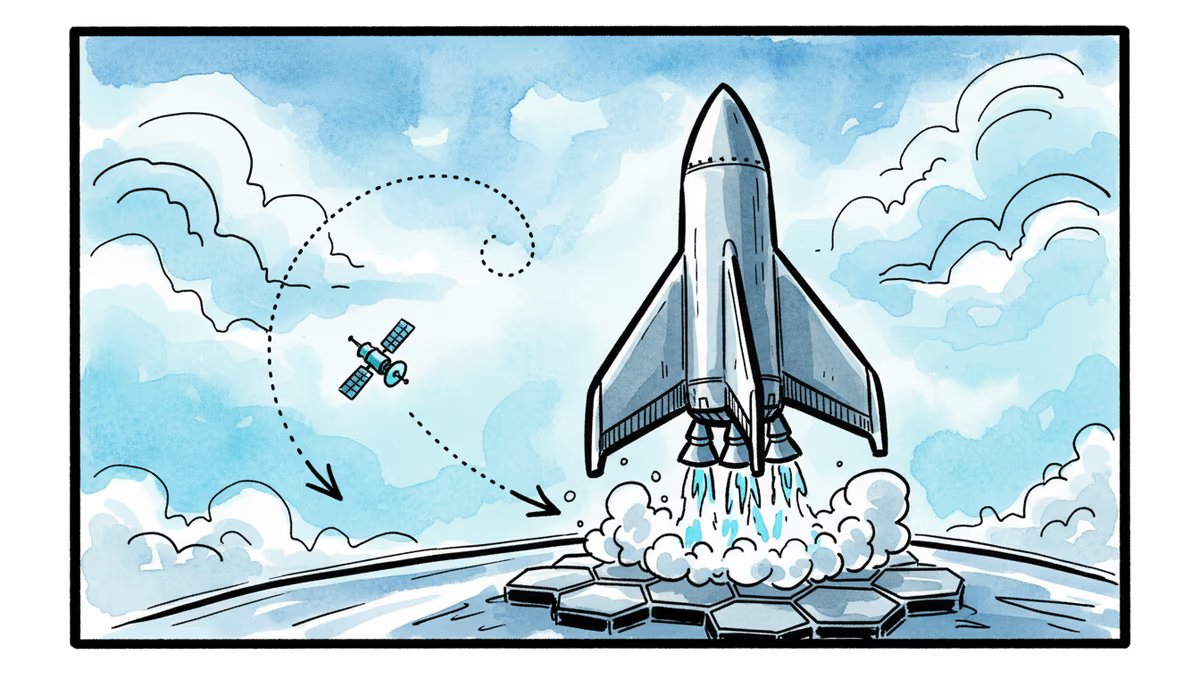
Blue Origin's New Glenn nailed its second booster landing, but AST SpaceMobile's BlueBird 7 satellite ended up in the wrong orbit—effectively useless. What this split outcome reveals about the space race.
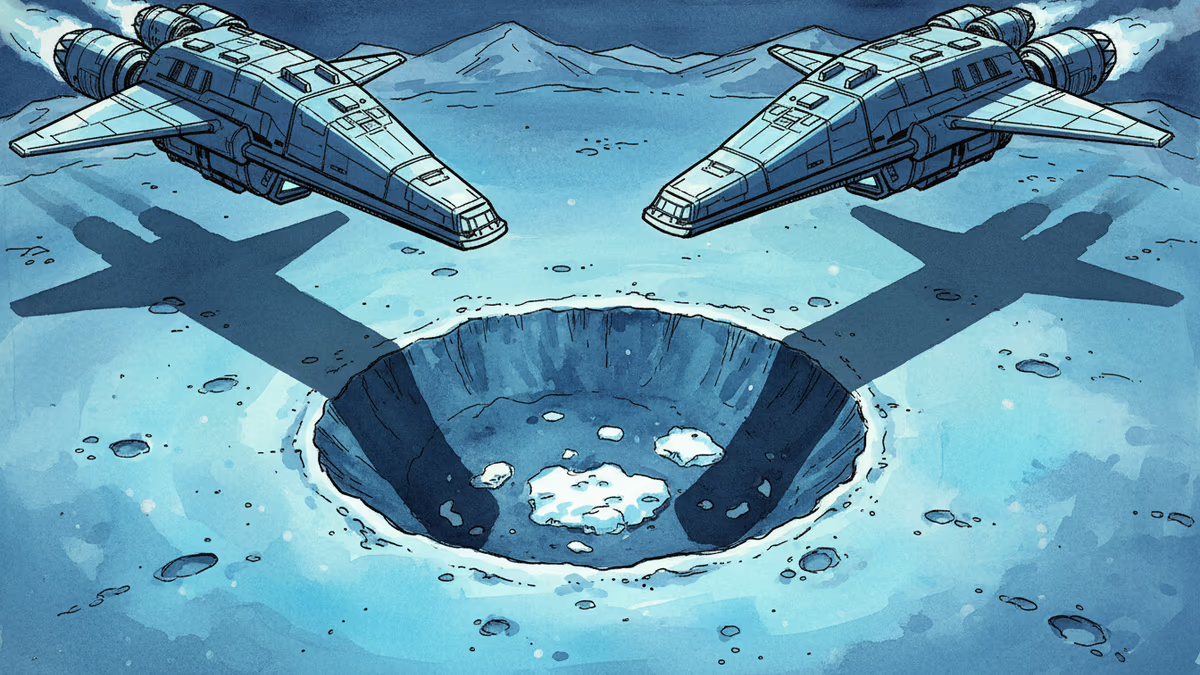
Blue Origin's Endurance and China's Chang'e 7 are both headed to the Moon's south pole this year. The race for lunar water ice is no longer theoretical.
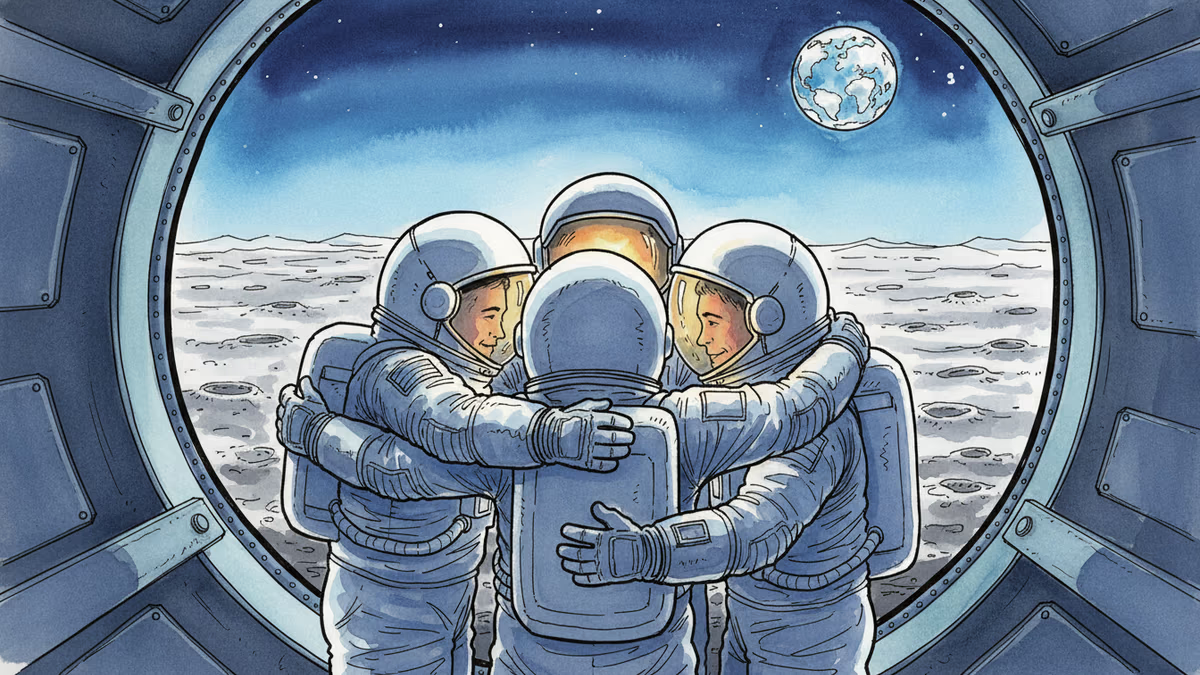
The Artemis II crew broke Apollo 13's distance record from Earth, traveling over 248,655 miles into lunar orbit. Here's why this moment is more complicated than it looks.
SpaceX's upgraded Starship V3 completed its first test flight, deploying 20 Starlink simulators but losing the Super Heavy booster. With an IPO weeks away, the stakes just got higher.
Blue Origin's New Glenn nailed its second booster landing, but AST SpaceMobile's BlueBird 7 satellite ended up in the wrong orbit—effectively useless. What this split outcome reveals about the space race.
Blue Origin's Endurance and China's Chang'e 7 are both headed to the Moon's south pole this year. The race for lunar water ice is no longer theoretical.
The Artemis II crew broke Apollo 13's distance record from Earth, traveling over 248,655 miles into lunar orbit. Here's why this moment is more complicated than it looks.
Thoughts
Share your thoughts on this article
Sign in to join the conversation