

How Social Media Giants Saw Teens as Business Gold Mines
Newly released internal documents reveal how Meta, Snap, TikTok, and YouTube systematically targeted teenagers while knowing the risks of heavy digital engagement.
$1 billion in lawsuits has just exposed what social media companies really think about teenagers. They don't see them as vulnerable young people who need protection—they see them as the ultimate business opportunity.
Newly released internal documents from Meta, Snap, TikTok, and YouTube reveal a calculated strategy to recruit teens to their platforms, even while company researchers documented the psychological risks of heavy social media use.
These documents emerged from major trials brought by school districts and state attorneys general across the US, alleging that these platforms deliberately designed their products to harm young users.
Why Teens Are the Holy Grail of Social Media
The internal communications make it crystal clear why these companies prioritized teenage users above all others. Teens spend 2-3 times longer on platforms than adults, are more likely to recommend apps to friends, and most crucially—habits formed during adolescence tend to stick for life.
One Meta internal report explicitly stated that "acquiring users aged 13-15 is critical for long-term growth." The company's data showed that 85% of users who join as teens continue using the platform into adulthood.
Snapchat went further, with documents revealing discussions about how "teenage brains are still developing, making them more susceptible to engaging with our product." This wasn't accidental—it was strategic exploitation of neuroscience.
TikTok's internal research identified the optimal "hook point" for teen users: exactly 35 seconds of content consumption before the algorithm could reliably predict what would keep them scrolling for hours.
They Knew the Risks—And Chose Profits

Perhaps most damning is evidence that these companies were fully aware of the mental health risks their products posed to young users. Meta's own research found that 32% of teenage girls who used Instagram for more than 3 hours daily experienced decreased self-esteem.
YouTube documented how its recommendation algorithm could lead teens down "rabbit holes" of extreme content within just 20 minutes of casual browsing. Yet instead of fixing the algorithm, the company focused on legal disclaimers.
Snapchat identified that its "streak" feature—encouraging daily app usage—was causing anxiety and sleep disruption among 67% of teen users. The response? Make streaks even more prominent in the app design.
The Regulatory Reckoning
These revelations come as lawmakers worldwide are crafting new rules for social media platforms. The UK's Age Appropriate Design Code has already forced some changes, while the EU's Digital Services Act includes specific protections for minors.
In the US, momentum is building for federal action. The revelations have united typically divided politicians around the need to protect children online. But tech companies are fighting back, arguing that parental controls and education—not regulation—are the answer.
The Global Impact
This isn't just an American problem. Similar patterns are emerging worldwide as these platforms expand globally. In South Korea, 94% of teens use smartphones for over 4 hours daily, mostly on social media. European studies show comparable addiction rates among young users.
The business model is universal: capture young minds early, maximize engagement through psychological manipulation, and convert attention into advertising revenue. The human cost—anxiety, depression, sleep disruption, academic problems—is treated as an acceptable externality.
Authors
Related Articles
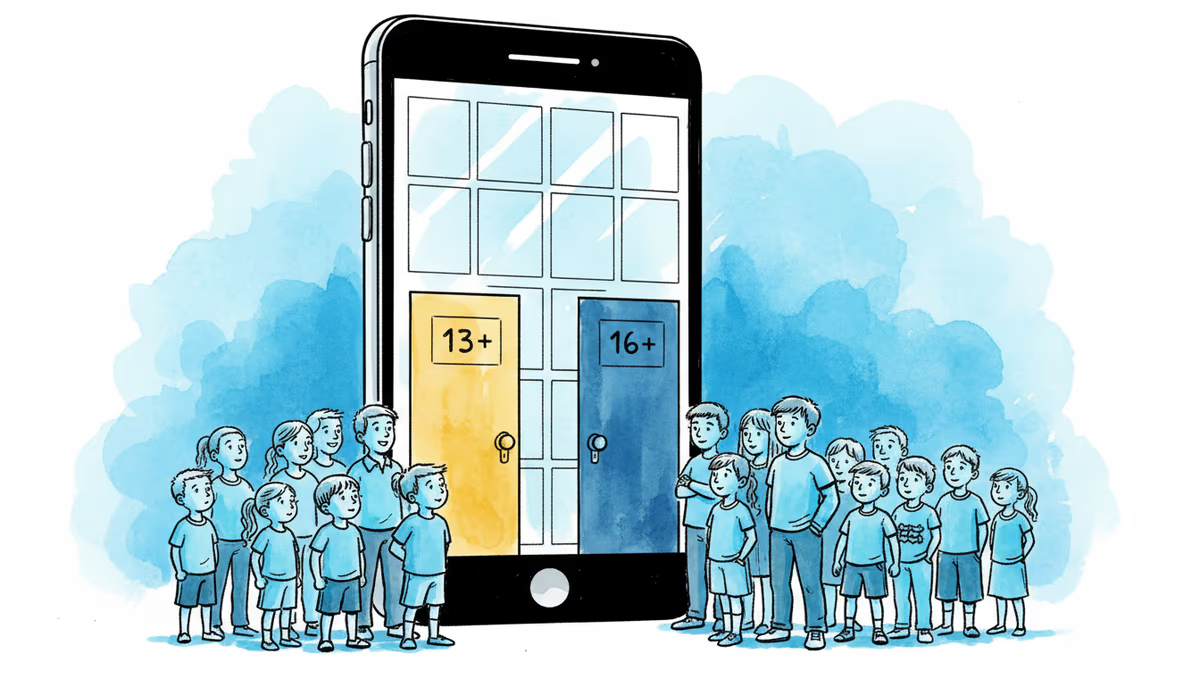
Indonesia introduces age-tiered social media restrictions, allowing 13+ for low-risk platforms and 16+ for high-risk ones. How does this compare to Australia's blanket ban?
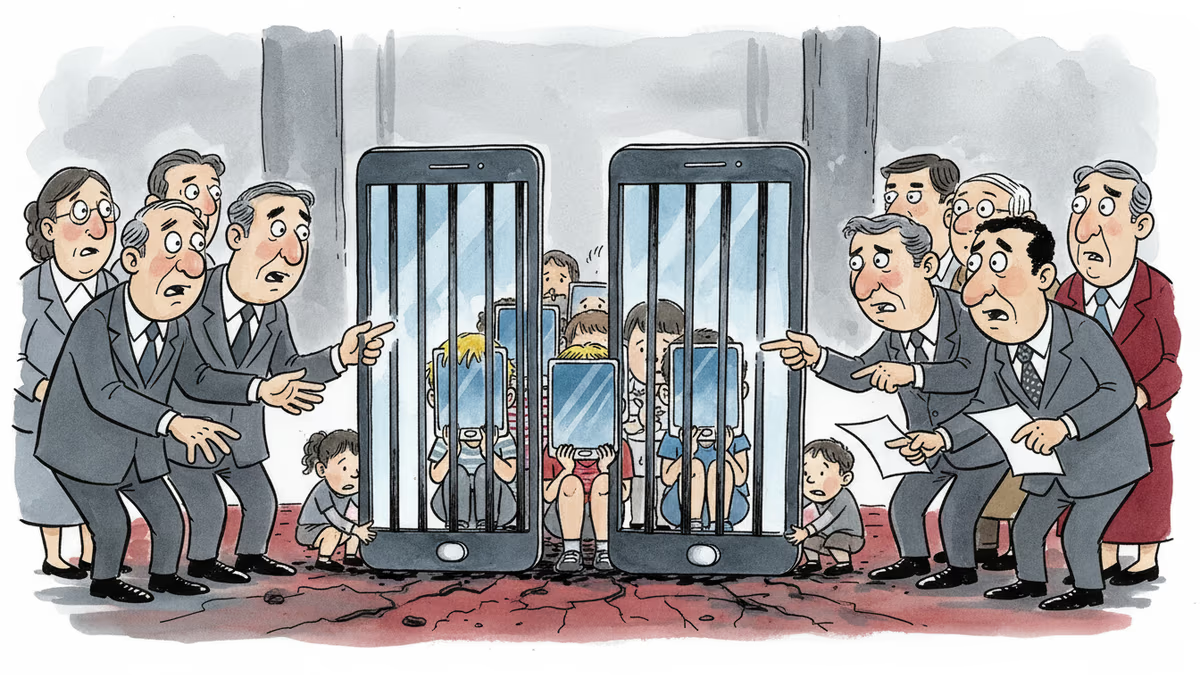
From Australia's $34M fines to France's parliamentary vote, 10 countries are restricting teen social media access. A global experiment in digital parenting begins.
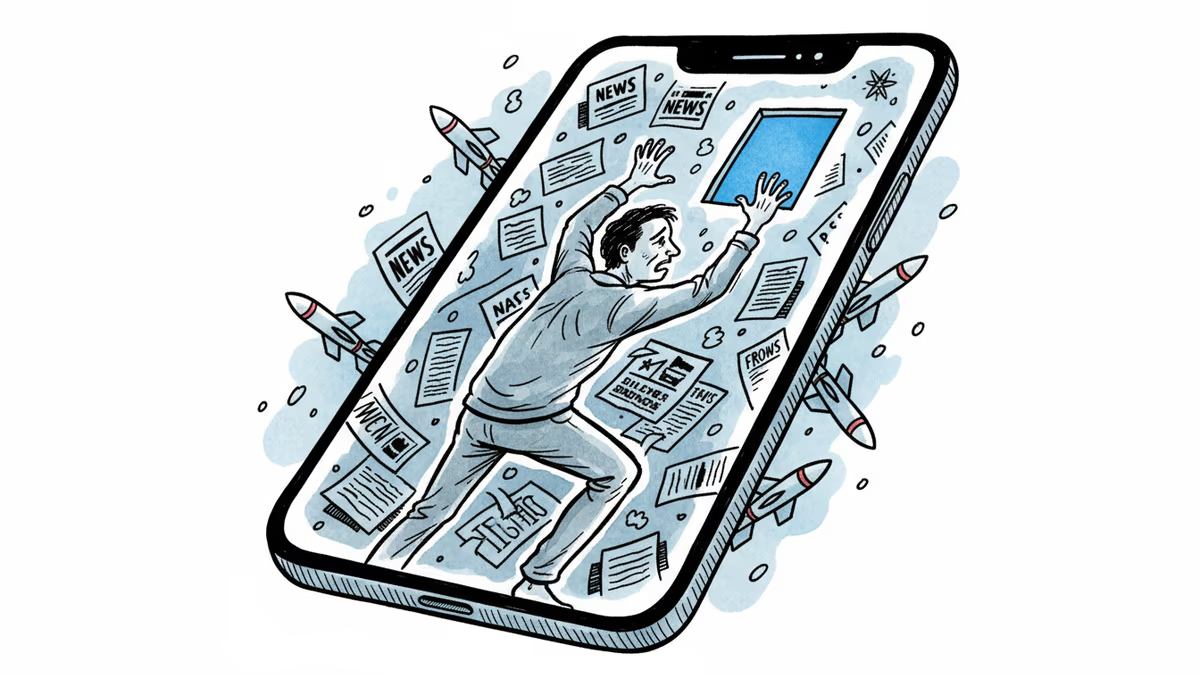
Middle East missile strikes trigger global doomscrolling epidemic. Neuroscience reveals why we can't stop scrolling through bad news and how to break free.
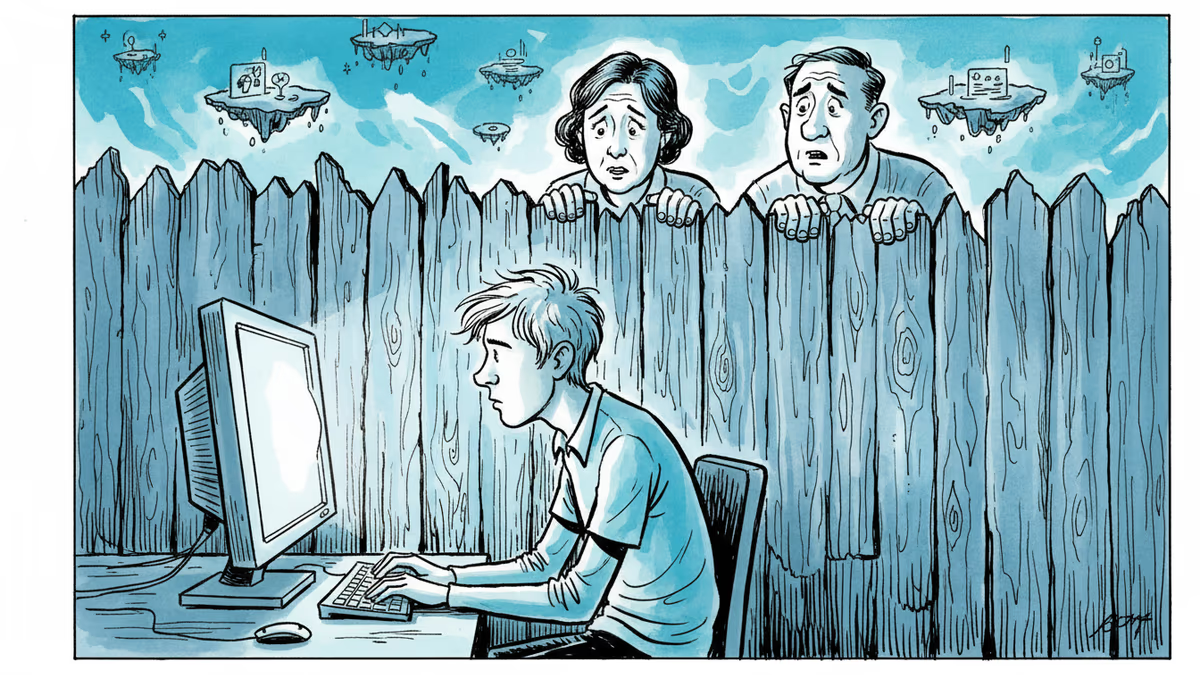
Instagram's new suicide search alerts for parents raise questions about whether surveillance-based solutions truly protect teens or simply push their struggles underground.
Indonesia introduces age-tiered social media restrictions, allowing 13+ for low-risk platforms and 16+ for high-risk ones. How does this compare to Australia's blanket ban?
From Australia's $34M fines to France's parliamentary vote, 10 countries are restricting teen social media access. A global experiment in digital parenting begins.
Middle East missile strikes trigger global doomscrolling epidemic. Neuroscience reveals why we can't stop scrolling through bad news and how to break free.
Instagram's new suicide search alerts for parents raise questions about whether surveillance-based solutions truly protect teens or simply push their struggles underground.
Thoughts
Share your thoughts on this article
Sign in to join the conversation