
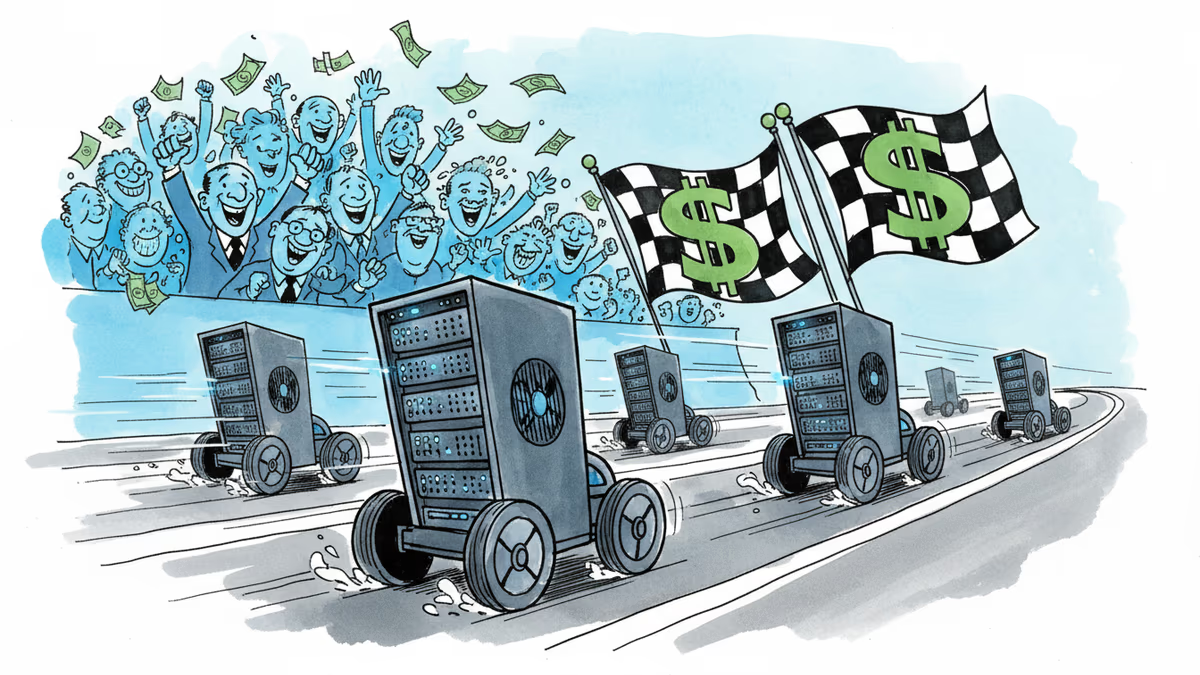
The $2.5B AI Inference Gold Rush Has Begun
Modal Labs doubles valuation in 5 months as AI inference infrastructure becomes the hottest investment category. Why VCs are betting billions on speed.
$2.5 billion. That's what Modal Labs is reportedly worth in its new funding round, more than doubling its $1.1 billion valuation from just five months ago. For a company most people have never heard of, doing something most people don't understand.
Modal Labs optimizes AI inference—the split-second process when an AI model generates an answer to your prompt. Think of it as the difference between a sports car and a minivan when you're asking ChatGPT a question. The company's annual revenue? Around $50 million.
General Catalyst is reportedly leading the round, joining a feeding frenzy that's reshaping the AI investment landscape.
The Inference Arms Race
Why are VCs throwing billions at companies that make AI responses faster? Because training AI models is a one-time cost, but inference happens billions of times daily.
Every time someone asks ChatGPT a question, Google searches with AI, or Netflix recommends a show, that's inference. Shave off milliseconds, save millions in compute costs. Multiply that across the entire AI economy, and you're looking at a market that could dwarf cloud computing.
Modal's competitors are seeing similar investor enthusiasm. Baseten raised $300 million at a $5 billion valuation last week. Fireworks AI secured $250 million at $4 billion in October. The team behind vLLM launched Inferact with $150 million in seed funding at an $800 million valuation.

The Speed Economy
For enterprises, inference optimization isn't just about user experience—it's about survival. A retail company running AI-powered recommendations could save millions annually by reducing inference latency. A healthcare AI that diagnoses faster could literally save lives.
But here's the catch: most companies building AI applications have no choice but to rely on these specialized inference providers. They're essentially renting speed, and the landlords are getting very expensive.
Modal's CEO Erik Bernhardsson spent 15+ years at companies like Spotify and Better.com, where he learned that real-time data processing at scale is more art than science. His team's bet is that inference will become as critical as databases were in the early internet era.
The Valuation Question
A 50x revenue multiple for a company with $50 million ARR raises eyebrows. Traditional SaaS companies trade at 5-15x revenue. But VCs argue this isn't traditional SaaS—it's infrastructure for the AI revolution.
The bull case: AI inference demand grows exponentially as more applications go live. The bear case: Amazon, Microsoft, and Google could crush these startups by integrating similar optimizations into their cloud platforms.
Early backers Lux Capital and Redpoint Ventures are sitting on paper returns that would make any LP smile. But the real test comes when enterprises have to choose between paying premium prices for specialized inference or building in-house solutions.
The bigger question: In a world where every app claims to be "AI-powered," who really controls the user experience—the model makers or the speed merchants?
Authors
Related Articles
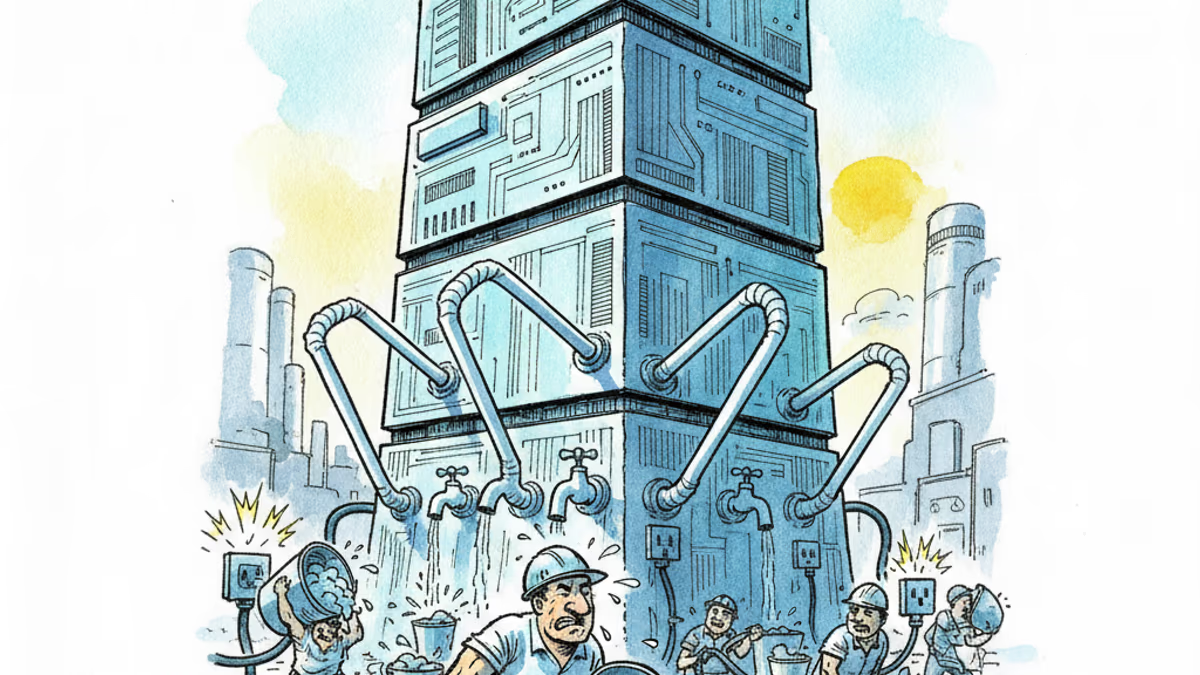
Samsung and SK unveiled a chip and AI investment package worth thousands of trillions of won on June 29. The headline number swings wildly by outlet, but the real contest isn't capital — it's water and power.

Lucra Sports CEO Dylan Robbins landed Cathie Wood's ARK Invest as a Series B lead without building AI. The story behind his unconventional fundraising playbook.

SolarSquare is raising $55-60M at a $450-500M valuation, more than doubling its worth in 18 months. Here's what's driving investor conviction in India's residential solar market.

Viral videos show 2026 graduates jeering executives who praise AI at commencement ceremonies. It's not just rudeness — it's a signal about who pays for technological optimism.
Samsung and SK unveiled a chip and AI investment package worth thousands of trillions of won on June 29. The headline number swings wildly by outlet, but the real contest isn't capital — it's water and power.
Lucra Sports CEO Dylan Robbins landed Cathie Wood's ARK Invest as a Series B lead without building AI. The story behind his unconventional fundraising playbook.
SolarSquare is raising $55-60M at a $450-500M valuation, more than doubling its worth in 18 months. Here's what's driving investor conviction in India's residential solar market.
Viral videos show 2026 graduates jeering executives who praise AI at commencement ceremonies. It's not just rudeness — it's a signal about who pays for technological optimism.
Thoughts
Share your thoughts on this article
Sign in to join the conversation