
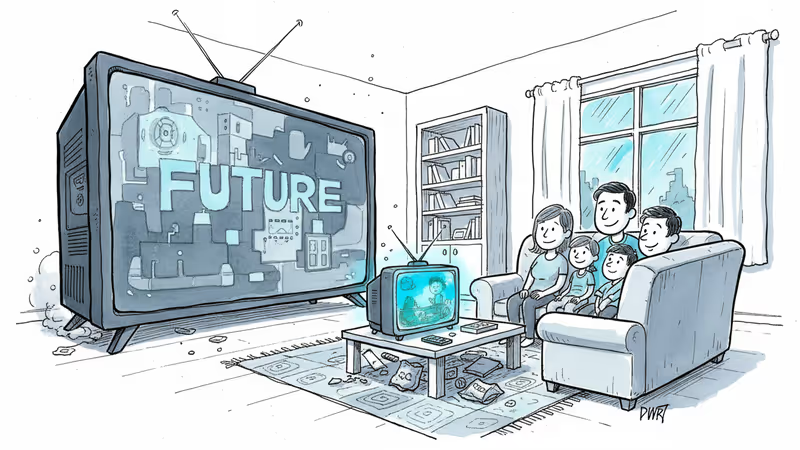
The Quiet Death of 8K TVs: When Tech Innovation Misses the Mark
How 8K TVs failed to gain market traction despite industry-wide support, revealing the gap between technological capability and consumer demand.
Would you pay $133,000 for a hamburger? That's essentially what Sharp asked consumers to do in 2015 when it launched the first commercial 8K TV in Japan for 16 million yen. While the comparison might seem absurd, it perfectly captures how disconnected tech companies became from consumer reality during the 8K push of the 2010s.
The Grand 8K Vision
The 8K story began with genuine technological ambition. In 2012, Sharp unveiled its first 8K prototype at CES, setting off a chain reaction across the industry. By 2016, the Video Electronics Standards Association had established specifications for 8K support through DisplayPort 1.4. The HDMI Forum followed with HDMI 2.1. Dell released an 8K computer monitor in 2017, Samsung brought 8K TVs to the US market in 2018 starting at $3,500, and LG launched the first 8K OLED TV in 2019.
On paper, it looked like a perfect ecosystem: standards were set, products were shipping, and marketing departments were confidently declaring 8K as "the future." LG's US website still carries that message today.
Reality Check
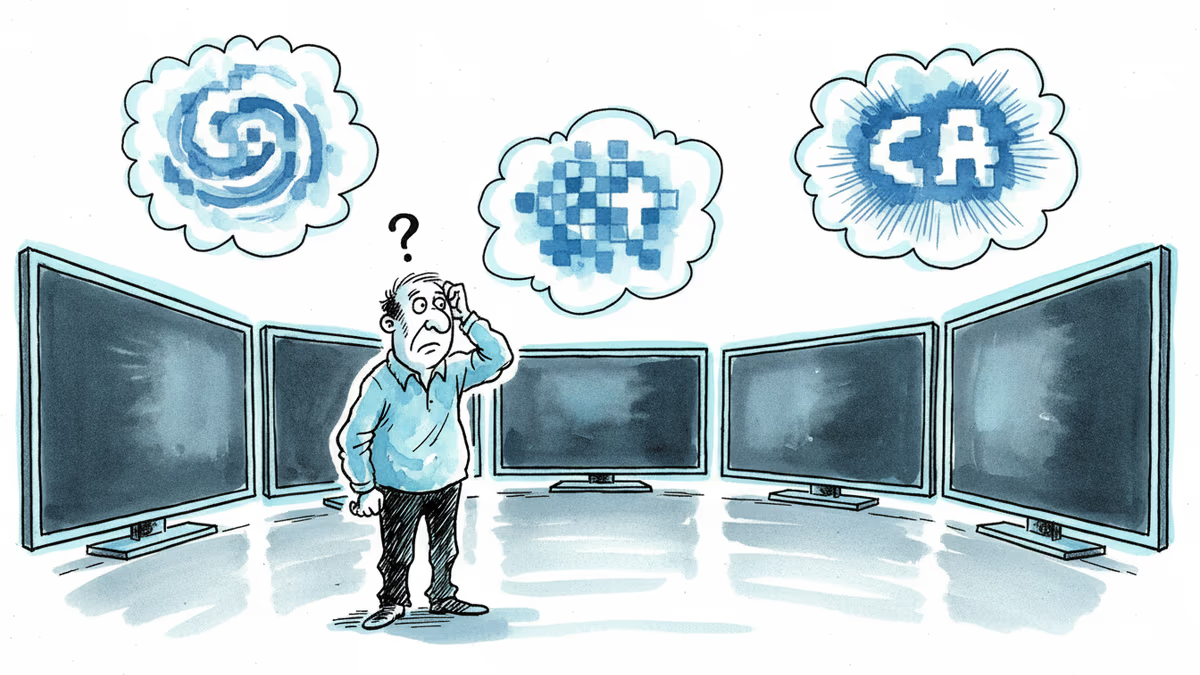
But the market had other plans. Despite the industry's collective enthusiasm, 8K never proved its necessity or practicality. The fundamental problem wasn't technical—it was experiential. Most consumers couldn't distinguish between 4K and 8K quality at typical viewing distances. Even if they could, there was virtually no native 8K content to watch.
Netflix, YouTube, and other streaming giants focused on expanding their 4KHDR libraries rather than investing in 8K production. The content creation industry recognized what TV manufacturers seemed to miss: better color, contrast, and brightness improvements were more noticeable than resolution bumps beyond 4K.

The Price Problem
Cost became the killer factor. While prices dropped from the initial six-figure range to thousands of dollars, 8K TVs remained prohibitively expensive for most consumers. The premium didn't just cover the display—8K processing required more powerful chips, leading to higher power consumption and heat generation.
Consumers began asking a simple question: "Why pay more for something I can't see the difference in?" The industry had no compelling answer.
Industry Pivot
By the early 2020s, manufacturers quietly shifted their focus. Instead of pushing 8K as the next big thing, companies like Samsung and LG began emphasizing features consumers could actually appreciate: improved HDR processing, higher refresh rates for gaming, better smart TV interfaces, and more sustainable designs.
The pandemic accelerated this shift. With more people working from home and streaming content, the demand grew for better 4K TVs with gaming features and streaming optimization—not higher resolution displays.
Lessons for Future Innovation
The 8K TV saga offers valuable insights for tech companies developing the next wave of consumer products. Technical capability doesn't guarantee market success. Consumer adoption requires three elements: noticeable improvement, accessible pricing, and supporting ecosystem—8K TVs delivered on only one.
This lesson extends beyond displays. As companies develop AI assistants, VR headsets, and autonomous vehicles, they'd do well to remember that consumers ultimately decide what constitutes meaningful innovation.
Authors
Related Articles
At Apple's 50th anniversary, top executives insisted the iPhone will anchor the AI era—and beyond. But is that confidence visionary or a warning sign?
Nine months after a record-breaking launch, Nintendo is cutting Switch 2 production from 6 million to 4 million units per quarter. What went wrong, and what does it signal for the console market?
Memory prices have surged up to 6x due to AI demand, causing shortages and price hikes across smartphones, gaming consoles, and laptops. How AI's appetite affects everyday consumers.
From OLED to QLED to mini-LED, TV technology advances faster than ever while prices plummet. What does this mean for consumers navigating the crowded market?
At Apple's 50th anniversary, top executives insisted the iPhone will anchor the AI era—and beyond. But is that confidence visionary or a warning sign?
Nine months after a record-breaking launch, Nintendo is cutting Switch 2 production from 6 million to 4 million units per quarter. What went wrong, and what does it signal for the console market?
Memory prices have surged up to 6x due to AI demand, causing shortages and price hikes across smartphones, gaming consoles, and laptops. How AI's appetite affects everyday consumers.
From OLED to QLED to mini-LED, TV technology advances faster than ever while prices plummet. What does this mean for consumers navigating the crowded market?
Thoughts
Share your thoughts on this article
Sign in to join the conversation