
CES 2026 Gadget Hardware: Why the Software Gap Defines This Year’s Show
Analysis of CES 2026 gadget hardware trends. Explore why this year's show focused on refined hardware over futuristic software and what it means for the industry.
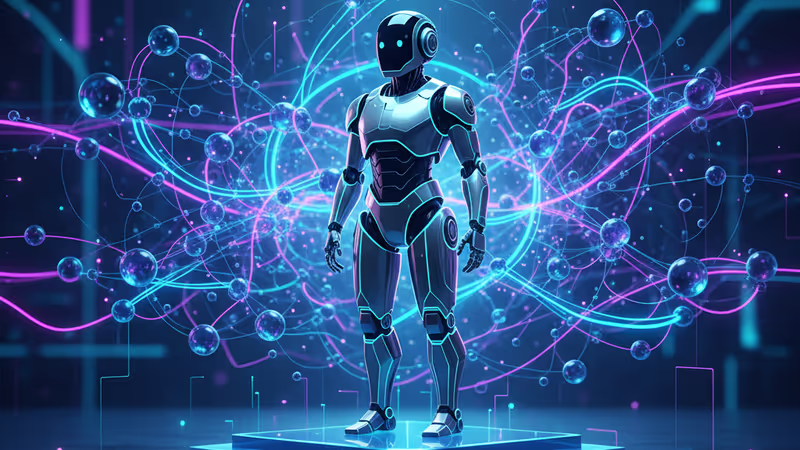
The flashiest TVs and flying cars didn't steal the show this year. Instead, CES 2026 felt different. It was a conference dominated by a pragmatic shift toward refining old gadgets and showcasing powerful hardware that's currently sitting in a waiting room for software to catch up.
CES 2026 Gadget Hardware: Hardware Leads the Race
According to The Verge, the vibe in Las Vegas this week was all about 'new ideas for old gadgets.' We didn't see the usual parade of futuristic prototypes that never hit the market. Rather, companies showcased impressive robotics and refined consumer electronics that are physically ready for the next decade, even if their operating systems aren't.

It was a whole lot of really impressive hardware waiting on software to catch up.
Key Highlights from the Show Floor
- Shift from 'Shock and Awe' to 'Utility': Focus moved to smarter everyday appliances.
- The Software Gap: High-end specs are present, but the intuitive AI experiences are still in development.
- Live at the Brooklyn Bowl: Industry insiders noted the grounded nature of this year's announcements.
Authors
Related Articles

Eclipse Ventures just raised $1.3B to build an ecosystem of physical AI startups across transportation, energy, robotics, and defense. Here's why the strategy matters more than the money.
At Apple's 50th anniversary, top executives insisted the iPhone will anchor the AI era—and beyond. But is that confidence visionary or a warning sign?

Nine months after a record-breaking launch, Nintendo is cutting Switch 2 production from 6 million to 4 million units per quarter. What went wrong, and what does it signal for the console market?
NASA's Swift Observatory is falling out of orbit. A $30M commercial robot mission may save it—and rewrite the rules for space infrastructure maintenance.
Eclipse Ventures just raised $1.3B to build an ecosystem of physical AI startups across transportation, energy, robotics, and defense. Here's why the strategy matters more than the money.
At Apple's 50th anniversary, top executives insisted the iPhone will anchor the AI era—and beyond. But is that confidence visionary or a warning sign?
Nine months after a record-breaking launch, Nintendo is cutting Switch 2 production from 6 million to 4 million units per quarter. What went wrong, and what does it signal for the console market?
NASA's Swift Observatory is falling out of orbit. A $30M commercial robot mission may save it—and rewrite the rules for space infrastructure maintenance.
Thoughts
Share your thoughts on this article
Sign in to join the conversation