
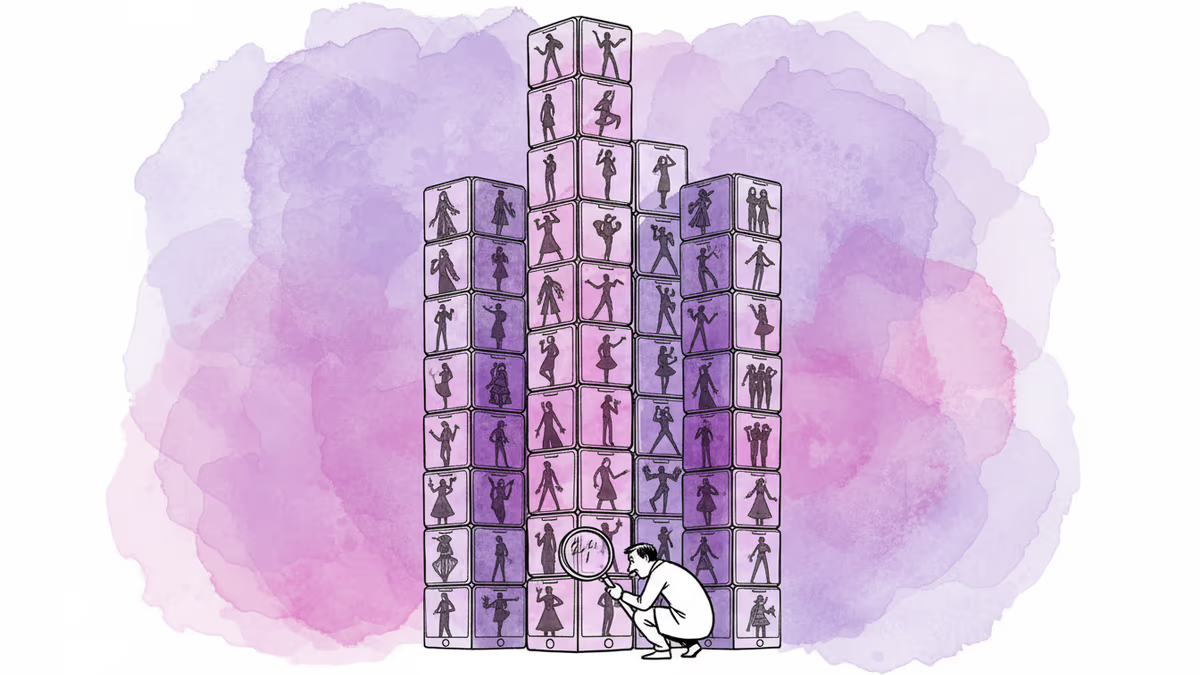
Who's Korea's Top Idol? Depends on How You Count
The Korea Business Research Institute ranked 1,730 K-pop idols by brand reputation in April 2026. Wanna One's Park Ji Hoon topped the list. But what does a big data reputation score actually measure—and what does it miss?
Out of 1,730 active K-pop idols, one algorithm picked a winner. He's from a group that disbanded seven years ago.
The Korea Business Research Institute released its monthly individual idol brand reputation rankings this week, covering the period from March 23 to April 23, 2026. The methodology: big data analysis across four indexes — consumer participation, media coverage, interaction, and community awareness. The result: Park Ji Hoon, formerly of Wanna One, held the top position for another consecutive cycle.
What a Reputation Score Actually Measures
Wanna One officially disbanded in early 2019, but Park Ji Hoon has sustained a consistent media footprint through solo releases and drama appearances. Under the institute's framework, that steady stream of articles, fan community posts, and social media mentions translates directly into index points — particularly in the media coverage and interaction categories.
This is the key distinction the headline obscures: brand reputation rankings measure how much an idol is talked about, not how much they sell. An artist can top this chart while sitting outside the top 100 on Melon's streaming rankings. Conversely, a fourth-generation group dominating global Spotify streams might rank lower here if their Korean-language community activity is thinner.
These aren't competing metrics — they're measuring different ecosystems entirely.
The Industry Logic Behind the Numbers

For entertainment agencies and brand managers, reputation indexes like this one serve a specific commercial function: they provide a defensible number to bring to advertising negotiations. In Korea's endorsement market, media buzz often determines contract rates more directly than streaming figures. A high reputation score signals to a cosmetics brand or a food conglomerate that the artist generates consistent earned media — a proxy for audience reach that's easier to quantify than fan loyalty.
From the fan community's perspective, however, the same index reads as a measure of organized effort. Fan clubs in Korea have long coordinated voting campaigns, article-sharing drives, and portal search boosts — activities that feed directly into the data inputs these rankings use. The score, in this reading, reflects not just popularity but the mobilization capacity of a fandom.
Same number. Two completely different interpretations.
The Measurement Problem Nobody Talks About
The Korea Business Research Institute publishes its methodology at a high level, but the specific platform weighting — how much TikTok activity counts versus Naver fan cafe posts, or whether overseas fan engagement factors into the community awareness index — isn't fully transparent to outside observers. That opacity matters more in 2026 than it did five years ago.
K-pop's audience has internationalized dramatically. Fourth-generation groups like aespa, NewJeans, and ATEEZ generate enormous engagement volumes on platforms that skew global — YouTube Shorts, Instagram Reels, X — while older domestic-focused artists may retain stronger footholds in Korean-language community spaces like Nate Pann or Naver Cafes. Depending on where the data collection boundary sits, a ranking can look very different.
No single metric captures the full picture of what "popular" means in a market this fragmented.
This content is AI-generated based on source articles. While we strive for accuracy, errors may occur. We recommend verifying with the original source.
Related Articles

BABYMONSTER announces digital single 'SUGAR HONEY ICE TEA' for June 8. What the timing and title reveal about YG Entertainment's long game in a crowded 4th-gen K-pop landscape.
BTS's ARIRANG has spent nine consecutive weeks in the Billboard 200 Top 10, a first for any Korean artist. What the longevity reveals about K-pop's next phase in the US market.
KiiiKiii topped South Korea's May rookie idol brand reputation rankings again. But what does a brand reputation index really tell us about a group's staying power—and what does it miss?
South Korea's monthly movie star brand reputation rankings reveal how big data metrics are quietly reshaping casting decisions, fan strategies, and the economics of celebrity in K-entertainment.
BABYMONSTER announces digital single 'SUGAR HONEY ICE TEA' for June 8. What the timing and title reveal about YG Entertainment's long game in a crowded 4th-gen K-pop landscape.
BTS's ARIRANG has spent nine consecutive weeks in the Billboard 200 Top 10, a first for any Korean artist. What the longevity reveals about K-pop's next phase in the US market.
KiiiKiii topped South Korea's May rookie idol brand reputation rankings again. But what does a brand reputation index really tell us about a group's staying power—and what does it miss?
South Korea's monthly movie star brand reputation rankings reveal how big data metrics are quietly reshaping casting decisions, fan strategies, and the economics of celebrity in K-entertainment.
Thoughts
Share your thoughts on this article
Sign in to join the conversation