
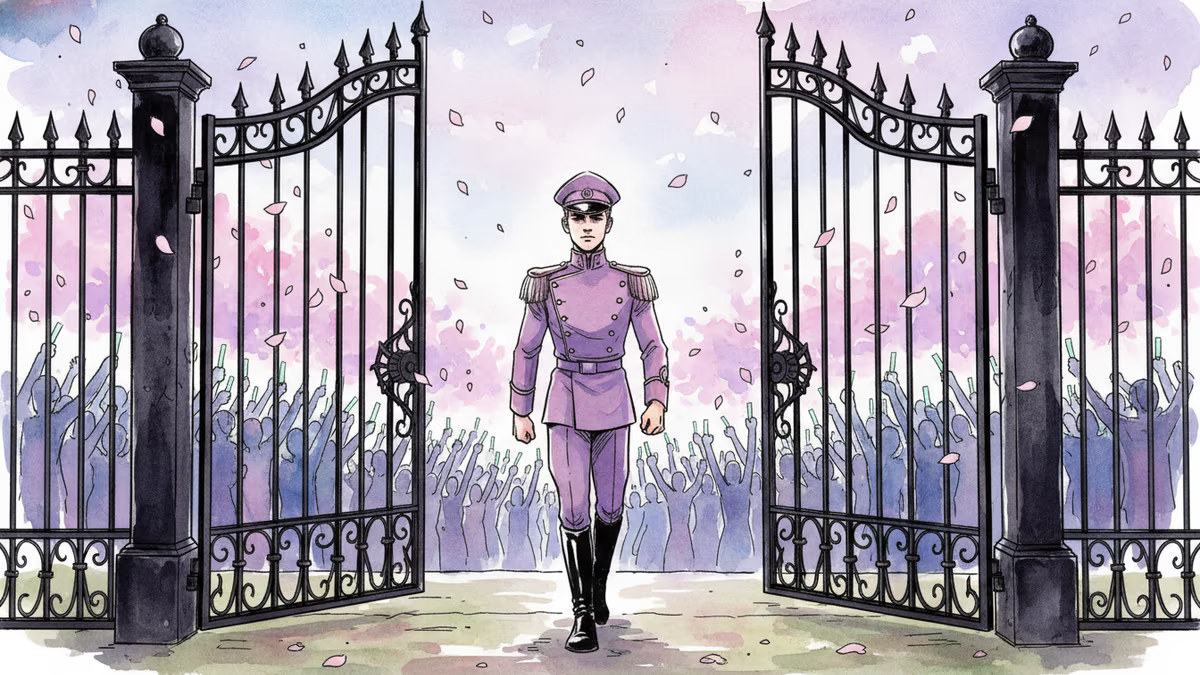
Jaehyun Is Out — And the NCT Reunion Clock Is Ticking
NCT's Jaehyun was discharged from mandatory military service on May 3, 2026. He's the second member out. Here's what it means for NCT's timeline — and K-pop's absence economy.
On the morning of May 3, 2026, Jaehyun walked out of the gates of the Korean army — and straight back into the orbit of one of K-pop's most structurally complex groups.
What Happened
NCT's Jaehyun completed his mandatory military service on May 3, 2026, making him the second NCT member to be discharged. He enlisted in November 2024 and served approximately 18 months as a member of the army band — the same unit where Jungwoo is currently still serving. In a moment that NCTzens immediately clocked and spread everywhere, Jungwoo was among the soldiers present at the discharge ceremony to greet Jaehyun in person.
It's a small detail, but it landed hard: two members of the same group, overlapping in the same military unit, one walking out while the other stays behind.
The Army Band Pipeline

The army band placement isn't incidental. Since BTS members began enlisting publicly in 2022–2023, the mechanics of how K-pop idols serve have become a topic of genuine scrutiny — from fans, from media, and from the industry itself. Army band service is perceived as a middle path: fulfilling the legal obligation while preserving some proximity to performance. For fandoms, it lowers the psychological distance of the absence.
What's shifted in the post-BTS era is that military service is no longer just a gap in a discography. It's been folded into the group narrative itself. Discharge days trend. Military-era anecdotes circulate. The return becomes an event. Jaehyun's discharge hitting real-time search trends on the day it happened is less about celebrity news and more about how K-pop fandoms have learned to convert institutional absence into sustained engagement.
Where NCT Actually Stands
This is where the industry lens matters. Jaehyun is out, but the full picture of NCT's member availability is still fragmented. Taeyong, Doyoung, Yuta and others are either currently serving or approaching enlistment age. SM Entertainment has been managing this through NCT's multi-unit architecture — NCT 127, NCT Dream, WayV, NCT WISH — keeping the brand active even as individual members cycle through service.
But the subunit strategy has a ceiling. The longer full-group activity remains on hold, the more SM faces pressure to deliver a large-scale NCT project once the window opens. Industry observers have pointed to late 2026 through 2027 as the likely consolidation period — when enough original members will be back to make a complete-lineup activation commercially viable. Jaehyun's discharge is one more piece clicking into place.
The competitive context adds pressure. While NCT's core members have been in uniform, fourth-generation groups — including SM's own aespa and RIIZE — have been aggressively building market share. The reunion, when it comes, will land in a more crowded field than the one NCT left.
This content is AI-generated based on source articles. While we strive for accuracy, errors may occur. We recommend verifying with the original source.
Related Articles

BABYMONSTER announces digital single 'SUGAR HONEY ICE TEA' for June 8. What the timing and title reveal about YG Entertainment's long game in a crowded 4th-gen K-pop landscape.
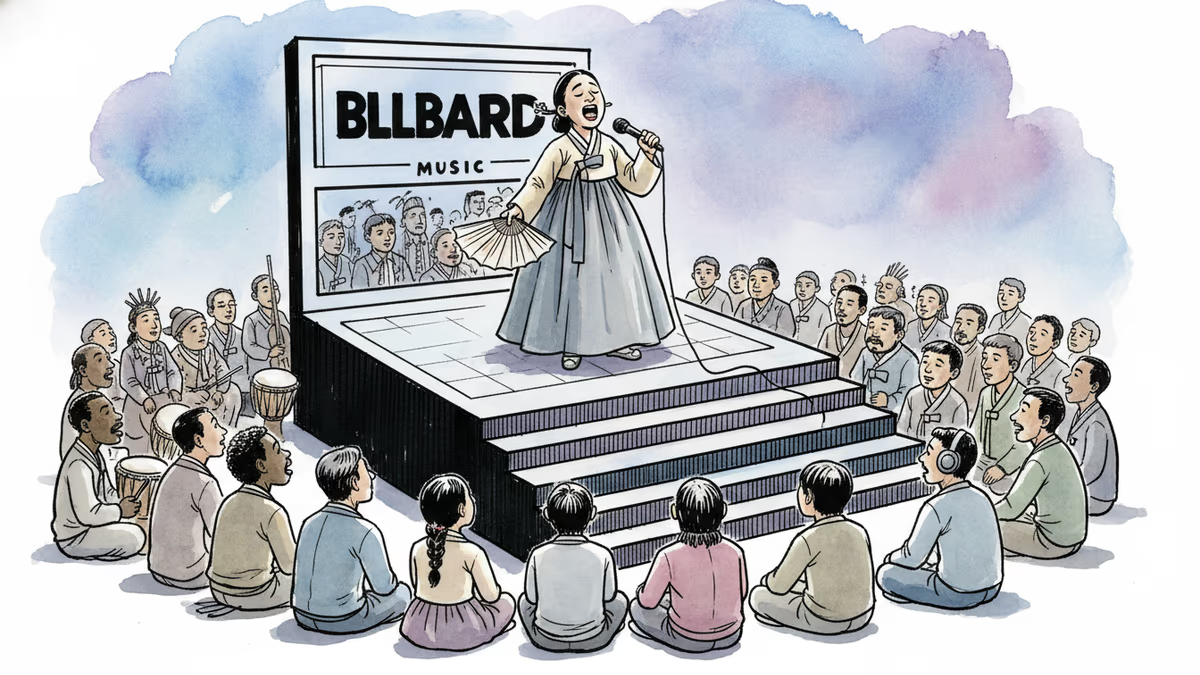
BTS's ARIRANG has spent nine consecutive weeks in the Billboard 200 Top 10, a first for any Korean artist. What the longevity reveals about K-pop's next phase in the US market.
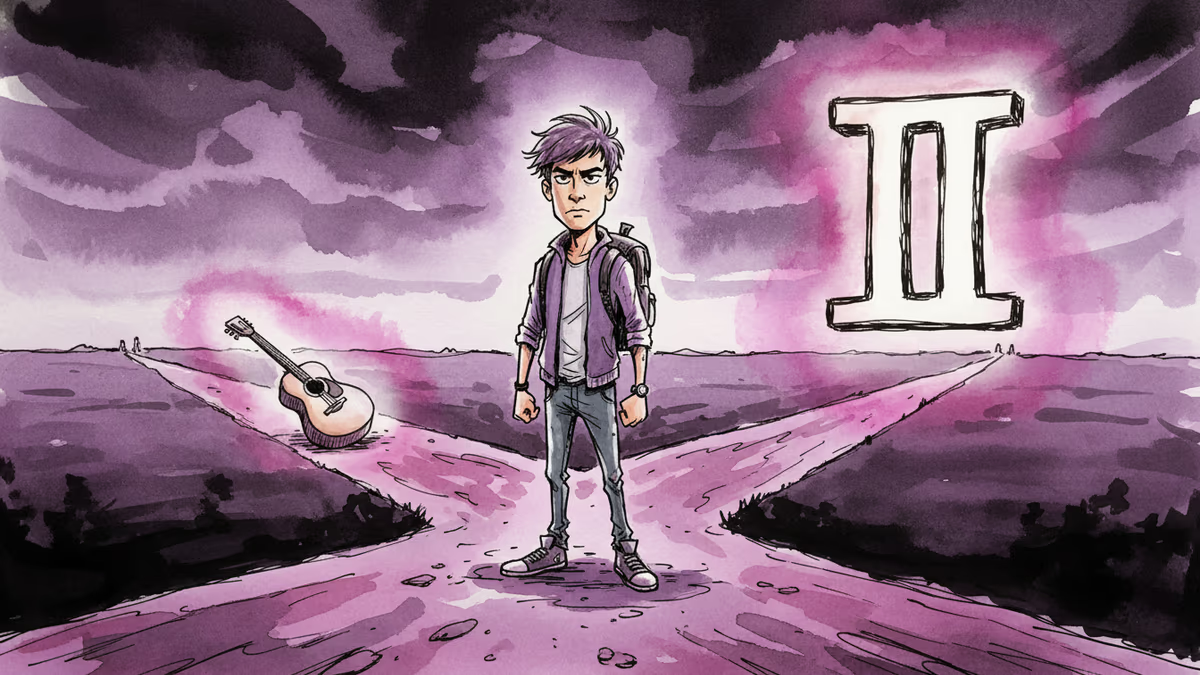
RIIZE announces mini album 'II' for June 15, 2026. Beyond the comeback, this release is a test of whether SM Entertainment's guitar-pop bet has a second chapter.
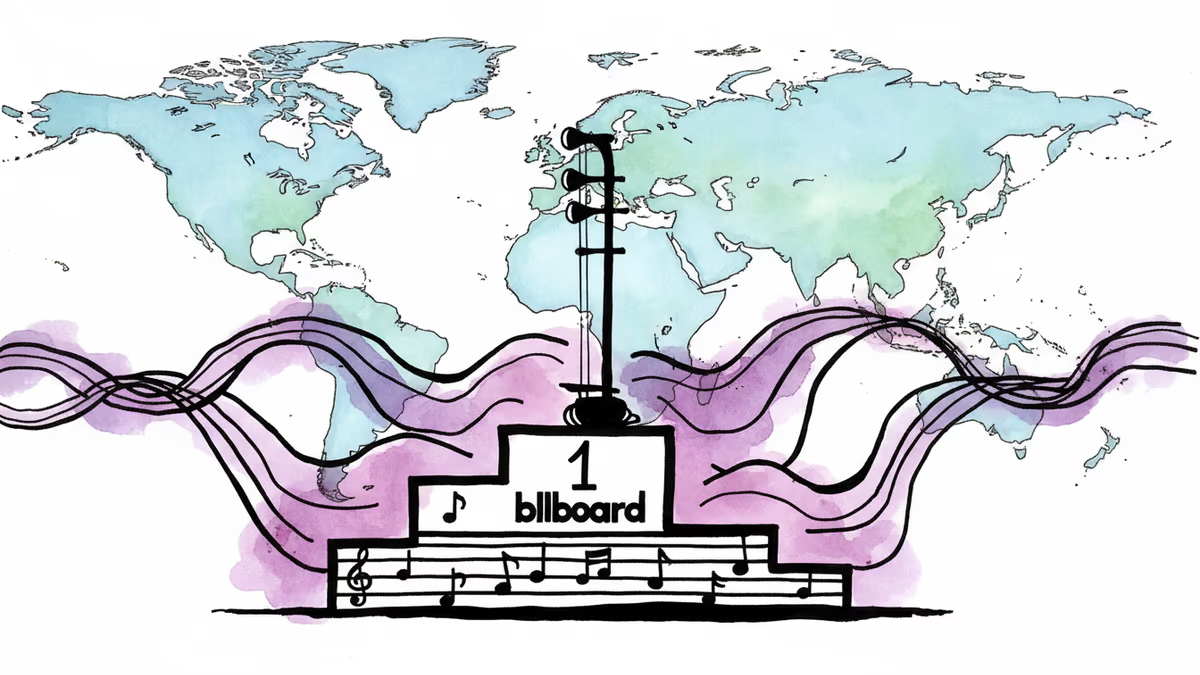
BTS's 'ARIRANG' holds at No. 8 on the Billboard 200 for an eighth consecutive week. Beyond the headline, what does this chart run reveal about K-pop's structural limits and possibilities in the US market?
BABYMONSTER announces digital single 'SUGAR HONEY ICE TEA' for June 8. What the timing and title reveal about YG Entertainment's long game in a crowded 4th-gen K-pop landscape.
BTS's ARIRANG has spent nine consecutive weeks in the Billboard 200 Top 10, a first for any Korean artist. What the longevity reveals about K-pop's next phase in the US market.
RIIZE announces mini album 'II' for June 15, 2026. Beyond the comeback, this release is a test of whether SM Entertainment's guitar-pop bet has a second chapter.
BTS's 'ARIRANG' holds at No. 8 on the Billboard 200 for an eighth consecutive week. Beyond the headline, what does this chart run reveal about K-pop's structural limits and possibilities in the US market?
Thoughts
Share your thoughts on this article
Sign in to join the conversation