
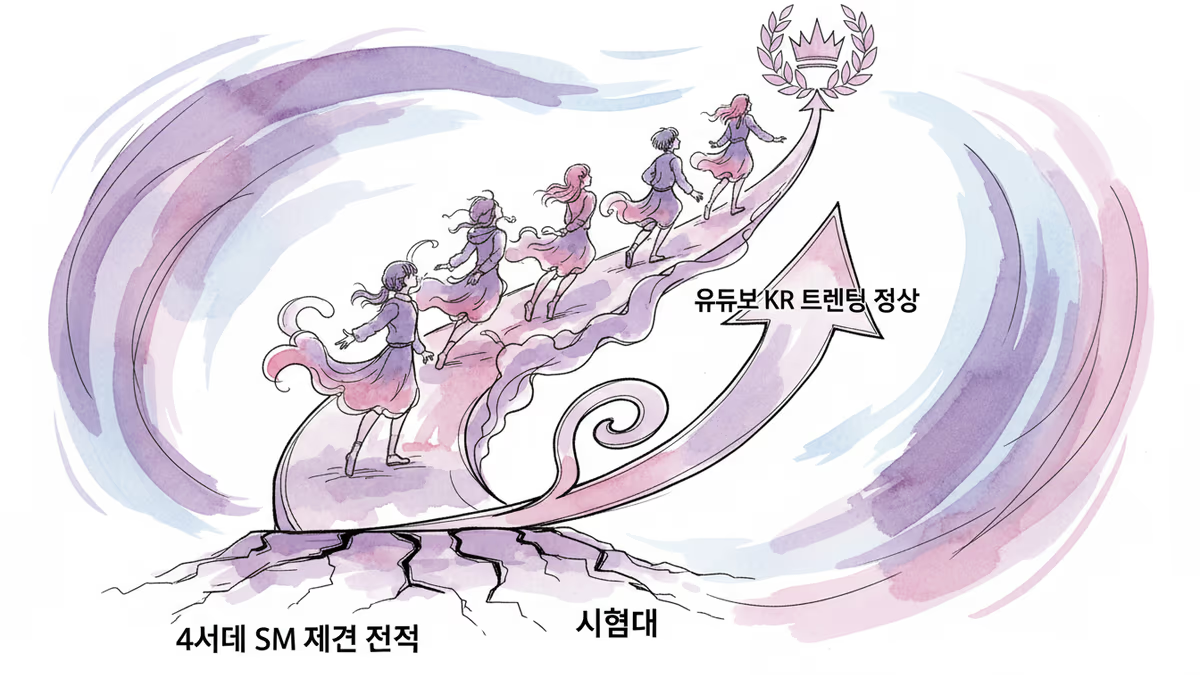
NCT WISH Tops YouTube KR Trending — The Real Test of SM Entertainment's 4th-Gen Rebuild
NCT WISH hit #1 on YouTube KR Trending. PRISM analyzes SM's 4th-gen strategy, fandom structure shifts, and K-pop's platform imbalance across four axes.
YouTube lit up — Spotify stayed silent. PRISM Trend Pipeline's latest trend signals show that NCT WISH scored a perfect signal strength of 1.000 on YouTube KR Trending (music and entertainment combined), while their Spotify KR Top 50 signal registered at 0.000. The temperature gap between the two platforms couldn't be starker. That imbalance isn't just a chart curiosity — it's a signal revealing exactly which platform foundation SM Entertainment's 4th-generation rebuild is actually standing on.
NCT WISH Conquers YouTube Trending — How Far Has SM's 4th-Gen Rebuild Come?
NCT WISH is SM Entertainment's global boy group that debuted in 2024 as the newest unit within the NCT universe. At the time of their debut, SM was still managing the fallout from its management control dispute with Kakao Entertainment, and restructuring its idol lineup was an urgent priority. In that context, NCT WISH topping YouTube Trending isn't just a popularity metric — it's a signal that the fandom mobilization system SM carefully engineered is actually working.
SM's traditional industry positioning has always been built on 'performance excellence + worldbuilding.' Through the lineage of TVXQ, SHINee, and EXO, SM has consistently positioned itself as the genre-definer. But after HYBE reshaped the global fandom economy through BTS, and JYP and YG carved up the 4th-gen market with Stray Kids and BLACKPINK respectively, SM's coordinates within the industry shifted noticeably. NCT WISH sits at the front line of SM's effort to fill that gap.
YouTube vs. Spotify: K-pop's Dual-Platform Structure
The contrast between a perfect YouTube Trending score and zero Spotify Top 50 presence reflects a structural reality in the K-pop platform ecosystem. YouTube's trending rankings directly incorporate music video views and fan community activity, meaning an organized fandom's ability to concentrate streams at the right moment largely determines the outcome. Spotify, by contrast, relies more heavily on everyday listening habits and algorithmic recommendations — casual listeners outside the fandom tend to drive those rankings.
This structure maps neatly onto K-pop fandom strategy. Organized fan communities have developed what's known as 'chonggong' (coordinated mass streaming), where fans synchronize streams during specific time windows to push tracks onto YouTube Trending. NCT WISH's YouTube signal strength of 1.000 looks like exactly that mobilization in action. Meanwhile, the Spotify signal of 0.000 suggests that penetration among general listeners beyond the core fandom remains limited. Some analysts argue this calls for a clear distinction between 'success within the fandom' and 'mainstream crossover.'

4th-Gen K-pop's Trend Break: From Worldbuilding to 'Relatability'
The K-pop market NCT WISH is operating in — 2026 — sits at a generational inflection point. Where 3rd-gen K-pop competed on 'elaborate worldbuilding' and 'conceptual polish,' the 4th generation has increasingly shifted toward 'artist-fan relationships' and real-time communication as its primary competitive axis. The rapid growth of fan communication platforms like Weverse and Bubble has accelerated this trend considerably.
SM has traditionally maintained a deliberate distance between artists and fans — a mystique-driven strategy that's been central to its brand identity. Analysts suggest that how well NCT WISH can honor that tradition while still responding to the 4th-gen demand for genuine connection will determine their long-term staying power. That said, SM has been building fan communication infrastructure through its own platform, Lysn, which points to a compromise approach rather than a clean break from the old playbook.
OTT, Platform Economics, and the Shifting K-pop Revenue Model
K-pop revenue streams have diversified well beyond music sales — platform streaming, concerts, merchandise, and fan subscription services now all play a role. Strong YouTube Trending performance translates into ad revenue and expanded algorithmic reach, but the absence from Spotify and similar audio streaming platforms can put an artist at a disadvantage in global revenue distribution. Spotify in particular functions as a key indicator for Western market entry, and an artist's presence there tends to directly correlate with the scale of their global touring potential.
At the same time, YouTube Music's growth and the viral reach of short-form platforms like TikTok and Instagram Reels are strengthening the argument that Spotify-centric Western streaming metrics aren't the only valid measure of K-pop success. Whether NCT WISH's YouTube-heavy footprint reflects a deliberate platform strategy by SM or simply the natural output of their fandom structure is difficult to conclude without additional data.
- YouTube KR Trending1Signal Strength
- Spotify KR Top 500Signal Strength
- RSS Headline Matching0Signal Strength
This content is AI-generated based on source articles. While we strive for accuracy, errors may occur. We recommend verifying with the original source.
Related Articles
PRISM Trend Pipeline caught LE SSERAFIM's YouTube KR trending peak. Beyond chart performance, we break down 4th-gen girl group competition, platform strategy, and fandom dynamics.
RIIZE announces mini album 'II' for June 15, 2026. Beyond the comeback, this release is a test of whether SM Entertainment's guitar-pop bet has a second chapter.

aespa dropped the dance practice video for 'WDA (Whole Different Animal)' feat. G-Dragon. Beyond the choreography, the collab reveals a quiet but deliberate shift in how SM Entertainment is repositioning its flagship 4th-gen act.

SBS's 'K-EXPO Inkigayo in Paris' taps Taemin and NCT WISH for a Korea-France diplomatic anniversary. Behind the lineup lies a calculated bet on K-pop as state soft power.
PRISM Trend Pipeline caught LE SSERAFIM's YouTube KR trending peak. Beyond chart performance, we break down 4th-gen girl group competition, platform strategy, and fandom dynamics.
RIIZE announces mini album 'II' for June 15, 2026. Beyond the comeback, this release is a test of whether SM Entertainment's guitar-pop bet has a second chapter.
aespa dropped the dance practice video for 'WDA (Whole Different Animal)' feat. G-Dragon. Beyond the choreography, the collab reveals a quiet but deliberate shift in how SM Entertainment is repositioning its flagship 4th-gen act.
SBS's 'K-EXPO Inkigayo in Paris' taps Taemin and NCT WISH for a Korea-France diplomatic anniversary. Behind the lineup lies a calculated bet on K-pop as state soft power.
Thoughts
Share your thoughts on this article
Sign in to join the conversation