

NCT WISH's First Win: What 11,578 Points Actually Measure
NCT WISH claimed their first Music Bank win for 'Ode to Love' with 11,578 points. But what does a K-pop music show score really tell us about an artist's reach?
A 3.8x point margin sounds decisive. But when the runner-up is AKMU — one of South Korea's most-streamed singer-songwriter duos — that gap says less about musical dominance and more about how K-pop's music show economy actually works.
What Happened on May 1
On the May 1 episode of KBS Music Bank, NCT WISH was announced as the weekly winner for 'Ode to Love,' scoring 11,578 points against AKMU's 3,059 points for 'Joy, Sorry, A Beautiful Heart.' It marks the group's first-ever music show win for this track. The same episode featured performances from &TEAM, 82MAJOR, TWS, ILLIT, and CRAVITY, among others.
NCT WISH is a six-member boy group launched by SM Entertainment in 2024 as the newest unit in the NCT universe. The group was built with a deliberate Japan-Korea dual-market strategy from the start, with a notable proportion of Japanese members. 'Ode to Love' is the title track of their second Korean mini-album.
The Score System Isn't Measuring What You Think
Music Bank's ranking formula combines digital streaming performance, physical album sales, broadcast airplay, and viewer votes. In practice, organized fandom activity — bulk album purchases and coordinated voting — is the decisive lever.

AKMU consistently performs well on general streaming charts like Melon and Genie, where passive listeners drive numbers. But in a scoring system that heavily weights physical sales and fan votes, a singer-songwriter duo without a mobilized fandom is structurally disadvantaged — regardless of how widely their music is actually heard.
This isn't a new tension. Since the mid-2010s, critics have pointed out that music show rankings conflate 'popularity' with 'fandom size.' Broadcasters, for their part, have little incentive to change: the current format drives fan engagement, social media activity, and live viewership in ways a pure chart system wouldn't.
Where NCT WISH Sits in the 4th-Gen Landscape
The 2024–2026 fourth-generation boy group market is crowded. ENHYPEN, TOMORROW X TOGETHER, ZEROBASEONE, TWS, and RIIZE are all competing for fan attention and chart real estate. Within this field, NCT WISH occupies an unusual position: they inherit the recognition of an established IP while needing to build a distinct identity of their own.
SM Entertainment's strategy of expanding the NCT universe through unit diversification — a model running since NCT 127 and NCT DREAM launched in 2016 — only works if each new unit generates new fans rather than simply redistributing existing ones. Whether NCT WISH's first win reflects growing reach or the loyalty of existing NCTzens is a question physical sales trajectories and streaming new-listener data would answer more honestly than a trophy.
Also worth noting: ILLIT and TWS, both on the same episode's stage, are HYBE subsidiaries — BELIFT LAB and PLEDIS Entertainment respectively. The recurring pattern of HYBE-affiliated acts dominating Music Bank lineups in the same week as SM acts frames this win within a broader SM vs. HYBE market share contest that plays out every broadcast cycle.
This content is AI-generated based on source articles. While we strive for accuracy, errors may occur. We recommend verifying with the original source.
Related Articles
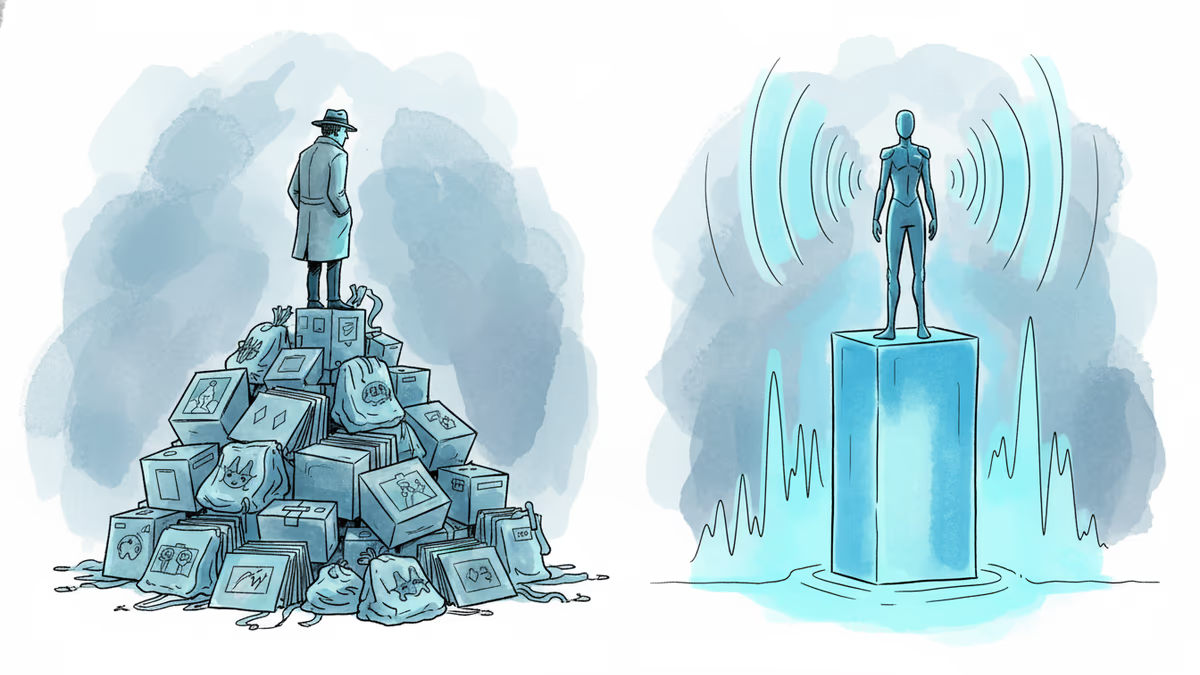
NMIXX and AKMU both topped Circle Charts the week of May 10–16, but their wins reflect opposite ends of K-pop's consumption divide—fandom economy vs. general streaming.
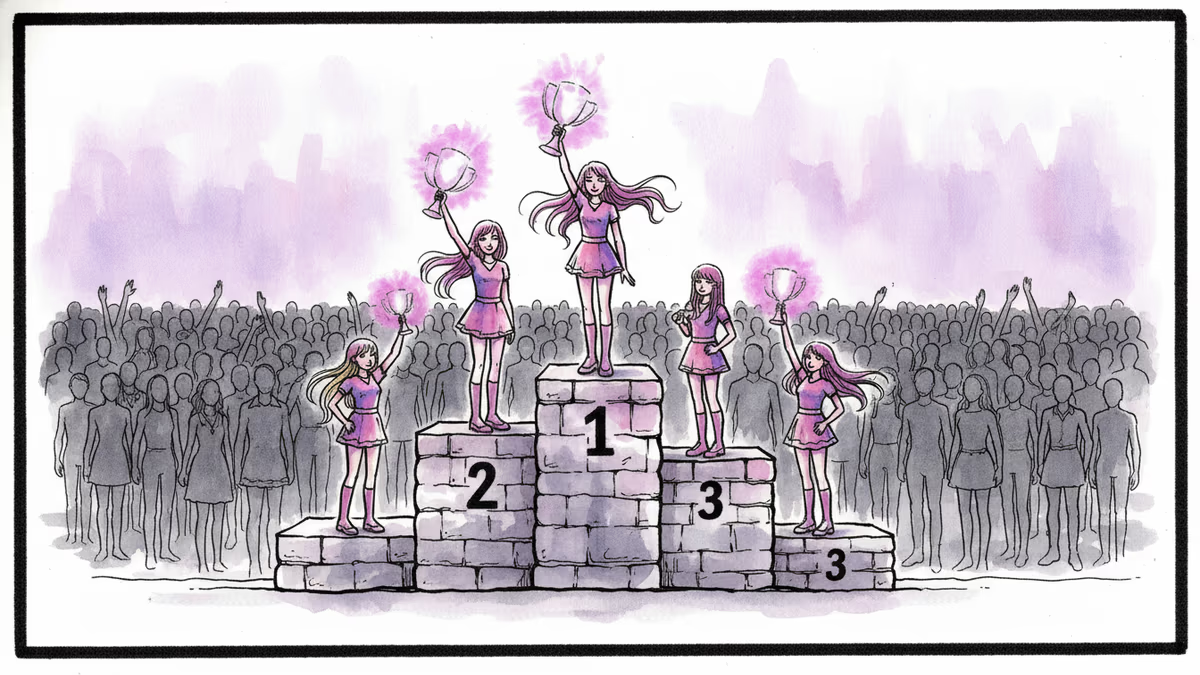
NMIXX claimed their 2nd win for 'Heavy Serenade' on Music Bank, beating ILLIT with 9,582 points. Here's what the win reveals about 4th-gen girl group competition.
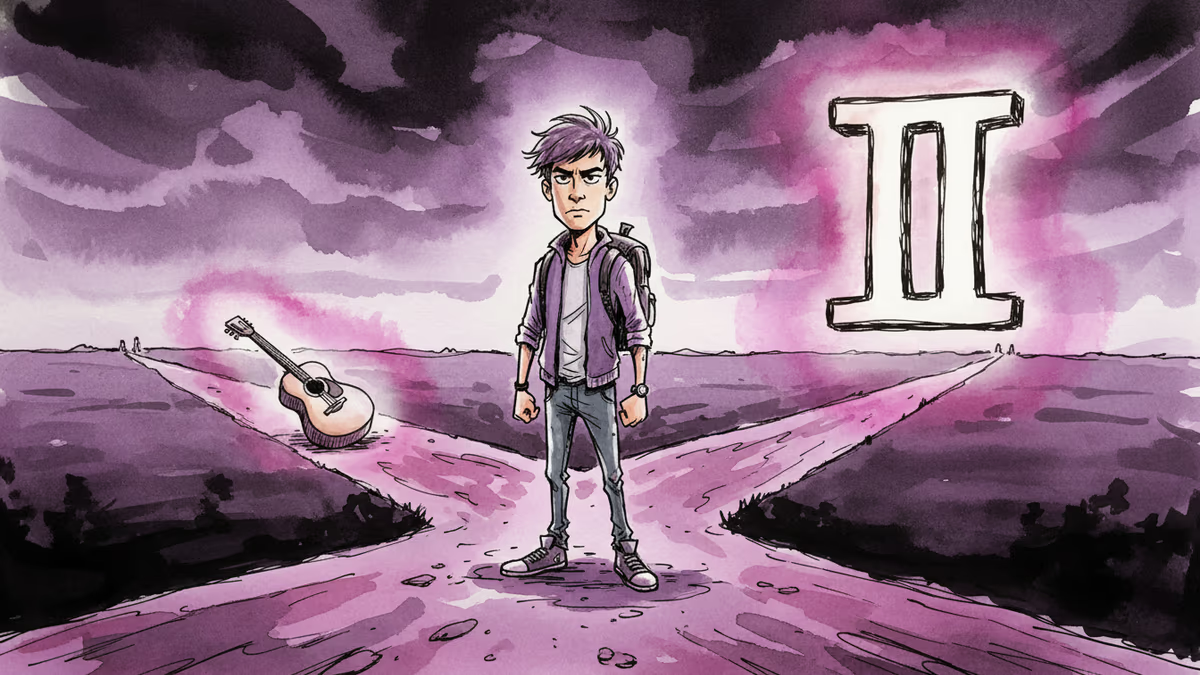
RIIZE announces mini album 'II' for June 15, 2026. Beyond the comeback, this release is a test of whether SM Entertainment's guitar-pop bet has a second chapter.
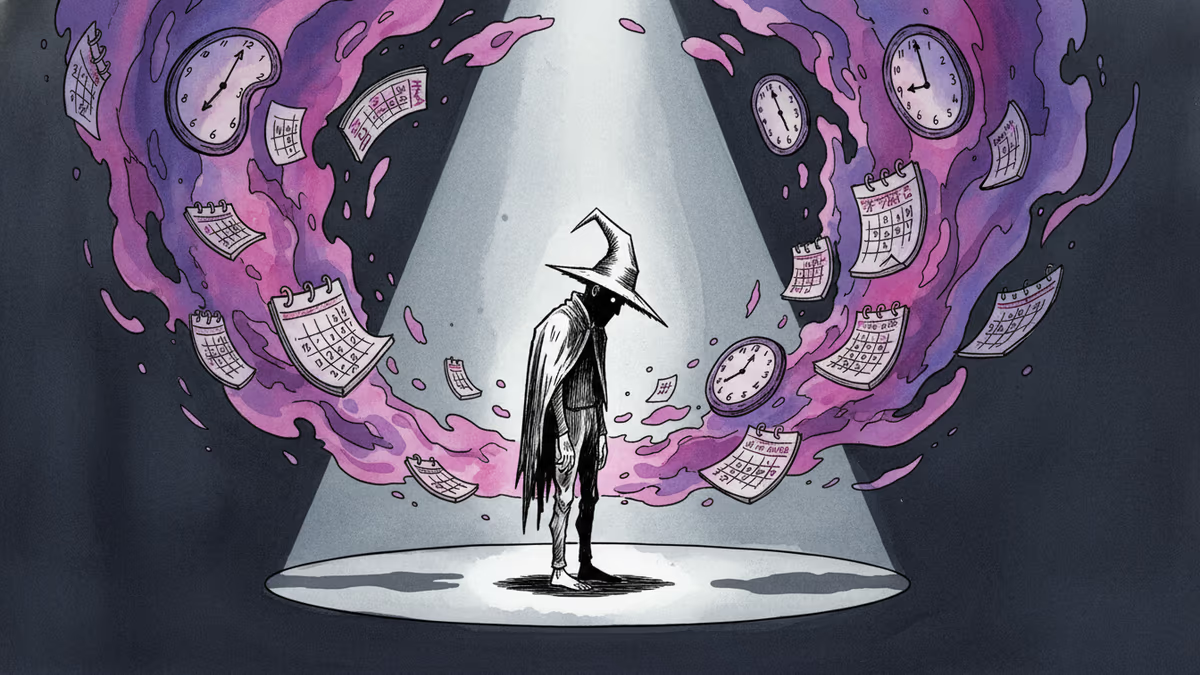
LE SSERAFIM's Kim Chaewon is taking a health break from scheduled activities. Behind SOURCE MUSIC's brief statement lies a pattern the K-pop industry rarely examines out loud.
NMIXX and AKMU both topped Circle Charts the week of May 10–16, but their wins reflect opposite ends of K-pop's consumption divide—fandom economy vs. general streaming.
NMIXX claimed their 2nd win for 'Heavy Serenade' on Music Bank, beating ILLIT with 9,582 points. Here's what the win reveals about 4th-gen girl group competition.
RIIZE announces mini album 'II' for June 15, 2026. Beyond the comeback, this release is a test of whether SM Entertainment's guitar-pop bet has a second chapter.
LE SSERAFIM's Kim Chaewon is taking a health break from scheduled activities. Behind SOURCE MUSIC's brief statement lies a pattern the K-pop industry rarely examines out loud.
Thoughts
Share your thoughts on this article
Sign in to join the conversation