

India's AI Data Center Boom Fuels Water Crisis in Host Communities
As India races to become an AI hub with a rapid data center expansion, local communities are facing a severe water crisis. An analysis of the hidden environmental and social costs.
The global race for AI dominance has a hidden cost, and it's being paid in water. As India rapidly expands its data center infrastructure to become an AI hub, local villagers are finding their wells running dry, revealing the dark side of the technology boom.
The Price of an AI Superpower
India is emerging as a key player in the global push to scale artificial intelligence, triggering a massive expansion of data centers across the nation. This surge, however, places a heavy burden on neighboring communities. According to a December 26, 2025, report, facilities like the Yotta Data Centre in Uttar Pradesh are consuming vast amounts of water, leading to severe scarcity.

When the Wells Run Dry
The direct consequence for local communities is stark. Villagers are now forced to dig deeper and deeper for water, a situation that shows the mounting stress on local resources. This highlights a growing tension between the national ambition for technological leadership and the immediate survival needs of its people.
Authors
Related Articles
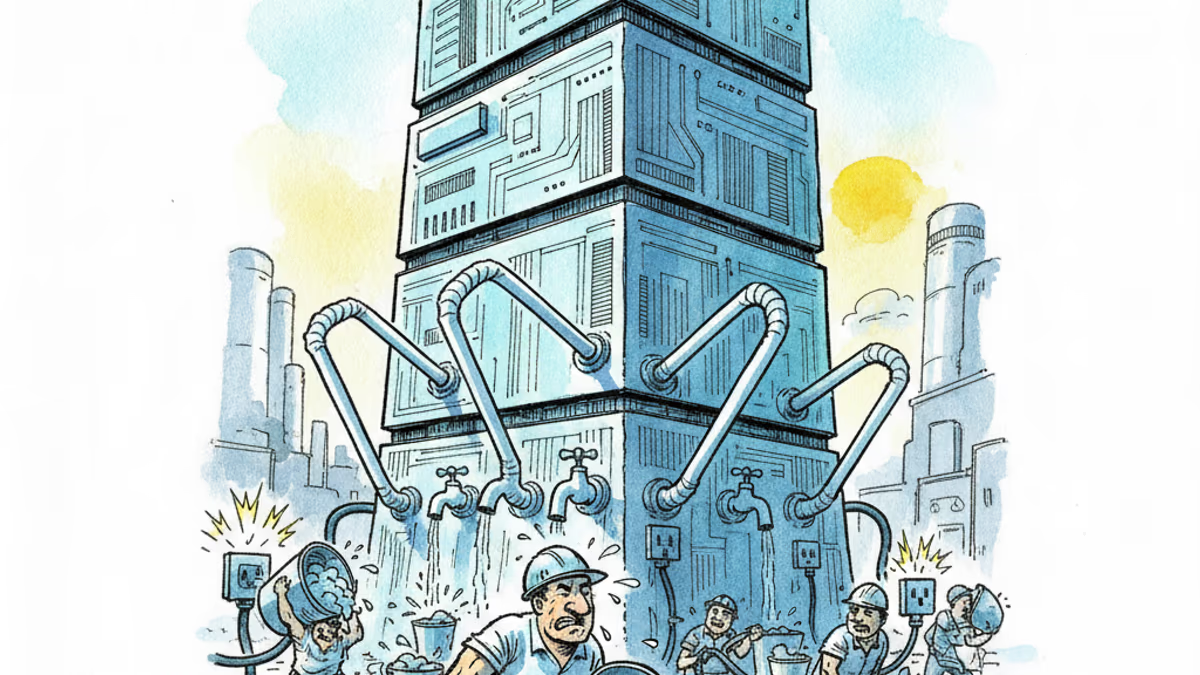
Samsung and SK unveiled a chip and AI investment package worth thousands of trillions of won on June 29. The headline number swings wildly by outlet, but the real contest isn't capital — it's water and power.

SolarSquare is raising $55-60M at a $450-500M valuation, more than doubling its worth in 18 months. Here's what's driving investor conviction in India's residential solar market.
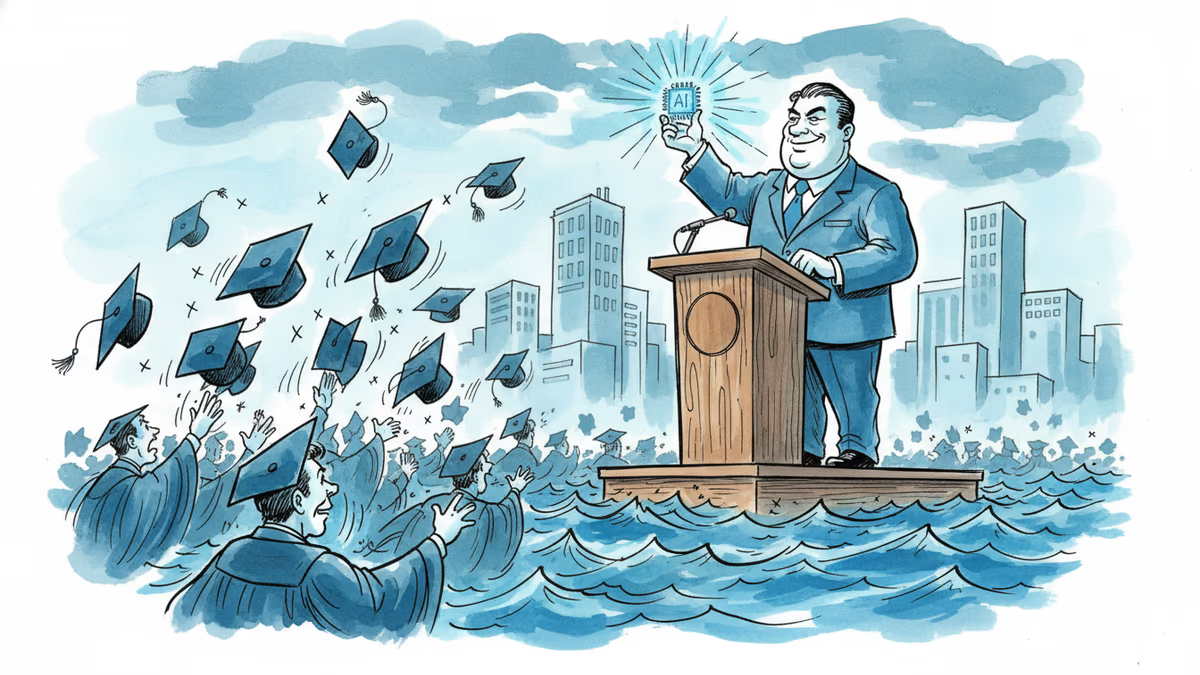
Viral videos show 2026 graduates jeering executives who praise AI at commencement ceremonies. It's not just rudeness — it's a signal about who pays for technological optimism.

Filipino virtual assistants using AI to ghost-manage LinkedIn profiles for executives is now a structured industry. 30 comments a day, fake engagement rings, and a platform struggling to tell real from fabricated.
Samsung and SK unveiled a chip and AI investment package worth thousands of trillions of won on June 29. The headline number swings wildly by outlet, but the real contest isn't capital — it's water and power.
SolarSquare is raising $55-60M at a $450-500M valuation, more than doubling its worth in 18 months. Here's what's driving investor conviction in India's residential solar market.
Viral videos show 2026 graduates jeering executives who praise AI at commencement ceremonies. It's not just rudeness — it's a signal about who pays for technological optimism.
Filipino virtual assistants using AI to ghost-manage LinkedIn profiles for executives is now a structured industry. 30 comments a day, fake engagement rings, and a platform struggling to tell real from fabricated.
Thoughts
Share your thoughts on this article
Sign in to join the conversation