
Why India's $200 Billion AI Bet Could Reshape Global Tech
India aims to attract over $200 billion in AI infrastructure investment within two years, building on $70 billion already committed by US tech giants. Can this ambitious push make India the world's next AI superpower?
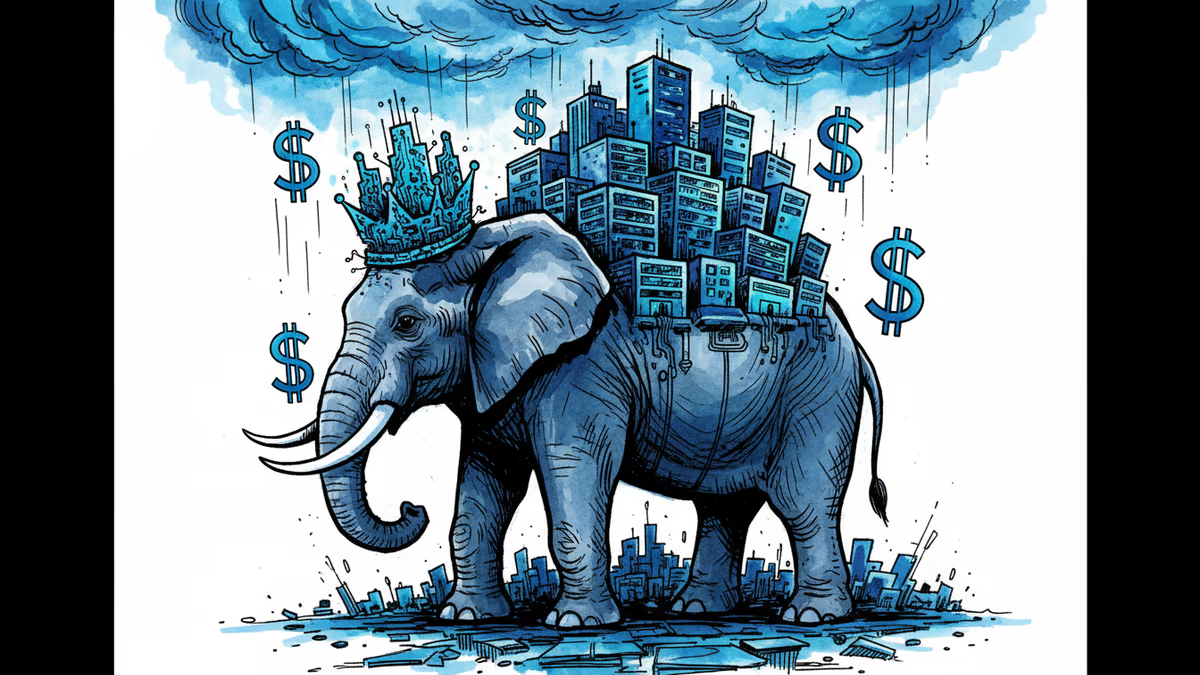
$200 billion in two years. That's India's audacious target for AI infrastructure investment, announced Tuesday by IT Minister Ashwini Vaishnaw at New Delhi's AI Impact Summit. To put this in perspective, it's roughly equivalent to Netflix's entire market cap—except India wants to spend it on becoming the world's AI computing hub.
The announcement wasn't made in isolation. Senior executives from OpenAI, Google, and Anthropic sat in the audience, representing companies that have already helped validate India's thesis with real money.
The Foundation Is Already There
India's confidence stems from momentum already building. US tech giants including Amazon, Google, and Microsoft have committed approximately $70 billion to expand AI and cloud infrastructure in the country. That's 35% of the $200 billion target already secured before the official push even began.
But India isn't just chasing infrastructure dollars. Vaishnaw outlined plans for an additional $17 billion in deep-tech and AI applications investment, signaling ambitions beyond being merely a data center destination. The country wants to capture the entire AI value chain—from chips to applications.
The Carrot and Stick Approach
To sweeten the deal, India's rolling out a comprehensive incentive package: long-term tax relief for export-oriented cloud services, a $1.1 billion government-backed venture program targeting high-risk AI ventures, and extended startup benefits. Deep-tech companies now qualify as startups for 20 years instead of the previous shorter periods.

The government is also expanding shared compute capacity under the IndiaAI Mission, adding 20,000 GPUs to the existing 38,000 units. This democratization of AI computing resources could level the playing field for smaller players who can't afford their own infrastructure.
The Execution Challenge
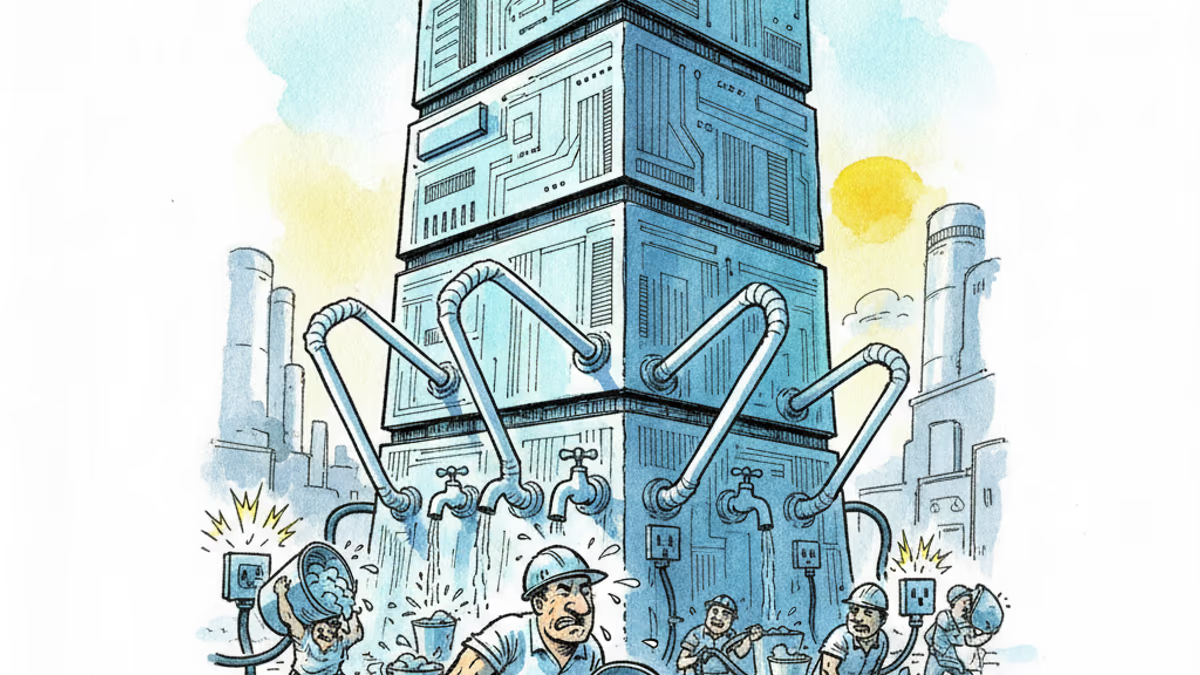
Ambition meets reality in India's infrastructure constraints. AI data centers are notoriously power-hungry and water-intensive. While Vaishnaw pointed to India's energy mix—with over half of installed capacity from clean sources—as an advantage, the practical challenges of scaling power and water infrastructure alongside AI computing capacity remain formidable.
The timeline adds another layer of complexity. India is essentially trying to compress years of infrastructure development into a much shorter window, creating execution risks that could derail even the best-laid plans.
Global Stakes
This isn't just about India's technological ambitions. As AI computing costs rise and capacity constraints tighten globally, companies are desperately seeking alternatives to concentrated infrastructure in the US and China. India's push comes at a moment when geographic diversification of AI infrastructure has shifted from nice-to-have to strategic necessity.
The geopolitical implications are equally significant. If successful, India could emerge as a third pole in AI infrastructure, breaking the current US-China duopoly. For global tech companies, this represents both opportunity and complexity—another major market to navigate, but also potential leverage against existing providers.
The next two years will reveal whether India's ambitious timeline is achievable—or whether the gap between AI aspirations and infrastructure reality proves too wide to bridge.
Authors
Related Articles
Samsung and SK unveiled a chip and AI investment package worth thousands of trillions of won on June 29. The headline number swings wildly by outlet, but the real contest isn't capital — it's water and power.

SolarSquare is raising $55-60M at a $450-500M valuation, more than doubling its worth in 18 months. Here's what's driving investor conviction in India's residential solar market.

Viral videos show 2026 graduates jeering executives who praise AI at commencement ceremonies. It's not just rudeness — it's a signal about who pays for technological optimism.

Google's Gmail Live lets you ask your inbox questions out loud. Announced at I/O 2026, it's AI's pitch to skeptics — and a reminder of how much Google already knows about you.
Samsung and SK unveiled a chip and AI investment package worth thousands of trillions of won on June 29. The headline number swings wildly by outlet, but the real contest isn't capital — it's water and power.
SolarSquare is raising $55-60M at a $450-500M valuation, more than doubling its worth in 18 months. Here's what's driving investor conviction in India's residential solar market.
Viral videos show 2026 graduates jeering executives who praise AI at commencement ceremonies. It's not just rudeness — it's a signal about who pays for technological optimism.
Google's Gmail Live lets you ask your inbox questions out loud. Announced at I/O 2026, it's AI's pitch to skeptics — and a reminder of how much Google already knows about you.
Thoughts
Share your thoughts on this article
Sign in to join the conversation