
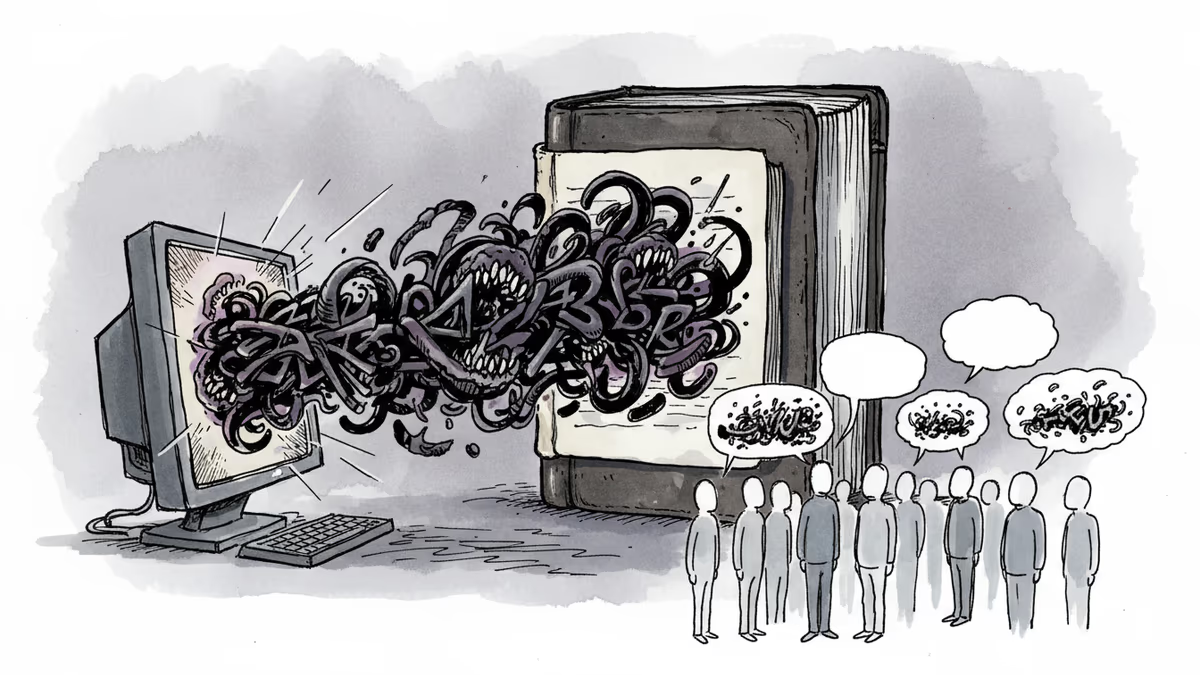
How Incel Slang Hijacked Mainstream Language
From corporate boardrooms to casual conversations, misogynistic terminology has quietly infiltrated everyday discourse. How did hate speech become hashtag material?
The Day "Friction-Maxxing" Made Headlines
When The Cut declared "friction-maxxing" a lifestyle trend at the start of 2026, most readers didn't blink. The concept—intentionally adding inconvenience to over-digitized lives—seemed reasonable enough. But the casual use of "-maxxing" as a suffix in mainstream media revealed something unsettling: incel terminology had fully infiltrated everyday language.
The word comes from the involuntarily celibate online ecosystem, where bitter men use clinical jargon to "insulate, isolate, and identify themselves through in-group codespeak." So how did their loaded vocabulary become so... normal?
From Gamergate to Your Group Chat
Slang has always been viral, but 2014's Gamergate marked a linguistic turning point. The harassment campaign against women in gaming exposed a vein of reactionary anger that would later fuel Trump's 2016 campaign. More importantly, it introduced mainstream internet users to the "trollish nihilism" of toxic message boards like 4chan and the PSL community—PUAHate, SlutHate, and Lookism.
Lookism, the sole survivor of this trifecta, likely birthed the first "-maxxing" verb: "looksmaxxing." Borrowed from RPG "min-maxing," it describes attempts to improve appearance for sexual success—from simple style changes to "bonesmashing" (literally tapping your jaw with a hammer for better definition).
The building blocks multiplied: Chad (ideal male), Gigachad (Chad among Chads), mogging (displaying physical superiority), and foids (derogatory term for women). Soon, you could "maxx" anything—"jestermaxxing" (seduction through humor), "moneymaxxing" (wealth accumulation), "gymmaxxing" (hardcore fitness). Men could "heightmog," "hairmog," or "framemog" their rivals.
The Clavicular Effect

Clavicular—a 20-year-oldKick streamer named Braden Peters—recently accelerated this linguistic spread. He openly abuses steroids and methamphetamine, associates with white nationalists and alleged human traffickers, and charges $49 for a "radicalizing academy" teaching young men to "ascend."
Yet the entire conversation around him derives from absurd captions like "Clavicular got brutally frame mogged by a frat leader" and "Clavicular was mid jestergooning when foids spiked his cortisol levels." These trigger phrases have activated social media masses, making sentences like "Trump brutally lawmogged by SCOTUS for tariffmaxxing" actually comprehensible to the "irony-poisoned commentariat."
The Normalization Machine
What's particularly disturbing is that Clavicular isn't technically an incel—his access to women makes him aspirational to those without it. He's an "incel-ebrity" steeped in their logic while transcending their condition. The artificial nature of his saga, complete with "Chad leaderboards" and bizarre side characters, forces engagement with content better left ignored.
TikTok and Twitter algorithms amplify these terms through "engagement bait"—users ironically adopting incel language for comedic effect, unknowingly normalizing its underlying worldview. A 2025 study found that 73% of Gen Z users couldn't identify the origins of terms like "mogging" or "Chad," despite using them regularly.
Corporate America Gets "Mogged"
The linguistic infiltration extends beyond social media. Marketing agencies now use "Chad energy" in brand campaigns. LinkedIn influencers discuss "career-maxxing." Even academic papers reference "optimization behaviors" that mirror incel terminology without acknowledgment.
This sanitization process strips away context while preserving harmful frameworks. When we "jokingly" adopt language that reduces human interaction to hierarchical competition, we unconsciously internalize its assumptions about worth, success, and relationships.
Authors
Related Articles
Snap, YouTube, and TikTok settled a landmark school district lawsuit over social media addiction. With 1,000+ similar cases pending, this could reshape Big Tech's liability landscape.
New Mexico already won $375 million from Meta. Now it wants something harder to give: a court order forcing Facebook, Instagram, and WhatsApp to redesign themselves. A three-week trial starts Monday.
A small pro-Iran team is racking up millions of views with AI-generated Lego videos that mock Trump — and Americans are sharing them. What does that tell us about information warfare?
Reddit CEO Steve Huffman announced human verification for suspicious accounts. As AI bots flood the internet, one platform is drawing a line — but the line keeps moving.
Snap, YouTube, and TikTok settled a landmark school district lawsuit over social media addiction. With 1,000+ similar cases pending, this could reshape Big Tech's liability landscape.
New Mexico already won $375 million from Meta. Now it wants something harder to give: a court order forcing Facebook, Instagram, and WhatsApp to redesign themselves. A three-week trial starts Monday.
A small pro-Iran team is racking up millions of views with AI-generated Lego videos that mock Trump — and Americans are sharing them. What does that tell us about information warfare?
Reddit CEO Steve Huffman announced human verification for suspicious accounts. As AI bots flood the internet, one platform is drawing a line — but the line keeps moving.
Thoughts
Share your thoughts on this article
Sign in to join the conversation