
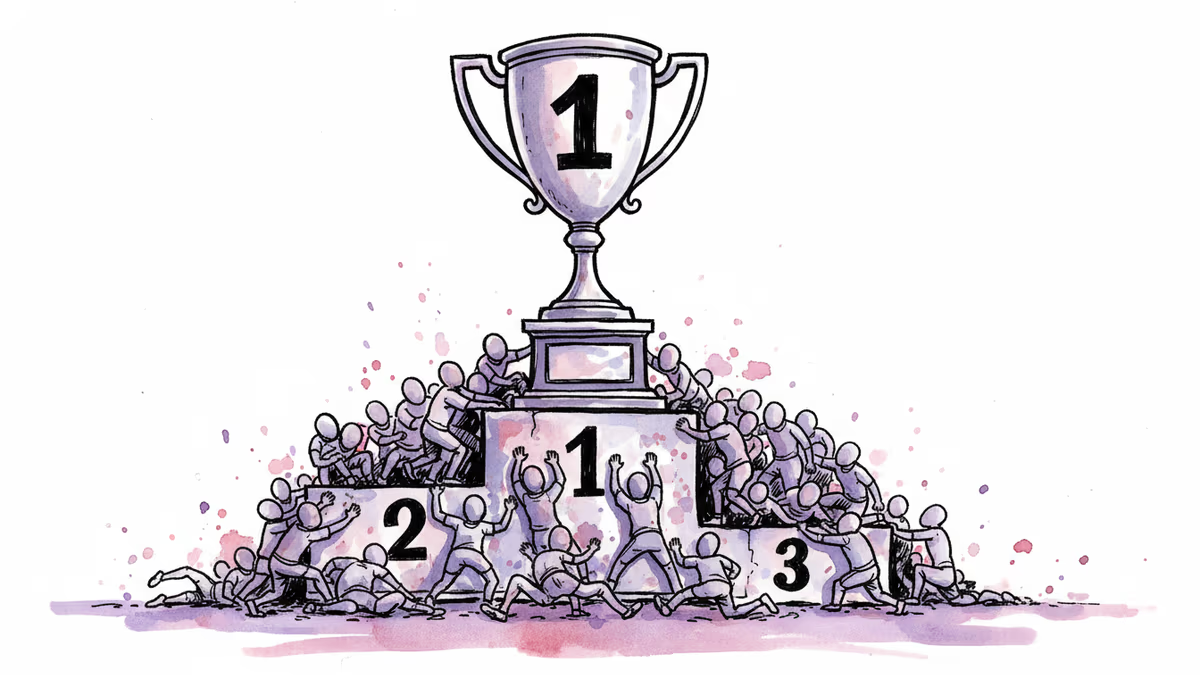
BTS Tops Again — But the Real Story Is Below Them
Korea Business Research Institute's May 2026 idol brand reputation rankings keep BTS at #1. But the data below the top spot reveals more about K-pop's shifting power structures than the headline number.
Every month, a South Korean research institute publishes a number that fan communities treat like a report card — and that entertainment executives quietly use as a negotiating chip.
The Korea Business Research Institute released its May 2026 idol group brand reputation rankings this week, covering big data collected between April 14 and May 14. The methodology scores groups across four axes: consumer participation, media coverage, community awareness, and interaction indexes. BTS held the top spot. Again.
Why the #1 Result Isn't the Interesting Part
That BTS remains at the summit is, by now, structurally predictable. Most members are completing or have recently completed mandatory military service, meaning the group has had limited active output. Yet the brand index barely flinches. This is less a testament to any specific promotional push and more a demonstration of what brand theorists call threshold inertia — the point at which an IP accumulates enough cultural mass that it sustains visibility without continuous content injection.
HYBE has built its entire multi-label business model around this logic. The BTS brand functions as a permanent anchor that keeps the parent company's valuation floor elevated even during fallow periods. With a full-group comeback expected later in 2026, the more analytically interesting question isn't whether BTS will top the charts — it's whether the return will produce a measurable spike or simply confirm that the brand was never really dormant to begin with.
The 2–5 Bracket Is Where Strategy Gets Tested

Below the top position, the rankings become a live stress test of competing label strategies. The April 14–May 14 window coincided with aespa's ongoing world tour dates, BLACKPINK member solo activities, and SEVENTEEN's North American schedule — creating unusual density in the mid-tier competition.
SM Entertainment's approach with aespa centers on lore-driven IP expansion: the group's brand score benefits from sustained narrative engagement across social platforms, not just music releases. YG Entertainment, by contrast, has distributed BLACKPINK's brand across individual member activations, which maintains aggregate visibility even when the full group isn't promoting together. HYBE's multi-label structure means groups like TOMORROW X TOGETHER and ENHYPEN are building independent brand equity that doesn't depend on proximity to the BTS flagship.
These aren't just fan preference differences. They represent divergent bets on what sustains a K-pop brand across a three-to-five year commercial cycle — world-building, solo star development, or portfolio diversification.
What This Index Actually Measures (and What It Doesn't)
The brand reputation index carries real-world weight: it's referenced in advertising contract negotiations, brand ambassador discussions, and licensing conversations with overseas distributors. When a mid-tier group from a smaller agency breaks into the top ten, it functions as a market signal for investors and potential label partners — a dynamic that partly explains why agencies like Belift Lab and Pledis became attractive acquisition targets for HYBE.
But the methodology has a structural tilt. Groups with highly organized, mobilized fandoms score disproportionately on the community awareness and interaction indexes. A group with critical acclaim but a smaller or less coordinated fanbase will consistently underperform relative to its cultural footprint. Critics of the index argue it measures fandom mobilization capacity more than brand health in any meaningful commercial sense — which raises the question of whether it's a leading indicator of market performance or a lagging reflection of existing fandom size.
This content is AI-generated based on source articles. While we strive for accuracy, errors may occur. We recommend verifying with the original source.
Related Articles
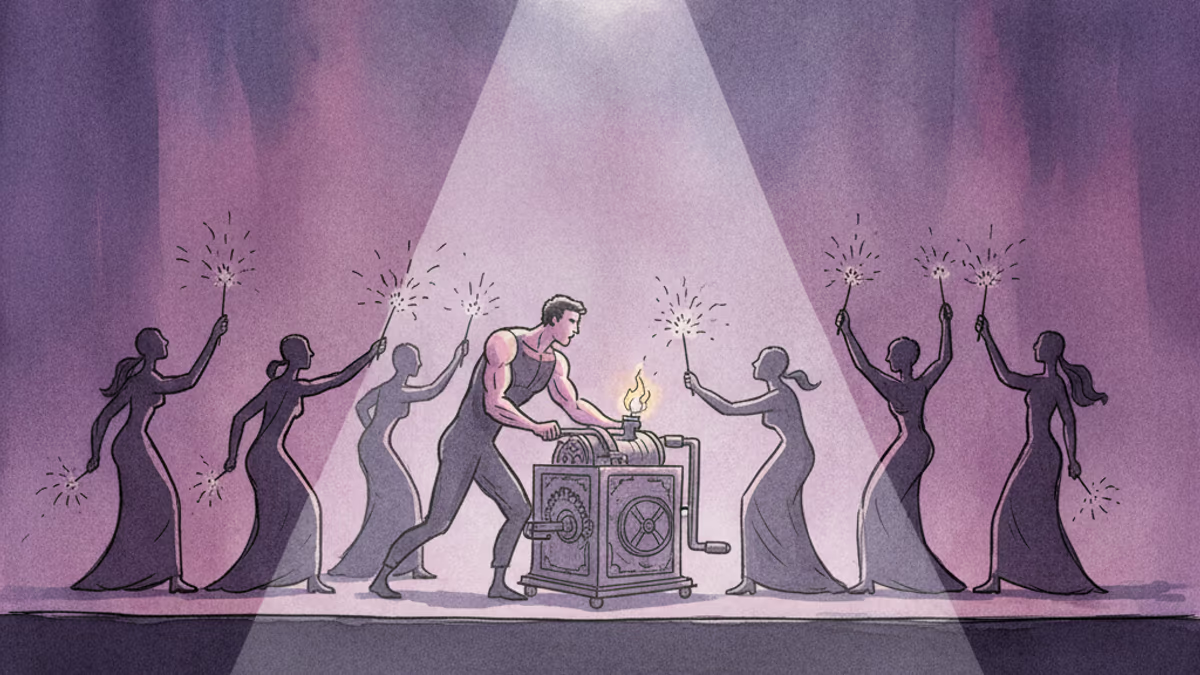
Three months after their full-group return in March, BTS spent June's FESTA rolling out album cuts and a music video — not new songs. Come Over cracked a global top 5 with zero new music behind it. Did the play work?
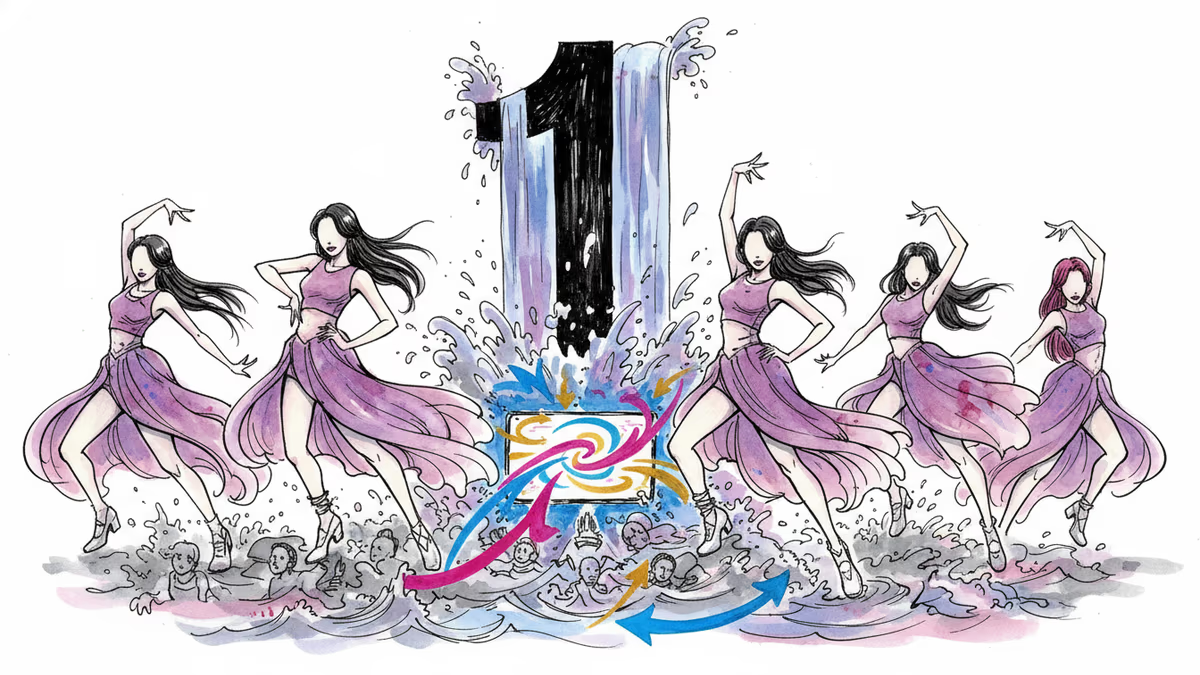
PRISM Trend Pipeline caught LE SSERAFIM's YouTube KR trending peak. Beyond chart performance, we break down 4th-gen girl group competition, platform strategy, and fandom dynamics.
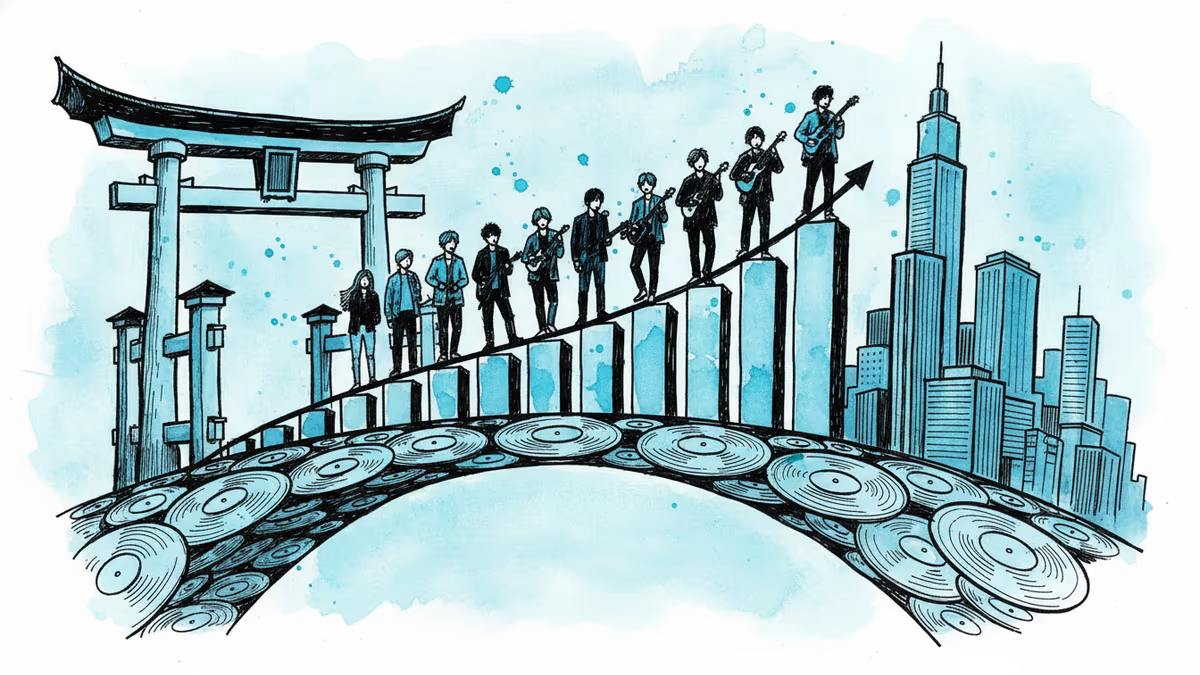
&TEAM's 'We on Fire' debuted on the Billboard 200 for the first time. Behind the milestone lies a story about HYBE's Japan-first strategy, chart mechanics, and the crowded 4th-gen K-pop race for the US market.

BABYMONSTER announces digital single 'SUGAR HONEY ICE TEA' for June 8. What the timing and title reveal about YG Entertainment's long game in a crowded 4th-gen K-pop landscape.
Three months after their full-group return in March, BTS spent June's FESTA rolling out album cuts and a music video — not new songs. Come Over cracked a global top 5 with zero new music behind it. Did the play work?
PRISM Trend Pipeline caught LE SSERAFIM's YouTube KR trending peak. Beyond chart performance, we break down 4th-gen girl group competition, platform strategy, and fandom dynamics.
&TEAM's 'We on Fire' debuted on the Billboard 200 for the first time. Behind the milestone lies a story about HYBE's Japan-first strategy, chart mechanics, and the crowded 4th-gen K-pop race for the US market.
BABYMONSTER announces digital single 'SUGAR HONEY ICE TEA' for June 8. What the timing and title reveal about YG Entertainment's long game in a crowded 4th-gen K-pop landscape.
Thoughts
Share your thoughts on this article
Sign in to join the conversation