
BTS Hits Quadruple Million—But What Does That Number Actually Count?
BTS earns Circle Chart's Quadruple Million certification while P1Harmony, HUNTR/X, and DK go Platinum. A look at what K-pop's certification numbers really measure in 2026.
Four million copies. In an era when a chart-topping Western album might sell a fraction of that, the number sounds almost fictional. But the story behind BTS's latest Circle Chart Quadruple Million certification is less about musical dominance and more about how K-pop quietly reinvented what an "album sale" means.
Circle Chart (formerly Gaon Chart), South Korea's official music chart authority, has released its latest certification batch. BTS has been awarded a Quadruple Million certification for cumulative album sales exceeding 4 million units. In the same batch, P1Harmony, rookie group HUNTR/X, and DK (of SEVENTEEN) each received Platinum status. The certification system, introduced by the Korea Music Content Industry Association in 2018, applies to releases from January 1 of that year onward, with Platinum set at 1 million units and Million certifications stacking in increments of 1 million.
The System Built for a New Kind of Fan
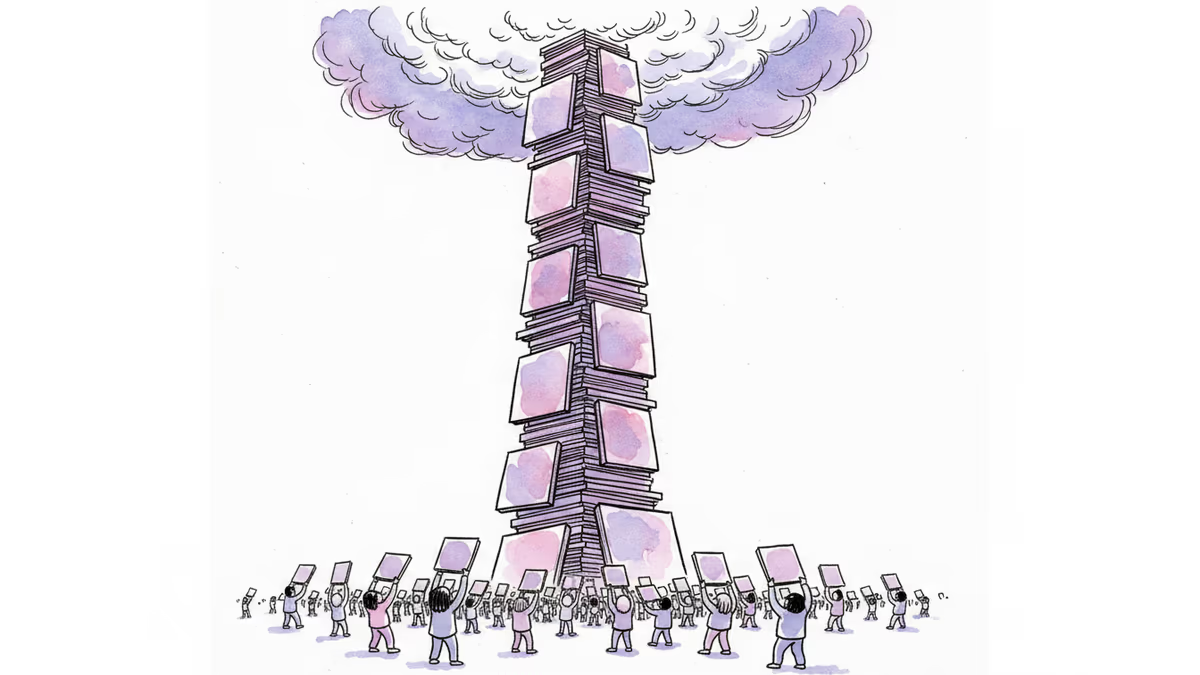
The year 2018 wasn't chosen arbitrarily. It coincided almost precisely with the moment K-pop albums stopped being primarily music delivery vehicles and became something closer to collectible fan participation kits. BTS's LOVE YOURSELF series was mid-run. Random photo cards, multiple versions, fan sign event entry coupons—all of it packaged inside a single album purchase. The incentive to buy the same release five, ten, or thirty times was baked into the product design.
The result was a structural inflation of "sales" that has no real parallel in Western music markets. By the early 2020s, BTS, SEVENTEEN, and Stray Kids were regularly moving 1–2 million units within a week of release. The Quadruple Million BTS just certified is the compounded total of that era's purchasing logic.
What the Platinum Tier Reveals

The more instructive data points in this certification batch may actually be the Platinum recipients. P1Harmony is signed to FNC Entertainment—not one of the industry's dominant three (HYBE, SM, JYP/YG). A mid-tier agency group reaching Platinum-adjacent sales in 2026 signals that concentrated fandom purchasing power has diffused well beyond the top labels. The infrastructure of K-pop fan culture—streaming parties, bulk buying campaigns, chart support servers—now operates at scale for groups that would have been considered niche five years ago.
DK's Platinum as a soloist running parallel to SEVENTEEN's group activities is a different kind of signal. It confirms that the multi-unit and solo-project model—where a group member's individual release adds revenue without cannibalizing the main act's fanbase—has matured into a reliable business strategy rather than an experiment. Labels can now forecast solo Platinum with reasonable confidence if the parent group has an established fandom.
HUNTR/X is the least-known name in this batch, and that's precisely why it matters. A group with a smaller public profile reaching Platinum demonstrates that K-pop's certification numbers are increasingly a measure of fandom intensity, not mainstream reach.
The Number and Its Discontents
None of this is to diminish what BTS has built. But the certification system itself is facing quiet scrutiny from within the industry. In 2025, several major labels—including HYBE—began experimenting with simplified album formats, reduced version counts, and digital photo card systems. Fan communities had grown vocal about what some described as engineered purchasing pressure. The implicit contract between fan devotion and album design was being renegotiated.
The tension is structural: Circle Chart certifications are based on units shipped and sold, not unique listeners. In a streaming-dominant global market, a 4-million-unit certification and a 4-billion-stream milestone measure genuinely different things. Western industry observers tracking K-pop's commercial performance often conflate the two, which distorts the picture of how deeply an artist has actually penetrated a market versus how intensely their existing fanbase has mobilized.
This content is AI-generated based on source articles. While we strive for accuracy, errors may occur. We recommend verifying with the original source.
Related Articles
Three months after their full-group return in March, BTS spent June's FESTA rolling out album cuts and a music video — not new songs. Come Over cracked a global top 5 with zero new music behind it. Did the play work?
PRISM Trend Pipeline caught LE SSERAFIM's YouTube KR trending peak. Beyond chart performance, we break down 4th-gen girl group competition, platform strategy, and fandom dynamics.
NMIXX and AKMU both topped Circle Charts the week of May 10–16, but their wins reflect opposite ends of K-pop's consumption divide—fandom economy vs. general streaming.
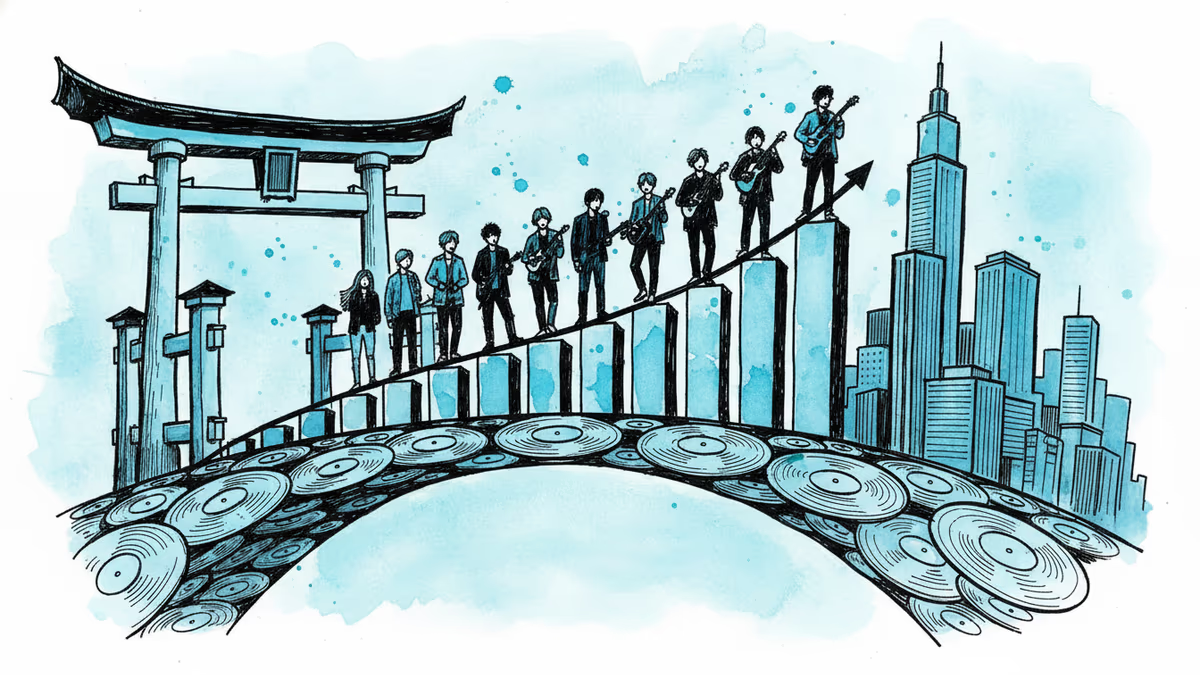
&TEAM's 'We on Fire' debuted on the Billboard 200 for the first time. Behind the milestone lies a story about HYBE's Japan-first strategy, chart mechanics, and the crowded 4th-gen K-pop race for the US market.
Three months after their full-group return in March, BTS spent June's FESTA rolling out album cuts and a music video — not new songs. Come Over cracked a global top 5 with zero new music behind it. Did the play work?
PRISM Trend Pipeline caught LE SSERAFIM's YouTube KR trending peak. Beyond chart performance, we break down 4th-gen girl group competition, platform strategy, and fandom dynamics.
NMIXX and AKMU both topped Circle Charts the week of May 10–16, but their wins reflect opposite ends of K-pop's consumption divide—fandom economy vs. general streaming.
&TEAM's 'We on Fire' debuted on the Billboard 200 for the first time. Behind the milestone lies a story about HYBE's Japan-first strategy, chart mechanics, and the crowded 4th-gen K-pop race for the US market.
Thoughts
Share your thoughts on this article
Sign in to join the conversation