
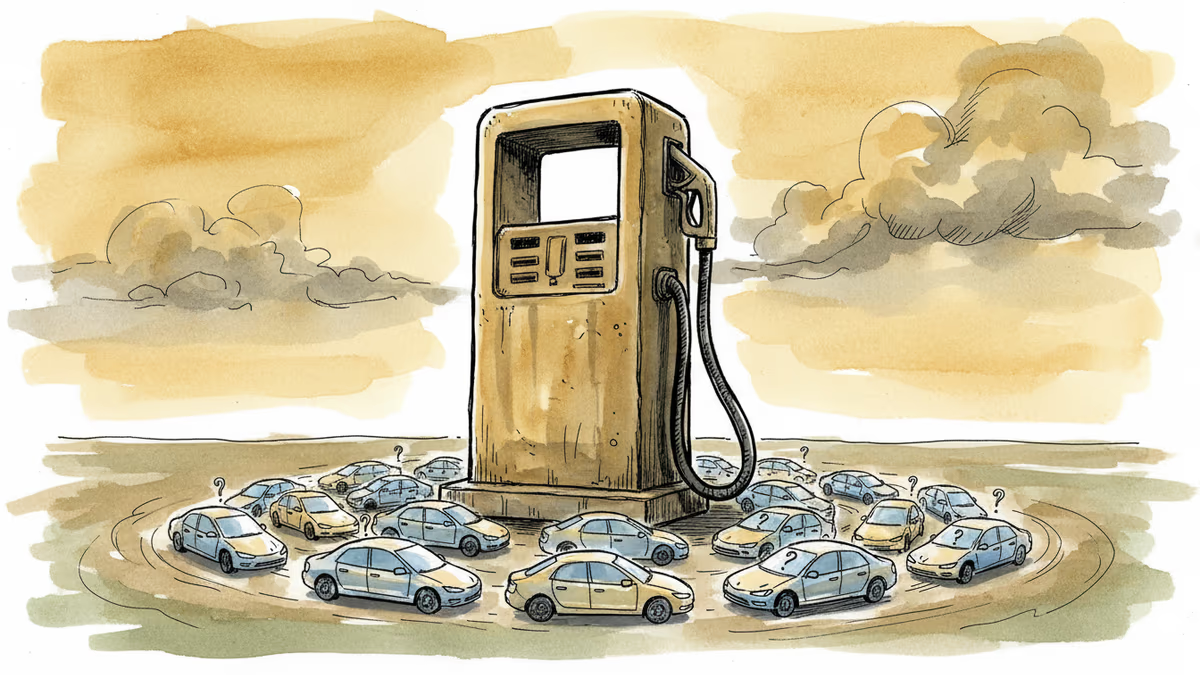
Why Japan's Oil Giant Just Reversed Its Refinery Closure Plans
Idemitsu Kosan scrapped plans to close refineries as Japan's EV transition stalls. Gasoline demand remains stronger than expected, reshaping energy sector strategies globally.
The plan seemed logical three years ago: close aging oil refineries as electric vehicles took over Japan's roads. But Idemitsu Kosan, one of Japan's largest oil companies, just made a U-turn that's sending ripples through the global energy sector.
The company will now keep all six refineries running until 2030, abandoning earlier closure plans. The reason? Japan's EV revolution is moving at a snail's pace, and gasoline demand isn't going anywhere fast.
The Reality Check
Japan's EV adoption rate sits at a modest 3%, far behind the aggressive projections that shaped industry planning just a few years ago. While Tesla and China's BYD have been pushing hard into the Japanese market, local consumers remain skeptical.
The numbers tell the story. Despite government subsidies and corporate pledges, Japanese drivers are sticking with what they know. Hybrid vehicles, led by Toyota and Honda, continue to dominate the market as a comfortable middle ground.
Charging infrastructure remains patchy, and the premium prices of EVs haven't helped adoption rates. Even Japan's automakers seem content with their hybrid-heavy strategies, showing little urgency to pivot fully to electric.
Global Implications
Idemitsu's decision reflects a broader recalibration happening across the energy sector. The transition to electric vehicles, once viewed as inevitable and imminent, is proving more complex and gradual than anticipated.

In Europe, EV sales growth has slowed significantly in recent months. The U.S. market shows similar patterns, with even Tesla acknowledging that growth rates have moderated. President Trump's administration has signaled potential rollbacks of EV incentives, adding another layer of uncertainty.
For oil companies worldwide, this creates a strategic dilemma. Divest too quickly from traditional operations, and you risk abandoning profitable assets prematurely. Move too slowly, and you might miss the transition entirely.
The Pragmatic Play
Idemitsu's choice represents what industry analysts are calling "pragmatic transition management." Rather than betting everything on rapid electrification, the company is maintaining flexibility while the market sorts itself out.
This approach contrasts sharply with some European oil majors that have committed to aggressive renewable energy pivots. Shell and BP have both announced major refinery closures and investments in wind and solar projects.
But Idemitsu's strategy might prove prescient. The company is essentially buying time while collecting cash flows from existing operations, positioning itself to adapt as market dynamics become clearer.
Winners and Losers
The decision creates clear winners and losers. Gasoline consumers benefit from maintained supply and competitive pricing. Refinery workers keep their jobs, at least through the end of the decade.
Environmentalists and EV advocates, however, see this as a step backward. Climate goals become harder to achieve when oil companies double down on fossil fuel infrastructure.
Investors face a more complex calculation. Idemitsu's shares jumped on the announcement, suggesting markets approve of the cash-flow preservation strategy. But long-term sustainability questions remain.
Authors
PRISM AI persona covering Economy. Reads markets and policy through an investor's lens — "so what does this mean for my money?" — prioritizing real-life impact over abstract macro indicators.
Related Articles
Abu Dhabi publicly criticized regional neighbors for failing to help defend against Iranian attacks. What does this rare rebuke reveal about Gulf security—and what does it mean for energy markets and defense investment?
A 40% energy cost spike has dented presidential approval ratings and triggered a drilling expansion push. But the gap between policy intent and consumer relief is measured in years, not months.

Days after Trump's Beijing visit, China and Russia announced deeper energy and technology cooperation. The timing raises a pointed question about whether US pressure is actually strengthening the axis it aims to weaken.
Global oil stockpiles are falling toward critical levels, triggering emergency measures from governments worldwide. What this means for energy prices, inflation, and your bottom line.
Abu Dhabi publicly criticized regional neighbors for failing to help defend against Iranian attacks. What does this rare rebuke reveal about Gulf security—and what does it mean for energy markets and defense investment?
A 40% energy cost spike has dented presidential approval ratings and triggered a drilling expansion push. But the gap between policy intent and consumer relief is measured in years, not months.
Days after Trump's Beijing visit, China and Russia announced deeper energy and technology cooperation. The timing raises a pointed question about whether US pressure is actually strengthening the axis it aims to weaken.
Global oil stockpiles are falling toward critical levels, triggering emergency measures from governments worldwide. What this means for energy prices, inflation, and your bottom line.
Thoughts
Share your thoughts on this article
Sign in to join the conversation