
ICE Is in Your Airport Now
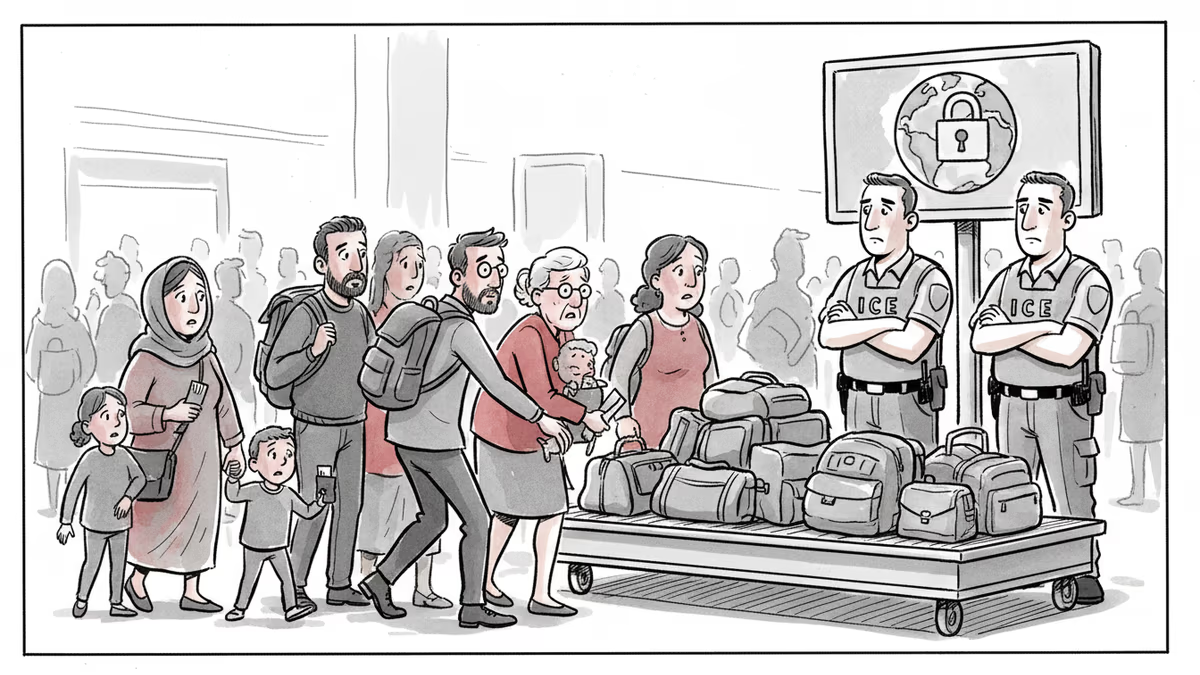
ICE agents have been deployed to 14 US airports, officially to fill TSA staffing gaps during the government shutdown. But the line between security assistance and immigration enforcement is blurring fast.
She heard the scream first.
A witness walking to her gate at San Francisco International Airport last Sunday stopped when she heard what she described as a "horrible" sound. Two men — no visible badges, no identification — were grabbing a woman who was trying to hold onto her child. Dozens of onlookers pulled out their phones. When San Francisco police arrived, they formed a wall between the crowd and the men doing the detaining. The witness asked why she could see the officers' badge numbers but not the other men's. No one answered. The police just stared ahead.
That scene is now part of a much larger story unfolding across 14 major US airports.
How ICE Ended Up at the Gate
The official explanation starts with a budget standoff. Since late January, thousands of TSA agents have gone without pay as part of a partial government shutdown. Many stopped showing up. Some quit. Security lines at major airports grew. White House border czar Tom Homan announced that ICE agents would be deployed to fill the gaps.
On the surface, it sounds administrative. ICE and TSA both fall under the Department of Homeland Security. Congress continued funding ICE through the One Big Beautiful Bill passed in 2025, even as other parts of DHS remain in funding limbo. So the argument goes: the money is there, the bodies are available, the lines are long.
But then President Trump posted on Truth Social on March 21. ICE agents, he wrote, would be doing "security like no one has ever seen before, including the immediate arrest of all Illegal Immigrants who have come into our Country, with heavy emphasis on those from Somalia." The administration has been targeting Somali American communities specifically, deploying roughly 3,000 immigration agents to Minnesota following fraud allegations at some of the state's childcare centers.
So which is it — crowd control or immigration enforcement? The White House didn't respond to requests for comment. DHS didn't answer questions about whether ICE officers would be conducting immigration actions while stationed at checkpoints.
The Skills Gap No One Wants to Talk About
Everett Kelley, president of AFGE — the union representing TSA workers — didn't mince words. "ICE agents are not trained or certified in aviation security. TSA officers spend months learning to detect explosives, weapons, and threats specifically designed to evade detection at checkpoints — skills that require specialized instruction, hands-on practice, and ongoing recertification. You cannot improvise that."

Videos circulating on social media seem to confirm the concern: ICE officers standing around airports, not screening bags, not operating equipment. DHS acting assistant secretary Lauren Bis responded to WIRED's questions by framing the deployment as Democrats' fault: "While the Democrats continue to put the safety, dependability, and ease of our air travel at risk, President Trump is taking action."
What DHS did not address: what training, if any, ICE agents received before being placed next to security screening lines. What authority they have to detain travelers. Whether the woman detained in San Francisco — in an incident the airport called "unrelated" to the wider deployment, without further explanation — had any recourse.
A Paper Trail That Predates This Weekend
This didn't come from nowhere. Last year, WIRED reported that airlines were selling passenger data to DHS. The New York Times revealed that TSA was sharing passenger information with ICE. And now ICE agents are physically present at the checkpoints where that data originates.
Connect those dots and a pattern emerges: airports are quietly becoming nodes in an immigration surveillance infrastructure, not just transportation hubs. The checkpoint isn't only checking for weapons anymore.
Senator Andy Kim, Democrat of New Jersey, put it plainly on Bluesky: "Americans don't want ICE in our airports or in our communities. We just want Republicans to agree to fund TSA so workers can be paid and these lines can go down." Newark Liberty International — in Kim's own backyard — is one of the 14 airports now hosting ICE agents.
Who's Actually Watching Whom
The stakeholders here don't agree on what's even happening, let alone whether it's appropriate.
For the Trump administration, this is a two-for-one: solve a political problem (airport chaos during a shutdown they're blamed for) while advancing an immigration enforcement agenda. Trump even asked ICE agents not to wear masks at airports — a notable reversal from the masked, unmarked-vehicle tactics used in community raids, and one that signals the administration wants this visibility.
For travelers — especially immigrants, visa holders, and people from communities the administration has explicitly named — the calculus has shifted. The airport, once a predictable if tedious gauntlet of ID checks and bag scans, now carries a different kind of uncertainty. You don't know who the men in vests are authorized to do, or whether your name appears on a list they're working from.
For aviation security professionals, the concern is practical and immediate: an agency with no explosives detection training is now standing next to the people who do that work. If something goes wrong, who's accountable?
For international observers, the US is watching its own airport system become something other countries would recognize — not as a model of open travel, but as a checkpoint state.
Authors
Related Articles
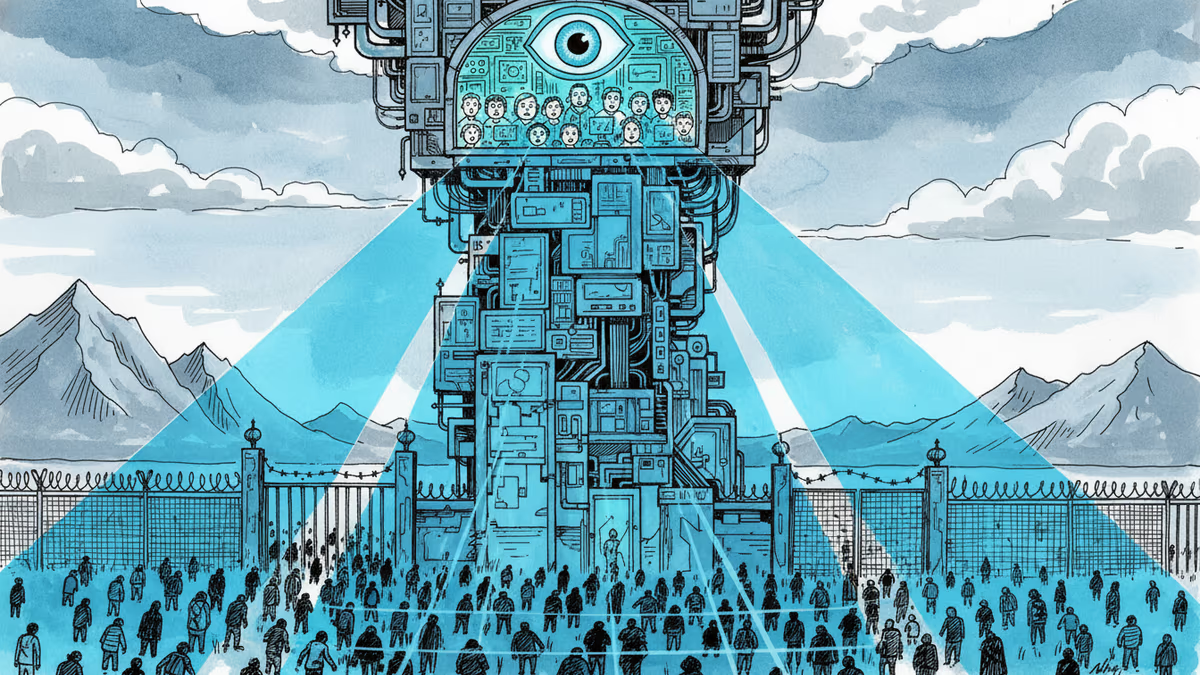
Palantir has become the tech backbone of Trump's immigration enforcement. Former employees are calling it a 'descent into fascism.' What happens when the people who build surveillance tools start asking uncomfortable questions?
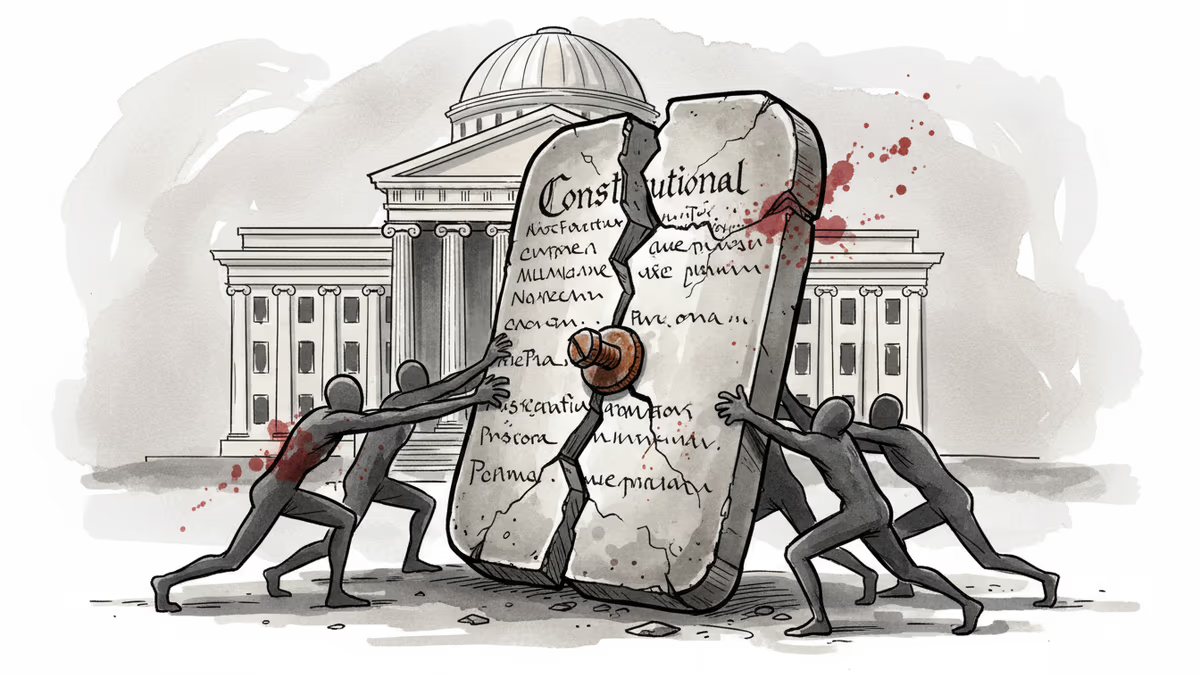
The Supreme Court heard arguments over Trump's birthright citizenship order. The justices seemed skeptical—but the fact that this case made it to the highest court signals something bigger.

Trump abruptly replaced DHS Secretary Kristi Noem after a tenure marked by record custody deaths and controversial enforcement tactics. What this means for immigration policy ahead.
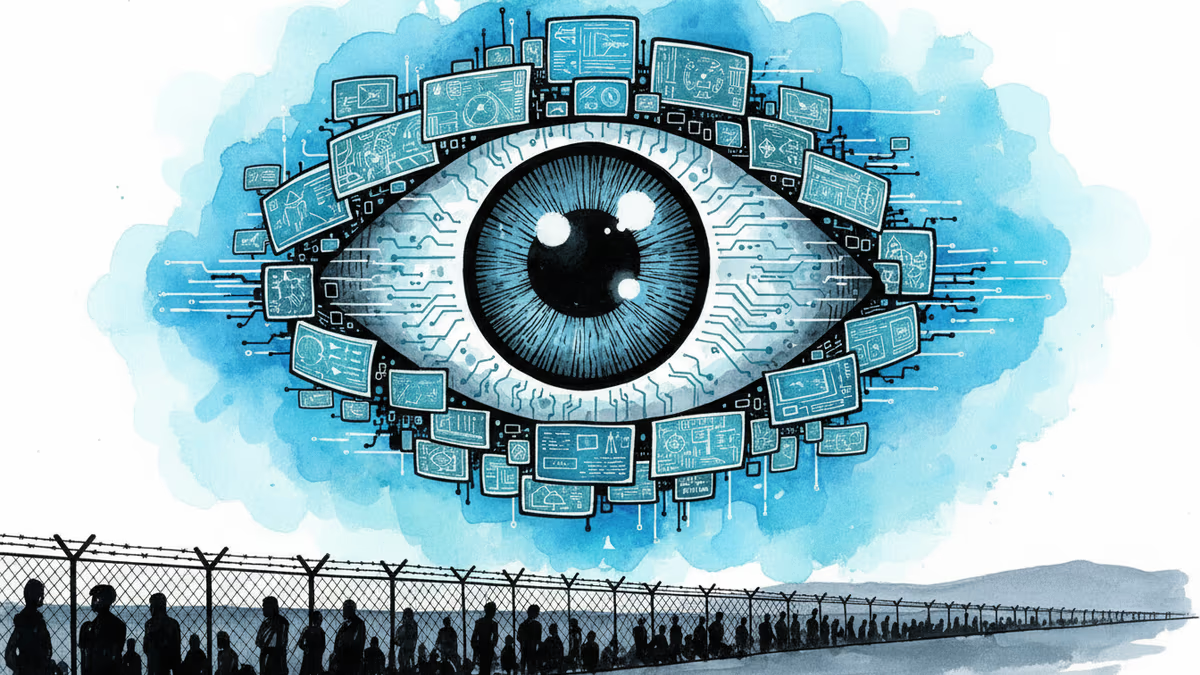
ICE and CBP have paid hundreds of millions to Palantir, Microsoft, Amazon, and Google for immigration enforcement technology. Where's the line between innovation and surveillance?
Palantir has become the tech backbone of Trump's immigration enforcement. Former employees are calling it a 'descent into fascism.' What happens when the people who build surveillance tools start asking uncomfortable questions?
The Supreme Court heard arguments over Trump's birthright citizenship order. The justices seemed skeptical—but the fact that this case made it to the highest court signals something bigger.
Trump abruptly replaced DHS Secretary Kristi Noem after a tenure marked by record custody deaths and controversial enforcement tactics. What this means for immigration policy ahead.
ICE and CBP have paid hundreds of millions to Palantir, Microsoft, Amazon, and Google for immigration enforcement technology. Where's the line between innovation and surveillance?
Thoughts
Share your thoughts on this article
Sign in to join the conversation