

Big Tech Powers America's Immigration Crackdown
ICE and CBP have paid hundreds of millions to Palantir, Microsoft, Amazon, and Google for immigration enforcement technology. Where's the line between innovation and surveillance?
$121.9 Million Tells a Story
That's what Immigration and Customs Enforcement has paid Palantir since 2023. In the same period, ICE shelled out at least $94 million to Microsoft, $51 million to Amazon, and $921,000 to Google. The numbers reveal something stark: America's immigration enforcement isn't just about agents and detention centers anymore. It's a tech-powered surveillance apparatus backed by Silicon Valley's biggest names.
Federal contracting data shows ICE and Customs and Border Protection are spending hundreds of millions on everything from cloud storage to AI analysis tools. The infrastructure powering immigration raids, deportations, and border surveillance runs on the same technology that manages your email and streams your movies.
Palantir: The Data Analysis Engine
Palantir sits at the center of this digital dragnet. Since 2014, the company has operated ICE's Investigative Case Management system, used by about 10,000 people globally. This isn't just a database—it's what DHS calls ICE's "core law enforcement case management tool."
Built on Palantir's Gotham platform, ICM stores criminal and civil case files, facilitates information-sharing with CBP, and performs "investigative research" across internal and external systems. Police departments use similar Gotham tools to search for suspects by physical traits like tattoos or scars, and to hypothesize about individuals' relationships and possible gang membership.
The company's newest creation, ELITE, takes this further. Deployed since June, the app creates on-the-spot dossiers about deportation targets, complete with a "confidence score" of whether someone might live at a specific address. AI analyzes "unstructured, hard-to-read address information" from rap sheets and warrants, feeding officers actionable intelligence in real-time.
Palantir also built tools to process tips submitted to ICE, automatically reviewing, categorizing, and translating non-English submissions. The company's FALCON environment, now retired, previously handled trade data analysis and made information from various internal databases searchable.
Microsoft, Amazon, Google: The Infrastructure Layer

While Palantir provides the analytical muscle, other tech giants supply the backbone. Microsoft's Azure cloud powers ICE's Office of the Chief Information Officer and the Office of the Principal Legal Advisor, where lawyers litigate "removal cases against criminal aliens, terrorists, and human rights abusers."
Azure also supports ICE's Homeland Security Investigations Technical Operations team, which uses "electronic surveillance devices like telephone, video, audio, tracking, radio frequency technologies" during "high-risk" criminal investigations. These daily operations run entirely on Microsoft's infrastructure.
CBP, meanwhile, has paid Amazon at least $158 million and Google$7 million for cloud services. Most purchases happen through third-party vendors like Dell Federal Systems or Four Points Technology, making it unclear whether the tech giants know exactly how their products are being used.
The 'Collect It All' Mentality
Experts warn this represents a fundamental shift toward surveillance overreach. "The overriding theme we've seen, especially over the last year, is this 'collect it all' mentality," says Jake Laperruque from the Center for Democracy and Technology. "'Let's grab as much as we can, we will find ways to use it.'"
Jeramie Scott from the Electronic Privacy Information Center points to a troubling trend: "This administration is trying to aggregate different data sources for immigration enforcement, despite the fact that information wasn't collected for that purpose. Doing that undermines trust in government."
The scope of available data has expanded dramatically. ICE now has potential access to information spanning from student records to ongoing criminal cases—all fair game for immigration enforcement under current policies.
Internal Tensions at Palantir
Even within Palantir, employees are asking uncomfortable questions. Following the recent deaths of Renee Good and Alex Pretti during an ICE operation in Minneapolis, some staff requested more information about the company's relationship with the agency.
CEO Alex Karp's response? A video that shared "very little information," according to reports. Employees wanting to learn more were told they'd need to sign NDAs first. The message was clear: company profits trump employee concerns.
Authors
Related Articles

Palantir has become the tech backbone of Trump's immigration enforcement. Former employees are calling it a 'descent into fascism.' What happens when the people who build surveillance tools start asking uncomfortable questions?

The Supreme Court heard arguments over Trump's birthright citizenship order. The justices seemed skeptical—but the fact that this case made it to the highest court signals something bigger.

ICE agents have been deployed to 14 US airports, officially to fill TSA staffing gaps during the government shutdown. But the line between security assistance and immigration enforcement is blurring fast.
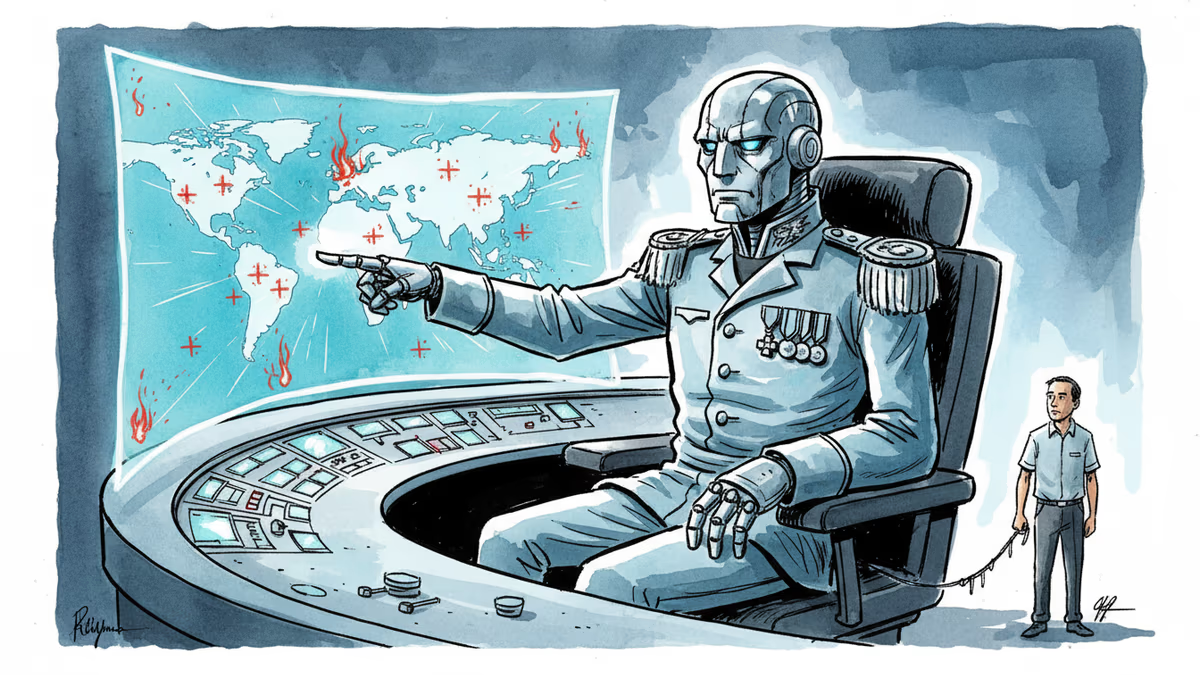
Anthropic's Claude AI is embedded in US military operations—from the capture of Maduro to the Iran war. A Pentagon dispute is exposing what "responsible AI" actually means in wartime.
Palantir has become the tech backbone of Trump's immigration enforcement. Former employees are calling it a 'descent into fascism.' What happens when the people who build surveillance tools start asking uncomfortable questions?
The Supreme Court heard arguments over Trump's birthright citizenship order. The justices seemed skeptical—but the fact that this case made it to the highest court signals something bigger.
ICE agents have been deployed to 14 US airports, officially to fill TSA staffing gaps during the government shutdown. But the line between security assistance and immigration enforcement is blurring fast.
Anthropic's Claude AI is embedded in US military operations—from the capture of Maduro to the Iran war. A Pentagon dispute is exposing what "responsible AI" actually means in wartime.
Thoughts
Share your thoughts on this article
Sign in to join the conversation