
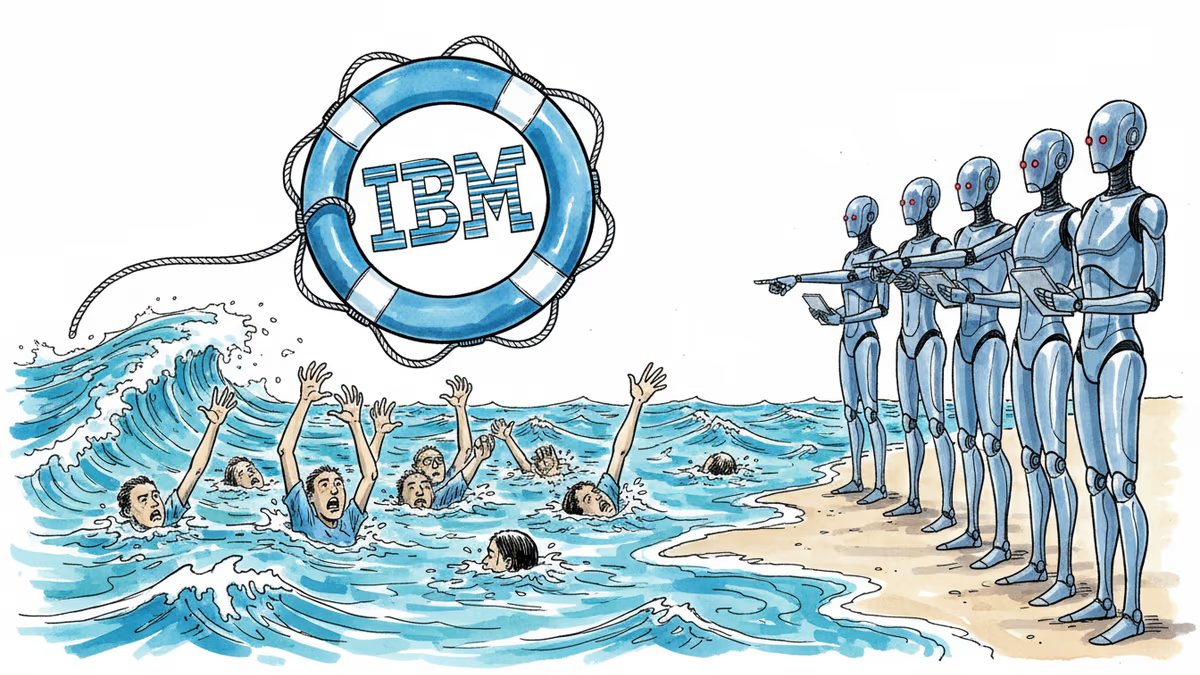
While AI Threatens Entry-Level Jobs, IBM Plans to Triple Hiring
IBM announces plan to triple entry-level hiring in 2026, defying AI automation trends. What's behind this contrarian strategy?
11.7% of jobs could already be automated by AI, according to MIT's 2025 study. Yet IBM just announced it's doing the exact opposite of what everyone expects.
The tech giant plans to triple entry-level hiring in the U.S. this year. "And yes, it's for all these jobs that we're being told AI can do," said Nickle LaMoreaux, IBM's chief human resources officer, at Tuesday's Charter AI Summit.
Rewriting Job Descriptions for the AI Age
This isn't just about hiring more people—it's about hiring them differently. IBM completely rewrote its entry-level job descriptions, reducing focus on tasks AI can automate (like coding) and emphasizing human-centric work like customer engagement.
The move signals a fundamental shift in thinking. While competitors slash junior roles, IBM is betting that today's entry-level workers will become tomorrow's senior talent—if properly developed.
The Long Game vs. Short-Term Efficiency
IBM's strategy reflects a classic corporate dilemma: immediate cost savings versus future talent pipeline. Most companies are choosing efficiency. TechCrunch's investor survey found that 2026 is expected to be the year AI's labor impact becomes visible.

But IBM is playing a different game. The company recognizes that even if AI can handle certain tasks now, human oversight and strategic thinking will remain crucial. By investing in junior talent today, they're building the leadership bench for an AI-integrated future.
Industry Reactions: Skepticism and Hope
The announcement has divided Silicon Valley. Startups struggling with runway see IBM's move as a luxury they can't afford. "We need people who can contribute from day one," says one Y Combinator founder.
However, HR leaders at established firms are watching closely. If IBM's experiment succeeds, it could reshape industry hiring practices. The question isn't whether AI will change work—it's how companies will adapt their talent strategies.
The Broader Labor Market Test
This year could be pivotal for understanding AI's real impact on employment. Multiple investors predict 2026 will reveal whether AI displacement fears were overblown or understated.
IBM's contrarian bet offers a live case study. If their reimagined entry-level roles prove valuable, other companies might follow. If not, it could validate the efficiency-first approach most firms are taking.
Authors
Related Articles
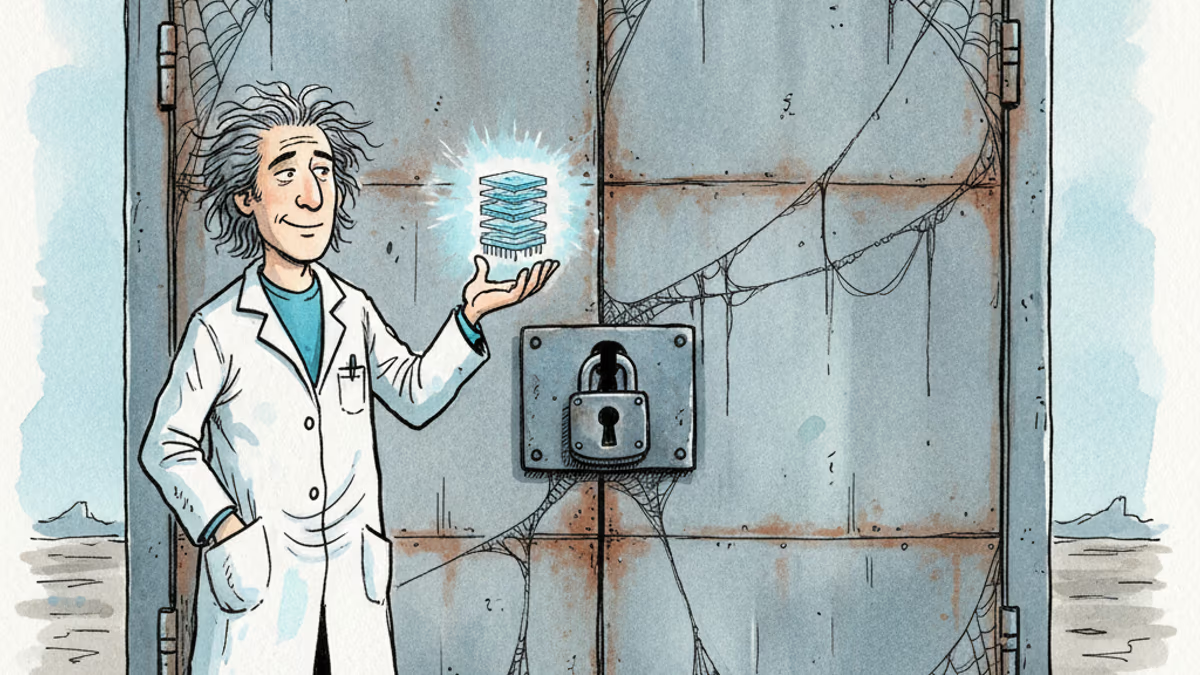
IBM has unveiled 'nanostack,' the world's first sub-1nm (0.7nm) chip research. Some say it adds a decade to Moore's Law; others say a lab demo is a long way from a fab. Either way, mass production isn't IBM's job.

Samsung and SK unveiled a chip and AI investment package worth thousands of trillions of won on June 29. The headline number swings wildly by outlet, but the real contest isn't capital — it's water and power.

Viral videos show 2026 graduates jeering executives who praise AI at commencement ceremonies. It's not just rudeness — it's a signal about who pays for technological optimism.

Filipino virtual assistants using AI to ghost-manage LinkedIn profiles for executives is now a structured industry. 30 comments a day, fake engagement rings, and a platform struggling to tell real from fabricated.
IBM has unveiled 'nanostack,' the world's first sub-1nm (0.7nm) chip research. Some say it adds a decade to Moore's Law; others say a lab demo is a long way from a fab. Either way, mass production isn't IBM's job.
Samsung and SK unveiled a chip and AI investment package worth thousands of trillions of won on June 29. The headline number swings wildly by outlet, but the real contest isn't capital — it's water and power.
Viral videos show 2026 graduates jeering executives who praise AI at commencement ceremonies. It's not just rudeness — it's a signal about who pays for technological optimism.
Filipino virtual assistants using AI to ghost-manage LinkedIn profiles for executives is now a structured industry. 30 comments a day, fake engagement rings, and a platform struggling to tell real from fabricated.
Thoughts
Share your thoughts on this article
Sign in to join the conversation