
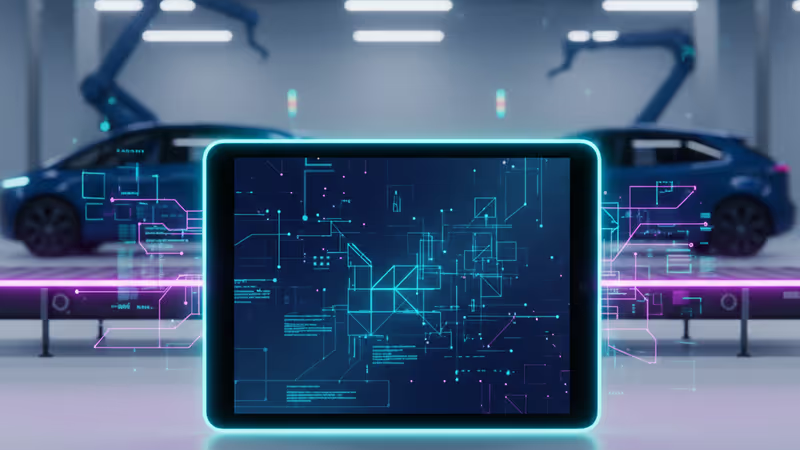
"Big Tech Can't Replicate Us": Hyundai Motor AI Strategy 2026 and the Power of Physical Data
Hyundai Motor Executive Chair Euisun Chung unveiled the Hyundai Motor AI Strategy 2026, focusing on the competitive advantage of physical data and a $86.5 billion investment plan.
There's a powerful advantage that big tech companies can't easily replicate. Euisun Chung, Executive Chair of Hyundai Motor Group, declared on January 5, 2026, that the AI-driven industrial transition won't just be a challenge—it'll be the group's greatest growth catalyst.
Hyundai Motor AI Strategy 2026: The Manufacturing Edge
According to Yonhap News, Chung highlighted the group's extensive data on "moving physical assets," such as vehicles and robots, as its core competitive edge in the artificial intelligence era. He noted that for a group possessing data, capital, and manufacturing capabilities, AI is a game where they have a strong chance of success. This strategy marks a shift from following tech trends to leading with physical-world data that pure software companies lack.
Chung also called for an organizational overhaul to combat global uncertainties. He emphasized that reports shouldn't just list facts; they must include the employee's own analysis and be shared instantly with the right stakeholders. This push for agility is designed to keep Hyundai ahead as the global automotive industry faces intense competition and geopolitical fragmentation.

Investment of 125.2 Trillion Won in Mobility
To secure its future, the group is committing massive capital. Hyundai Motor Group previously announced plans to invest 125.2 trillion won ($86.5 billion) over a five-year period through 2030. Chung clarified that this capital isn't just for expansion but for "qualitative growth"—focusing on the depth and value of their technological integration.
- Acceleration of Software-Defined Vehicles (SDV)
- Strategic AI partnerships with global leaders
- Enhanced situational awareness for supply chain risks
Authors
Related Articles
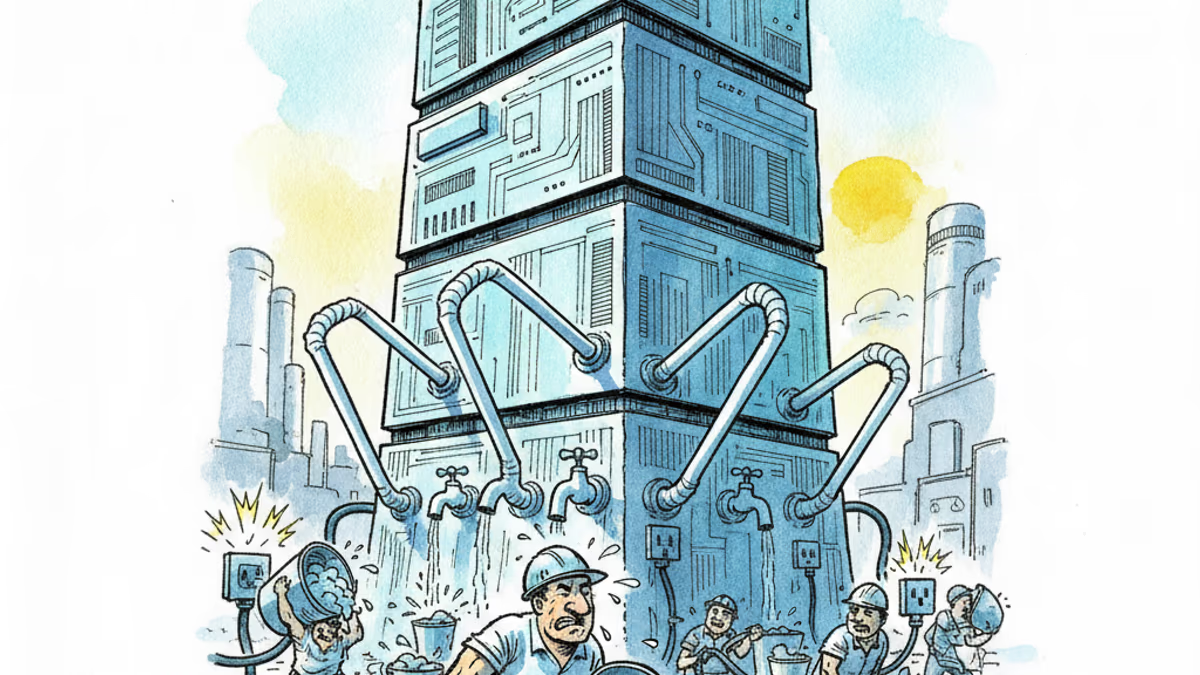
Samsung and SK unveiled a chip and AI investment package worth thousands of trillions of won on June 29. The headline number swings wildly by outlet, but the real contest isn't capital — it's water and power.
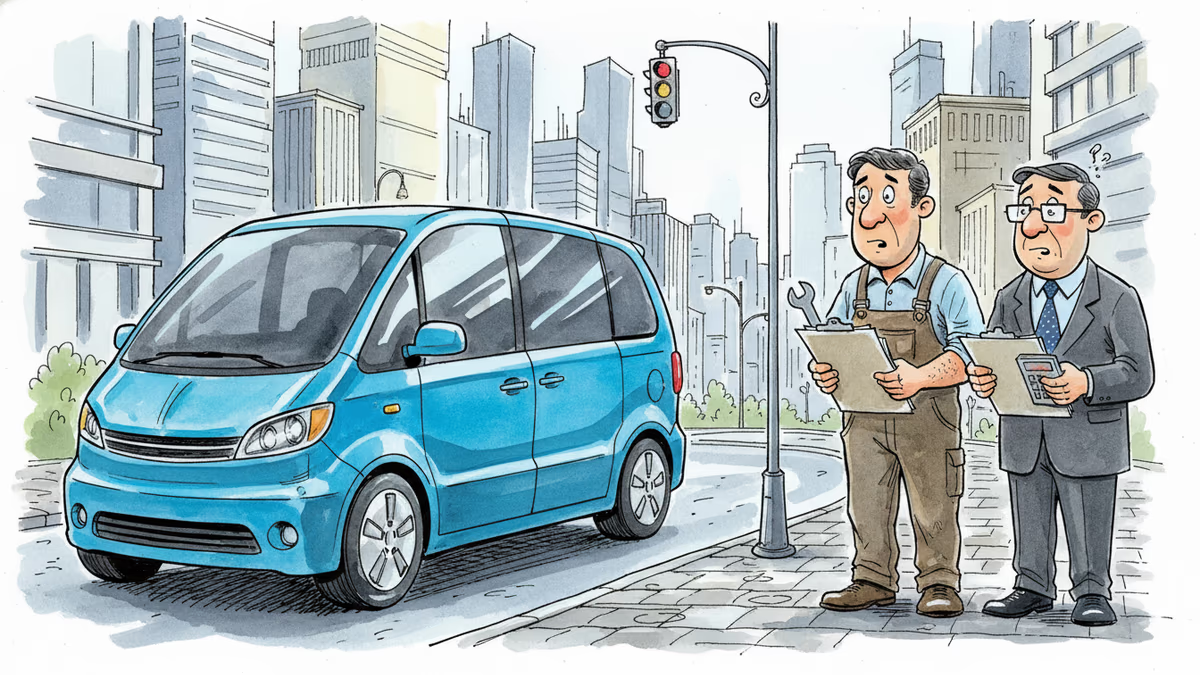
Waymo's new Ojai robotaxi isn't just a vehicle upgrade. It's the company's most serious attempt yet at cracking the cost problem that has kept autonomous vehicles from scaling. Here's what's really at stake.
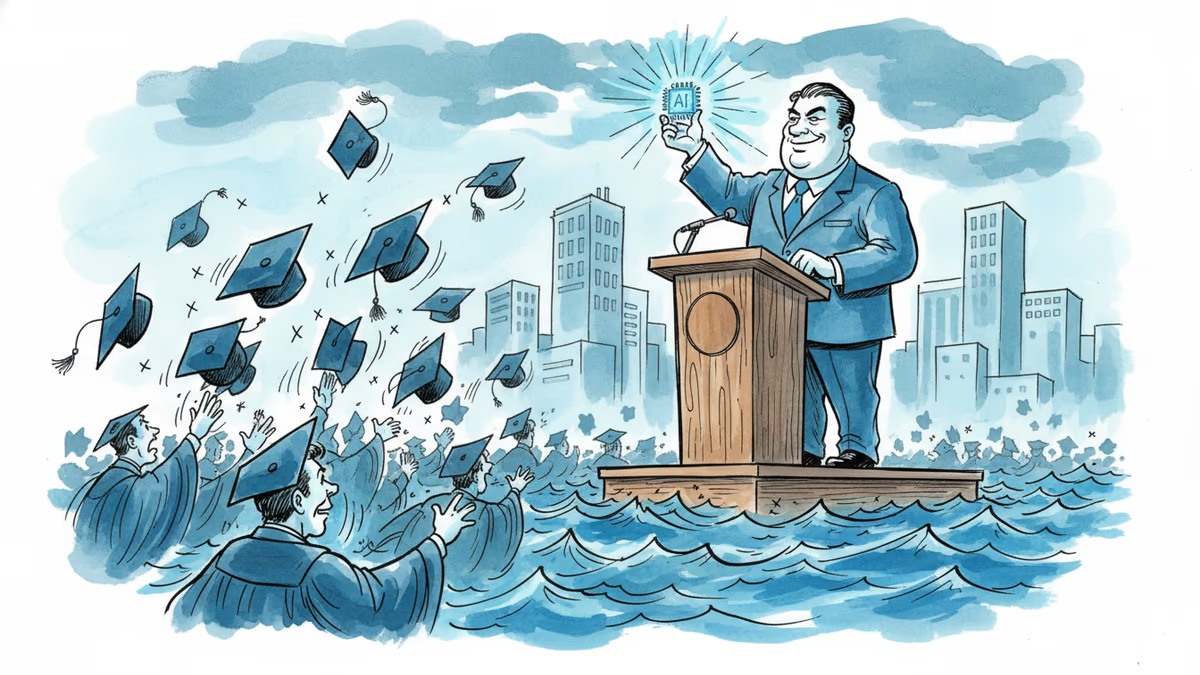
Viral videos show 2026 graduates jeering executives who praise AI at commencement ceremonies. It's not just rudeness — it's a signal about who pays for technological optimism.

Filipino virtual assistants using AI to ghost-manage LinkedIn profiles for executives is now a structured industry. 30 comments a day, fake engagement rings, and a platform struggling to tell real from fabricated.
Samsung and SK unveiled a chip and AI investment package worth thousands of trillions of won on June 29. The headline number swings wildly by outlet, but the real contest isn't capital — it's water and power.
Waymo's new Ojai robotaxi isn't just a vehicle upgrade. It's the company's most serious attempt yet at cracking the cost problem that has kept autonomous vehicles from scaling. Here's what's really at stake.
Viral videos show 2026 graduates jeering executives who praise AI at commencement ceremonies. It's not just rudeness — it's a signal about who pays for technological optimism.
Filipino virtual assistants using AI to ghost-manage LinkedIn profiles for executives is now a structured industry. 30 comments a day, fake engagement rings, and a platform struggling to tell real from fabricated.
Thoughts
Share your thoughts on this article
Sign in to join the conversation