
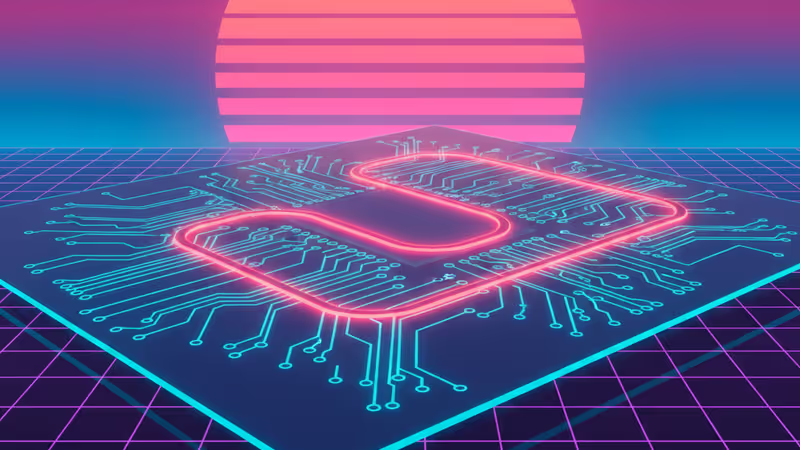
Huawei's New Phones Now Nearly 60% Chinese Parts, Teardown Shows Amid US Sanctions
A new teardown reveals Huawei's latest smartphones contain nearly 60% Chinese-made parts by value. The company is accelerating its tech self-sufficiency, successfully localizing key components like CPUs and memory chips despite US sanctions.
How do you build a smartphone under intense US sanctions? For Huawei, the answer is to build it yourself. A new teardown analysis shows the Chinese tech giant's latest smartphones now contain nearly 60% domestic components by value, a stark indicator of its accelerating push for self-sufficiency in the face of American export restrictions.
From Sanctions to Self-Reliance
According to a teardown report from Nikkei on December 25, 2025, Huawei has sharply increased the ratio of Chinese-made parts in its new devices. The flagship Pura 80 Pro, for instance, contains 57% domestic components by value. This marks a significant shift for the company, which has been grappling with US restrictions on its access to semiconductor technology since they were tightened.

Cracking the Core: CPUs and Memory Chips
The teardown's most crucial finding is the progress in localizing high-value components, specifically central processing units (CPUs) and memory chips. China's growing ability to produce these sophisticated parts domestically suggests that Huawei is successfully building an alternative supply chain that's less vulnerable to US pressure. This development is not just about smartphones; it has wider implications for China's ambitions in AI, autonomous vehicles, and other advanced tech sectors.
Authors
Related Articles
US AI-chip export controls split into three layers in the first half of 2026 — January easing, a May crackdown on circumvention, and a pending bill. Nvidia erased China from its guidance and still posted a record $81.6 billion quarter. A look at the export policy that both shields and cages it.
China is restricting AI researchers and startup founders from traveling abroad as the U.S.-China AI performance gap narrows to just 2.7%. What Beijing's talent lockdown means for the global AI race.
The US government invested $2 billion in quantum computing startups, but Congress says the money was never authorized for that purpose. The fate of IBM-backed Anderon hangs in the balance.
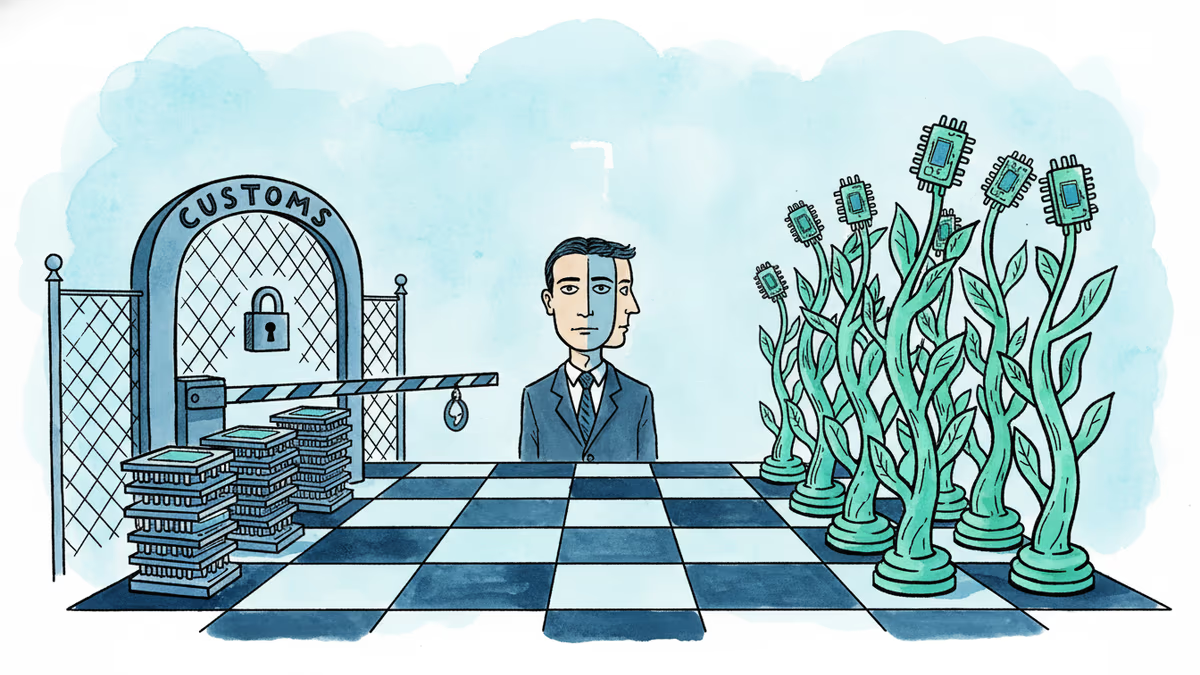
Beijing added an Nvidia gaming chip to its customs ban list the same week Jensen Huang visited China with Trump. Here's what it means for the chip war—and who actually wins.
US AI-chip export controls split into three layers in the first half of 2026 — January easing, a May crackdown on circumvention, and a pending bill. Nvidia erased China from its guidance and still posted a record $81.6 billion quarter. A look at the export policy that both shields and cages it.
China is restricting AI researchers and startup founders from traveling abroad as the U.S.-China AI performance gap narrows to just 2.7%. What Beijing's talent lockdown means for the global AI race.
The US government invested $2 billion in quantum computing startups, but Congress says the money was never authorized for that purpose. The fate of IBM-backed Anderon hangs in the balance.
Beijing added an Nvidia gaming chip to its customs ban list the same week Jensen Huang visited China with Trump. Here's what it means for the chip war—and who actually wins.
Thoughts
Share your thoughts on this article
Sign in to join the conversation