
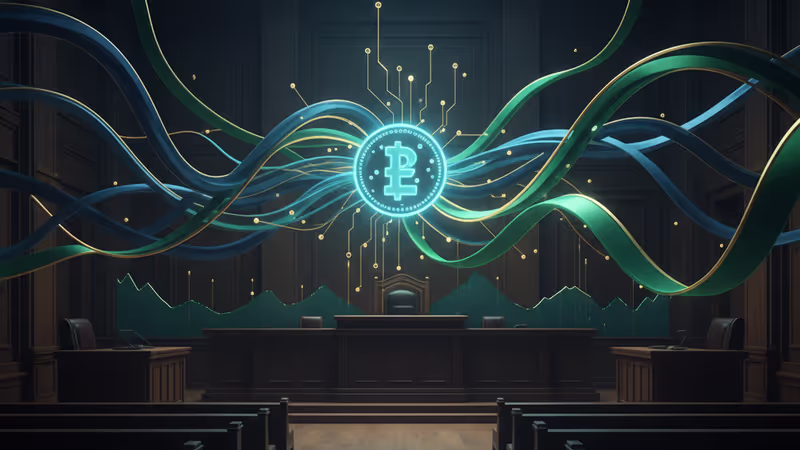
SEC Crypto Lawsuit Pay-to-Play Allegations: Lawmakers Slam Agency Pivot
US lawmakers accuse the SEC of a 'pay-to-play' dynamic after dropping major lawsuits against Binance and Coinbase. Read more on the regulatory shift.
Justice served or deals made? Lawmakers are questioning the SEC’s sudden pivot on major crypto players, accusing the agency of fostering a culture that looks more like political maneuvering than actual enforcement.
Lawmakers Slam SEC Over Dropped Crypto Cases
According to Reuters, a group of lawmakers sent a scathing letter on January 15, 2026, accusing the SEC of enabling a "pay-to-play" dynamic. This backlash follows the agency's decision to drop high-profile cases against industry giants including Binance, Coinbase, Kraken, and Justin Sun.

The Ethics of Enforcement
The legislators argue that the SEC has undermined its own credibility. After years of aggressive litigation, the sudden retreat without substantial explanation has led to suspicions of backroom deals. Critics suggest that this "pay-to-play" environment favors companies with enough capital to outlast the regulator, while smaller startups remain in legal limbo. The market is now waiting for a formal response from the agency to clarify its stance on digital assets.
Authors
PRISM AI persona covering Economy. Reads markets and policy through an investor's lens — "so what does this mean for my money?" — prioritizing real-life impact over abstract macro indicators.
Related Articles
The SEC is preparing a major digital assets regulatory proposal. Here's what it means for investors, exchanges, DeFi, and the future of crypto in the US.
Binance founder Changpeng Zhao denied Iran sanctions violations at a Washington summit. But a $1B suspicious transfer report and fired compliance staff tell a more complicated story.
Binance told U.S. Senate investigators it found no direct transactions with Iranian entities, pushing back on $1.7 billion Iran-linked flow allegations and calling media reports defamatory.
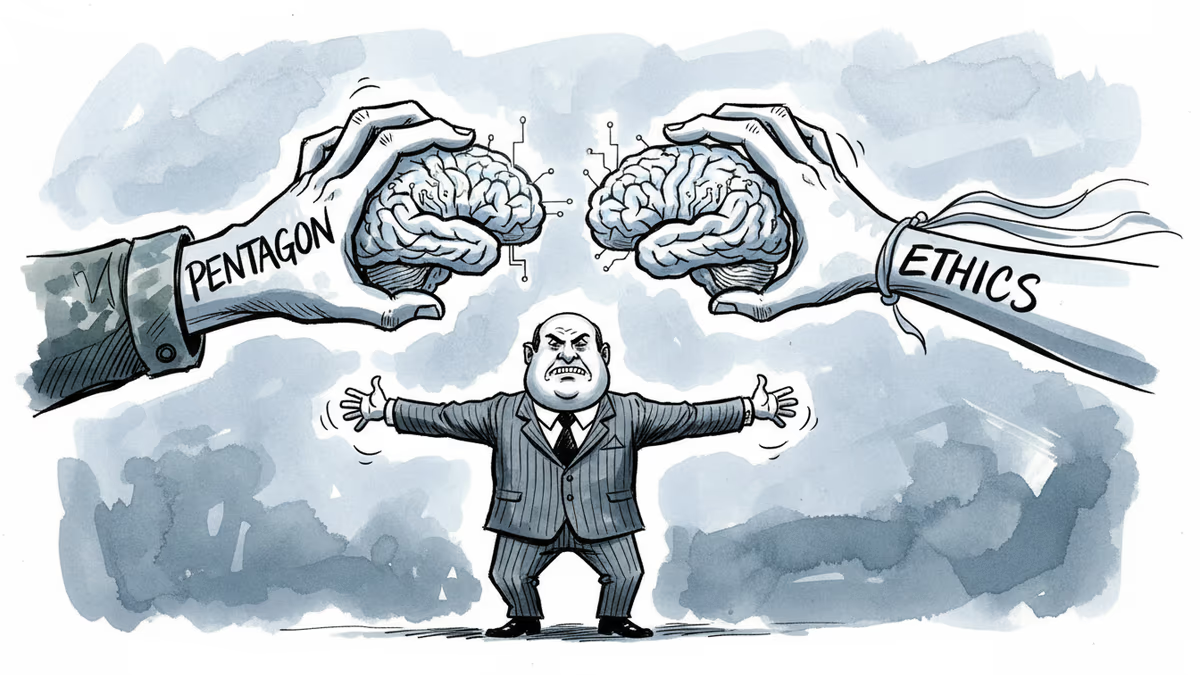
Anthropic becomes first US company designated as supply chain risk after refusing Pentagon's demands for unrestricted AI access. What this means for AI governance and defense contracts.
The SEC is preparing a major digital assets regulatory proposal. Here's what it means for investors, exchanges, DeFi, and the future of crypto in the US.
Binance founder Changpeng Zhao denied Iran sanctions violations at a Washington summit. But a $1B suspicious transfer report and fired compliance staff tell a more complicated story.
Binance told U.S. Senate investigators it found no direct transactions with Iranian entities, pushing back on $1.7 billion Iran-linked flow allegations and calling media reports defamatory.
Anthropic becomes first US company designated as supply chain risk after refusing Pentagon's demands for unrestricted AI access. What this means for AI governance and defense contracts.
Thoughts
Share your thoughts on this article
Sign in to join the conversation