
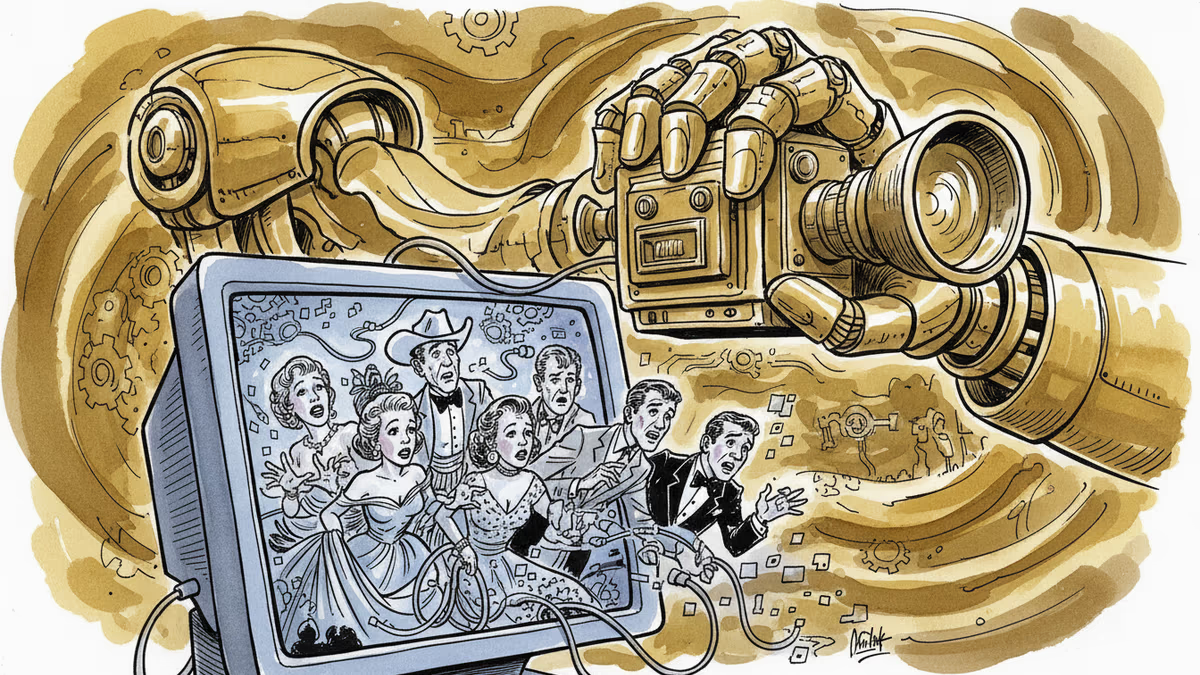
How Two Lines of Text Just Broke Hollywood
ByteDance's Seedance 2.0 AI video tool created Tom Cruise fighting Brad Pitt with just a simple prompt, triggering massive copyright backlash from Hollywood studios and Disney's legal team.
15 Seconds That Shook an Industry
"Made with a 2 line prompt in seedance 2," read the X post. The video showed Tom Cruise and Brad Pitt in combat—except neither actor had ever filmed such a scene. It was entirely AI-generated, created in seconds using ByteDance's newly released Seedance 2.0.
Within 24 hours of the tool's launch, Hollywood's biggest players were issuing cease-and-desist letters. What started as a tech demo had become an industry crisis.
The Creative Panic Sets In
The response was swift and visceral. Deadpool screenwriter Rhett Reese captured the mood: "I hate to say it. It's likely over for us."
But panic quickly turned to legal action. Motion Picture Association CEO Charles Rivkin didn't mince words: "In a single day, the Chinese AI service Seedance 2.0 has engaged in unauthorized use of U.S. copyrighted works on a massive scale."
The Human Artistry Campaign—backed by Hollywood unions and trade groups—called it "an attack on every creator around the world." Even SAG-AFTRA, the actors' union, stood with studios in condemning what they called "blatant infringement."
Disney's "Virtual Smash-and-Grab" Accusation
The most aggressive response came from Disney. Users had already created videos featuring Spider-Man, Darth Vader, and Grogu (Baby Yoda) using Seedance. Disney's legal team fired back with a cease-and-desist letter accusing ByteDance of a "virtual smash-and-grab of Disney's IP."
The letter claimed ByteDance was "hijacking Disney's characters by reproducing, distributing, and creating derivative works." Strong words from a company that's typically measured in its public statements.

Yet Disney's approach reveals something interesting: they're not anti-AI entirely. While sending legal threats to ByteDance and Google over similar issues, they've signed a three-year licensing deal with OpenAI. The message is clear—work with us, don't around us.
The China vs. Silicon Valley Playbook
Seedance's launch highlights a fundamental difference in how Chinese and American companies approach AI development. While U.S. firms tiptoe around copyright concerns, ByteDance seems to follow a "build first, ask questions later" philosophy.
OpenAI's Sora faced similar criticism but never triggered this level of immediate, industry-wide backlash. Why the difference?
Accessibility matters. Sora remains in limited beta; Seedance is live for Chinese users via ByteDance's Jianying app and coming soon to global CapCut users.
Guardrails matter more. OpenAI implemented filters against generating celebrity likenesses; Seedance's safeguards appear less robust.
The Broader Stakes
This isn't just about Hollywood protecting its turf. The entertainment industry employs 2.5 million Americans and generates over $200 billion annually. If AI tools can replicate actors, characters, and storylines without permission or payment, the economic model collapses.
But there's a flip side. Democratizing video creation could unleash creativity from millions of users who lack Hollywood budgets. The same tool that threatens Tom Cruise's likeness could help a student filmmaker tell their story.
The Regulatory Scramble
Washington is watching closely. ByteDance is already under scrutiny over TikTok's data practices. Now lawmakers have another reason to question the company's respect for American intellectual property.
Europe's AI Act includes provisions for copyright protection, but enforcement remains unclear. The U.S. lacks comprehensive AI legislation, leaving courts to sort out these disputes case by case.
Meanwhile, ByteDance continues expanding Seedance globally, betting that innovation will outpace regulation.
Authors
Related Articles
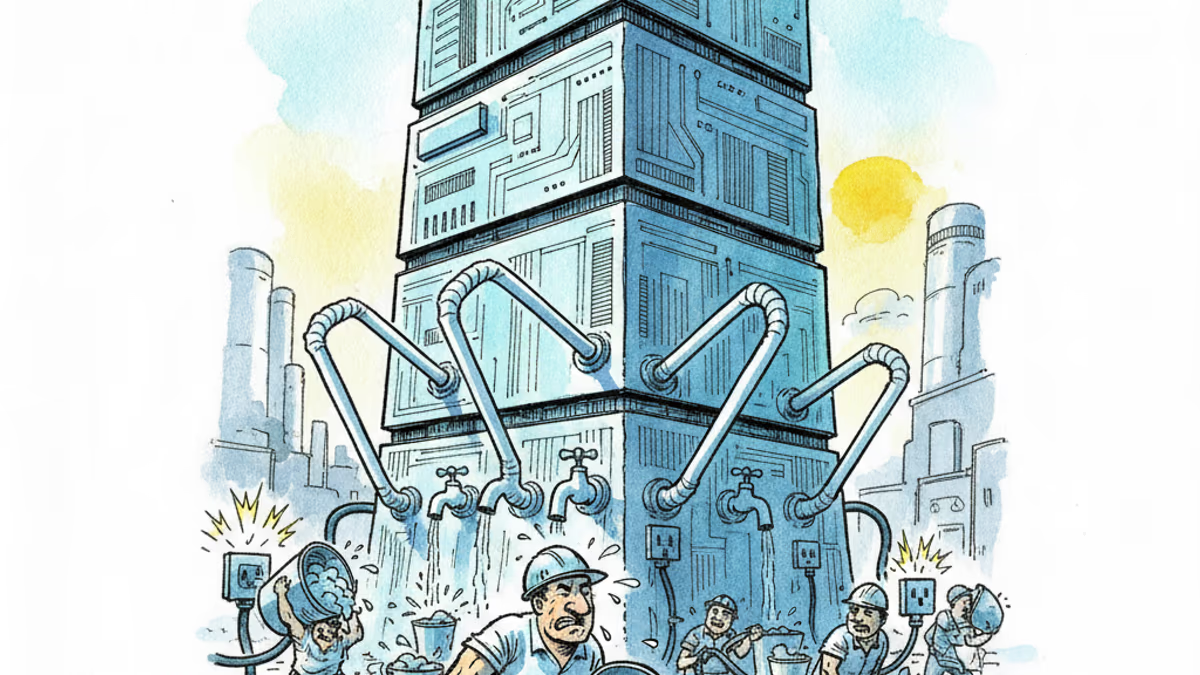
Samsung and SK unveiled a chip and AI investment package worth thousands of trillions of won on June 29. The headline number swings wildly by outlet, but the real contest isn't capital — it's water and power.
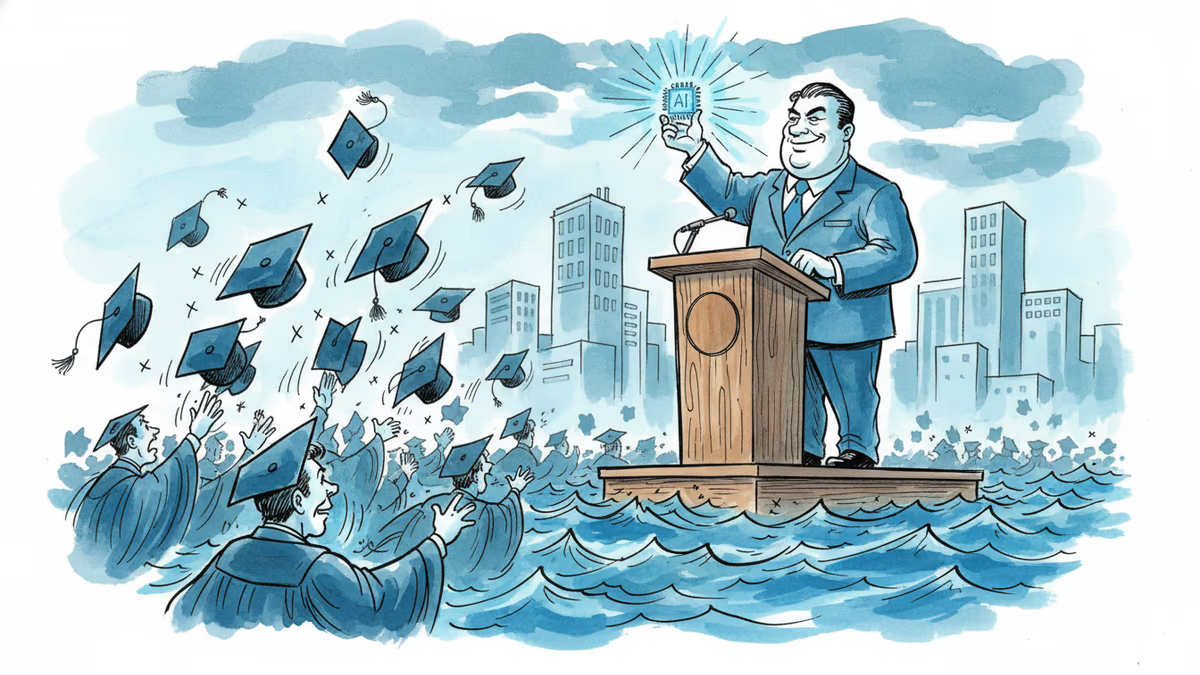
Viral videos show 2026 graduates jeering executives who praise AI at commencement ceremonies. It's not just rudeness — it's a signal about who pays for technological optimism.
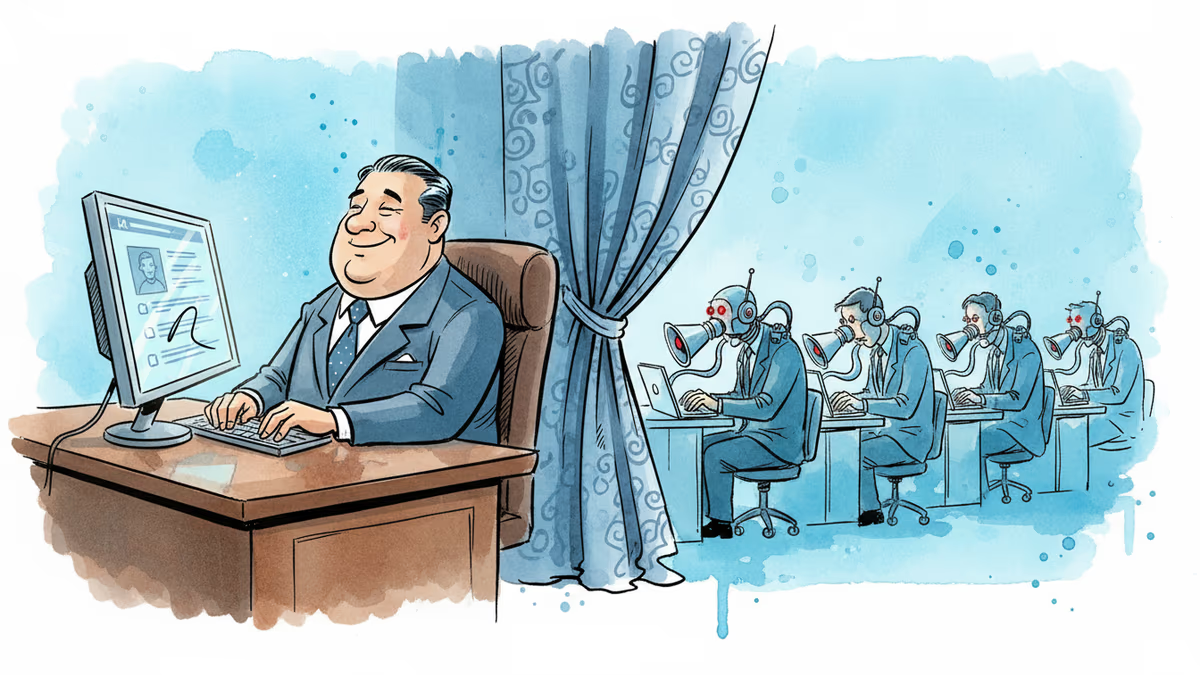
Filipino virtual assistants using AI to ghost-manage LinkedIn profiles for executives is now a structured industry. 30 comments a day, fake engagement rings, and a platform struggling to tell real from fabricated.
Two commencement speakers learned the hard way that AI enthusiasm doesn't land well with today's graduates. The backlash reveals a widening gap between tech optimism and Gen Z's economic reality.
Samsung and SK unveiled a chip and AI investment package worth thousands of trillions of won on June 29. The headline number swings wildly by outlet, but the real contest isn't capital — it's water and power.
Viral videos show 2026 graduates jeering executives who praise AI at commencement ceremonies. It's not just rudeness — it's a signal about who pays for technological optimism.
Filipino virtual assistants using AI to ghost-manage LinkedIn profiles for executives is now a structured industry. 30 comments a day, fake engagement rings, and a platform struggling to tell real from fabricated.
Two commencement speakers learned the hard way that AI enthusiasm doesn't land well with today's graduates. The backlash reveals a widening gap between tech optimism and Gen Z's economic reality.
Thoughts
Share your thoughts on this article
Sign in to join the conversation