

The Specialist Is Dead. The AI Era Demands the Rise of the Generalist.
The AI revolution is upending career paths. Discover why deep specialization is no longer enough and how adaptable, fast-learning generalists are becoming the most valuable players in tech, according to EliseAI's CTO.
In the 2010s, the path to a top-tier tech career was clear: specialize. Backend engineers, data scientists, and system architects built careers on predictable foundations like cloud infrastructure. That model worked when technology evolved slowly. That era is over.
"The pace of change has exploded," writes Tony Stoyanov, CTO and co-founder of EliseAI. With AI going mainstream, new technologies appear and mature in less than a year. "You can’t hire someone who has been building AI agents for five years, as the technology hasn’t existed for that long," he explains. The people thriving today aren’t those with the longest résumés; they’re the ones who learn fast, adapt fast, and act without waiting for direction.
AI has lowered the barrier to complex technical work while simultaneously raising expectations for what counts as real expertise. At Stoyanov's company, he sees engineers who've never touched front-end code building UIs, while front-end developers are moving into back-end work. The tools are getting easier, but the problems are getting harder because they span more disciplines.

This shift is set to reshape the entire labor market. McKinsey estimates that by 2030, up to 30% of U.S. work hours could be automated and 12 million workers may need to shift roles entirely. Despite the hype, only 1% of companies consider themselves truly mature in AI adoption. Many are still stuck in organizational structures built for a slower world.
So what defines a strong generalist? It's not about being a jack-of-all-trades, master of none. It’s about having breadth without losing depth. Stoyanov identifies several key traits: They take end-to-end ownership of outcomes, not just tasks. They use first-principles thinking to question assumptions. They demonstrate agency, acting without waiting for approval, and possess the adaptability to move between domains smoothly.
If you’re a builder who thrives in ambiguity, this is your time. The AI era rewards curiosity and initiative more than credentials. For those hiring, the advice is to look ahead. "The people who’ll move your company forward might not be the ones with the perfect résumé for the job," Stoyanov concludes. "They’re the ones who can grow into what the company will need as it evolves." The future belongs to generalists—and to the companies that trust them.
Authors
Related Articles

Samsung and SK unveiled a chip and AI investment package worth thousands of trillions of won on June 29. The headline number swings wildly by outlet, but the real contest isn't capital — it's water and power.

Viral videos show 2026 graduates jeering executives who praise AI at commencement ceremonies. It's not just rudeness — it's a signal about who pays for technological optimism.
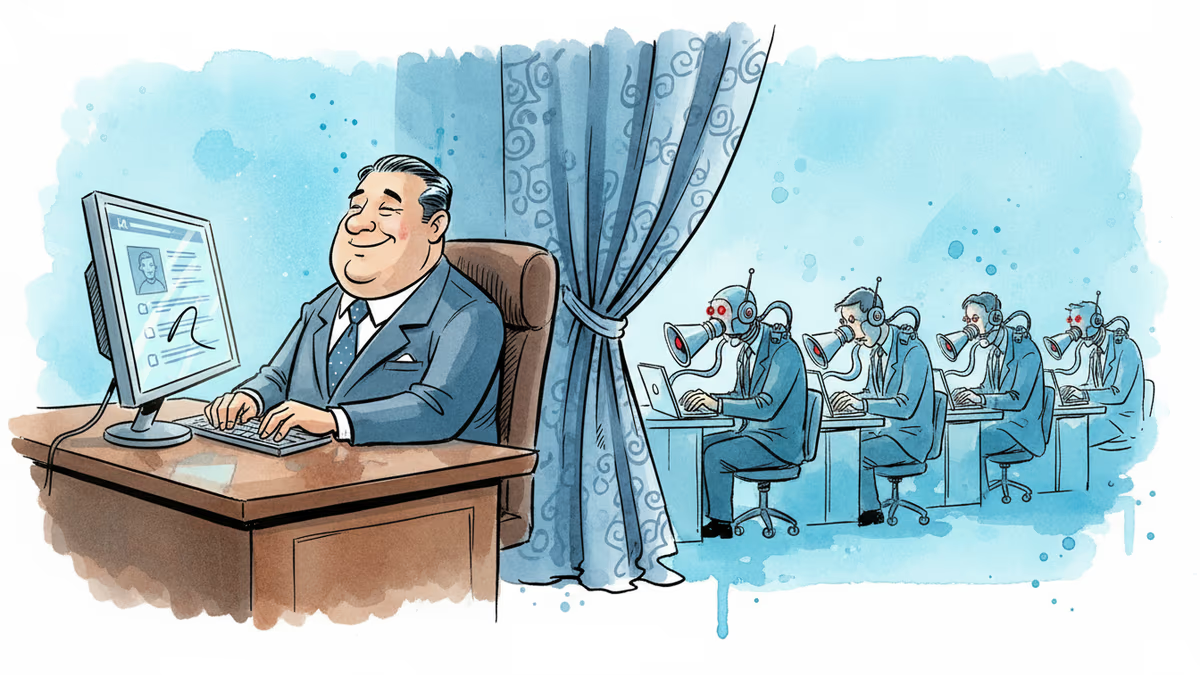
Filipino virtual assistants using AI to ghost-manage LinkedIn profiles for executives is now a structured industry. 30 comments a day, fake engagement rings, and a platform struggling to tell real from fabricated.
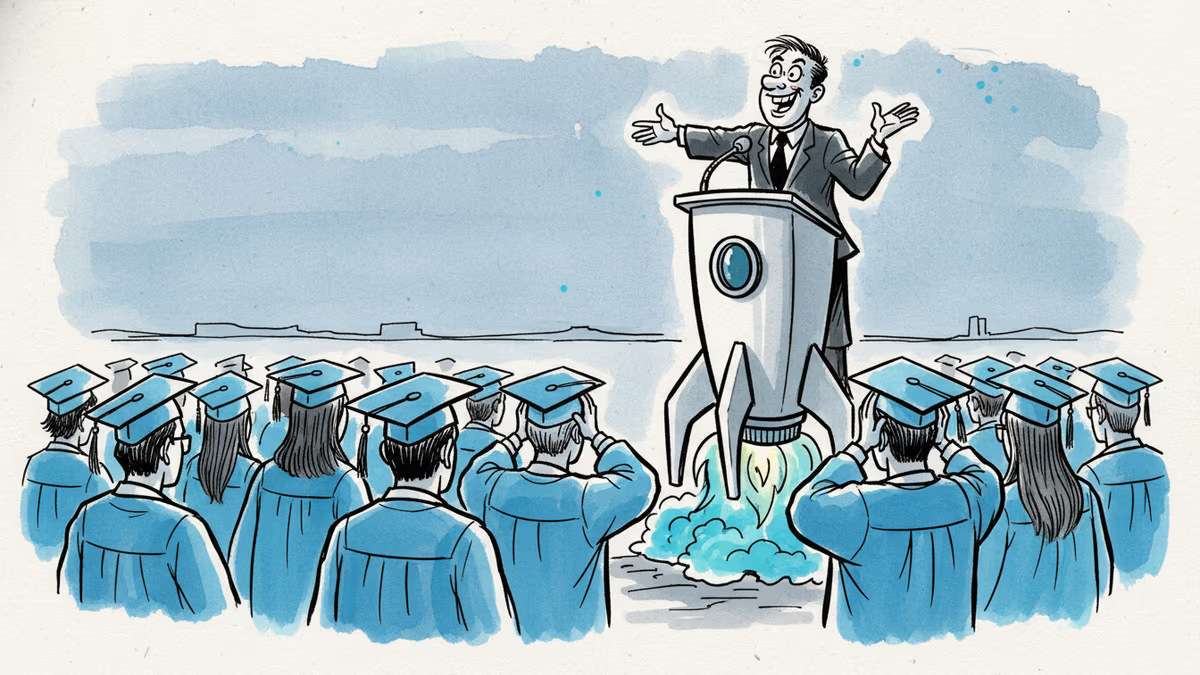
Two commencement speakers learned the hard way that AI enthusiasm doesn't land well with today's graduates. The backlash reveals a widening gap between tech optimism and Gen Z's economic reality.
Samsung and SK unveiled a chip and AI investment package worth thousands of trillions of won on June 29. The headline number swings wildly by outlet, but the real contest isn't capital — it's water and power.
Viral videos show 2026 graduates jeering executives who praise AI at commencement ceremonies. It's not just rudeness — it's a signal about who pays for technological optimism.
Filipino virtual assistants using AI to ghost-manage LinkedIn profiles for executives is now a structured industry. 30 comments a day, fake engagement rings, and a platform struggling to tell real from fabricated.
Two commencement speakers learned the hard way that AI enthusiasm doesn't land well with today's graduates. The backlash reveals a widening gap between tech optimism and Gen Z's economic reality.
Thoughts
Share your thoughts on this article
Sign in to join the conversation