
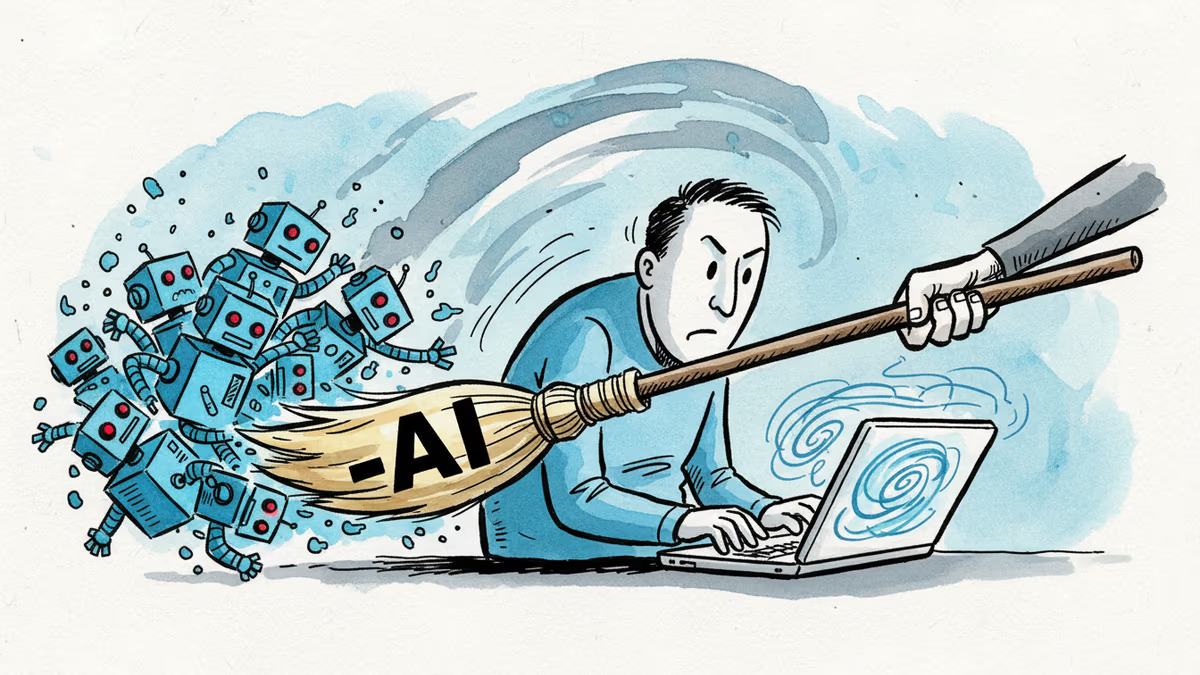
The Secret Code to Escape Google's AI: Just Type '-ai
Users discovered a simple trick to remove AI summaries from Google search results. But what does this workaround reveal about the future of search?
The 48-Hour Discovery That's Changing How We Search
Type '-ai' at the end of any Google search, and something magical happens: the AI Overview disappears entirely. This simple trick, discovered by users and shared across forums, has become the internet's favorite workaround for avoiding Google's generative AI summaries.
The method exploits Google's existing search syntax. The en dash function is designed to exclude whatever follows it from results. Typing '-ai', '-1', or even '-z' works identically—they all make AI Overviews vanish, apparently as an unintended side effect.
When Users Build Their Own Exit Ramps
Google's response reveals the tension: "People find Search more helpful with AI Overviews, and they're coming back to search more as a result," a spokesperson told WIRED. They point to a 'Web' filter option, but admit "people only use it for a tiny fraction of searches."
Yet here we are, with users creating their own solutions. The '-ai' trick spread organically through WIRED comments and tech forums—a grassroots rebellion against algorithmic summaries. It's working so well that many users report they'll keep typing it "until it becomes muscle memory."
The Mobile Reality Check

The trick works perfectly on desktop browsers but hits limitations on mobile. iOS users in Safari and Chrome still see AI-generated "web guides" prominently displayed. Android users fare better—the workaround functions on Google Pixel devices, though results may vary.
Mobile users must rely on the "Classic Search" button tucked away on the right side of results. It's functional but requires an extra tap—a small friction that might discourage casual use.
What DuckDuckGo and Brave Are Watching
Alternative search engines are taking notes. Both DuckDuckGo and Brave offer built-in toggles for AI summaries—features that Google conspicuously lacks. They're positioning themselves as havens for users seeking choice over algorithmic curation.
This user-driven demand for AI-free search could reshape competitive dynamics. When people actively seek workarounds, it signals market opportunity for alternatives.
The Accuracy Problem Persists
Google's AI Overviews launched in 2024 amid widespread mockery for suggestions like adding glue to pizza. While Google claims accuracy has improved, generative AI still occasionally hallucinates information. The company's advice? "Always worth clicking through and double-checking anything you read in an AI Overview."
That recommendation undermines the entire premise of AI summaries—if you need to verify everything anyway, why not skip the middlebot entirely?
Authors
Related Articles
In a post-Google I/O interview, Sundar Pichai acknowledged flawed search results, real AI anxiety, and an AGI timeline that makes the label irrelevant. Here's what he said — and what it means.
Google is building AI agents that search the web proactively, without user prompting. That's not just a product update — it's a fundamental shift in who controls the information you receive.
Google unveiled the 'Googlebook' platform to replace Chromebook and ChromeOS—but revealed zero hardware specs. What's the strategy, and what does it mean for users, manufacturers, and the education market?
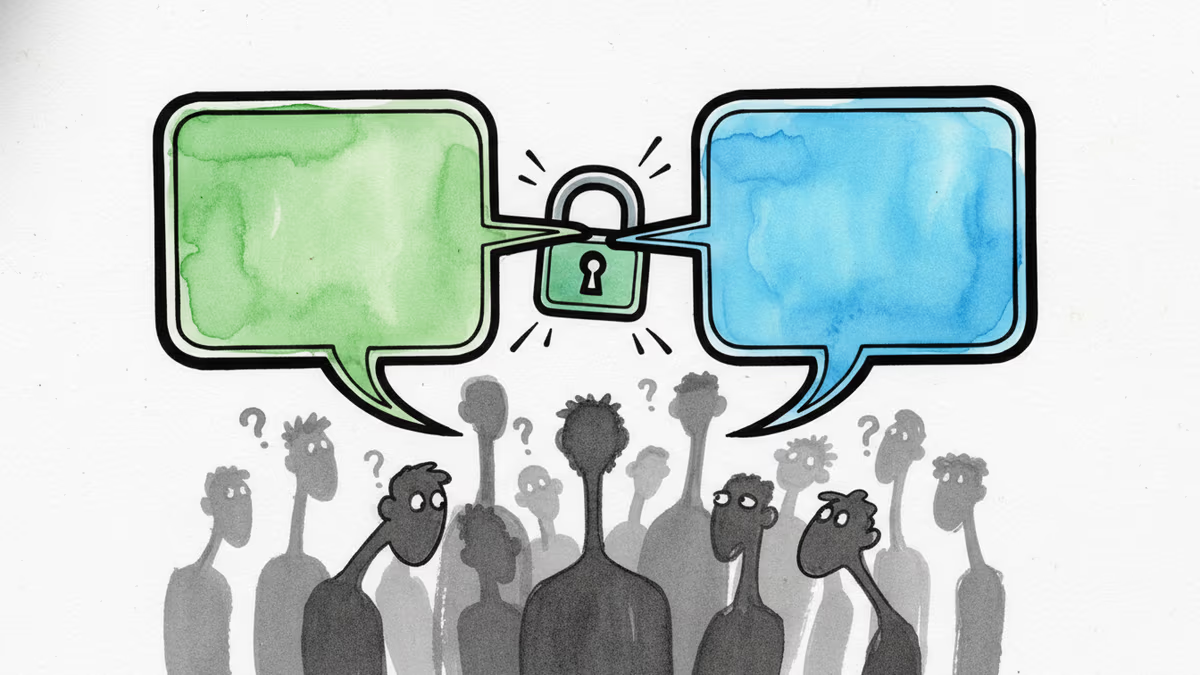
After 15 years of fragmented mobile messaging, Apple and Google are rolling out end-to-end encrypted RCS messaging between iPhones and Android devices. Here's what changed, why it took so long, and what it means for your privacy.
In a post-Google I/O interview, Sundar Pichai acknowledged flawed search results, real AI anxiety, and an AGI timeline that makes the label irrelevant. Here's what he said — and what it means.
Google is building AI agents that search the web proactively, without user prompting. That's not just a product update — it's a fundamental shift in who controls the information you receive.
Google unveiled the 'Googlebook' platform to replace Chromebook and ChromeOS—but revealed zero hardware specs. What's the strategy, and what does it mean for users, manufacturers, and the education market?
After 15 years of fragmented mobile messaging, Apple and Google are rolling out end-to-end encrypted RCS messaging between iPhones and Android devices. Here's what changed, why it took so long, and what it means for your privacy.
Thoughts
Share your thoughts on this article
Sign in to join the conversation