
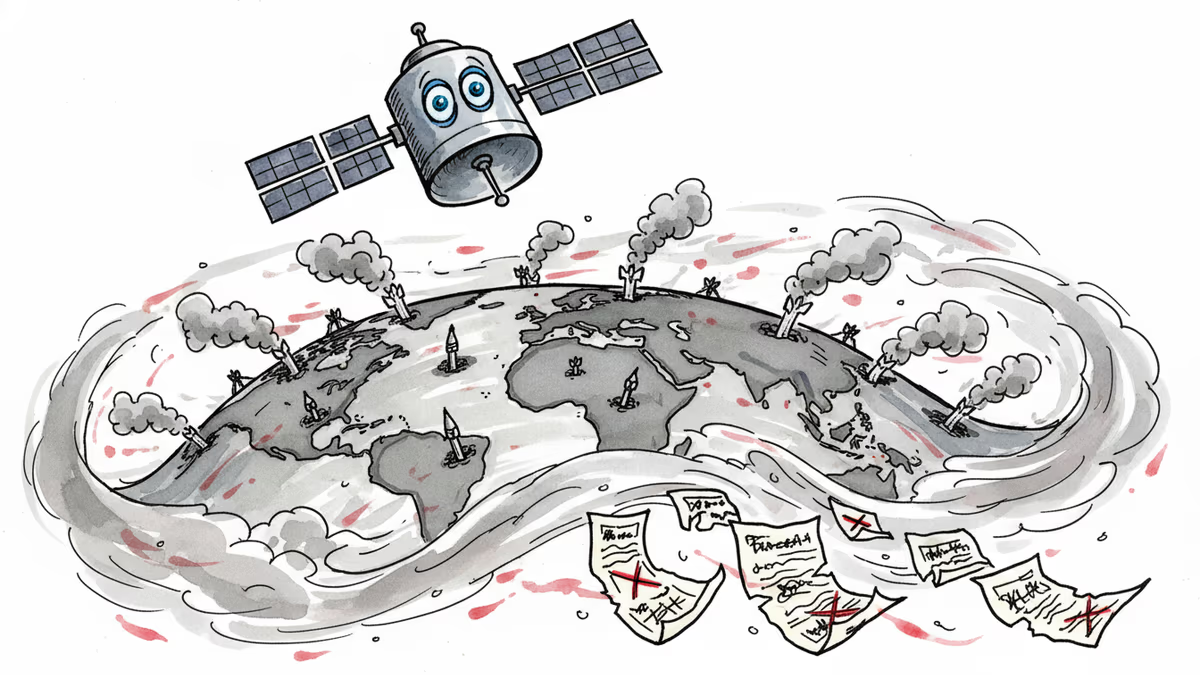
When Treaties Die, Can Satellites and AI Keep Nuclear Peace?
With nuclear arms control treaties collapsing, researchers propose using AI-powered satellites to monitor the world's weapons. But can machines replace human trust?
The 50,000 Nuclear Weapons That Vanished—And Why It Matters Now
For half a century, humanity pulled off something remarkable: we eliminated roughly 50,000 nuclear weapons through painstaking diplomacy. From 60,000 warheads in 1985 to just over 12,000 today, treaties like New START created a framework where former enemies could literally count each other's doomsday devices.
That era just ended.
New START expired on February 5, 2026, taking with it the last major nuclear arms control treaty between the world's two largest nuclear powers. With trust at historic lows and countries like China rapidly expanding their arsenals, researchers are proposing something that sounds like science fiction: using artificial intelligence and satellites to monitor nuclear weapons remotely.
When Inspectors Become Impossible
"To be clear, this is plan B," says Matt Korda, associate director at the Federation of American Scientists. His recent report, "Inspections Without Inspectors," outlines what he calls "cooperative technical means"—essentially replacing human inspectors with AI-powered surveillance systems.
The old system worked through trust-building. American and Russian inspectors would tour each other's missile silos, count warheads, and verify compliance. These on-site visits weren't just about verification—they were diplomatic confidence-building measures that helped end the Cold War.
Today's geopolitical reality makes such cooperation nearly impossible. No country wants "foreign inspectors roaming around on their territory," Korda notes. Meanwhile, South Korea is eyeing nuclear weapons, China is building new ICBM silos, and both the US and Russia are spending billions on next-generation nuclear systems.
The AI Solution: Promise and Peril

Here's how the proposed system would work: Countries would agree to open missile silo hatches at predetermined times when satellites pass overhead. AI systems would analyze the imagery, looking for changes in weapon deployments, new construction at nuclear facilities, or violations of agreed limits.
"Something that artificial intelligence is good at is pattern recognition," Korda explains. "If you had a large enough and well-curated dataset, you could, in theory, train a model that's able to identify both minute changes at particular locations but also potentially identify individual weapon systems."
But Sara Al-Sayed from the Union of Concerned Scientists raises a fundamental question: what exactly would these AI systems be tracking? "You could think of all manners of things like missiles, the launchers, the bombers, the submarines, the sites of their production, the testing, the storage, the maintenance, and the dismantlement," she says. The complexity is staggering.
The Trust Paradox
The proposal reveals a deeper contradiction. If countries trust each other enough to cooperate on AI-monitored verification, why do they need such intensive monitoring in the first place?
"Why would you want to rely on an AI-based verification regime?" Al-Sayed asks. "If you believe that automation is necessary, then you are in this paradigm where you feel like you need to catch every instance of your adversary or arms control treaty partner cheating."
There's also the technical reality: AI systems fail regularly, ship with security flaws, and often can't explain their decisions. Nuclear weapons monitoring requires the highest possible reliability—a standard current AI technology struggles to meet.
Beyond the Binary Choice
Yet for all its flaws, the satellite-AI approach offers something the world currently lacks: any monitoring system at all. Traditional treaties may be politically impossible, but the alternative—a completely unmonitored nuclear arms race—is arguably worse.
The proposal also reflects a broader shift in international relations. As traditional diplomacy becomes more difficult, technology increasingly fills the gaps. From trade verification to climate monitoring, remote sensing and AI are becoming tools of international governance.
Different stakeholders see different possibilities. Military planners might appreciate the reduced need for human intelligence gathering. Tech companies see a new market for specialized AI applications. Arms control advocates view it as a stopgap measure to prevent complete treaty collapse.
Authors
Related Articles
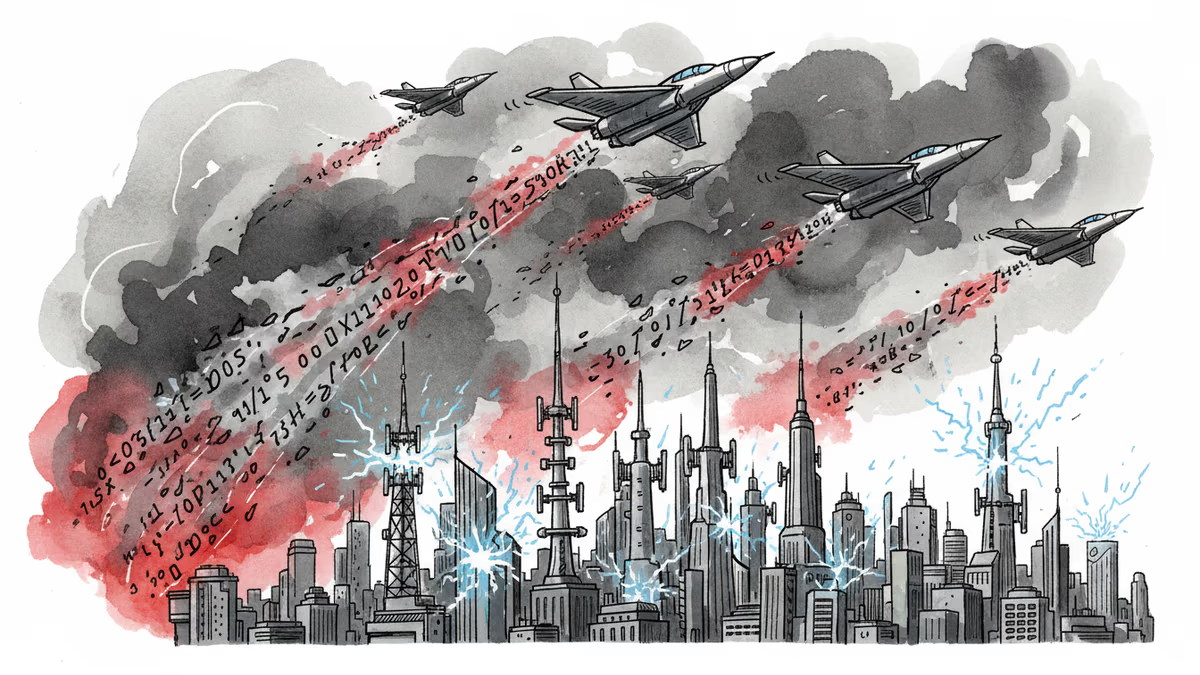
Cyber operations played a pivotal role in the U.S.-Israeli strikes against Iran, disrupting communications and hijacking broadcasts. A new era of warfare where code is as powerful as bombs.
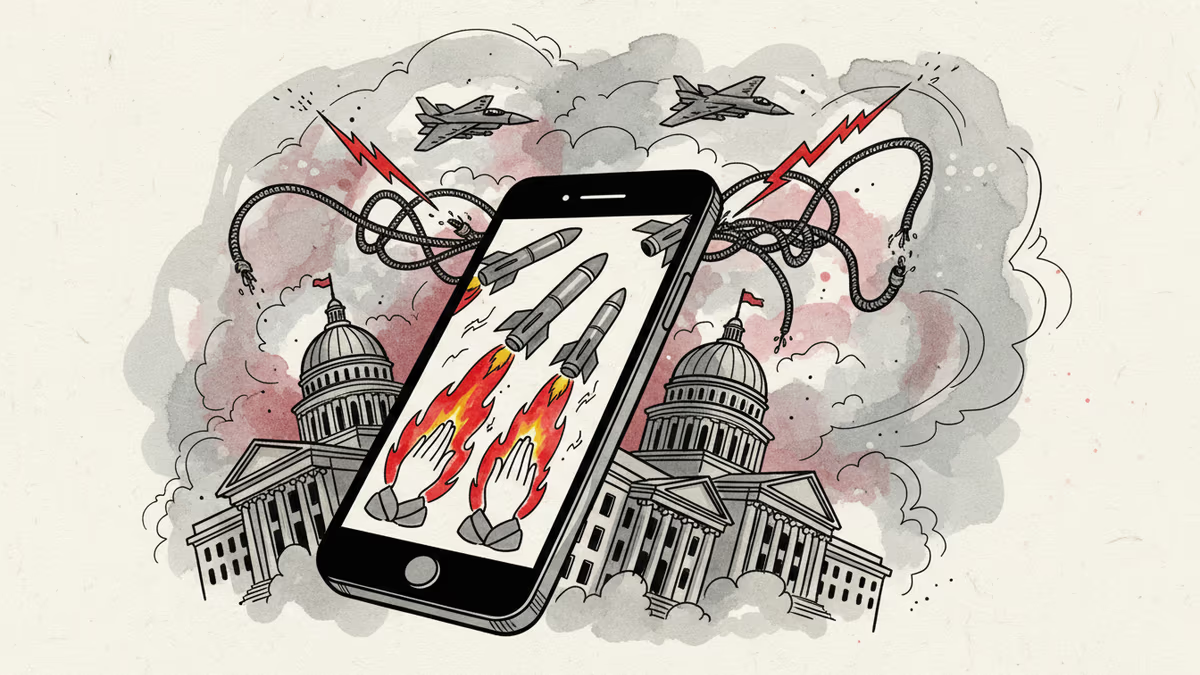
Iran's supreme leader killed in coordinated US-Israeli strikes paired with sophisticated cyber attacks. From prayer app hacks to internet blackouts, digital weapons merged with physical warfare in unprecedented ways.
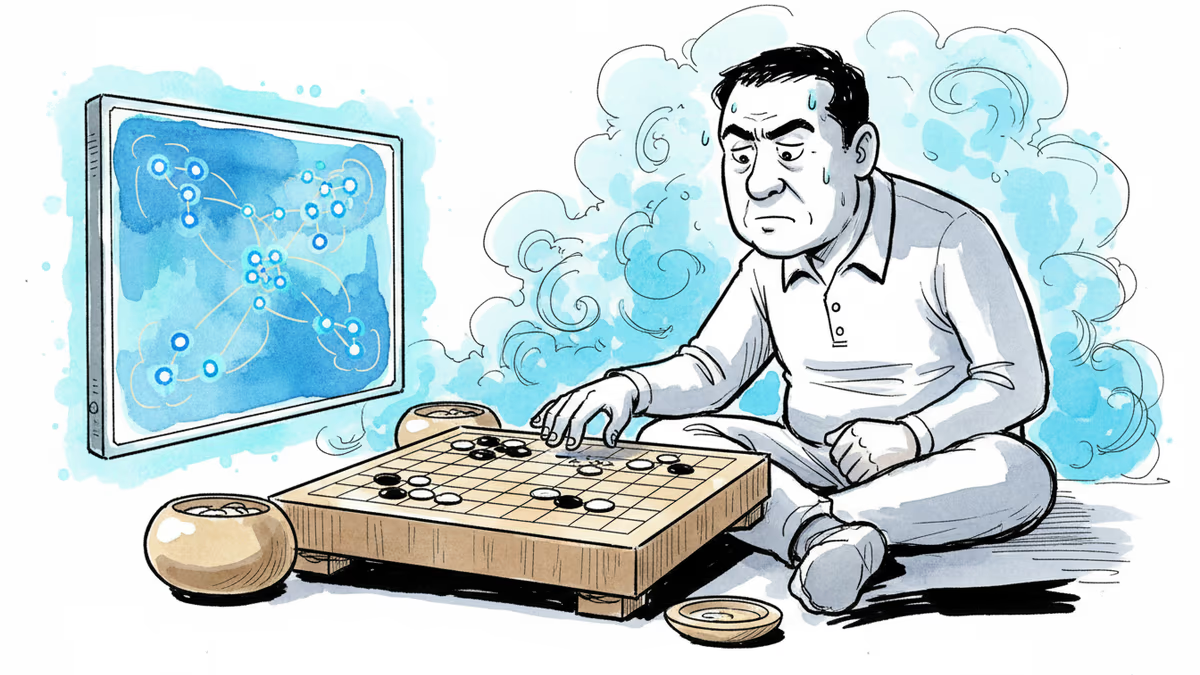
Ten years after AlphaGo's victory, AI has revolutionized Go completely. Yet fans still prefer watching humans play. The reason reveals something profound about what makes us human.

Riley Walz, creator of viral web stunts, joins OpenAI to reinvent human-AI interaction. What this hiring reveals about the next phase of AI competition.
Cyber operations played a pivotal role in the U.S.-Israeli strikes against Iran, disrupting communications and hijacking broadcasts. A new era of warfare where code is as powerful as bombs.
Iran's supreme leader killed in coordinated US-Israeli strikes paired with sophisticated cyber attacks. From prayer app hacks to internet blackouts, digital weapons merged with physical warfare in unprecedented ways.
Ten years after AlphaGo's victory, AI has revolutionized Go completely. Yet fans still prefer watching humans play. The reason reveals something profound about what makes us human.
Riley Walz, creator of viral web stunts, joins OpenAI to reinvent human-AI interaction. What this hiring reveals about the next phase of AI competition.
Thoughts
Share your thoughts on this article
Sign in to join the conversation