
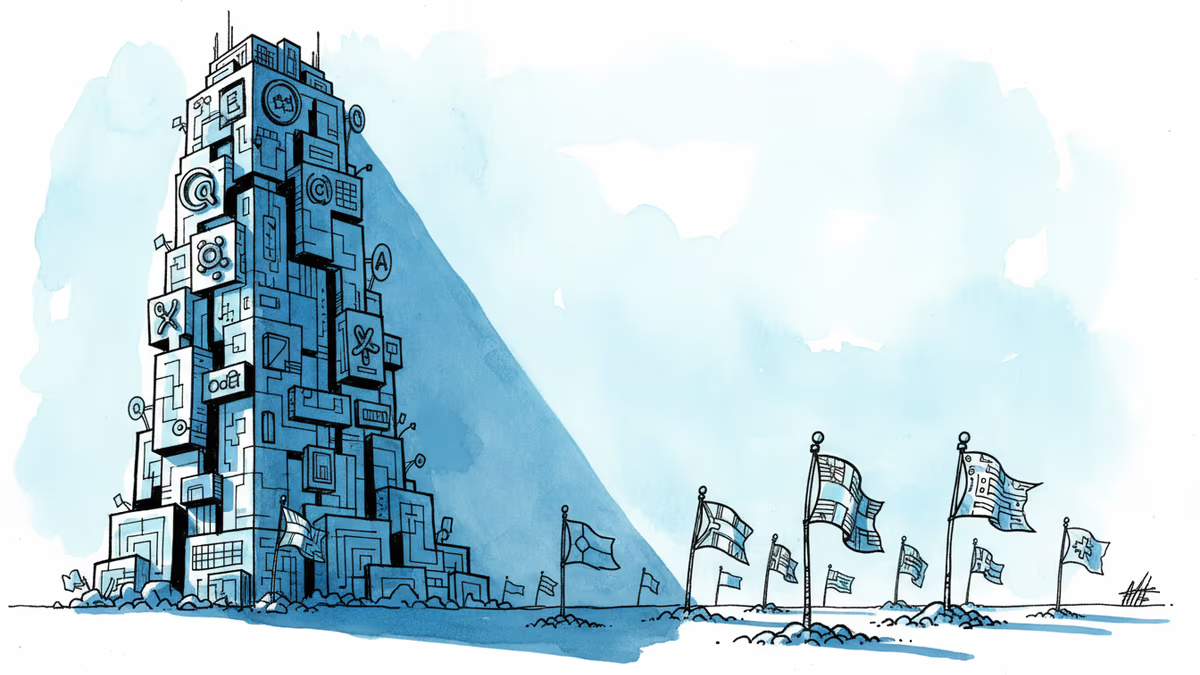
Why AI Sovereignty Means Building, Not Buying
As 45% of workers now use AI daily, nations face a critical choice: rent Big Tech's models or invest in open alternatives that ensure true digital independence.
The $10 Trillion Question Every Nation Must Answer
As world leaders gather in New Delhi for India's AI Impact Summit this week, they're confronting a deceptively simple question: Should countries build their own AI capabilities or simply rent them from Big Tech?
The stakes couldn't be higher. Artificial intelligence has quietly become as essential as electricity—45% of employees now use AI at work, according to Gallup. It's embedded in search results, email systems, and workflows across entire economies. Yet this critical infrastructure remains controlled by a handful of foreign corporations offering proprietary black boxes.
Mozilla's Raffi Krikorian argues that this arrangement isn't just economically problematic—it's a sovereignty crisis in disguise.
The Comfort of Dependency
The current model feels almost too convenient. OpenAI, Google, Microsoft, and Anthropic handle everything: the models, hosting, safety guardrails, and billing. For cash-strapped governments and resource-constrained businesses, the value proposition seems obvious—why reinvent the wheel when you can simply rent it?
This logic has created a global AI economy where most nations function as digital tenants rather than digital owners. Countries invest billions in accessing foreign AI systems while their domestic tech sectors remain dependent on external innovation cycles they cannot influence or predict.
But Krikorian, writing from his position at Mozilla, warns that this arrangement carries hidden costs that compound over time. "If governments finance dependency, dependency is what they will get," he argues.
The Open Alternative That Nobody Funds
Here's where the story gets interesting: The technology gap isn't as wide as the market dominance suggests. Open-source AI models routinely achieve 90% or more of proprietary systems' performance at a fraction of the cost. The problem isn't capability—it's funding.
Private investors shy away from open-source AI infrastructure because it exhibits classic public-good characteristics. Unlike proprietary systems that generate recurring revenue streams, open infrastructure benefits everyone while enriching no single entity. This creates a market failure where the most strategically important technology receives the least private investment.

Mozilla is attempting to break this cycle by committing its billion-dollar-plus reserves to open-source AI development. The organization plans to invest in existing companies, establish new ones, fund research, and build training programs—essentially creating the venture capital ecosystem that open AI lacks.
Beyond the False Binary
The sovereignty debate often gets framed as a choice between isolation and dependence. Krikorian rejects this binary, pointing to successful precedents of collaborative independence.
The internet itself emerged from sustained public investment in open technologies. Linux, Apache, and other open-source foundations became the backbone of the global digital economy precisely because they enabled private innovation while preventing infrastructure capture.
Even geopolitical projects like CERN, Airbus, and the Galileo satellite system demonstrate how nations can pool resources around shared, open foundations while maintaining strategic autonomy.
Canadian Prime Minister Mark Carney captured this logic at Davos: "Collective investments in resilience are cheaper than everyone building their own fortress."
The Developer Perspective Split
The AI sovereignty debate reveals interesting fault lines within the tech community itself. Enterprise customers often favor the simplicity and reliability of proprietary solutions—they need AI that works consistently for mission-critical applications.
Meanwhile, developers and researchers increasingly chafe at the limitations of closed systems. They cannot audit algorithms for bias, cannot customize models for specific cultural contexts, and cannot guarantee long-term access if geopolitical tensions shift vendor policies.
This tension reflects a broader question about technological self-determination. Should critical infrastructure be optimized for convenience or control?
The Window Is Closing
Timing adds urgency to these strategic choices. The AI industry's rapid consolidation means that switching costs increase with each passing quarter. Companies that build their workflows around proprietary APIs face mounting exit barriers. Nations that structure their digital economies around foreign AI services find themselves increasingly locked into dependencies they cannot easily escape.
The semiconductor industry offers a cautionary tale. Countries that chose to import rather than develop chip manufacturing capabilities now find themselves vulnerable to supply chain disruptions and geopolitical leverage they cannot easily counter.
Authors
Related Articles
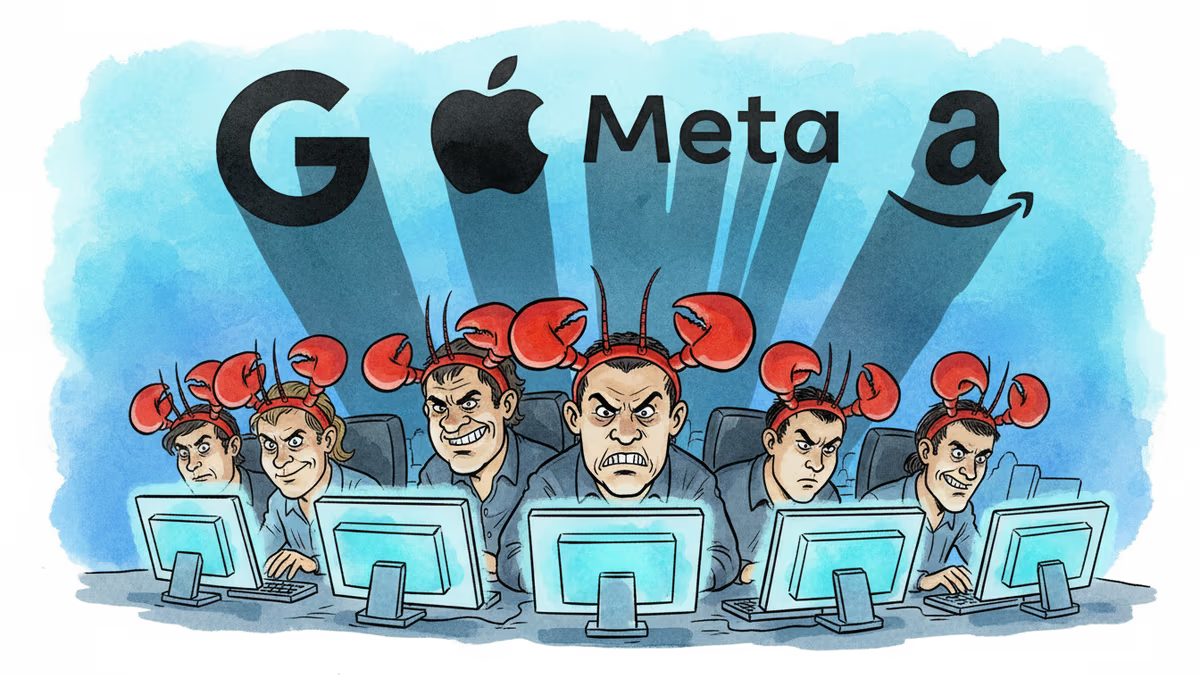
Hundreds gathered at ClawCon to celebrate OpenClaw, an open-source AI platform challenging Big Tech's closed models. A look at the growing developer revolt.
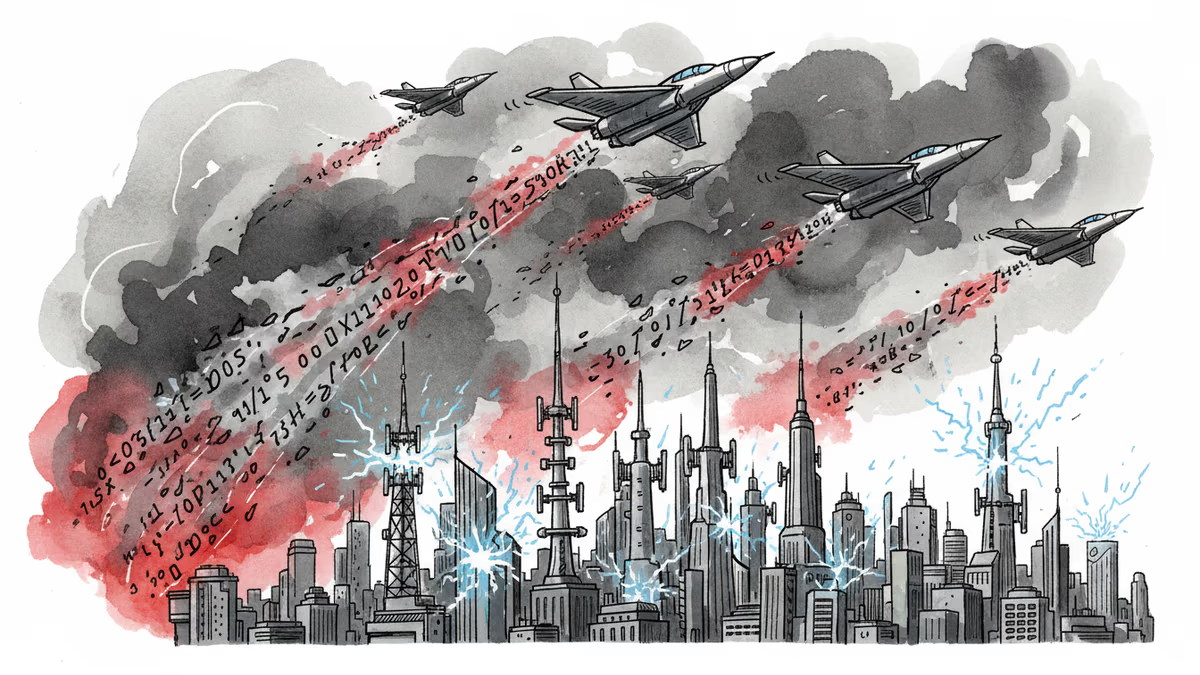
Cyber operations played a pivotal role in the U.S.-Israeli strikes against Iran, disrupting communications and hijacking broadcasts. A new era of warfare where code is as powerful as bombs.
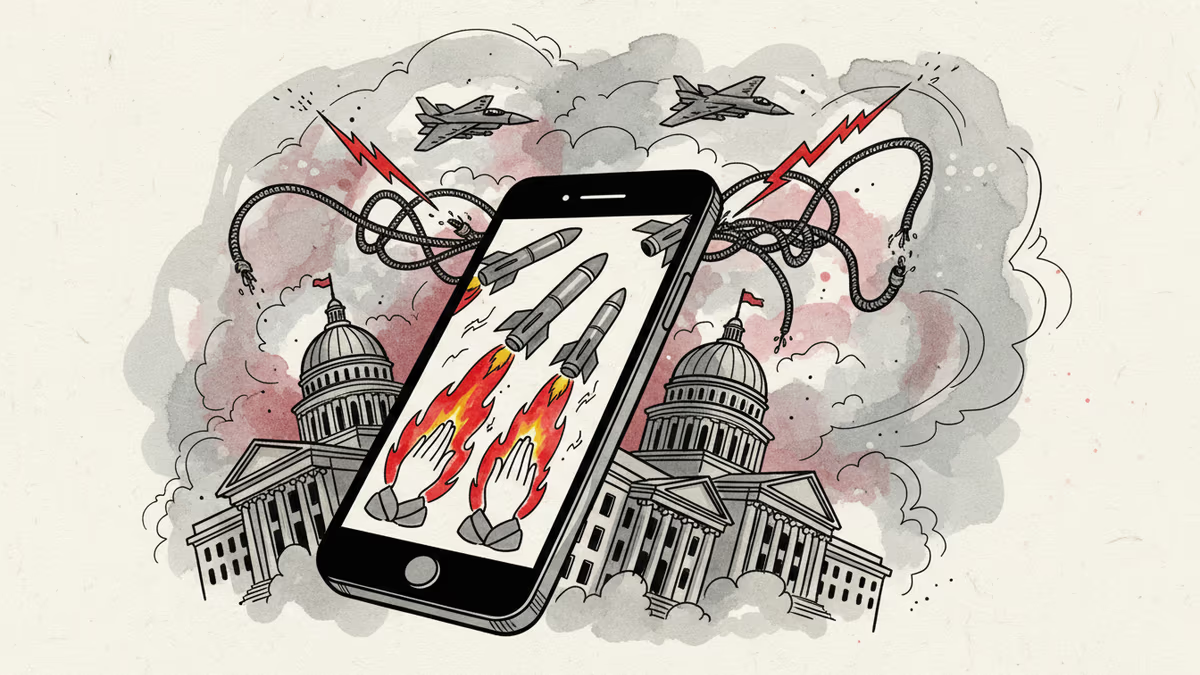
Iran's supreme leader killed in coordinated US-Israeli strikes paired with sophisticated cyber attacks. From prayer app hacks to internet blackouts, digital weapons merged with physical warfare in unprecedented ways.
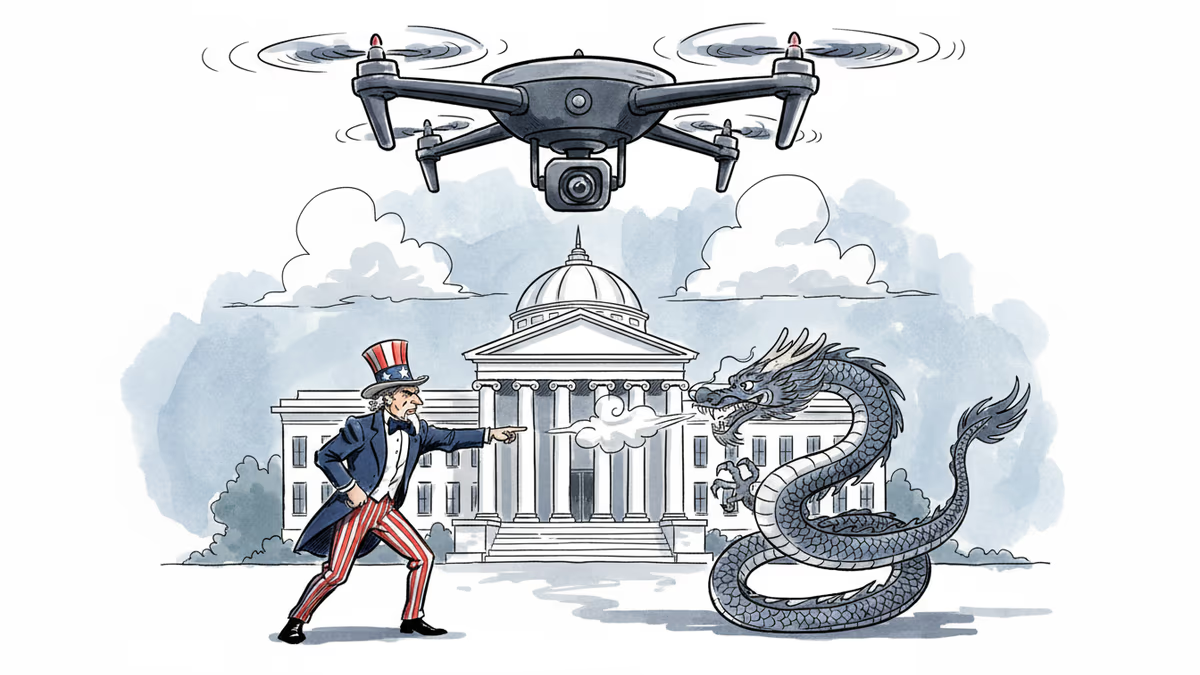
Chinese drone giant DJI challenges FCC's import ban in federal court, escalating US-China tech tensions into uncharted legal territory.
Hundreds gathered at ClawCon to celebrate OpenClaw, an open-source AI platform challenging Big Tech's closed models. A look at the growing developer revolt.
Cyber operations played a pivotal role in the U.S.-Israeli strikes against Iran, disrupting communications and hijacking broadcasts. A new era of warfare where code is as powerful as bombs.
Iran's supreme leader killed in coordinated US-Israeli strikes paired with sophisticated cyber attacks. From prayer app hacks to internet blackouts, digital weapons merged with physical warfare in unprecedented ways.
Chinese drone giant DJI challenges FCC's import ban in federal court, escalating US-China tech tensions into uncharted legal territory.
Thoughts
Share your thoughts on this article
Sign in to join the conversation