
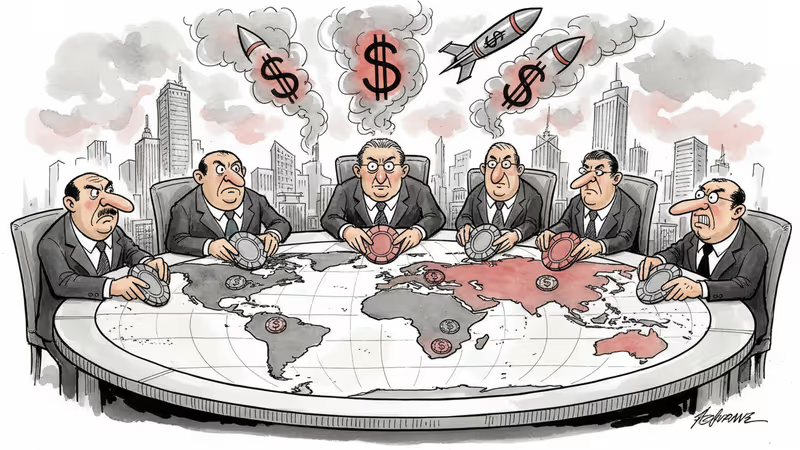
Betting on War: The Dark Side of Geopolitical Gambling
People are wagering $155 million on whether the U.S. will attack Iran. As prediction markets turn war into profit, 87% of users lose money. Who really wins this dangerous game?
Someone just made $400,000 betting on Venezuelan President Nicolás Maduro's capture—hours before it happened. Welcome to the world of geopolitical gambling, where war and peace have become betting opportunities worth millions.
When Conflict Becomes Commerce
Polymarket hit an $8 billion valuation last October, making its 27-year-old CEO Shayne Coplan a billionaire overnight. But here's the catch: 87% of users on the platform lose money, according to market researcher LayerHub.
What started as sports betting has evolved into something far more complex. These prediction markets now cover everything from Oscar winners to potential government shutdowns. But it's the geopolitical bets that raise the most eyebrows—and generate the biggest volumes.
In January alone, users created 191 new geopolitical events on Polymarket, a 260% increase from the same month last year. The platform's growth exploded after the 2024 U.S. presidential elections, when political gambling went mainstream.
The High-Stakes Hotspots
The biggest money is on Iran. Traders have wagered $155 million on potential U.S. and Israeli military intervention. The odds of a U.S. strike dropped dramatically from 65% to 33% after President Trump hinted at ongoing negotiations with Iran on January 31.

Venezuela provided the most dramatic example of potential insider trading. An anonymous trader made $400,000 by betting on Maduro's capture just hours before U.S. forces moved in. The aftermath sparked a frenzy of bets on Venezuela's next leader, with interim President Delcy Rodríguez leading at 66% odds and Nobel Peace Prize winner María Corina Machado at 14%. Even Trump, Secretary of State Marco Rubio, and Secretary of War Pete Hegseth made the list, though with less than 1% odds each.
Somalia emerged as the next flashpoint after Trump authorized Hegseth to attack Somali pirate boats. Traders now give it 89% odds of being the next U.S. target.
The Regulation Gap
Unlike competitor Kalshi, which received Commodity Futures Trading Commission authorization in 2020, Polymarket operates without U.S. regulation. The platform restricts American users to invite-only access, yet the U.S. still accounts for 25% of its user base as of December 2025.
Users circumvent restrictions through virtual private networks and crypto wallets. This regulatory gray area becomes particularly concerning when anonymous traders appear to profit from advance knowledge of military operations.
The Bigger Questions
These platforms raise fundamental questions about the intersection of finance, technology, and geopolitics. When money flows toward conflict predictions, do the markets simply reflect reality—or do they start shaping it?
The Venezuelan incident highlights the potential for insider trading in spaces with loose oversight. If someone knew about the Maduro operation in advance, prediction markets become less about forecasting and more about monetizing privileged information.
There's also the psychological dimension. When thousands of people have financial stakes in geopolitical outcomes, does that change how they consume news or engage with international affairs? Do betting odds influence public perception of conflict probability?
Authors
Related Articles
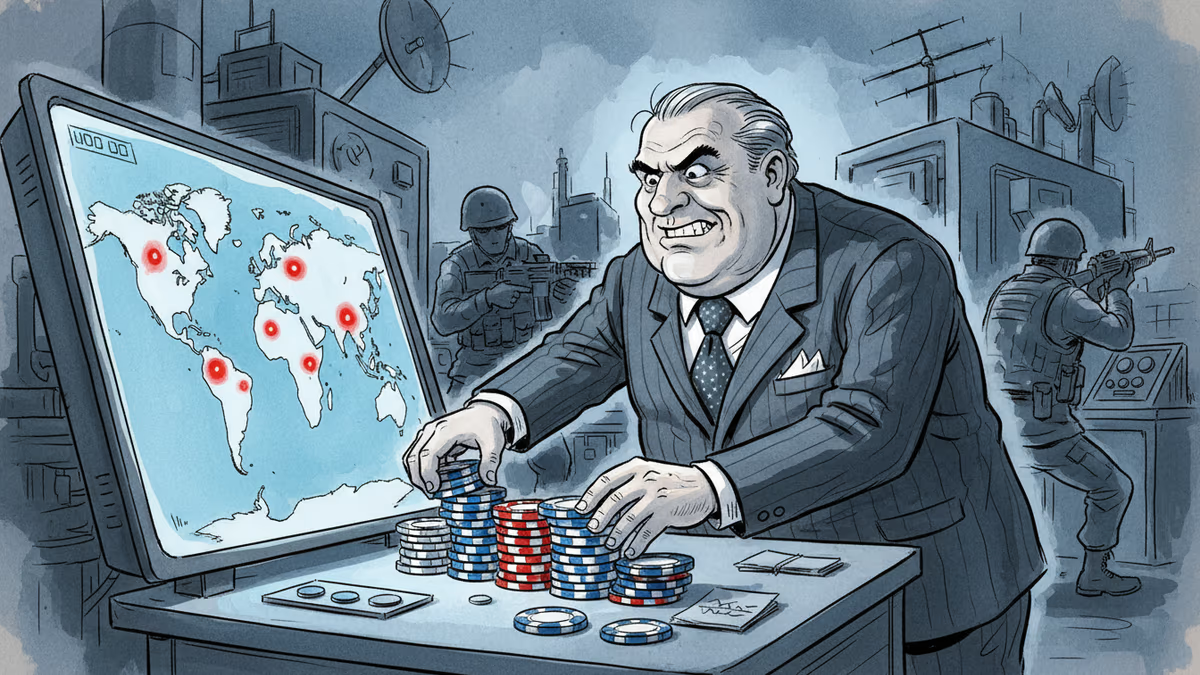
A US official involved in the operation to capture Venezuelan president Nicolás Maduro made over $400,000 on Polymarket bets days before it happened. Now he has a name.
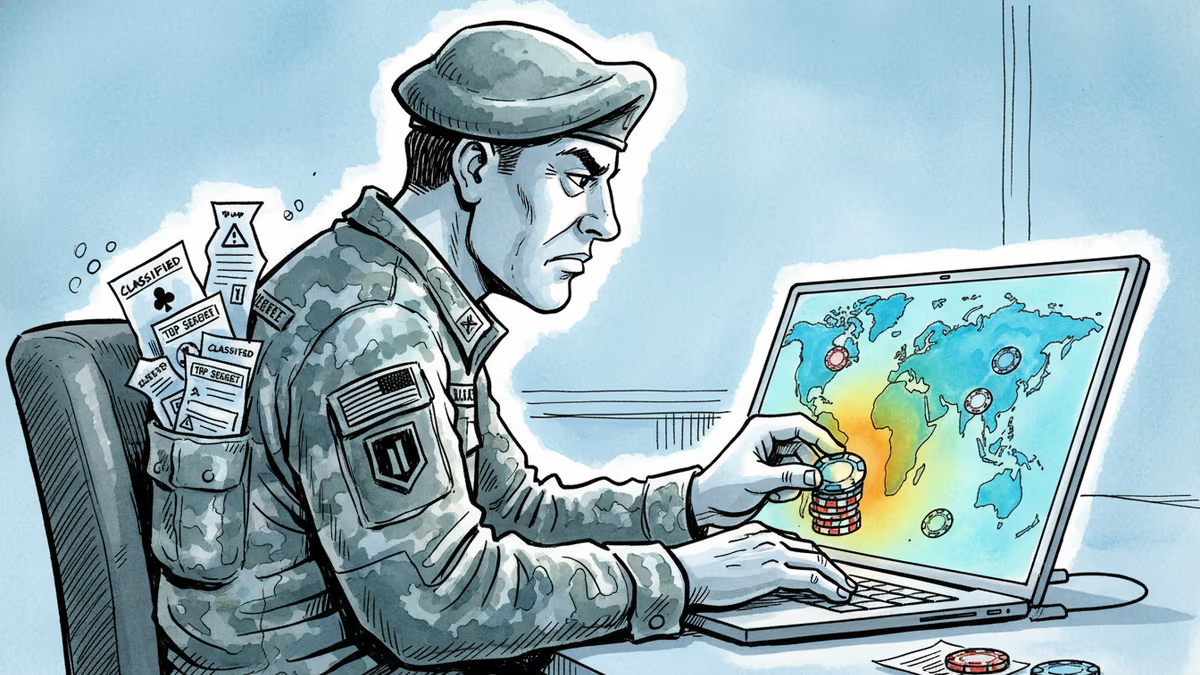
A US special forces soldier involved in the operation that captured Venezuela's Maduro allegedly used classified intel to bet on Polymarket, pocketing over $400,000. The case exposes a gaping hole in how prediction markets are regulated.
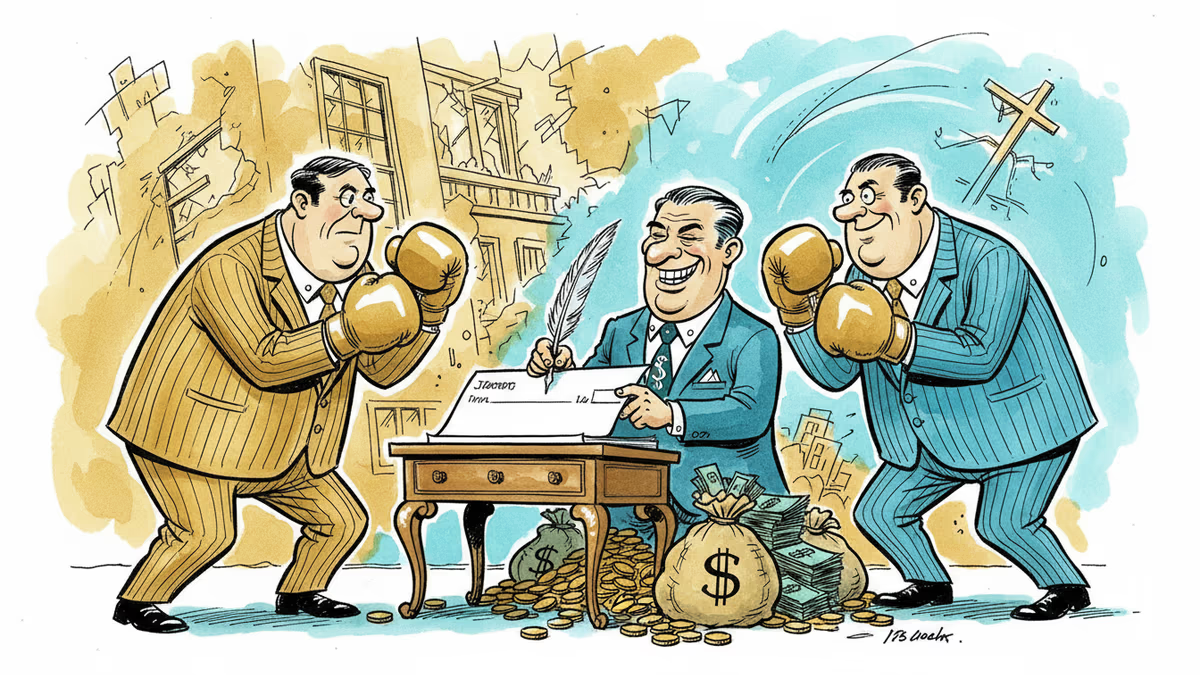
Despite fierce competition, the CEOs of Polymarket and Kalshi have co-invested in 5(c) Capital, a $35M VC fund targeting prediction market infrastructure. What this signals for the industry.
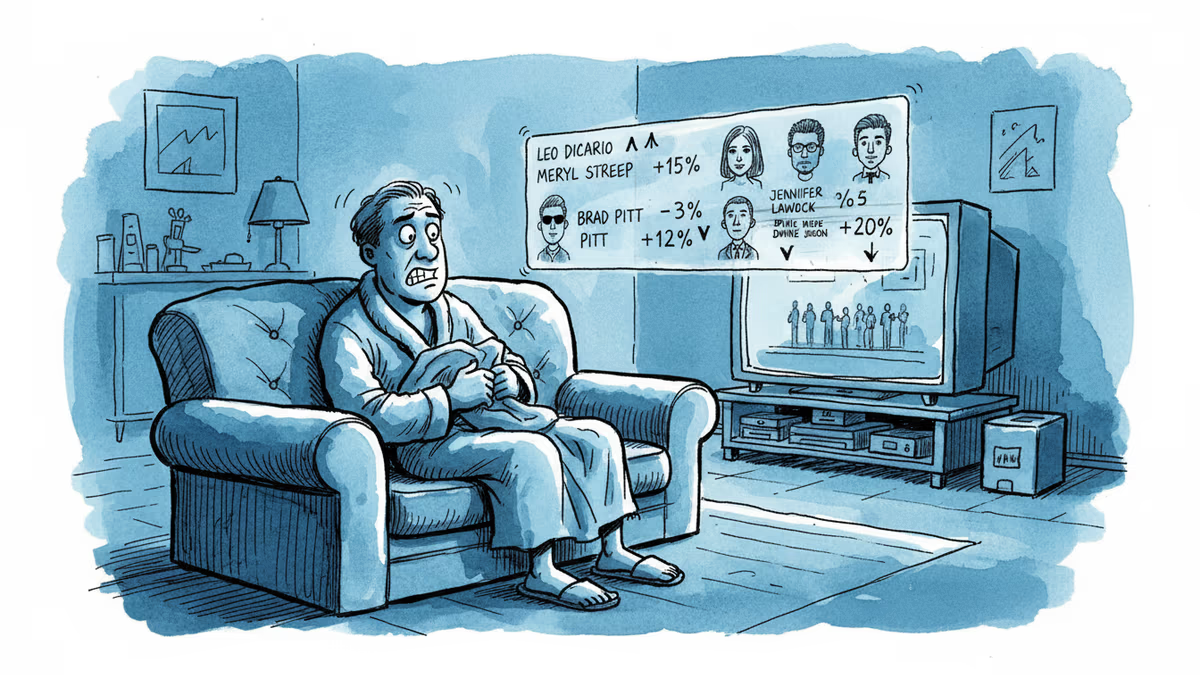
The Golden Globes partnered with Polymarket. From war timelines to Nobel Prizes, prediction markets now price every uncertainty. What does that do to the way we experience the world?
A US official involved in the operation to capture Venezuelan president Nicolás Maduro made over $400,000 on Polymarket bets days before it happened. Now he has a name.
A US special forces soldier involved in the operation that captured Venezuela's Maduro allegedly used classified intel to bet on Polymarket, pocketing over $400,000. The case exposes a gaping hole in how prediction markets are regulated.
Despite fierce competition, the CEOs of Polymarket and Kalshi have co-invested in 5(c) Capital, a $35M VC fund targeting prediction market infrastructure. What this signals for the industry.
The Golden Globes partnered with Polymarket. From war timelines to Nobel Prizes, prediction markets now price every uncertainty. What does that do to the way we experience the world?
Thoughts
Share your thoughts on this article
Sign in to join the conversation