
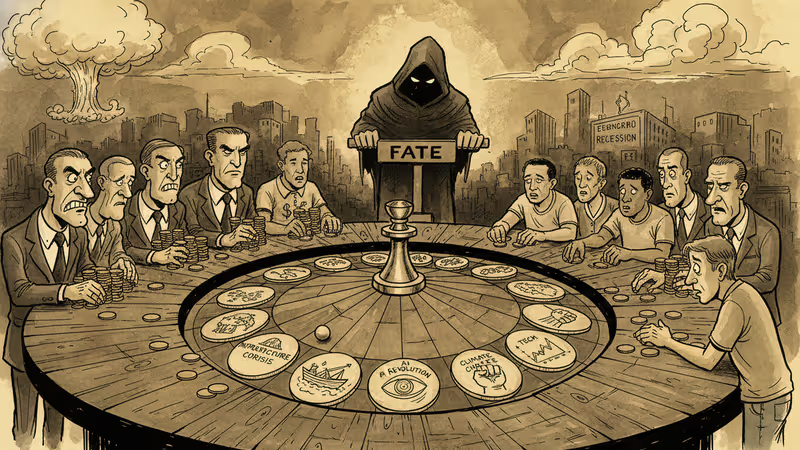
When Everything Becomes a Bet: The Rise of Prediction Markets
Prediction markets blur the lines between trading and gambling, raising questions about regulation, ethics, and the future of financial markets as platforms profit from betting on everything.
A newly-created account on Polymarket just made $400,000 in January by betting on the capture of Venezuelan leader Nicolás Maduro. The timing was suspiciously perfect, the profit substantial, and the questions it raises about prediction markets are profound.
Welcome to the world where you can bet on literally anything—from Elon Musk's tweet count to presidential elections, from celebrity deaths to geopolitical events. These platforms, led by companies like Polymarket and Kalshi, claim to offer the "most accurate predictions mankind has right now," according to Polymarket CEO Shayne Copland. But they're also tearing apart traditional boundaries between legitimate trading and outright gambling.
The Blurring Lines of Finance
Prediction markets operate in a regulatory gray zone that's becoming increasingly uncomfortable for authorities worldwide. Portugal recently ordered Polymarket to shut down operations, while the FBI seized the phone of Polymarket's CEO in November, highlighting the growing scrutiny these platforms face.
The fundamental question isn't just about legality—it's about what these markets represent. As Bloomberg'sJoe Weisenthal observed, "All of the lines between trading, speculating, [and] gambling are just being completely torn apart." When Robinhood CEO Vlad Tenev openly discusses prediction markets as the future, and Robinhood itself has been criticized as "just a gambling app," the distinction between investing and betting becomes meaningless.
The appeal is undeniable. Prediction markets can aggregate information in ways traditional polls and analysis cannot. They captured Trump's 2024 victory more accurately than most professional forecasters. But this accuracy comes with a cost: the financialization of everything, including human tragedy and political instability.
The Ethics of Betting on Everything

The Maduro bet exemplifies the ethical minefield these platforms navigate. Should anyone be able to profit from predicting political upheaval, natural disasters, or human suffering? The $400,000 profit wasn't just lucky timing—it raises serious questions about insider information and market manipulation.
These platforms have also been caught partnering with fake news accounts on X (formerly Twitter), further blurring the lines between legitimate information aggregation and market manipulation. When the line between news and betting tips disappears, the integrity of both information and markets suffers.
Kalshi and Polymarket argue they're democratizing prediction and creating more efficient information markets. Critics counter that they're simply creating new avenues for gambling addiction and market manipulation, dressed up in the language of innovation and efficiency.
The Regulatory Reckoning
Financial regulators worldwide are scrambling to catch up. The traditional frameworks that separate securities trading from gambling weren't designed for platforms where you can bet on whether Taylor Swift will attend the Super Bowl alongside predictions about Federal Reserve policy.
The regulatory response varies dramatically by jurisdiction. While Portugal has banned Polymarket outright, the United States continues to grapple with whether these platforms fall under securities law, gambling regulations, or something entirely new. Meanwhile, Polymarket quietly raised more funding before the FBI raid, suggesting investor confidence remains high despite regulatory uncertainty.
The challenge for regulators isn't just technical—it's philosophical. If prediction markets truly aggregate information more efficiently than traditional methods, banning them might reduce overall market intelligence. But allowing unrestricted betting on everything from elections to disasters raises profound questions about what society should commodify.
Authors
Related Articles
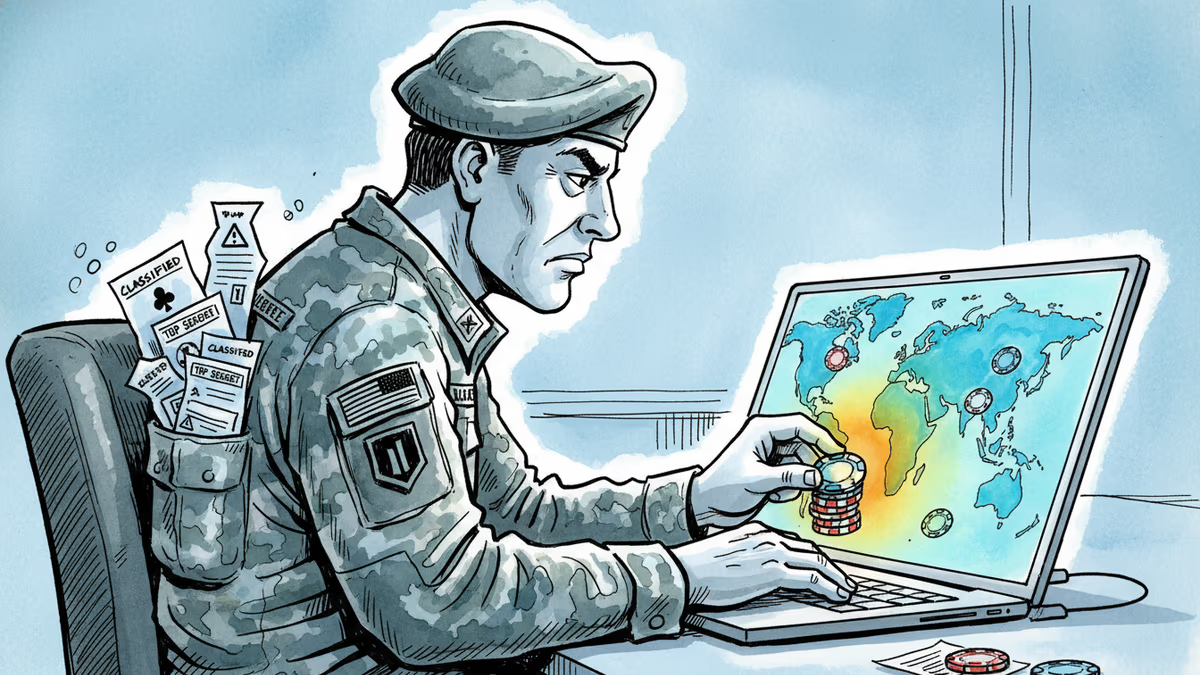
A US special forces soldier involved in the operation that captured Venezuela's Maduro allegedly used classified intel to bet on Polymarket, pocketing over $400,000. The case exposes a gaping hole in how prediction markets are regulated.
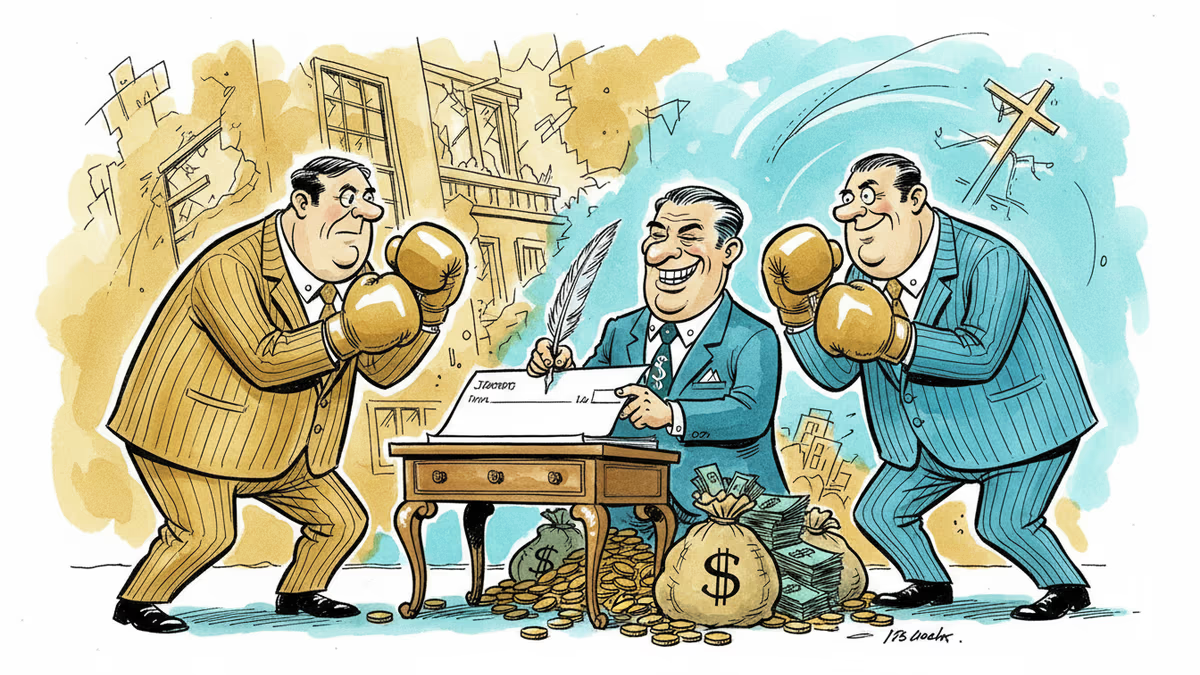
Despite fierce competition, the CEOs of Polymarket and Kalshi have co-invested in 5(c) Capital, a $35M VC fund targeting prediction market infrastructure. What this signals for the industry.
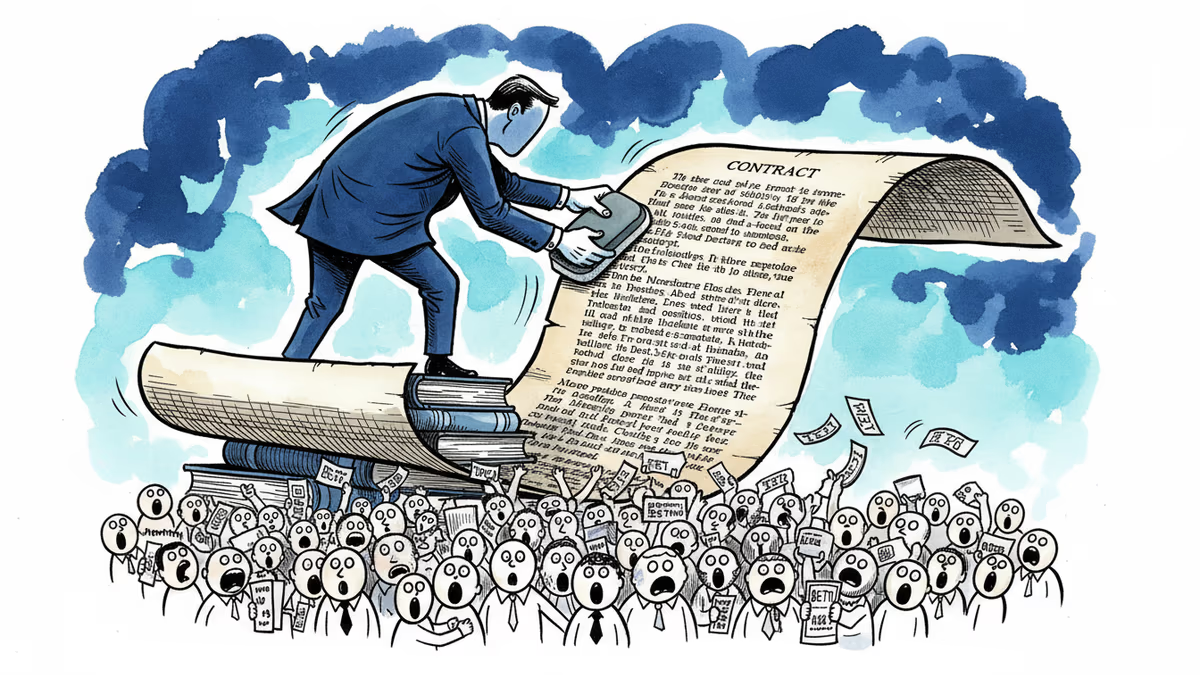
A class action lawsuit accuses Kalshi of changing payout rules after Iran's Supreme Leader Khamenei was killed. The case cuts to the heart of prediction market credibility.

Indonesia introduces age-tiered social media restrictions, allowing 13+ for low-risk platforms and 16+ for high-risk ones. How does this compare to Australia's blanket ban?
A US special forces soldier involved in the operation that captured Venezuela's Maduro allegedly used classified intel to bet on Polymarket, pocketing over $400,000. The case exposes a gaping hole in how prediction markets are regulated.
Despite fierce competition, the CEOs of Polymarket and Kalshi have co-invested in 5(c) Capital, a $35M VC fund targeting prediction market infrastructure. What this signals for the industry.
A class action lawsuit accuses Kalshi of changing payout rules after Iran's Supreme Leader Khamenei was killed. The case cuts to the heart of prediction market credibility.
Indonesia introduces age-tiered social media restrictions, allowing 13+ for low-risk platforms and 16+ for high-risk ones. How does this compare to Australia's blanket ban?
Thoughts
Share your thoughts on this article
Sign in to join the conversation