
Google's App Store Fee Cut: Victory or Strategic Retreat?
Google slashes app store fees from 30% to 20% after antitrust ruling. What this means for developers, competitors, and the future of digital marketplaces.
The $50 Billion Question: Is Google's Fee Cut Enough?
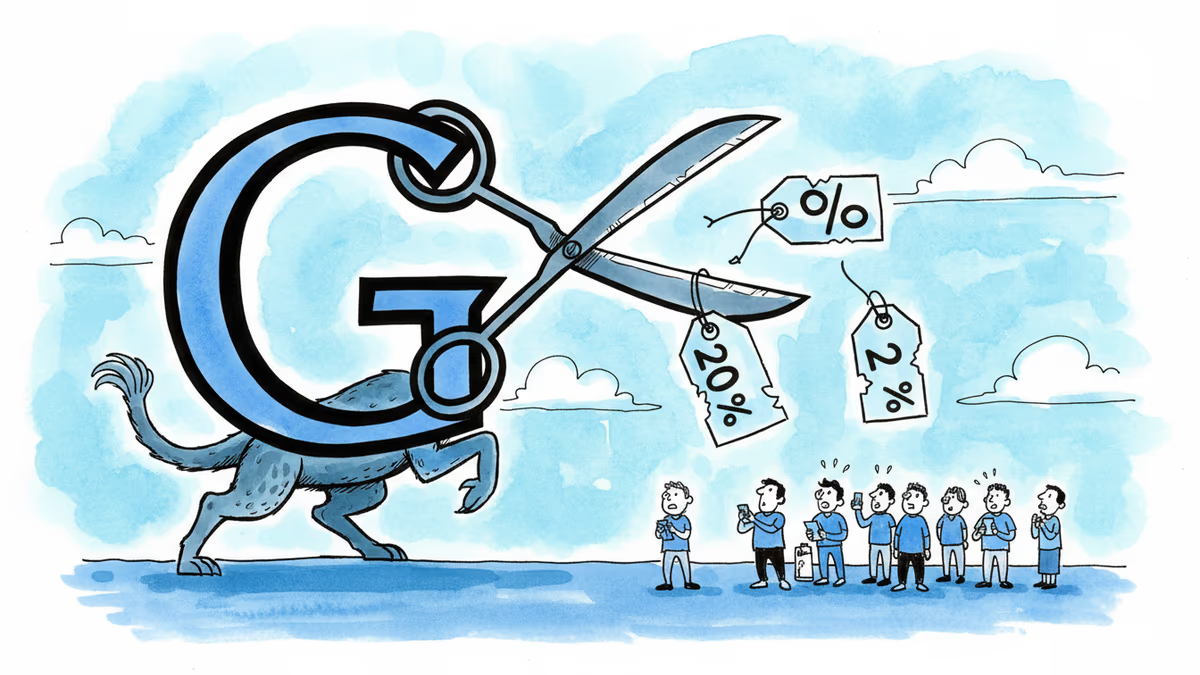
Google just made the most significant change to its app store economics in over a decade. Starting July 2024, the tech giant will slash its standard commission from 30% to 20% for in-app purchases, with subscription fees dropping to 10%. The move comes months after a federal judge declared Google Play's billing practices an illegal monopoly.
But here's what makes this interesting: Google isn't just cutting fees—it's creating entirely new categories of apps, including something called "metaverse browsers" with mysteriously redacted fee structures. The company is also launching "Apps Experience" and "Games Level Up" programs that could save developers up to 5% more.
The Antitrust Domino Effect
This wasn't Google's choice. In December 2023, a jury sided with Epic Games, ruling that Google had illegally maintained its app store monopoly through exclusive deals and technical barriers. The ruling forced Google to allow third-party app stores on Android devices and give developers more billing options.
The timing is crucial. While Apple faces similar antitrust pressure globally, Google is the first major platform to make such sweeping changes to its fee structure in response to legal action. The company is essentially testing whether voluntary concessions can prevent more aggressive regulatory intervention.

Winners, Losers, and the Complicated Middle
Small developers are celebrating. For an indie game generating $100,000 annually, this change means keeping an extra $10,000—enough to hire a part-time developer or fund marketing campaigns. Spotify, which has long battled app store fees, called the move "a step in the right direction."
Enterprise software companies face a more complex reality. While they'll pay less on in-app purchases, many already negotiated custom deals with Google. The real winners might be mid-tier developers who were too small for special arrangements but large enough to feel the 30% bite.
Competitors are watching closely. Apple still maintains its 30% standard rate, but pressure is mounting. The European Union's Digital Markets Act already forces Apple to allow alternative app stores, and this Google precedent could accelerate similar changes in Cupertino.
The Metaverse Mystery
Perhaps the most intriguing aspect is Google's new "metaverse browsers" category. The details are redacted, but the timing suggests Google is positioning itself for the next platform war. As Meta, Apple, and others bet billions on virtual and augmented reality, app store economics in these new environments remain undefined.
This category hints at Google's broader strategy: rather than just defending its current position, it's trying to set favorable terms for emerging platforms where it might not be the dominant player.
Authors
Related Articles
Behind every congressional hearing on Big Tech, there's a quieter room where the real rules get negotiated. As AI regulation, antitrust battles, and privacy law converge on Capitol Hill in 2026, the stakes have never been higher.
New data shows global app releases surged 60% year-over-year in Q1 2026. The theory that AI chatbots would replace apps may have it completely backwards.
Apple hits its 50th birthday with a $3 trillion valuation — but AI struggles, antitrust pressure, and a quiet innovation drought are raising real questions about what comes next.
A cloud provider trade group has filed an EU antitrust complaint against Broadcom after it slashed VMware's CSP partner count from 4,000+ to just 19 in the US. Here's what's really at stake.
Behind every congressional hearing on Big Tech, there's a quieter room where the real rules get negotiated. As AI regulation, antitrust battles, and privacy law converge on Capitol Hill in 2026, the stakes have never been higher.
New data shows global app releases surged 60% year-over-year in Q1 2026. The theory that AI chatbots would replace apps may have it completely backwards.
Apple hits its 50th birthday with a $3 trillion valuation — but AI struggles, antitrust pressure, and a quiet innovation drought are raising real questions about what comes next.
A cloud provider trade group has filed an EU antitrust complaint against Broadcom after it slashed VMware's CSP partner count from 4,000+ to just 19 in the US. Here's what's really at stake.
Thoughts
Share your thoughts on this article
Sign in to join the conversation