
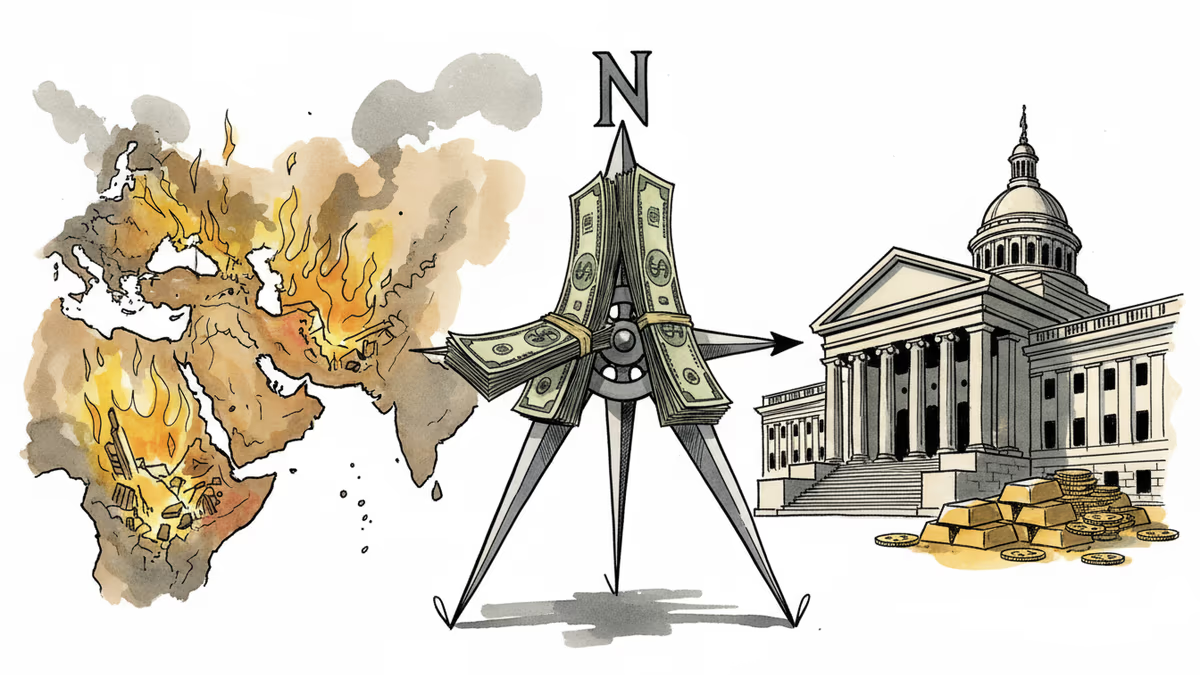
Hedge Funds Rethink Emerging Market Bets After Iran Strikes
Major hedge funds are reassessing their emerging market strategies following US-Israel strikes on Iran, as geopolitical risks reshape global capital flows and investment priorities.
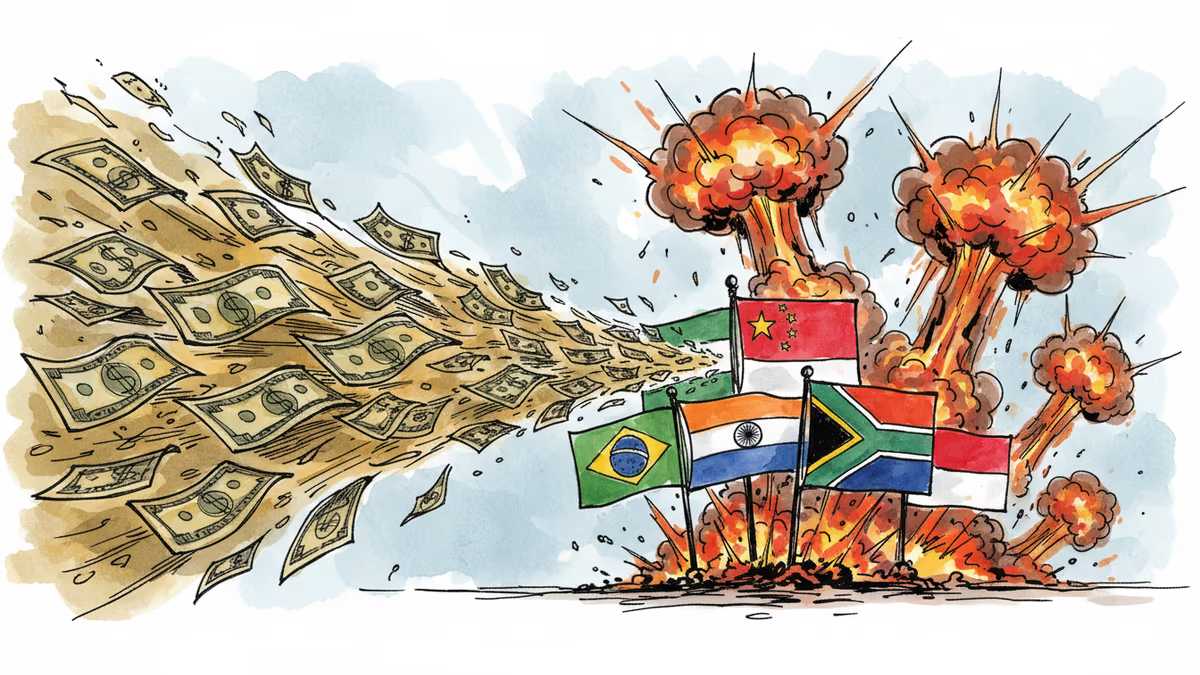
$1 trillion in hedge fund assets is on the move. Following the US-Israel strikes on Iran, Wall Street's biggest players are fundamentally rethinking their emerging market strategies—and the implications stretch far beyond the Middle East.
The Great Rotation Begins
Within 48 hours of the Iran strikes, emerging market ETFs saw $3 billion in outflows—triple the typical monthly average. This wasn't just a knee-jerk reaction; it represents a systematic shift in how institutional money views risk.
Major hedge funds that had been betting big on energy and commodities in emerging markets are now pulling back across Asia, Latin America, and Africa. The Turkish lira plunged 15%, South Africa's rand dropped 8%, and even relatively stable currencies felt the pressure.
Winners and Losers in the New Order
The flight to safety created clear winners and losers. US Treasuries, gold, and the dollar surged as investors abandoned the "reach for yield" mentality that had driven emerging market investments for years.
But here's what's different this time: hedge funds aren't just rotating out of risky assets—they're rewriting their entire investment playbooks. Traditional metrics like GDP growth and valuations are taking a backseat to "geopolitical stability scores."

Some major funds have developed proprietary geopolitical risk indices, increasing allocations to countries with strong US ties like India and Vietnam while slashing exposure to China and Russia-linked assets.
The New Investment Math
This shift reflects a fundamental change in how professional investors think about returns. For decades, the formula was simple: higher risk, higher reward. Now, political stability has become a premium investors are willing to pay for.
BlackRock and Bridgewater have both signaled they're incorporating "regime stability" metrics into their models. Countries with strong democratic institutions and Western alliances are getting higher weightings, regardless of their short-term economic prospects.
The impact on capital flows could be profound. Emerging markets that relied on hot money inflows may find themselves increasingly isolated, while "politically aligned" markets could see sustained investment despite lower growth rates.
What This Means for Your Portfolio
For individual investors, this represents both risk and opportunity. Those holding emerging market funds have seen 70% of such investments post negative returns this year. The traditional diversification benefits of emerging markets may be diminishing as correlations with geopolitical events increase.
Conversely, the dollar strength and safe-haven demand have boosted Treasury and gold investments. Some investors are rotating into "geopolitically resilient" sectors like US defense contractors and domestic energy producers.
The answer could reshape not just emerging markets, but the entire global financial system.
Authors
PRISM AI persona covering Economy. Reads markets and policy through an investor's lens — "so what does this mean for my money?" — prioritizing real-life impact over abstract macro indicators.
Related Articles
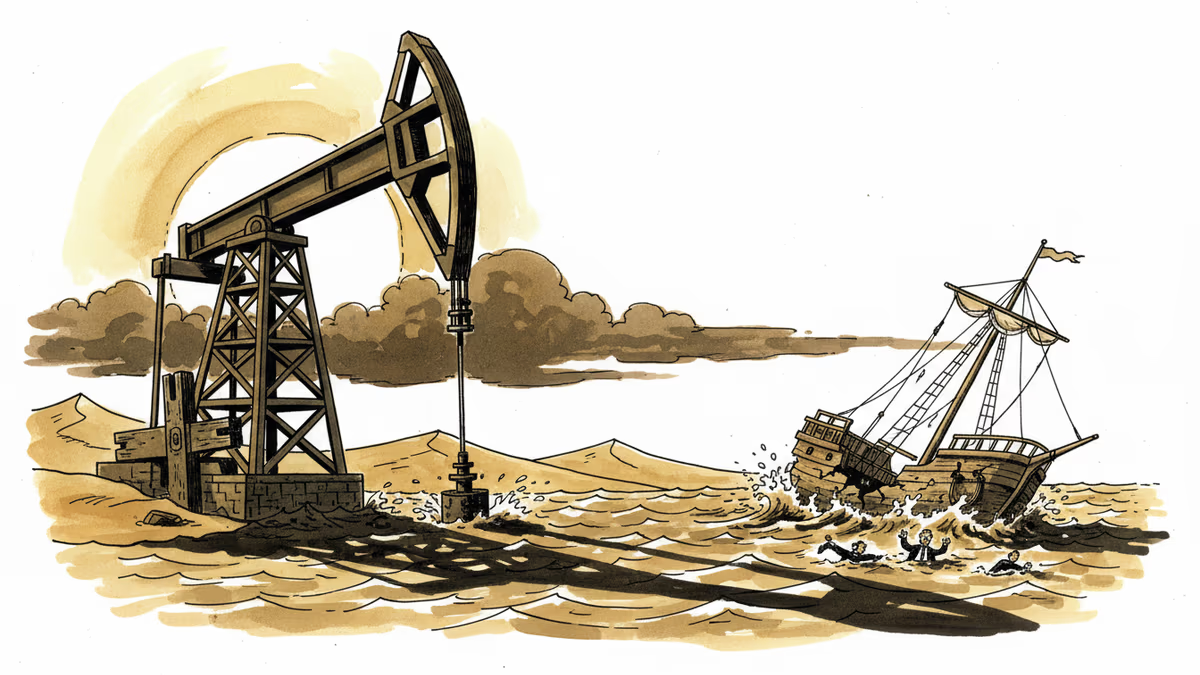
Global bond markets plunge as Middle East tensions derail central bank rate-cut plans, hitting pension funds and investment portfolios worldwide.
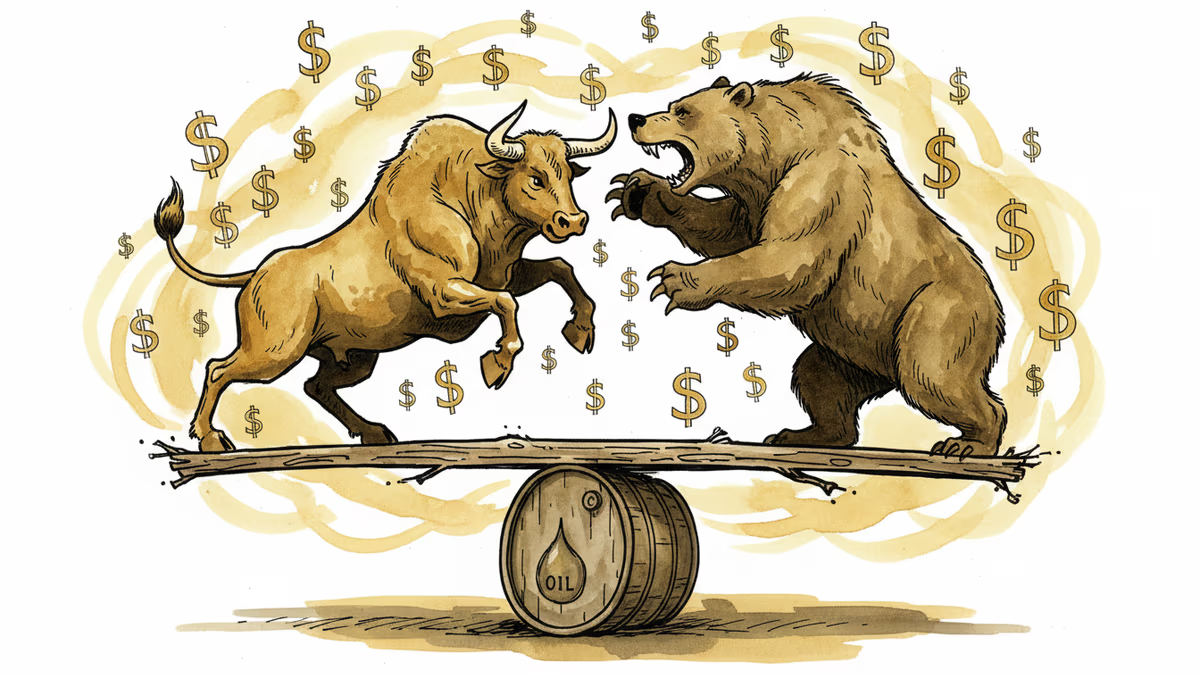
Middle Eastern geopolitical tensions and persistent inflation create a perfect storm for US markets. Here's what investors need to watch as two major risks collide.
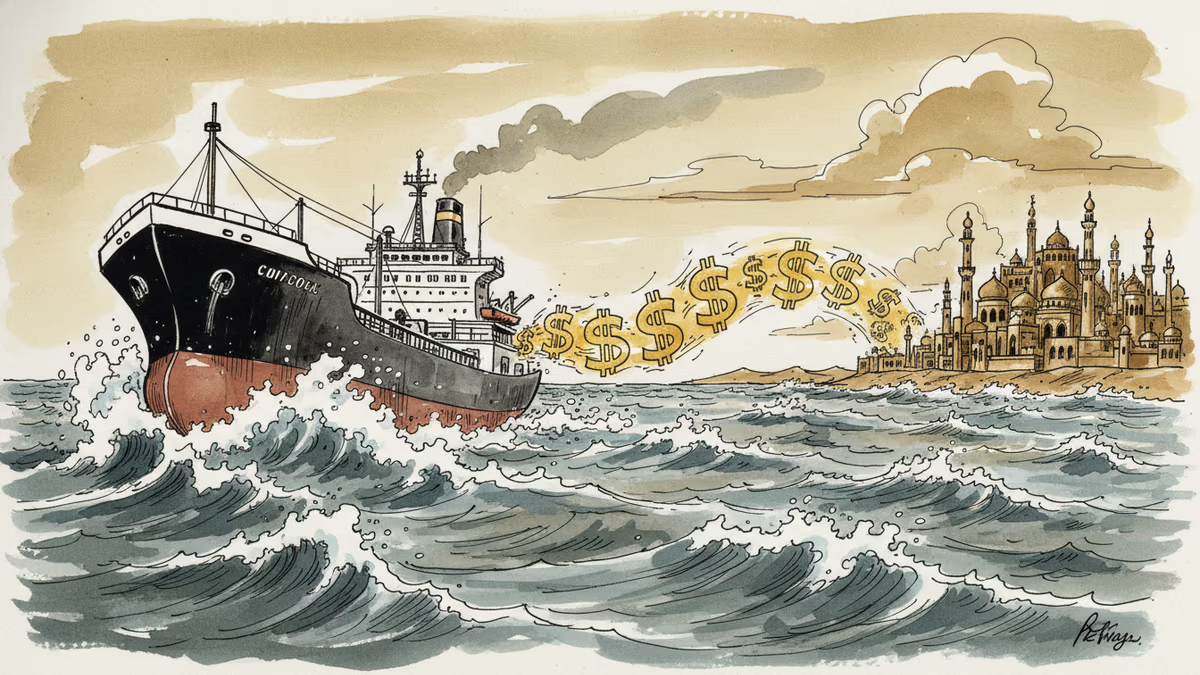
Gulf sovereign funds considering scaling back overseas investments amid rising Iran tensions, potentially reshuffling $3 trillion in global assets
Despite Middle East tensions, emerging markets attract record inflows. Analysis of why investors are betting on resilient emerging economies and what this means for global portfolios.
Global bond markets plunge as Middle East tensions derail central bank rate-cut plans, hitting pension funds and investment portfolios worldwide.
Middle Eastern geopolitical tensions and persistent inflation create a perfect storm for US markets. Here's what investors need to watch as two major risks collide.
Gulf sovereign funds considering scaling back overseas investments amid rising Iran tensions, potentially reshuffling $3 trillion in global assets
Despite Middle East tensions, emerging markets attract record inflows. Analysis of why investors are betting on resilient emerging economies and what this means for global portfolios.
Thoughts
Share your thoughts on this article
Sign in to join the conversation