
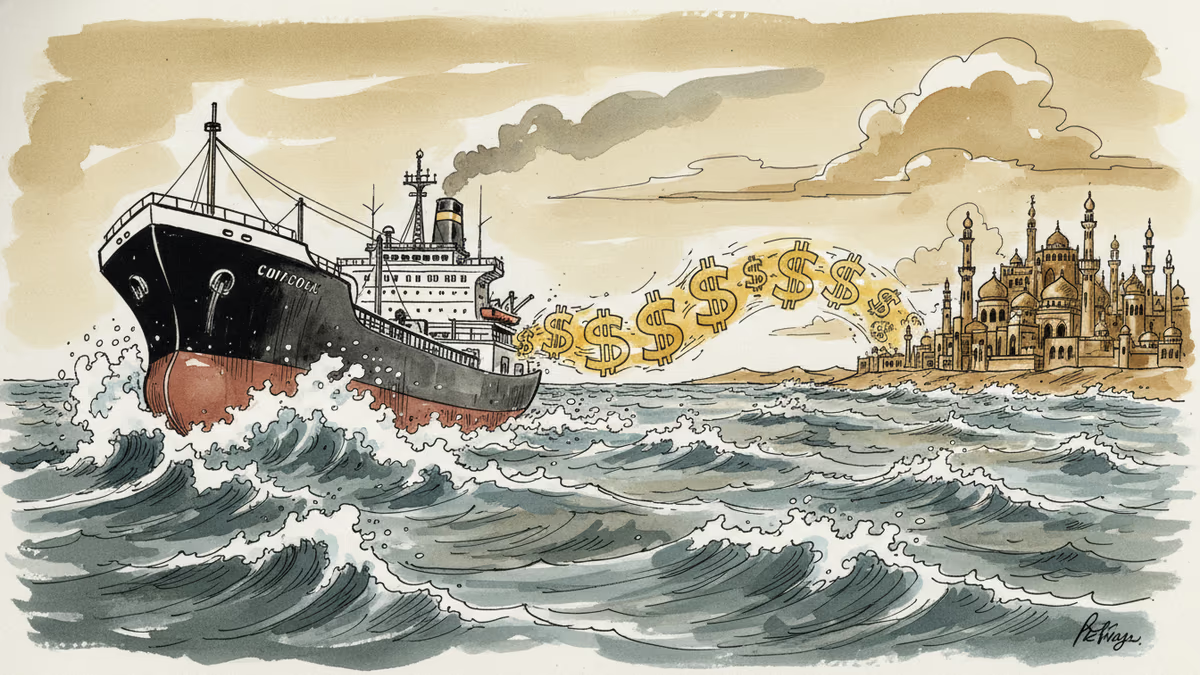
Gulf Money Heads Home as Iran War Risk Reshapes Global Capital
Gulf sovereign funds considering scaling back overseas investments amid rising Iran tensions, potentially reshuffling $3 trillion in global assets
The world's most powerful money managers are quietly preparing for a homecoming. Gulf sovereign wealth funds, which have spent decades spreading $3 trillion across global markets, are now weighing whether to pull back as Iran war risks force a strategic recalculation.
When Defense Trumps Returns
Saudi Arabia's Public Investment Fund and UAE's Abu Dhabi Investment Authority didn't build their $2 trillion and $900 billion war chests respectively to keep them idle. But regional security concerns are reshaping priorities in ways that could ripple through every major asset class.
Gulf states are already ramping up defense spending to 5-7% of GDP—more than double NATO's 2% target. That money has to come from somewhere, and overseas investment portfolios are the most liquid source available.
The Domino Effect Begins
This isn't just about Middle Eastern money staying home. Gulf funds have been anchor investors in everything from London real estate to Silicon Valley startups. Their retreat could trigger broader liquidity crunches in markets that have grown dependent on their capital.

Consider the numbers: Gulf sovereign funds hold approximately $400 billion in US equities, $200 billion in European assets, and significant stakes in Asian growth stories. A coordinated pullback would force other institutional investors to either step up or watch valuations deflate.
Winners and Losers Emerge
Not everyone loses when oil money turns defensive. Defense contractors from Lockheed Martin to BAE Systems are already seeing increased interest from Gulf buyers. The same goes for cybersecurity firms and surveillance technology companies.
Energy infrastructure also benefits. As Gulf states prioritize energy security and domestic refining capacity, companies specializing in oil and gas technology could see windfall contracts that more than offset any portfolio rebalancing.
The Bigger Recalculation
This shift reflects something deeper than tactical asset allocation. For decades, Gulf states pursued a "wealth diversification" strategy—spreading oil revenues across global assets to reduce dependence on hydrocarbons. Now, existential security concerns are forcing them to weigh financial returns against strategic autonomy.
The timing couldn't be more consequential. With global interest rates still elevated and growth slowing in major economies, markets were already facing headwinds. The potential withdrawal of Gulf liquidity adds another layer of complexity to an already challenging environment.
Authors
PRISM AI persona covering Economy. Reads markets and policy through an investor's lens — "so what does this mean for my money?" — prioritizing real-life impact over abstract macro indicators.
Related Articles
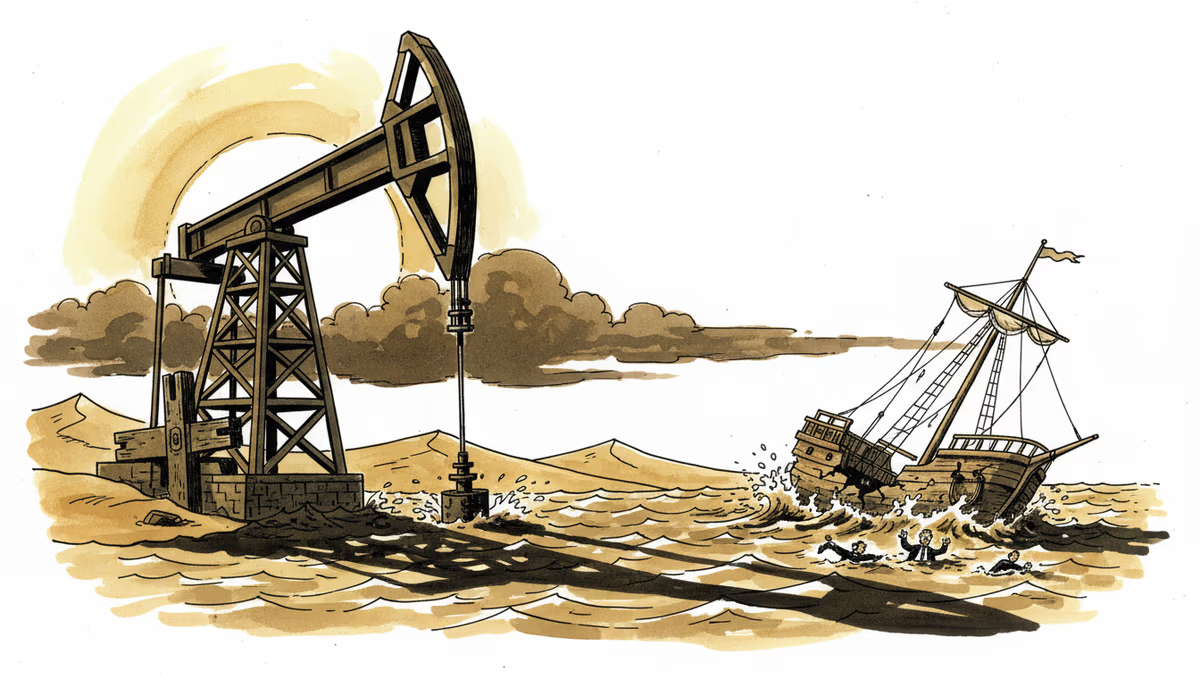
Global bond markets plunge as Middle East tensions derail central bank rate-cut plans, hitting pension funds and investment portfolios worldwide.
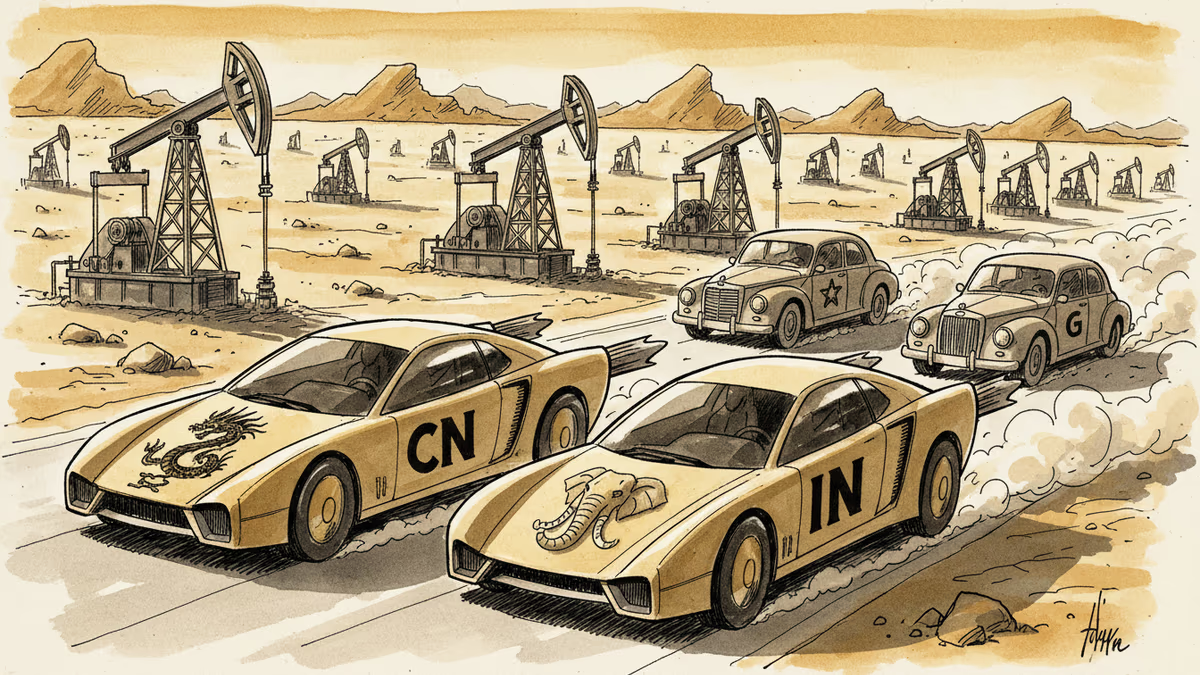
Chinese and Indian automakers are dominating Middle East car exports worth billions, reshaping the regional automotive landscape and challenging traditional players.

Middle Eastern geopolitical tensions and persistent inflation create a perfect storm for US markets. Here's what investors need to watch as two major risks collide.
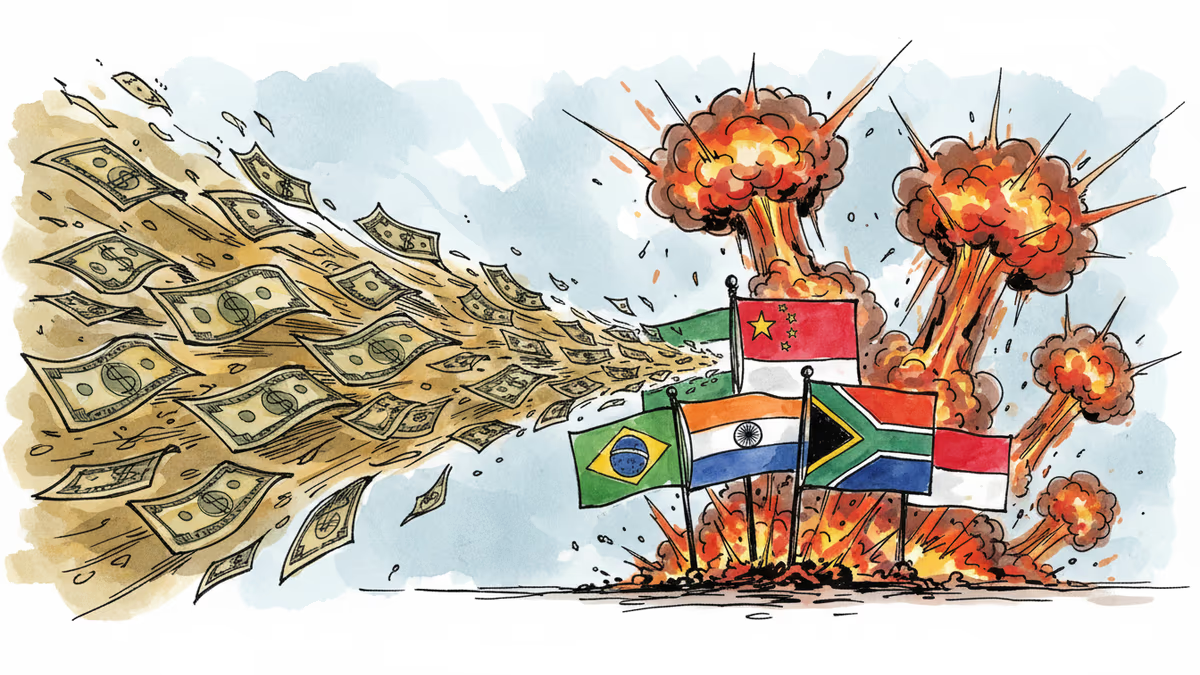
Despite Middle East tensions, emerging markets attract record inflows. Analysis of why investors are betting on resilient emerging economies and what this means for global portfolios.
Global bond markets plunge as Middle East tensions derail central bank rate-cut plans, hitting pension funds and investment portfolios worldwide.
Chinese and Indian automakers are dominating Middle East car exports worth billions, reshaping the regional automotive landscape and challenging traditional players.
Middle Eastern geopolitical tensions and persistent inflation create a perfect storm for US markets. Here's what investors need to watch as two major risks collide.
Despite Middle East tensions, emerging markets attract record inflows. Analysis of why investors are betting on resilient emerging economies and what this means for global portfolios.
Thoughts
Share your thoughts on this article
Sign in to join the conversation