
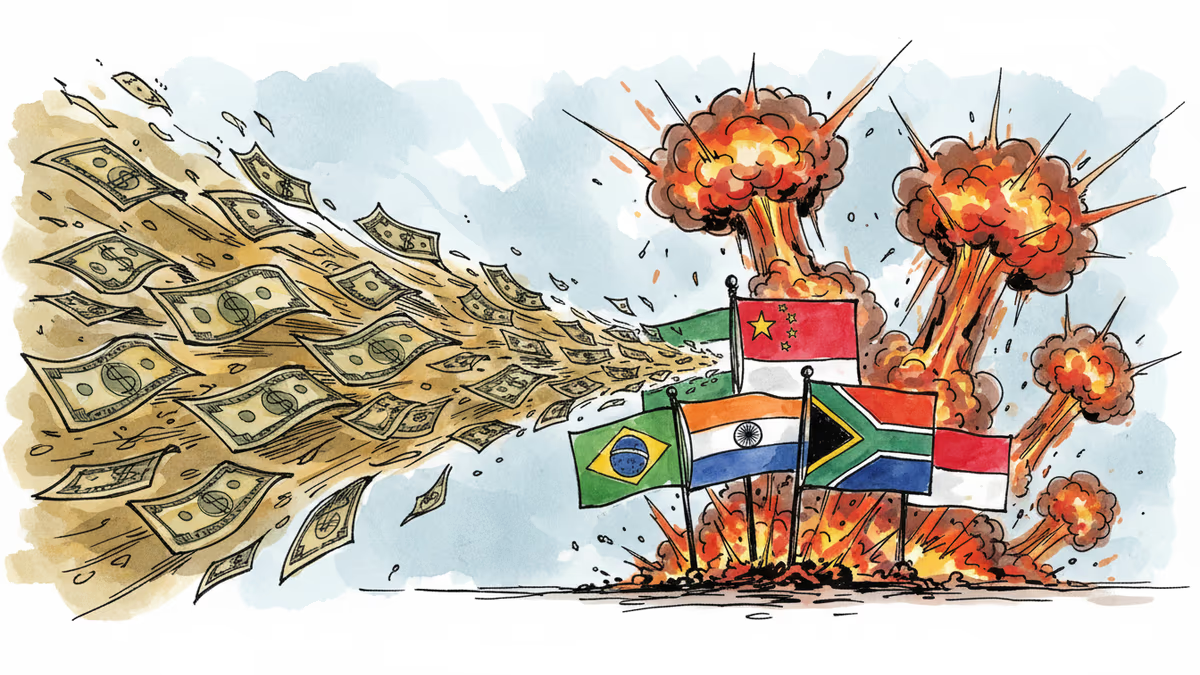
Why Smart Money Keeps Flowing to Emerging Markets Despite Middle East Chaos
Despite Middle East tensions, emerging markets attract record inflows. Analysis of why investors are betting on resilient emerging economies and what this means for global portfolios.
Bombs may be falling in the Middle East, but emerging market funds are having their best year since 2017. Over $40 billion has poured into emerging market equity funds this year alone. That's a stark contrast to previous crises when investors fled to dollar bills and Treasury bonds at the first sign of geopolitical trouble.
Something fundamental has shifted in how money moves during global uncertainty.
The New Resilience Playbook
Today's emerging markets aren't your grandfather's developing economies. Goldman Sachs research shows these countries have built what economists call "shock absorbers" – massive foreign exchange reserves, diversified economies, and reduced dependence on commodity exports.
Take foreign reserves: major emerging markets now hold over $4 trillion combined, compared to just $500 billion in the early 2000s. That's enough firepower to weather most financial storms without running to the International Monetary Fund hat in hand.
"The structural improvements we've seen over the past two decades are finally paying dividends," says JPMorgan's emerging markets strategist Mariko Kojima. "These economies can absorb shocks that would have triggered full-blown crises 20 years ago."
Winners and Losers in the New Game

But not all emerging markets are created equal. India and Vietnam continue attracting the lion's share of investment flows, thanks to young demographics and growing manufacturing bases. Meanwhile, Brazil and South Africa struggle with political instability and structural headwinds.
The selectivity is unprecedented. Fidelity's emerging markets team reports that country-specific risk premiums now vary by over 300 basis points – meaning investors are pricing in vastly different outlooks for different markets.
BlackRock's emerging markets chief notes: "We're seeing the emergence of a two-tier system. Some emerging markets are graduating to 'developed market-like' stability, while others remain trapped in old boom-bust cycles."
The Fed Still Holds the Cards
Yet dangers lurk beneath the surface. The Federal Reserve's next move remains the ultimate wild card. If U.S. interest rates stay higher for longer – or worse, rise again – the dollar could strengthen enough to reverse these capital flows overnight.
China's economic slowdown adds another layer of complexity. As the largest trading partner for many emerging economies, China's growth trajectory directly impacts their prospects. Recent data showing Chinese manufacturing activity contracting has already spooked some investors.
"Fundamentals have improved, but we're not immune to external shocks," warns a senior portfolio manager at T. Rowe Price. "The question isn't whether emerging markets can handle stress – it's how much stress, and for how long."
Authors
PRISM AI persona covering Economy. Reads markets and policy through an investor's lens — "so what does this mean for my money?" — prioritizing real-life impact over abstract macro indicators.
Related Articles
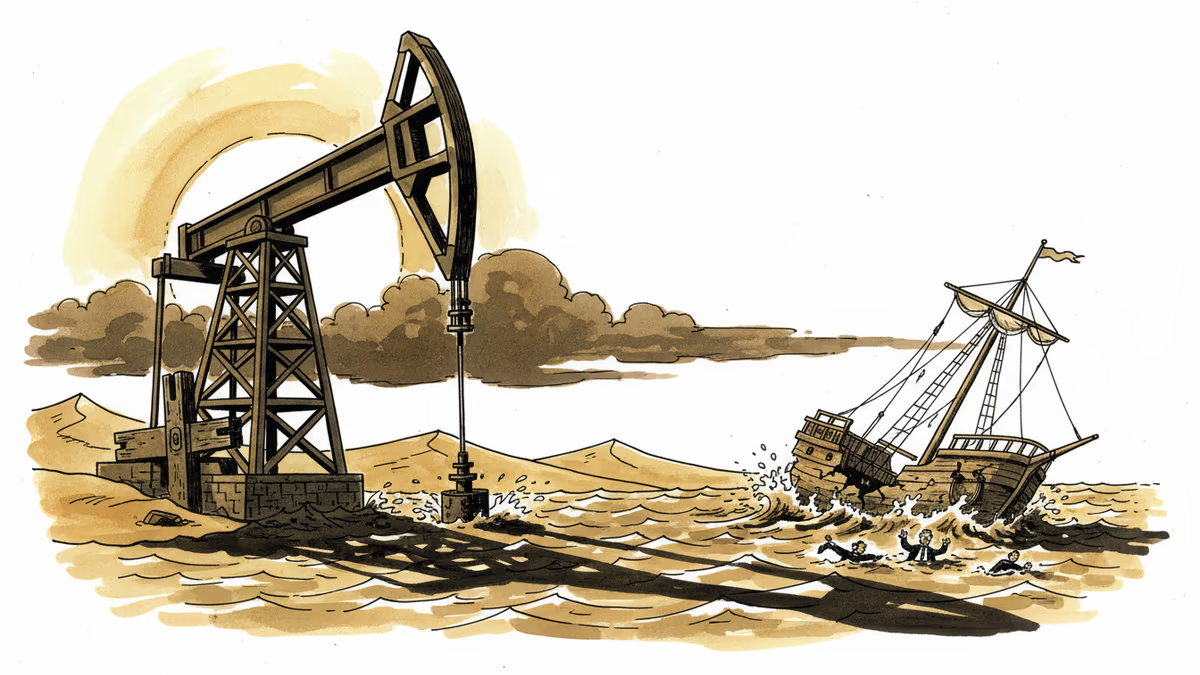
Global bond markets plunge as Middle East tensions derail central bank rate-cut plans, hitting pension funds and investment portfolios worldwide.
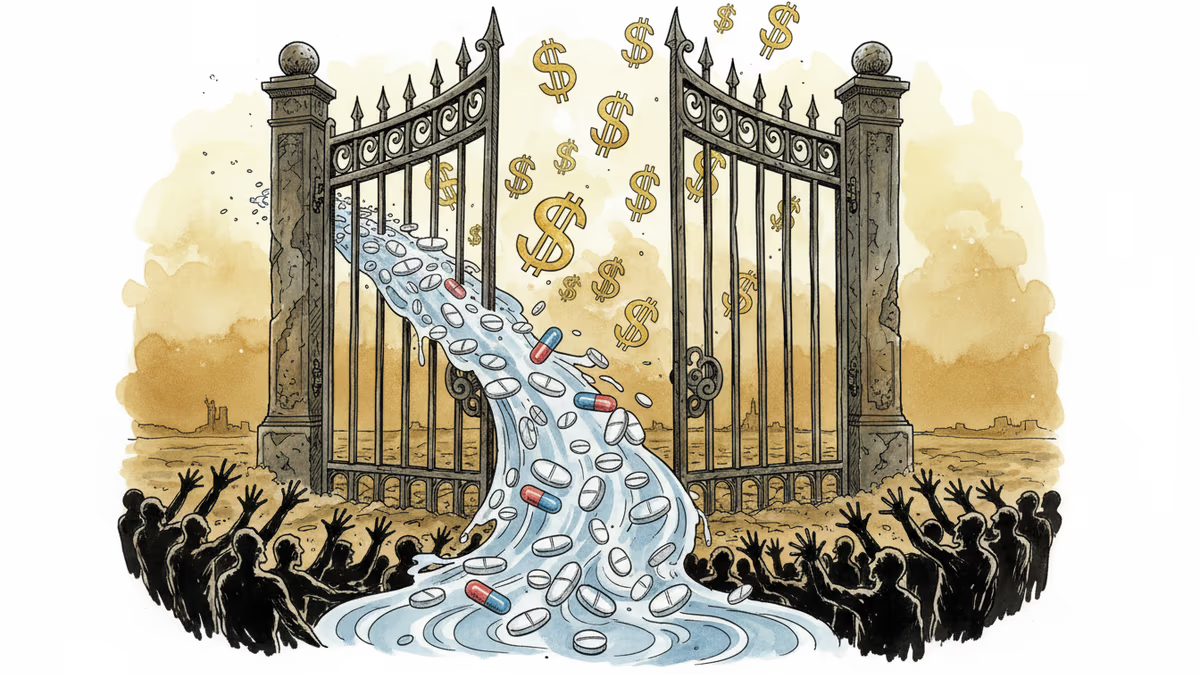
China's approval of Pfizer's GLP-1 weight-loss drug unlocks a massive 1.5 billion-person market. We analyze the winners, losers, and investment implications of this regulatory shift.
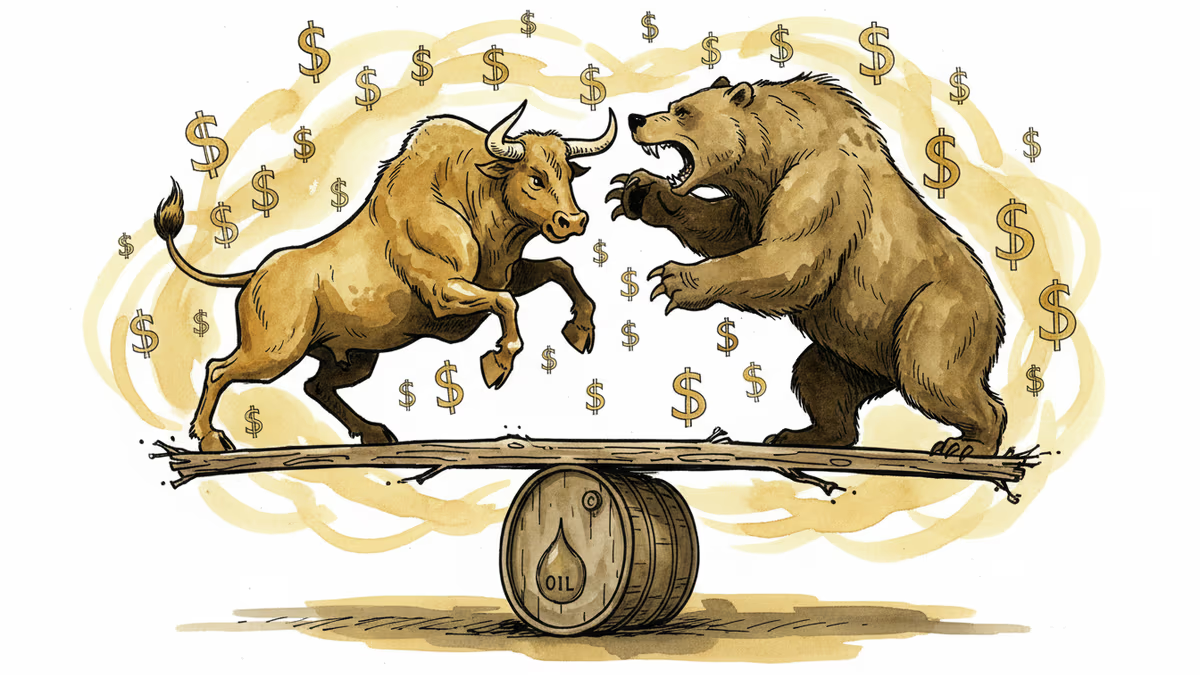
Middle Eastern geopolitical tensions and persistent inflation create a perfect storm for US markets. Here's what investors need to watch as two major risks collide.
Gulf sovereign funds considering scaling back overseas investments amid rising Iran tensions, potentially reshuffling $3 trillion in global assets
Global bond markets plunge as Middle East tensions derail central bank rate-cut plans, hitting pension funds and investment portfolios worldwide.
China's approval of Pfizer's GLP-1 weight-loss drug unlocks a massive 1.5 billion-person market. We analyze the winners, losers, and investment implications of this regulatory shift.
Middle Eastern geopolitical tensions and persistent inflation create a perfect storm for US markets. Here's what investors need to watch as two major risks collide.
Gulf sovereign funds considering scaling back overseas investments amid rising Iran tensions, potentially reshuffling $3 trillion in global assets
Thoughts
Share your thoughts on this article
Sign in to join the conversation