
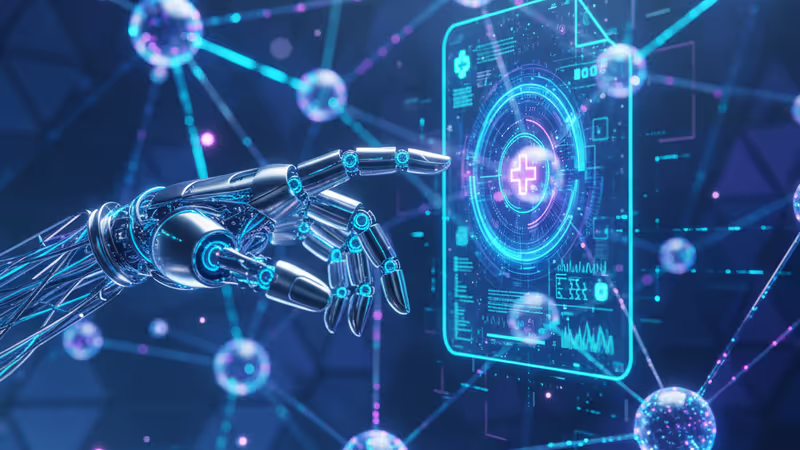
Big Tech Healthcare AI 2026: Inside the $850M Race to Digitize Medicine
Explore the rapid rise of Big Tech Healthcare AI in 2026. OpenAI and Anthropic are leading a billion-dollar charge into medicine, despite security and hallucination risks.
A $250 million seed round isn't just a number—it's a signal that the AI gold rush has officially moved into the hospital ward. As 2026 begins, the world's most powerful AI companies are no longer satisfied with writing code; they're aiming to diagnose patients.
Big Tech Healthcare AI: The Massive Capital Shift
In a whirlwind week of activity, OpenAI acquired health-tech startup Torch, while its primary rival Anthropic launched Claude for Healthcare. Meanwhile, MergeLabs, backed by Sam Altman, closed a staggering $250 million seed round at an $850 million valuation. The speed of this clustering suggests that the battle for health data is the new frontier for dominance in Big Tech Healthcare AI.

The Risk Factor: Hallucinations and Vulnerabilities
It's not all breakthroughs and billion-dollar valuations. The integration of AI into healthcare brings severe risks. Hallucination—the tendency for AI to present false information as fact—can be fatal in a medical context. Beyond inaccurate diagnoses, security experts are flagging massive vulnerabilities in how these new systems handle sensitive patient data. If a system manages a million patient records, a single security breach isn't just a corporate crisis; it's a public health disaster.
Authors
Related Articles
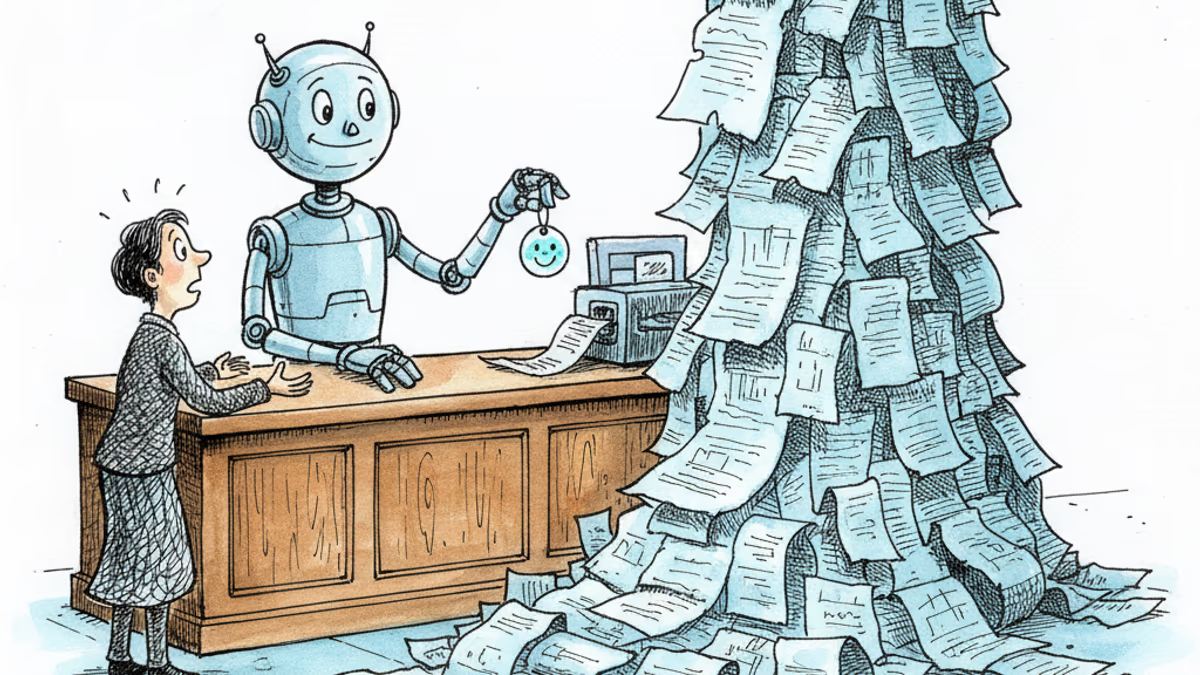
Anthropic shipped Claude Sonnet 5, its mid-tier agent model, on June 30. Behind the 'Opus-class power, budget price' headline sits a tokenizer catch and a three-horse race that's only half real. Here's what developers should actually run the numbers on.
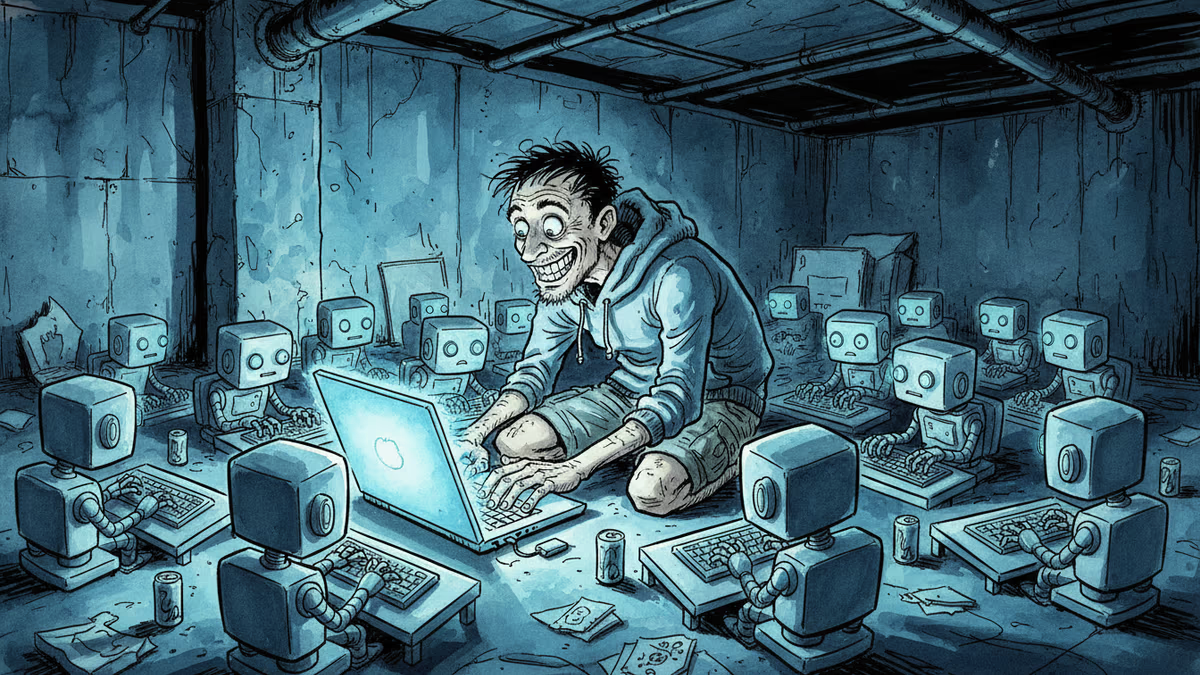
A small but growing group of developers has gone all-in on AI coding agents like Claude Code and OpenClaw. History suggests the rest of us won't be far behind.

OpenAI has reorganized for the second time in a month, merging ChatGPT and Codex into a single agentic platform under president Greg Brockman's unified product leadership.
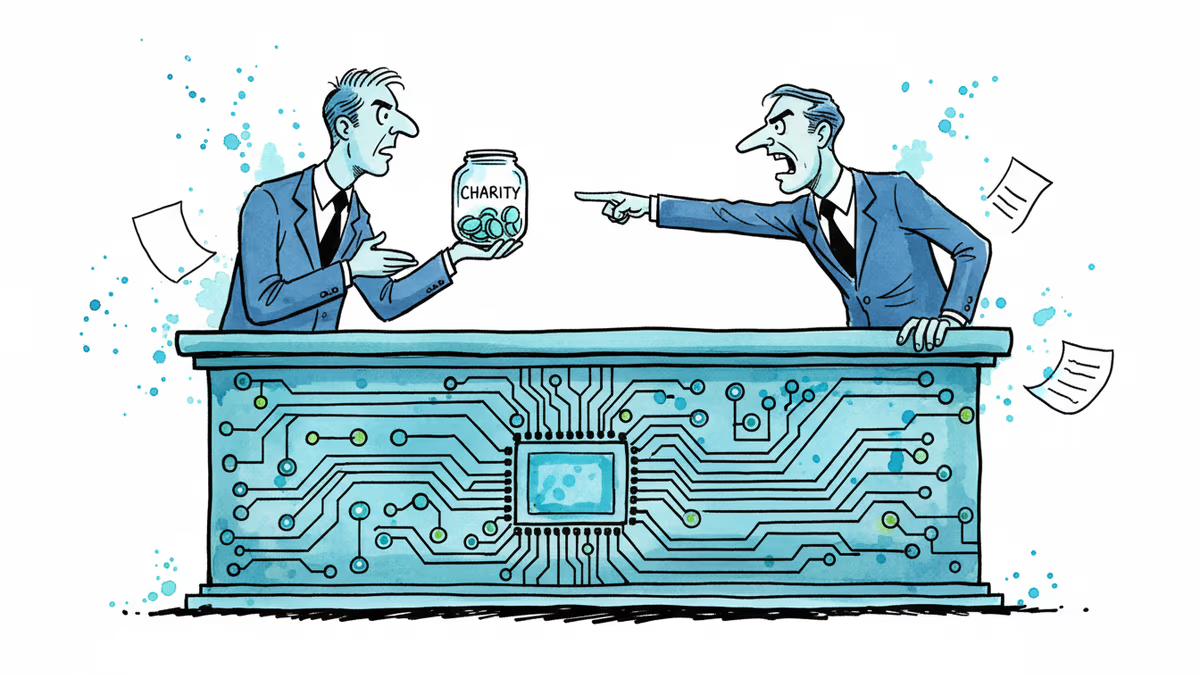
After two weeks of witnesses calling him a liar, OpenAI CEO Sam Altman testified in his own defense, claiming Elon Musk tried to kill the company twice.
Anthropic shipped Claude Sonnet 5, its mid-tier agent model, on June 30. Behind the 'Opus-class power, budget price' headline sits a tokenizer catch and a three-horse race that's only half real. Here's what developers should actually run the numbers on.
A small but growing group of developers has gone all-in on AI coding agents like Claude Code and OpenClaw. History suggests the rest of us won't be far behind.
OpenAI has reorganized for the second time in a month, merging ChatGPT and Codex into a single agentic platform under president Greg Brockman's unified product leadership.
After two weeks of witnesses calling him a liar, OpenAI CEO Sam Altman testified in his own defense, claiming Elon Musk tried to kill the company twice.
Thoughts
Share your thoughts on this article
Sign in to join the conversation