
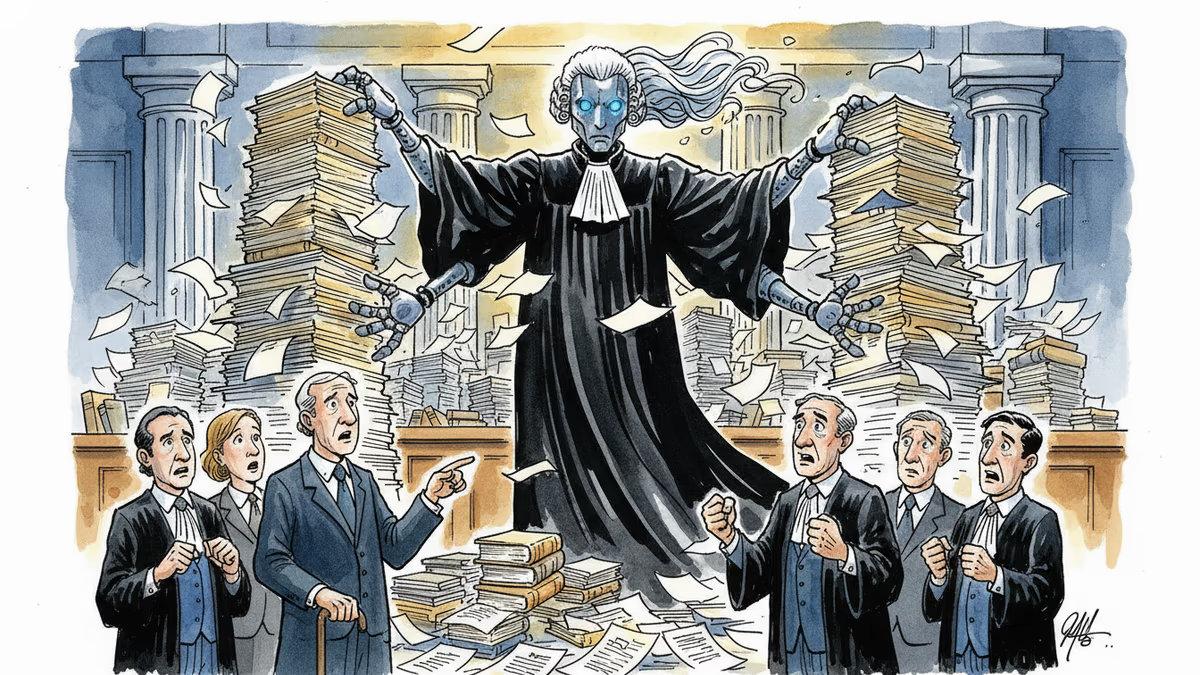
Legal AI Startup Harvey Jumps to $11B Valuation in 8 Months
Harvey reportedly raising $200M at $11B valuation, up 38% from $8B in December. Legal AI revolution accelerates as law firms embrace automation at unprecedented pace.
$11 Billion in 8 Months: Legal AI's Meteoric Rise
The legal industry's AI darling is at it again. Harvey, the startup that's been rewriting the rules of legal tech, is reportedly in talks to raise $200 million at an $11 billion valuation, led by Sequoia and Singapore's sovereign wealth fund GIC, according to Forbes sources.
The numbers tell a staggering story. Harvey's valuation has jumped $3 billion in just eight months—from $8 billion in December 2025 to $11 billion today. That's a 38% leap in a timeframe when most startups struggle to maintain their previous valuations.
But here's what makes this raise particularly striking: it's Harvey's fourth major funding round in less than two years. The trajectory reads like a Silicon Valley fever dream—$3 billion in February 2025, $5 billion in June, $8 billion in December, and now $11 billion.
Revenue Doubles Every Six Months
The valuation isn't just hype. Harvey's financials back up the excitement. CEO Winston Weinberg revealed on LinkedIn that the company hit $190 million in annual recurring revenue (ARR) by the end of 2025—nearly double the $100 million ARR from August.
For context, that's faster growth than most SaaS darlings achieved in their prime. The legal industry, traditionally one of the slowest to adopt new technology, is embracing Harvey's AI-powered contract review, document drafting, and case research tools at breakneck speed.

The Conservative Industry's Surprising Embrace
What's driving law firms—notorious for their resistance to change—to adopt AI so rapidly? The answer lies in economics and competition. Partners at major firms report that Harvey's tools can reduce document review time by 60-80%, directly impacting billable hours and profit margins.
"It's not about replacing lawyers," explains one BigLaw partner who requested anonymity. "It's about making them exponentially more efficient. When your competitor can turn around a contract review in hours instead of days, you either adapt or lose clients."
This shift represents a fundamental change in legal service delivery. For decades, the industry operated on the principle that more hours meant more revenue. Harvey's success suggests that efficiency, not time, is becoming the new competitive advantage.
The Regulatory Question Mark
But Harvey's rapid ascent raises uncomfortable questions about market concentration. As the startup consolidates its position, smaller legal tech companies find themselves squeezed out. The concern isn't just competitive—it's about access.
If Harvey becomes the dominant platform for legal AI, what happens to solo practitioners and small firms who can't afford enterprise-level subscriptions? The risk of creating a two-tiered legal system—AI-enhanced and traditional—looms large.
Regulators are taking notice. The American Bar Association has formed a committee to study AI's impact on legal practice, while European authorities are examining whether AI legal tools require specific oversight beyond general AI regulations.
Authors
Related Articles

Samsung and SK unveiled a chip and AI investment package worth thousands of trillions of won on June 29. The headline number swings wildly by outlet, but the real contest isn't capital — it's water and power.

Lucra Sports CEO Dylan Robbins landed Cathie Wood's ARK Invest as a Series B lead without building AI. The story behind his unconventional fundraising playbook.

Viral videos show 2026 graduates jeering executives who praise AI at commencement ceremonies. It's not just rudeness — it's a signal about who pays for technological optimism.

Filipino virtual assistants using AI to ghost-manage LinkedIn profiles for executives is now a structured industry. 30 comments a day, fake engagement rings, and a platform struggling to tell real from fabricated.
Samsung and SK unveiled a chip and AI investment package worth thousands of trillions of won on June 29. The headline number swings wildly by outlet, but the real contest isn't capital — it's water and power.
Lucra Sports CEO Dylan Robbins landed Cathie Wood's ARK Invest as a Series B lead without building AI. The story behind his unconventional fundraising playbook.
Viral videos show 2026 graduates jeering executives who praise AI at commencement ceremonies. It's not just rudeness — it's a signal about who pays for technological optimism.
Filipino virtual assistants using AI to ghost-manage LinkedIn profiles for executives is now a structured industry. 30 comments a day, fake engagement rings, and a platform struggling to tell real from fabricated.
Thoughts
Share your thoughts on this article
Sign in to join the conversation