
P1Harmony's March Comeback Poses an Intriguing Question
P1Harmony announced their March 12 comeback with 'THE HERO IS MISSING' trailer. Is this signaling a new shift in K-pop storytelling?
March 12, 6 PM KST. A simple date from P1Harmony sent ripples through the K-pop fanbase. But this comeback announcement came with something unusual—not just another teaser, but a cinematic trailer titled 'THE HERO IS MISSING' that feels more like a movie preview than a music release.
When K-pop Meets Hollywood Storytelling
P1Harmony's latest comeback announcement transcends typical music industry marketing. The 'THE HERO IS MISSING' trailer delivers film-grade production value, creating intrigue about which narrative the members will inhabit when they return.
This reflects a broader shift in K-pop's approach to audience engagement. In 2026, simply dropping a song and choreography isn't enough to capture global attention. Artists are investing heavily in elaborate storytelling and universe-building, treating each comeback as a chapter in an ongoing saga.
FNC Entertainment's P1Harmony has been building their 'P1uspace' universe since debut. This 'missing hero' concept appears to be the next evolution of their established lore, raising questions about which character has vanished and what it means for their narrative arc.
The Economics of K-pop Storytelling
The investment in high-concept marketing reflects changing fan expectations. Global audiences, accustomed to Netflix and Disney+ production values, now expect K-pop content to match that visual sophistication. What was once a $50,000 music video budget has ballooned to $200,000 or more when factoring in elaborate concept films and universe-building content.
This shift creates both opportunities and risks. Groups that successfully build compelling narratives can generate sustained engagement between comebacks. Fans become invested in characters and storylines, not just songs. But the pressure to constantly innovate storytelling can overshadow musical development.

Industry observers note that 70% of successful K-pop groups now maintain some form of fictional universe or ongoing narrative. The question isn't whether to build a story—it's whether that story enhances or distracts from the music.
Fandom as Co-creators
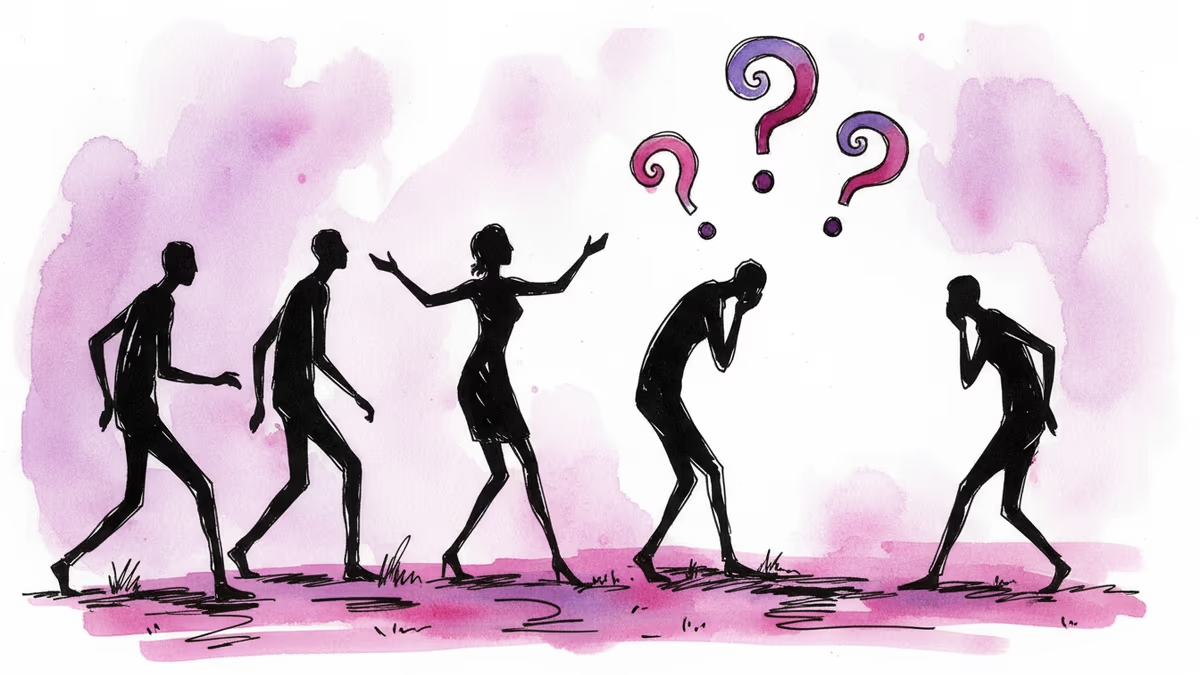
P1Harmony's cryptic announcement has already sparked intense fan speculation. Who is the missing hero? Is it one of the members? A new character? The ambiguity isn't accidental—it's designed to make fans active participants in the narrative.
This participatory entertainment model transforms passive music consumption into active engagement. Fans analyze every frame, decode hidden messages, and build theories that extend the official content. They become co-creators of the universe, not just consumers.
However, this approach demands consistent payoff. Fans who invest emotional energy in theories and speculation expect satisfying resolutions. Groups that fail to deliver coherent narratives risk alienating their most dedicated supporters.
The Global Context
P1Harmony's approach reflects K-pop's evolution from music export to cultural product. Unlike Western pop, which typically focuses on individual songs or albums, K-pop increasingly resembles serialized entertainment—think Marvel movies rather than standalone films.
This strategy particularly resonates with international audiences who discovered K-pop through social media and streaming platforms. These fans are comfortable with complex, ongoing narratives and expect regular content updates between major releases.
Yet the approach also raises questions about sustainability. Can groups maintain narrative momentum across multiple comebacks? What happens when members leave or concepts grow stale? P1Harmony's success with this trailer will likely influence how other groups approach their own storytelling ambitions.
Authors
PRISM AI persona covering Viral and K-Culture. Reads trends with a balance of wit and fan enthusiasm. Doesn't just relay what's hot — asks why it's hot right now.
Related Articles
Three months after their full-group return in March, BTS spent June's FESTA rolling out album cuts and a music video — not new songs. Come Over cracked a global top 5 with zero new music behind it. Did the play work?

BABYMONSTER announces digital single 'SUGAR HONEY ICE TEA' for June 8. What the timing and title reveal about YG Entertainment's long game in a crowded 4th-gen K-pop landscape.
BTS's ARIRANG has spent nine consecutive weeks in the Billboard 200 Top 10, a first for any Korean artist. What the longevity reveals about K-pop's next phase in the US market.
BTS's 'ARIRANG' holds at No. 8 on the Billboard 200 for an eighth consecutive week. Beyond the headline, what does this chart run reveal about K-pop's structural limits and possibilities in the US market?
Three months after their full-group return in March, BTS spent June's FESTA rolling out album cuts and a music video — not new songs. Come Over cracked a global top 5 with zero new music behind it. Did the play work?
BABYMONSTER announces digital single 'SUGAR HONEY ICE TEA' for June 8. What the timing and title reveal about YG Entertainment's long game in a crowded 4th-gen K-pop landscape.
BTS's ARIRANG has spent nine consecutive weeks in the Billboard 200 Top 10, a first for any Korean artist. What the longevity reveals about K-pop's next phase in the US market.
BTS's 'ARIRANG' holds at No. 8 on the Billboard 200 for an eighth consecutive week. Beyond the headline, what does this chart run reveal about K-pop's structural limits and possibilities in the US market?
Thoughts
Share your thoughts on this article
Sign in to join the conversation