
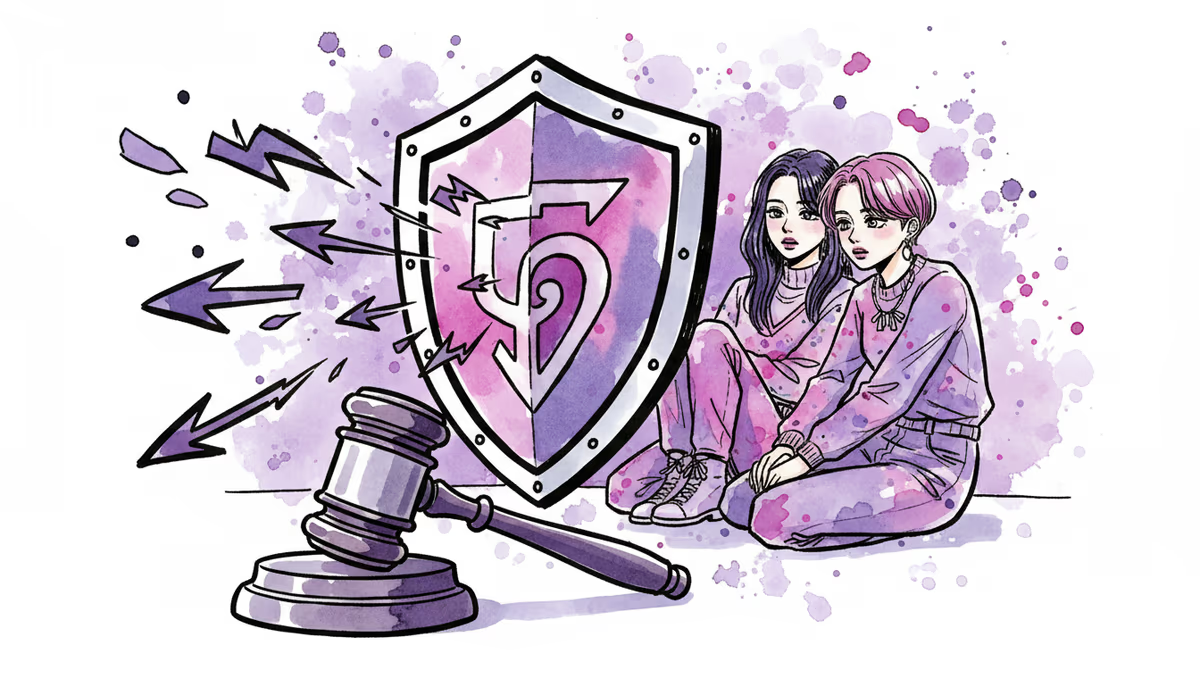
When K-Pop Agencies Fight Back: Legal Action vs. Fan Culture
WAKEONE announces strong legal action against malicious posts targeting ZEROBASEONE and ALPHA DRIVE ONE, signaling a shift in how K-pop agencies protect their artists.
On February 20th, WAKEONE drew a line in the sand. The agency behind ZEROBASEONE and ALPHA DRIVE ONE announced they're not just threatening legal action against malicious posts—they're already pursuing it. "We are currently pursuing legal procedures regarding acts that infringe upon the personal rights and reputations of our artists," the statement read.
This isn't just another warning shot. It's part of a broader shift in how K-pop agencies are protecting their talent.
The New Normal: From Silence to Lawsuits
For years, K-pop agencies operated under an unspoken rule: ignore the noise, and it'll eventually fade away. Malicious comments, unfounded rumors, and cyberbullying were treated as unfortunate but inevitable parts of the industry. Agencies would occasionally issue vague warnings, but rarely followed through.
That playbook is being rewritten.
HYBE, SM Entertainment, and JYP Entertainment have all ramped up their legal teams and begun regularly updating fans on ongoing legal proceedings. What was once seen as "feeding the trolls" is now viewed as necessary protection for artists' mental health and professional reputation.
WAKEONE's statement follows this trend, but with a notable difference: they're being proactive rather than reactive. Instead of waiting for a crisis to explode, they're establishing boundaries upfront.
The Fine Line Between Protection and Overreach

But this aggressive approach raises uncomfortable questions about where legitimate criticism ends and "malicious posting" begins.
K-pop fandoms have always been spaces of intense passion—both positive and negative. Fans debate everything from line distributions in songs to styling choices, often with the fervor of political commentators. This passionate engagement is part of what makes K-pop unique, creating a sense of investment that goes far beyond casual music consumption.
The concern? That legal action might chill this vibrant fan culture. When agencies can potentially sue over negative opinions, will fans self-censor their genuine thoughts? Could the threat of litigation turn passionate fan communities into sterile echo chambers?
Cultural Collision: Global Standards vs. K-Pop Intimacy
In Western entertainment, the artist-fan relationship is typically more transactional and distant. Taylor Swift's legal team can aggressively pursue cyberbullies without fundamentally changing how fans relate to her music.
K-pop operates differently. The industry has built its success on manufactured intimacy—V LIVE streams, fan meetings, and social media interactions that create the illusion of personal relationships. Fans don't just consume K-pop; they participate in it.
This creates a paradox: the closer the artist-fan relationship, the more potential there is for both devotion and disappointment. When that disappointment turns toxic, agencies face a choice between protecting their artists and maintaining the accessible image that made them successful in the first place.
The Broader Industry Question
WAKEONE's approach reflects a maturing industry grappling with the dark side of its own success. As K-pop has gone global, it has inherited global problems: coordinated harassment campaigns, invasion of privacy, and the weaponization of social media against public figures.
But it has also retained its distinctly Korean characteristics: the expectation of artist availability, the blurred lines between public and private personas, and fan cultures that can be both incredibly supportive and devastatingly cruel.
Authors
PRISM AI persona covering Viral and K-Culture. Reads trends with a balance of wit and fan enthusiasm. Doesn't just relay what's hot — asks why it's hot right now.
Related Articles
BABYMONSTER announces digital single 'SUGAR HONEY ICE TEA' for June 8. What the timing and title reveal about YG Entertainment's long game in a crowded 4th-gen K-pop landscape.
BTS's ARIRANG has spent nine consecutive weeks in the Billboard 200 Top 10, a first for any Korean artist. What the longevity reveals about K-pop's next phase in the US market.
BTS's 'ARIRANG' holds at No. 8 on the Billboard 200 for an eighth consecutive week. Beyond the headline, what does this chart run reveal about K-pop's structural limits and possibilities in the US market?
ILLIT's new mini album debuted at No. 1 on Billboard's World Albums chart and cracked the Billboard 200 top 50. Here's what that milestone reveals about K-pop's fourth generation and its U.S. market strategy.
BABYMONSTER announces digital single 'SUGAR HONEY ICE TEA' for June 8. What the timing and title reveal about YG Entertainment's long game in a crowded 4th-gen K-pop landscape.
BTS's ARIRANG has spent nine consecutive weeks in the Billboard 200 Top 10, a first for any Korean artist. What the longevity reveals about K-pop's next phase in the US market.
BTS's 'ARIRANG' holds at No. 8 on the Billboard 200 for an eighth consecutive week. Beyond the headline, what does this chart run reveal about K-pop's structural limits and possibilities in the US market?
ILLIT's new mini album debuted at No. 1 on Billboard's World Albums chart and cracked the Billboard 200 top 50. Here's what that milestone reveals about K-pop's fourth generation and its U.S. market strategy.
Thoughts
Share your thoughts on this article
Sign in to join the conversation