
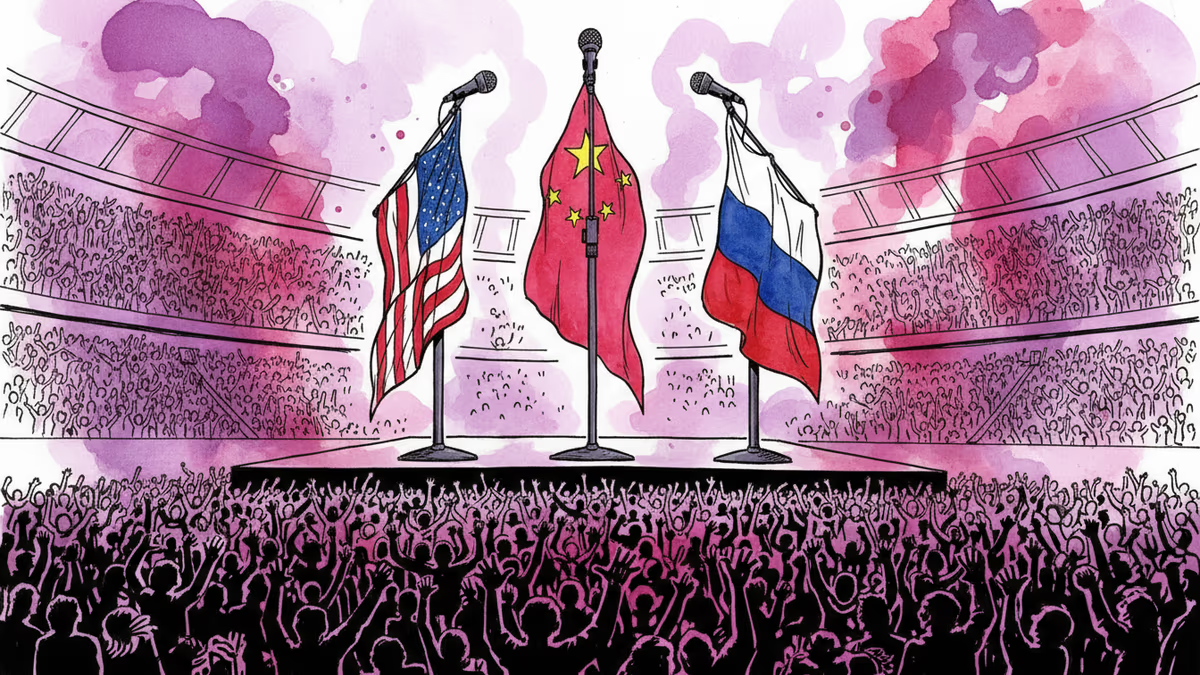
BTS, Madonna, Shakira to Headline World Cup Final Halftime Show
FIFA confirms BTS, Madonna, and Shakira as co-headliners for the 2026 World Cup Final Halftime Show on July 19 in New Jersey. What this lineup signals about K-pop's global standing.
The Super Bowl halftime show confirms who owns American pop. The FIFA World Cup Final halftime show is something else entirely—it's a referendum on who owns global culture. On July 19, that stage belongs to BTS, Madonna, and Shakira.
On May 14, FIFA officially announced the three acts as co-headliners for the 2026 FIFA World Cup Final Halftime Show at MetLife Stadium in East Rutherford, New Jersey. It marks the first time a K-pop act has performed at a World Cup Final halftime show.
Why This Lineup Is Deliberate
Nothing about this combination is accidental. Madonna anchors the bill with decades of pop canonization. Shakira is practically synonymous with World Cup music—her 2010 anthem Waka Waka remains the most-streamed World Cup song in history, and her 2014 closing ceremony performance cemented that connection. Adding BTS to that equation signals FIFA's intent to frame this tournament—co-hosted by the US, Canada, and Mexico—as genuinely planetary rather than just transatlantic.
The timing matters for BTS specifically. All seven members have completed or are finishing their South Korean mandatory military service, with a full-group reunion expected around 2025–2026. The July 2026 date aligns almost precisely with when BTS as a complete unit becomes available for large-scale global performances again. For the ARMY fanbase, this isn't just a concert announcement—it reads as the formal starting gun for the group's next chapter.
K-Pop's New Coordinate

To understand what this moment means industrially, context helps. BLACKPINK headlined Coachella in 2023. Stray Kids played Glastonbury in 2024. Both were significant milestones. But the World Cup Final halftime show operates on a different scale of audience and symbolic weight. Super Bowl halftime draws roughly 120 million US viewers. The World Cup Final pulls in hundreds of millions globally, across demographics that don't overlap with typical music festival audiences—casual sports fans, families, viewers in markets where K-pop has had limited penetration.
For HYBE, BTS's parent company, the implications extend well beyond the performance itself. The Weverse platform, merchandise licensing, and content rights tied to BTS IP all stand to benefit from a visibility event of this magnitude. HYBE's stock has already seen analyst speculation about a post-reunion valuation reset—this announcement adds a concrete anchor point to that thesis.
There's also a generational dimension within K-pop. For fourth-generation acts like aespa, NewJeans, and Stray Kids currently competing for global market share, the World Cup Final halftime show becomes a new benchmark. The ceiling just got raised.
Not Everyone's Celebrating
Among football purists, the Super Bowl-ification of the World Cup Final has been a recurring complaint. The halftime show as spectacle competes with the match itself for cultural real estate, and critics argue it dilutes the sport's integrity. FIFA's aggressive push into entertainment programming—this announcement follows years of expanding pre-match and half-time entertainment—reflects a calculated bet that broader audiences and sponsorship revenue outweigh traditionalist concerns.
There's also the question of whether a co-headlining format serves any of the three acts well. Splitting a halftime show three ways compresses each artist's set time significantly. The creative and logistical challenge of delivering a coherent performance across three artists from different genres and eras is non-trivial.
This content is AI-generated based on source articles. While we strive for accuracy, errors may occur. We recommend verifying with the original source.
Related Articles
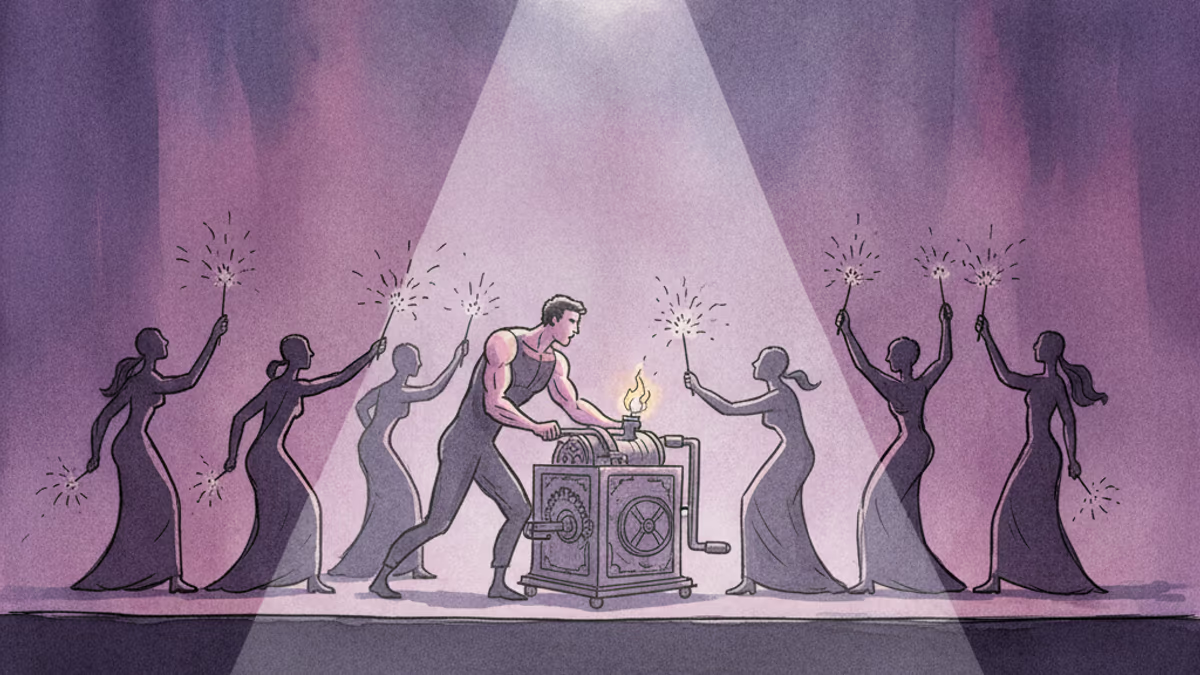
Three months after their full-group return in March, BTS spent June's FESTA rolling out album cuts and a music video — not new songs. Come Over cracked a global top 5 with zero new music behind it. Did the play work?
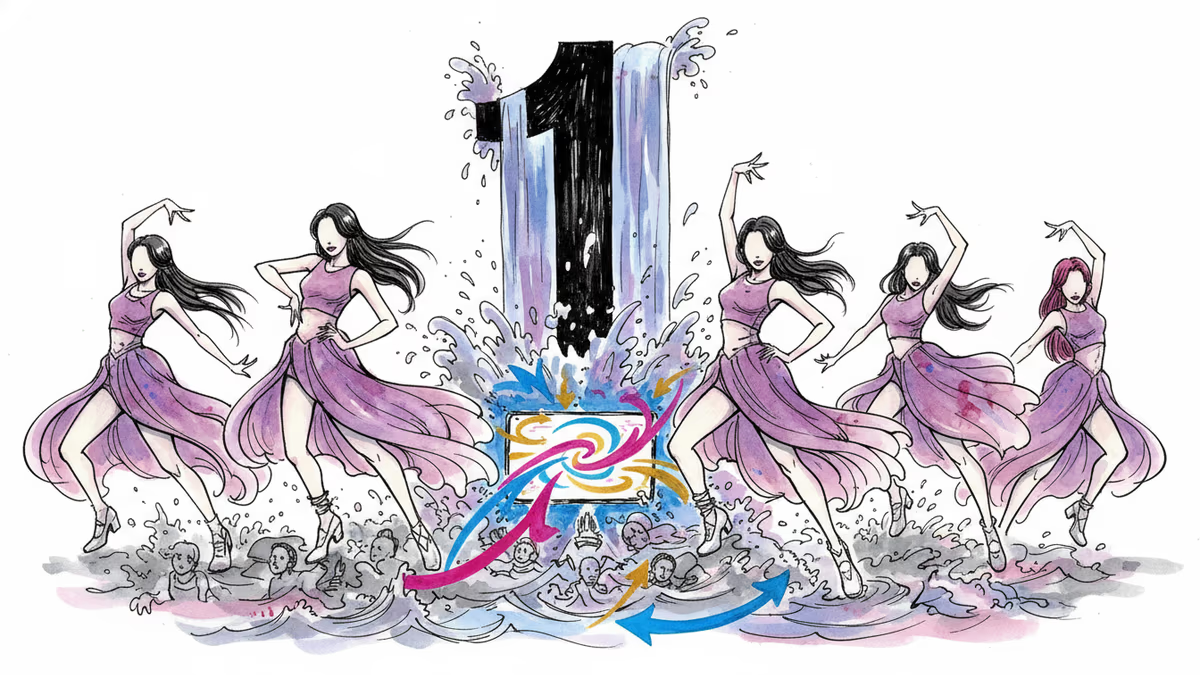
PRISM Trend Pipeline caught LE SSERAFIM's YouTube KR trending peak. Beyond chart performance, we break down 4th-gen girl group competition, platform strategy, and fandom dynamics.
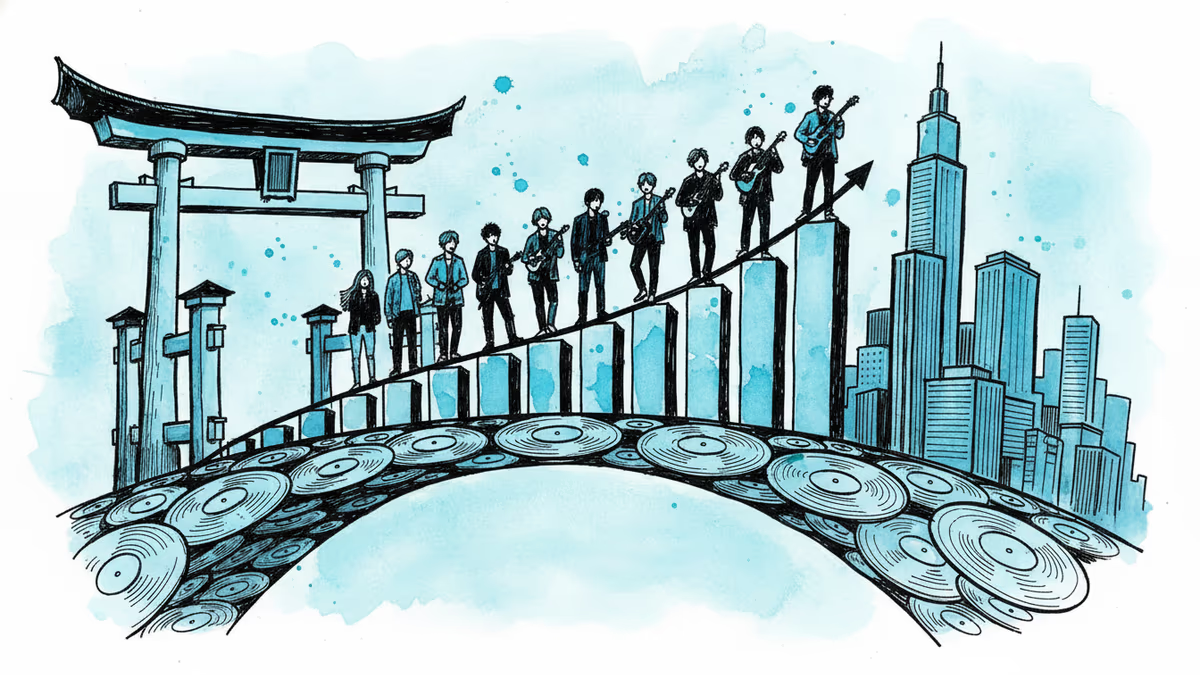
&TEAM's 'We on Fire' debuted on the Billboard 200 for the first time. Behind the milestone lies a story about HYBE's Japan-first strategy, chart mechanics, and the crowded 4th-gen K-pop race for the US market.
BABYMONSTER announces digital single 'SUGAR HONEY ICE TEA' for June 8. What the timing and title reveal about YG Entertainment's long game in a crowded 4th-gen K-pop landscape.
Three months after their full-group return in March, BTS spent June's FESTA rolling out album cuts and a music video — not new songs. Come Over cracked a global top 5 with zero new music behind it. Did the play work?
PRISM Trend Pipeline caught LE SSERAFIM's YouTube KR trending peak. Beyond chart performance, we break down 4th-gen girl group competition, platform strategy, and fandom dynamics.
&TEAM's 'We on Fire' debuted on the Billboard 200 for the first time. Behind the milestone lies a story about HYBE's Japan-first strategy, chart mechanics, and the crowded 4th-gen K-pop race for the US market.
BABYMONSTER announces digital single 'SUGAR HONEY ICE TEA' for June 8. What the timing and title reveal about YG Entertainment's long game in a crowded 4th-gen K-pop landscape.
Thoughts
Share your thoughts on this article
Sign in to join the conversation