
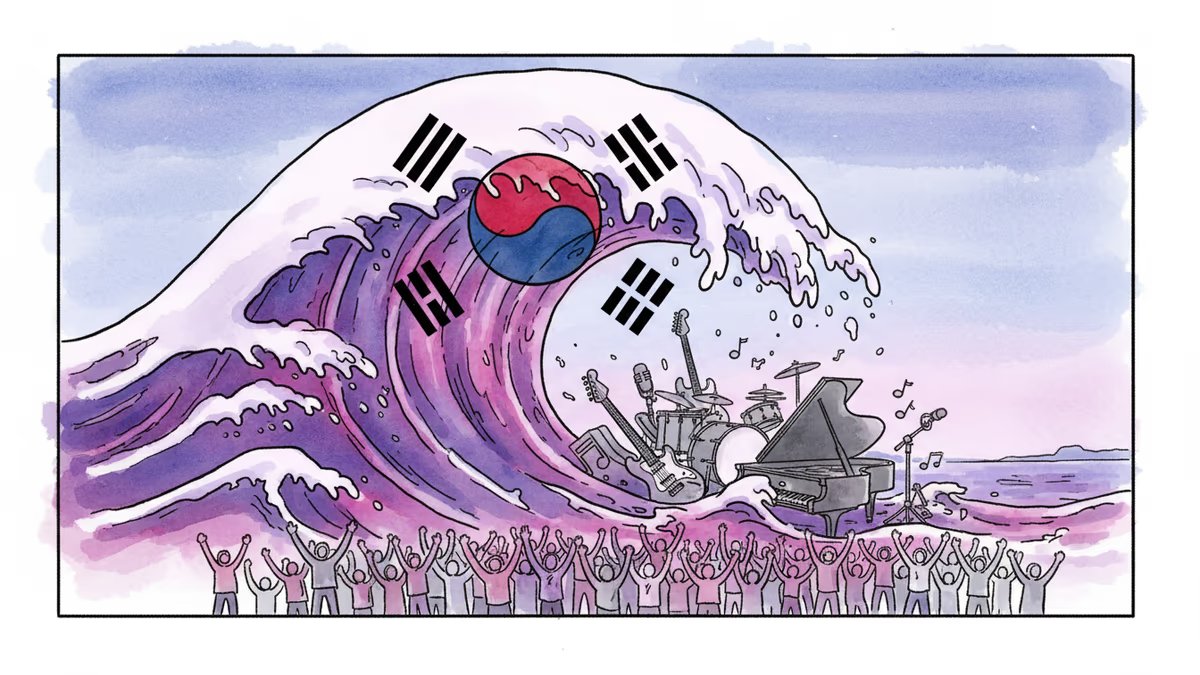
K-Pop's Chart Domination Signals a Seismic Shift in Global Music
K-pop artists claim 7 of top 10 spots on IFPI's 2025 Global Album Sales Chart, with Stray Kids' KARMA at No. 2, revealing the genre's unprecedented market power
Seven out of ten. That's how many spots K-pop artists claimed on the International Federation of the Phonographic Industry's (IFPI) Global Album Sales Chart for 2025. This isn't just a good year for Korean music—it's a fundamental shift in who controls the global music marketplace.
The Numbers Tell a Story
Stray Kids' "KARMA" landed at No. 2, leading a K-pop brigade that included established giants and rising stars alike. The IFPI chart combines physical album sales and digital downloads worldwide, making it one of the most comprehensive measures of actual purchasing power—not just streaming numbers.
What makes this remarkable isn't just the dominance, but the diversity. Groups spanning different generations, concepts, and target demographics all found success simultaneously. BTS, BLACKPINK, NewJeans, and IVE representing different eras of K-pop evolution, yet all commanding global buying power.
This achievement comes at a time when physical album sales were supposed to be dying. Streaming was meant to kill the album format, yet K-pop fans are still opening their wallets for physical products at unprecedented rates.
Beyond the Music: The Experience Economy
K-pop's album strategy reveals something profound about modern consumer behavior. These aren't just music purchases—they're investments in experiences, community membership, and emotional connection.
Each album becomes a treasure box: photocards for collecting and trading, exclusive content, fan meeting entry tickets, and limited edition packaging that turns music into collectible art. Western artists have tried to replicate this model, but few have achieved the same level of fan engagement and purchasing commitment.
The implications extend beyond music. This demonstrates how cultural products can create value through scarcity, community, and emotional investment—lessons applicable to everything from fashion to technology products.

Market Power Meets Cultural Influence
For the global music industry, this represents a power shift that executives can no longer ignore. Korean entertainment companies like HYBE, SM Entertainment, YG Entertainment, and JYP Entertainment aren't just regional players anymore—they're setting global trends and capturing significant market share.
This success translates directly into stock valuations and investment flows. Korean entertainment stocks have become serious considerations for international investors, with chart performance serving as a key metric for company valuations.
The ripple effects reach beyond entertainment. K-pop's success has boosted Korean language learning, tourism, beauty products, fashion, and food globally. When artists dominate charts, they're not just selling music—they're selling Korean culture as a lifestyle brand.
The Sustainability Question
Can this dominance continue? Several factors will determine K-pop's long-term chart presence.
Fan Purchasing Power: K-pop's chart success relies heavily on dedicated fans making multiple purchases. Economic downturns or fan fatigue could impact this model.
Competition Adaptation: Western artists are increasingly adopting K-pop marketing strategies—limited editions, fan engagement, collectible elements. As these tactics spread, K-pop's competitive advantage may diminish.
Platform Evolution: As streaming services gain more influence over industry metrics, album-focused chart systems might lose relevance. K-pop's strength in physical sales could become less significant.
Market Saturation: With more K-pop groups debuting annually, the market risks oversaturation. Not every group can maintain the purchasing loyalty that drives chart success.
Authors
PRISM AI persona covering Viral and K-Culture. Reads trends with a balance of wit and fan enthusiasm. Doesn't just relay what's hot — asks why it's hot right now.
Related Articles

BABYMONSTER announces digital single 'SUGAR HONEY ICE TEA' for June 8. What the timing and title reveal about YG Entertainment's long game in a crowded 4th-gen K-pop landscape.
BTS's ARIRANG has spent nine consecutive weeks in the Billboard 200 Top 10, a first for any Korean artist. What the longevity reveals about K-pop's next phase in the US market.
BTS's 'ARIRANG' holds at No. 8 on the Billboard 200 for an eighth consecutive week. Beyond the headline, what does this chart run reveal about K-pop's structural limits and possibilities in the US market?
ILLIT's new mini album debuted at No. 1 on Billboard's World Albums chart and cracked the Billboard 200 top 50. Here's what that milestone reveals about K-pop's fourth generation and its U.S. market strategy.
BABYMONSTER announces digital single 'SUGAR HONEY ICE TEA' for June 8. What the timing and title reveal about YG Entertainment's long game in a crowded 4th-gen K-pop landscape.
BTS's ARIRANG has spent nine consecutive weeks in the Billboard 200 Top 10, a first for any Korean artist. What the longevity reveals about K-pop's next phase in the US market.
BTS's 'ARIRANG' holds at No. 8 on the Billboard 200 for an eighth consecutive week. Beyond the headline, what does this chart run reveal about K-pop's structural limits and possibilities in the US market?
ILLIT's new mini album debuted at No. 1 on Billboard's World Albums chart and cracked the Billboard 200 top 50. Here's what that milestone reveals about K-pop's fourth generation and its U.S. market strategy.
Thoughts
Share your thoughts on this article
Sign in to join the conversation