

Japan Halts Hamaoka Nuclear Plant Restart Over Seismic Data Fraud
Japan's NRA has halted the Hamaoka nuclear plant restart after Chubu Electric admitted to fabricating seismic safety data. Read about the impact on Japan's energy future.
Japan's nuclear safety promises just hit a massive fault line. On Wednesday, January 7, 2026, the Nuclear Regulation Authority (NRA) announced it's halting the relicensing of two reactors at the Hamaoka plant. The decision follows a serious revelation: the operator fabricated critical seismic hazard data to facilitate the restart process.
The Hamaoka Nuclear Plant Seismic Data Fraud Scandal
It's a grave setback for Chubu Electric Power Co., which has been trying to reactivate its nuclear fleet since the Fukushima Daiichi disaster. The NRA was reportedly tipped off by a whistleblower back in February 2025, but the issue only became public this week. The company admitted in a press release that they manipulated data regarding ground motion expectations for potential earthquakes.

A High-Stakes Location on an Active Fault
The Hamaoka plant sits on the coast near an active subduction fault, a geographical mirror to the Fukushima site. This makes the data manipulation even more alarming to public safety advocates. Since the 2011 meltdown, Japan has been slowly and carefully restarting its nuclear plants, but this scandal threatens to derail the entire national energy strategy.
Authors
Related Articles
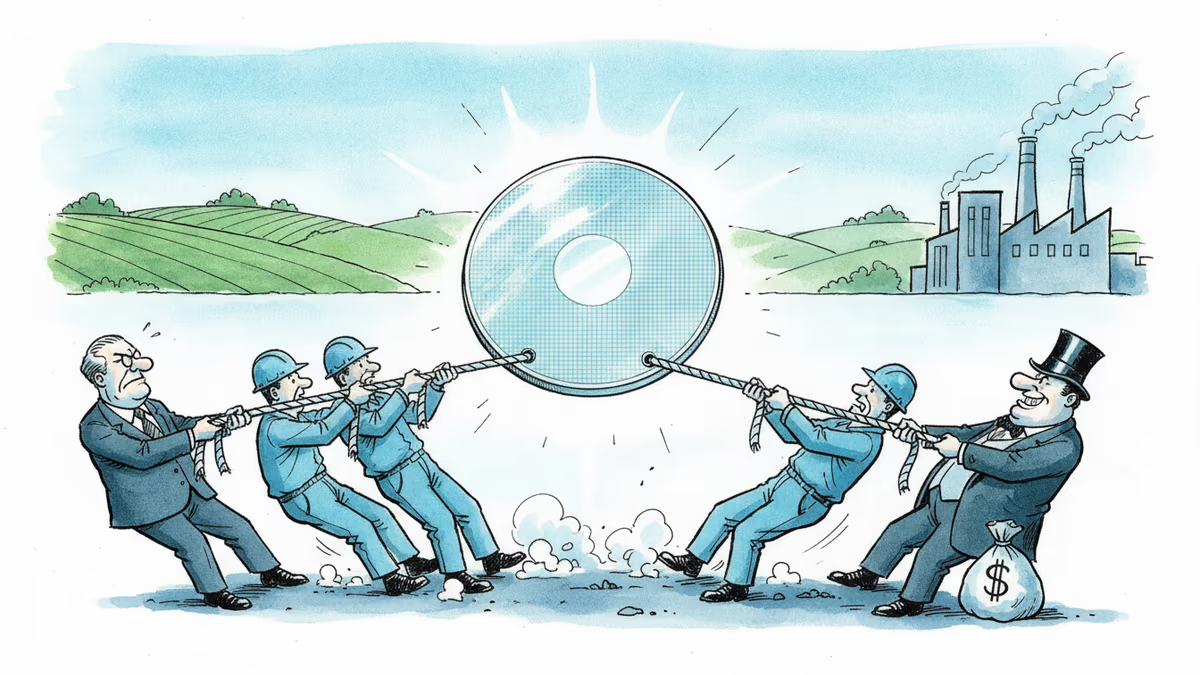
Samsung Electronics' union branch revealed that 84% of survey respondents oppose the government's roughly $290 billion (₩400 trillion) semiconductor megaproject in Gwangju. Government, management, the union and shareholders are all reading the same national project in sharply different ways.
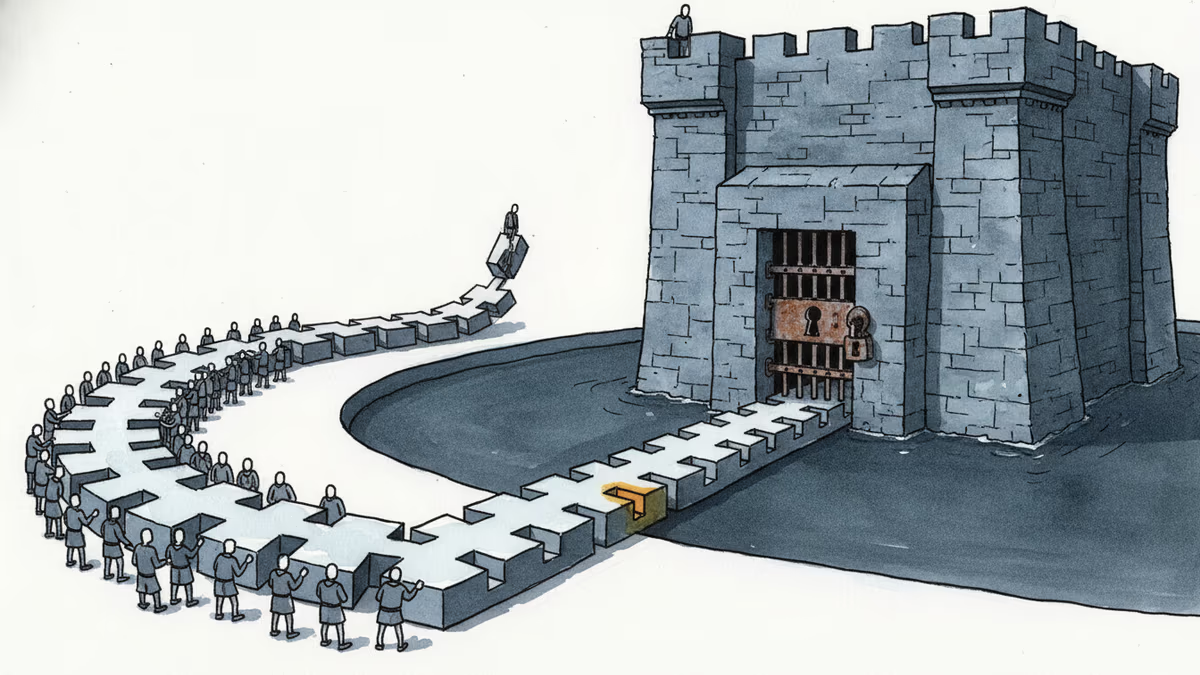
Nvidia shipped roughly a billion RISC-V cores in 2024, then announced it would run CUDA on the open standard. We break down how royalty-free instruction sets and open software stacks are trying to route around CUDA's lock-in. Part 2 of the Semiconductor Sovereignty series.
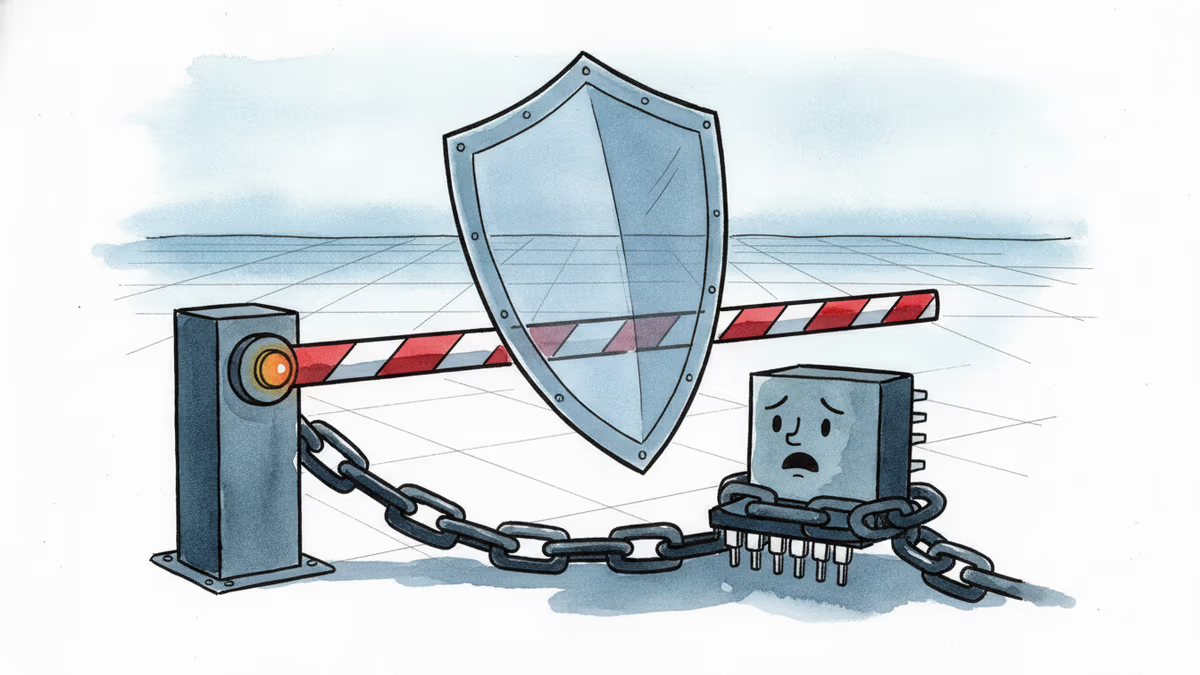
US AI-chip export controls split into three layers in the first half of 2026 — January easing, a May crackdown on circumvention, and a pending bill. Nvidia erased China from its guidance and still posted a record $81.6 billion quarter. A look at the export policy that both shields and cages it.
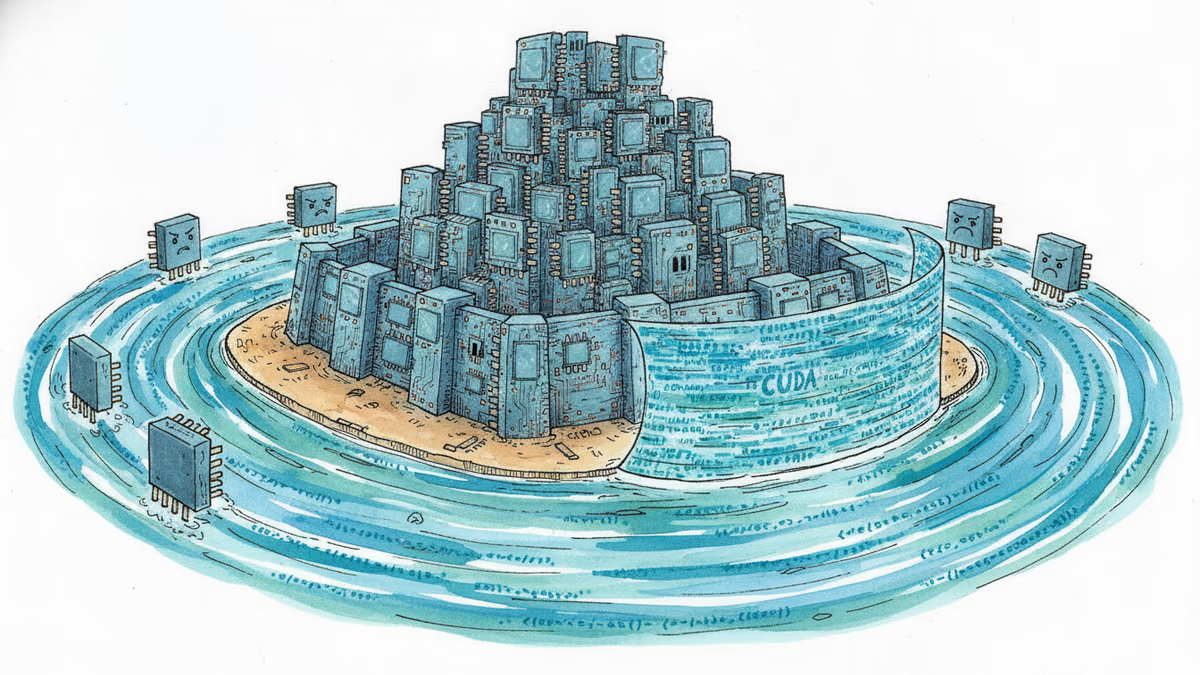
AMD's MI325X matches or beats Nvidia on memory and bandwidth — yet Nvidia's 86-92% share holds. The real moat is CUDA, 20 years in the making. Part 1 of 4.
Samsung Electronics' union branch revealed that 84% of survey respondents oppose the government's roughly $290 billion (₩400 trillion) semiconductor megaproject in Gwangju. Government, management, the union and shareholders are all reading the same national project in sharply different ways.
Nvidia shipped roughly a billion RISC-V cores in 2024, then announced it would run CUDA on the open standard. We break down how royalty-free instruction sets and open software stacks are trying to route around CUDA's lock-in. Part 2 of the Semiconductor Sovereignty series.
US AI-chip export controls split into three layers in the first half of 2026 — January easing, a May crackdown on circumvention, and a pending bill. Nvidia erased China from its guidance and still posted a record $81.6 billion quarter. A look at the export policy that both shields and cages it.
AMD's MI325X matches or beats Nvidia on memory and bandwidth — yet Nvidia's 86-92% share holds. The real moat is CUDA, 20 years in the making. Part 1 of 4.
Thoughts
Share your thoughts on this article
Sign in to join the conversation