
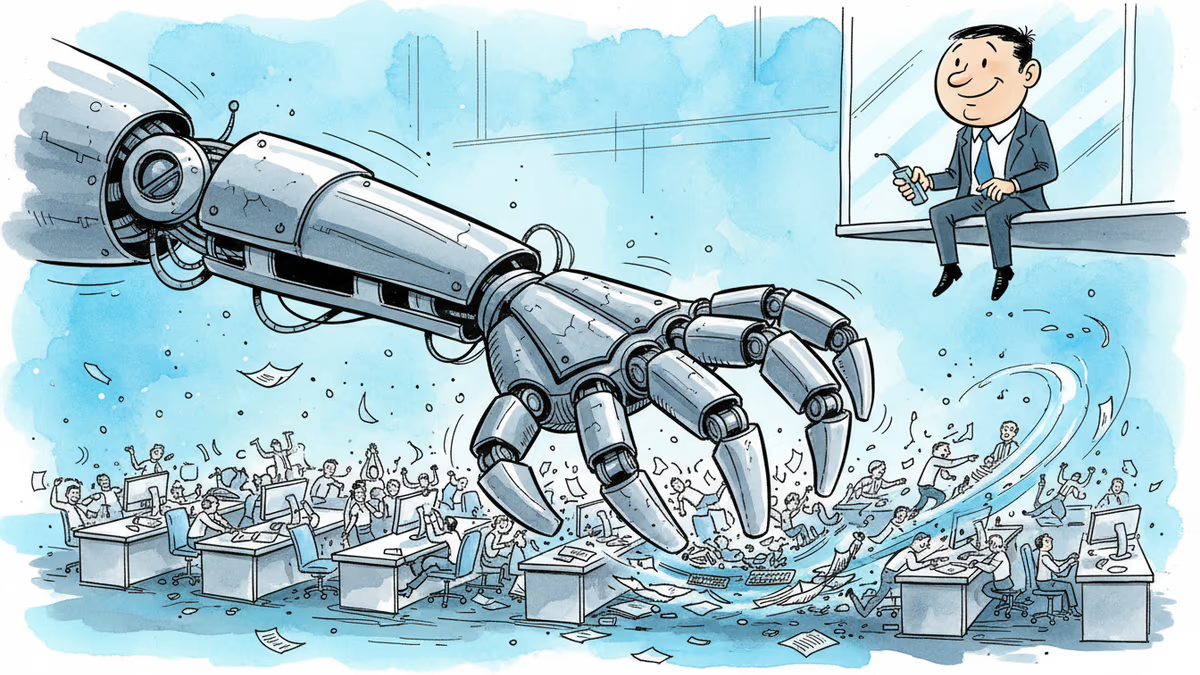
Half a Workforce Gone in One AI Announcement
Block cuts 4,000 jobs citing AI tools, sparking debate about automation's speed and corporate responsibility in the employment revolution.
4,000 people. Gone. Just like that.
Block's stock price jumped 25% in after-hours trading Thursday, celebrating what CEO Jack Dorsey called the company's embrace of "intelligence tools." But for nearly half of Block's workforce—those 4,000 employees facing termination—the AI revolution feels less like progress and more like a pink slip.
The Blunt Math of AI Efficiency
Dorsey didn't mince words in his shareholder letter: "Intelligence tools have changed what it means to build and run a company. We're already seeing it internally." Translation? AI can do what humans do, faster and cheaper.
The numbers tell a stark story. Block employed roughly 10,000 people before this announcement. Now, 4,000 jobs will disappear—not through gradual attrition or strategic restructuring, but through what the company frames as technological necessity.
Wall Street loved it. Investors saw immediate cost savings and efficiency gains. But the speed of this transition raises uncomfortable questions about how quickly companies should—or can—remake their workforce around AI capabilities.
When Disruption Becomes Personal
Block isn't just any fintech company. It's the brainchild of Jack Dorsey, the same entrepreneur who championed decentralization and individual empowerment through Twitter and digital payments. Yet here's Block wielding AI like a corporate efficiency scythe, cutting through jobs with algorithmic precision.
The irony runs deeper. Block built its reputation on democratizing financial services—helping small businesses and individuals access payment systems previously reserved for large corporations. Now it's demonstrating how AI democratizes job displacement, making mass layoffs as accessible to mid-sized companies as they once were to industrial giants.

The New Employment Equation
What makes Block's announcement particularly significant isn't the job cuts themselves—tech companies have been trimming workforces for months. It's the explicit connection between AI adoption and employment reduction.
Previous layoffs were often blamed on economic headwinds, over-hiring during the pandemic, or strategic pivots. Block is saying something different: We don't need these people anymore because machines can do their jobs.
This represents a fundamental shift in how companies justify workforce reductions. It's no longer about temporary belt-tightening or market conditions. It's about permanent technological displacement.
The Investor's Dilemma
For shareholders, Block's announcement creates a fascinating tension. The 25% stock price surge suggests investors believe AI-driven efficiency will boost profitability. But it also raises questions about sustainable growth models.
If AI tools can eliminate half a workforce overnight, what happens to consumer demand when similar cuts ripple across industries? Block's customers—small businesses and individual users—depend on employment income to use Block's services. Mass job displacement could eventually undermine the very market Block serves.
The Regulatory Reckoning
Block's bold AI pivot arrives as policymakers worldwide grapple with automation's societal impact. The company's approach—swift, comprehensive, unapologetic—might accelerate regulatory discussions about corporate responsibility during technological transitions.
Should companies be required to retrain displaced workers? Provide extended severance? Gradually phase in AI adoption rather than implementing wholesale replacements? Block's decision to cut 4,000 jobs in one announcement will likely fuel these debates.
Authors
Related Articles
Venmo's biggest redesign since 2021 adds social features, personalized offers, and a revamped feed. But the timing — amid PayPal's restructuring and Stripe's reported interest — raises a harder question about who this update is really for.
E-commerce fintech Parker filed for Chapter 7 bankruptcy on May 7, despite raising over $200M. The YC-backed startup's abrupt shutdown left small business customers scrambling—and exposed the fragility of vertical fintech models.
OpenAI acquired Hiro Finance, an AI-powered personal finance startup. Is this just a talent grab, or is the ChatGPT maker quietly building a financial services empire?
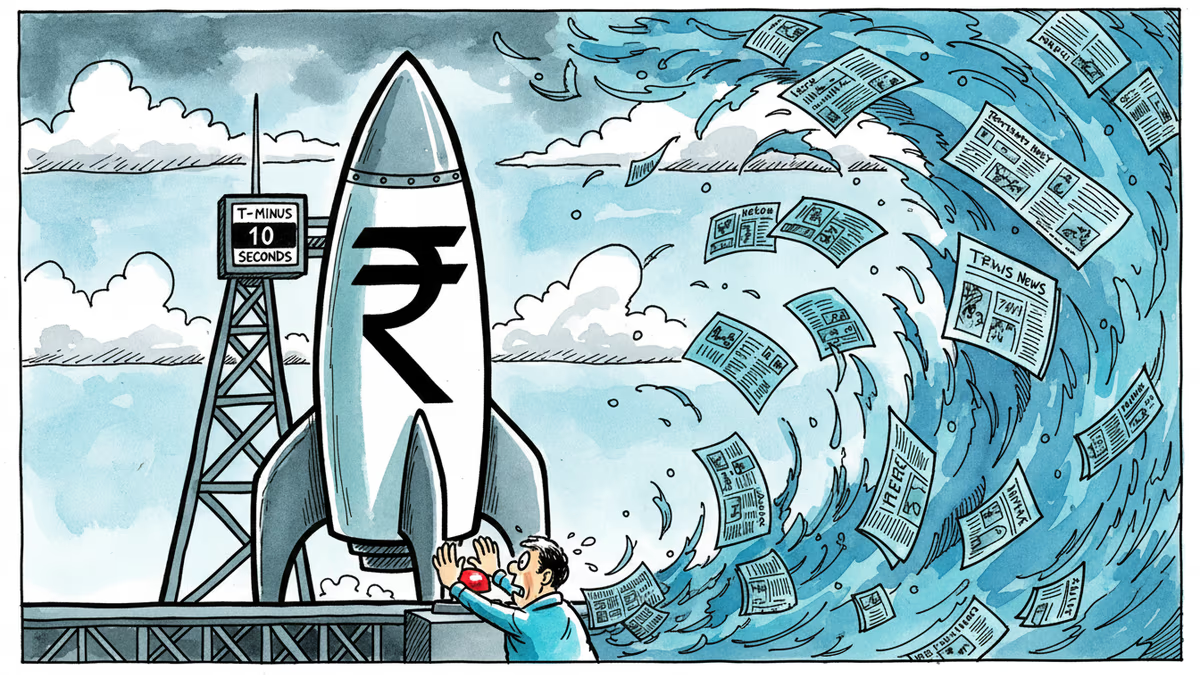
India's biggest digital payments platform PhonePe has shelved its IPO amid geopolitical tensions and a 9% market drop—but a quietly revised valuation tells a more complicated story.
Venmo's biggest redesign since 2021 adds social features, personalized offers, and a revamped feed. But the timing — amid PayPal's restructuring and Stripe's reported interest — raises a harder question about who this update is really for.
E-commerce fintech Parker filed for Chapter 7 bankruptcy on May 7, despite raising over $200M. The YC-backed startup's abrupt shutdown left small business customers scrambling—and exposed the fragility of vertical fintech models.
OpenAI acquired Hiro Finance, an AI-powered personal finance startup. Is this just a talent grab, or is the ChatGPT maker quietly building a financial services empire?
India's biggest digital payments platform PhonePe has shelved its IPO amid geopolitical tensions and a 9% market drop—but a quietly revised valuation tells a more complicated story.
Thoughts
Share your thoughts on this article
Sign in to join the conversation