
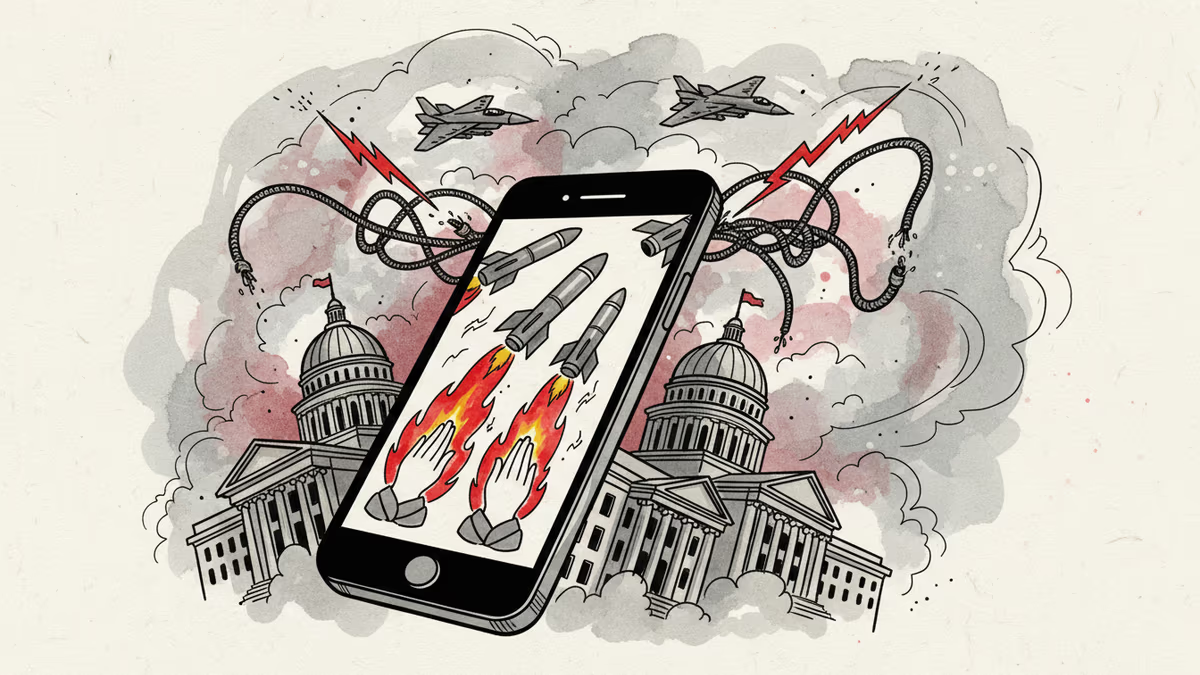
When Cyber Warfare Became Real Warfare
Iran's supreme leader killed in coordinated US-Israeli strikes paired with sophisticated cyber attacks. From prayer app hacks to internet blackouts, digital weapons merged with physical warfare in unprecedented ways.
5 million users of a prayer app suddenly received an ominous message: "The Iranian regime will pay for their cruel and merciless actions against the innocent people of Iran." As missiles rained down on Tehran early Saturday, Iranians' phones buzzed with something far more dangerous than breaking news alerts.
The Perfect Storm: Physical Meets Digital
While U.S. and Israeli airstrikes targeted Iran's Supreme Leader Ali Hosseini Khamenei and top leadership, another war was unfolding simultaneously in cyberspace. The timing wasn't coincidental—it was surgical.
Users of the BadeSaba prayer app received notifications promising "amnesty for anyone who rises up against government forces." The hack's perpetrator remains unknown, but the coordination was flawless. As physical infrastructure crumbled under bombardment, digital infrastructure delivered psychological warfare directly to citizens' pockets.
The Jerusalem Post reported that cyberattacks were deployed "as part of the U.S. and Israeli attacks in an effort to limit the Iranian response." This wasn't a side effect—it was strategy.
Digital Blackout, Physical Consequences
Doug Madory, director of internet analysis at Kentik, posted on Bluesky that Iran's internet connectivity "dropped to near-zero levels soon after airstrikes hit the country." Cloudflare confirmed the collapse. An entire nation, digitally severed from the world.

But the conflict didn't stay contained. Iranian retaliation missiles struck the UAE, causing Amazon's Middle East data center to report outages from "objects that struck the data center, creating sparks and fire." The cloud, it turns out, isn't immune to physical warfare.
Global Commerce Under Fire
Ships carrying goods through the Strait of Hormuz near Iran have ground to a halt, threatening critical e-commerce routes. This narrow waterway handles 21% of global petroleum liquids, but it's also a chokepoint for tech supply chains. Components for smartphones, servers, and semiconductors—all potentially stranded.
The New Battlefield: Your Phone
What makes this conflict unprecedented isn't just the scale, but the intimacy. Previous cyber warfare targeted government networks or critical infrastructure. This time, attackers reached directly into citizens' daily lives through a prayer app—something as personal and trusted as a digital sanctuary.
The hack of BadeSaba represents a new frontier: weaponizing faith-based technology. With over 5 million downloads, the app had become digital infrastructure for religious practice. Its compromise transforms private devotion into public resistance messaging.
Silicon Valley's Uncomfortable Questions
Tech companies are grappling with uncomfortable realities. Amazon's data center damage in the UAE raises questions about cloud resilience during regional conflicts. If physical infrastructure can be targeted to create digital outages, what does that mean for global cloud architecture?
App store policies are also under scrutiny. How do platforms verify the security of religious or cultural apps that handle sensitive user data? The BadeSaba hack suggests that apps serving specific communities might be particularly vulnerable—and valuable—targets.
Authors
Related Articles
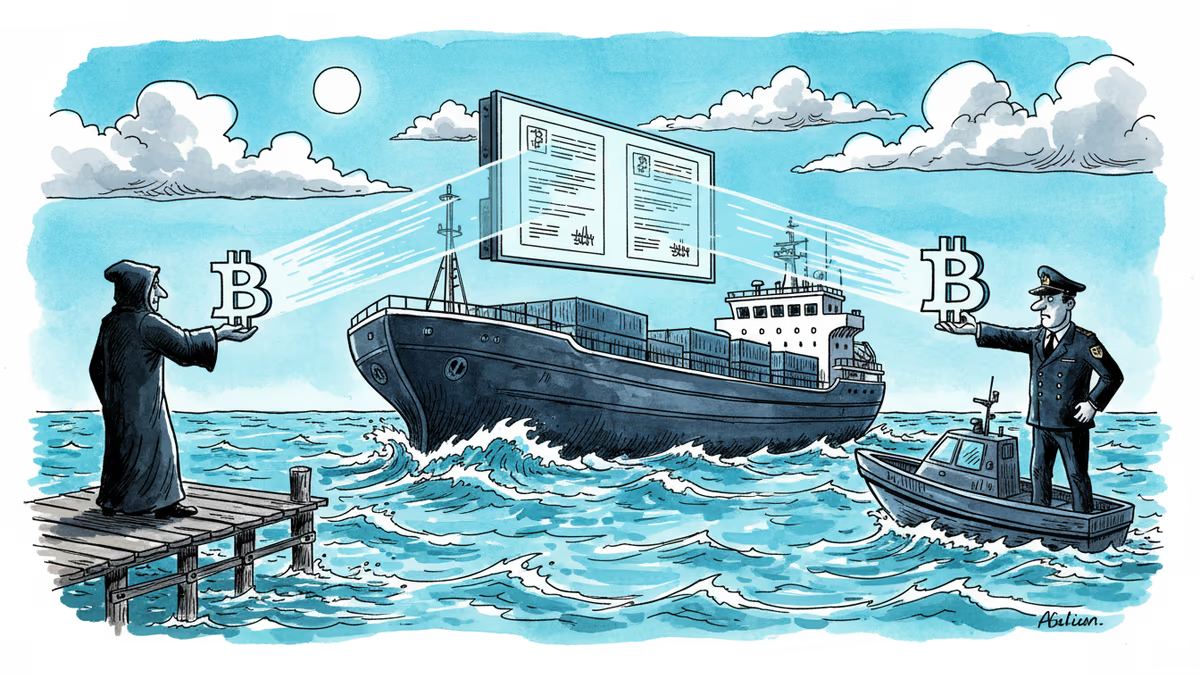
Scammers posing as Iranian authorities are demanding bitcoin and tether from ships near the Strait of Hormuz—exploiting the fact that Iran already does exactly this.
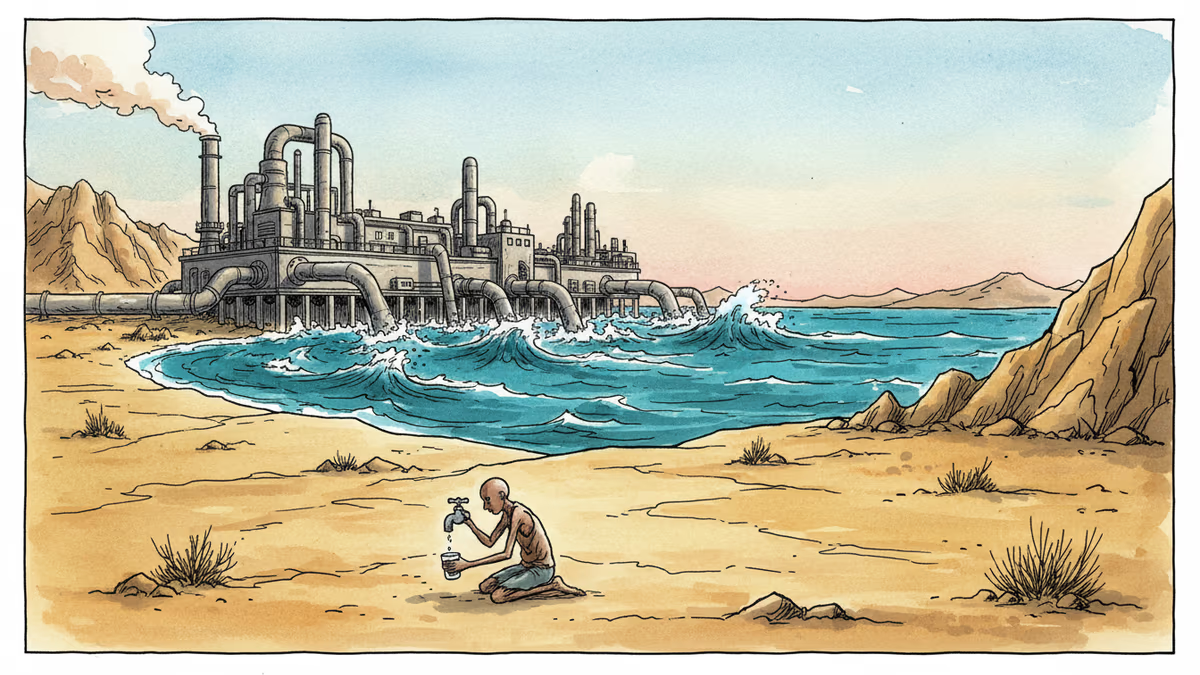
Qatar gets 99% of its drinking water from the sea. As the Middle East prepares to spend $25 billion expanding desalination capacity, this once-niche technology is becoming critical global infrastructure.

A small pro-Iran team is racking up millions of views with AI-generated Lego videos that mock Trump — and Americans are sharing them. What does that tell us about information warfare?
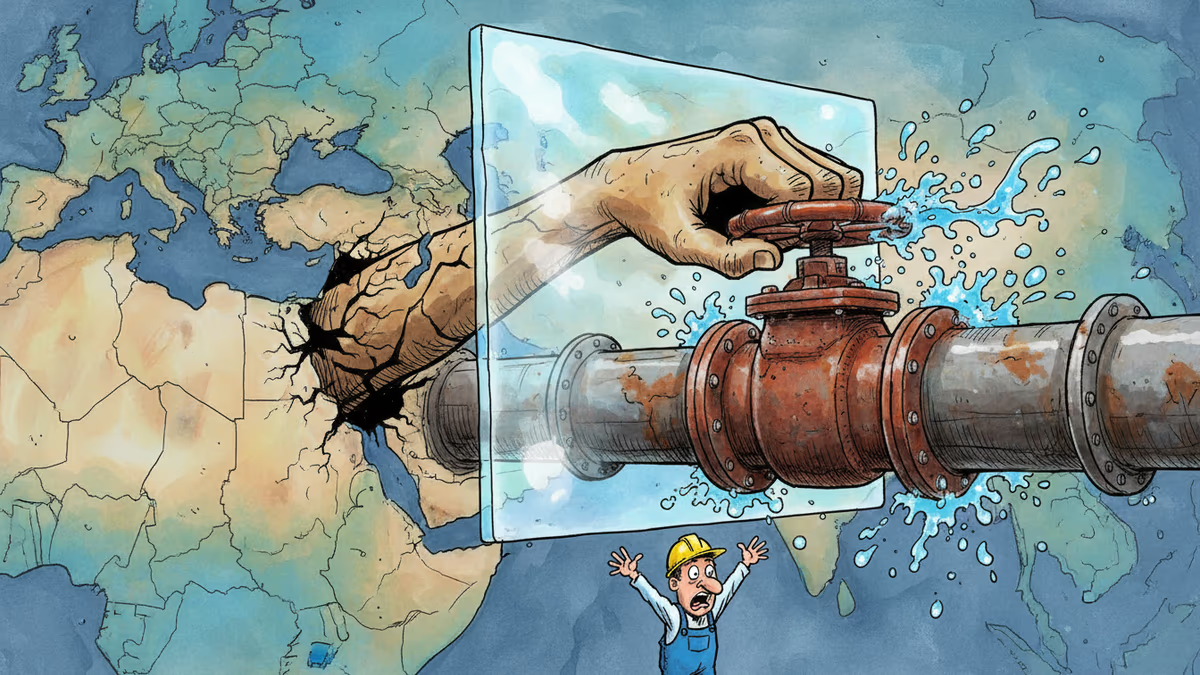
Iranian government-backed hackers have escalated from data theft to physically manipulating U.S. water, power, and local government control systems. A joint FBI-NSA-CISA-DOE advisory confirms operational disruption has already occurred.
Scammers posing as Iranian authorities are demanding bitcoin and tether from ships near the Strait of Hormuz—exploiting the fact that Iran already does exactly this.
Qatar gets 99% of its drinking water from the sea. As the Middle East prepares to spend $25 billion expanding desalination capacity, this once-niche technology is becoming critical global infrastructure.
A small pro-Iran team is racking up millions of views with AI-generated Lego videos that mock Trump — and Americans are sharing them. What does that tell us about information warfare?
Iranian government-backed hackers have escalated from data theft to physically manipulating U.S. water, power, and local government control systems. A joint FBI-NSA-CISA-DOE advisory confirms operational disruption has already occurred.
Thoughts
Share your thoughts on this article
Sign in to join the conversation