
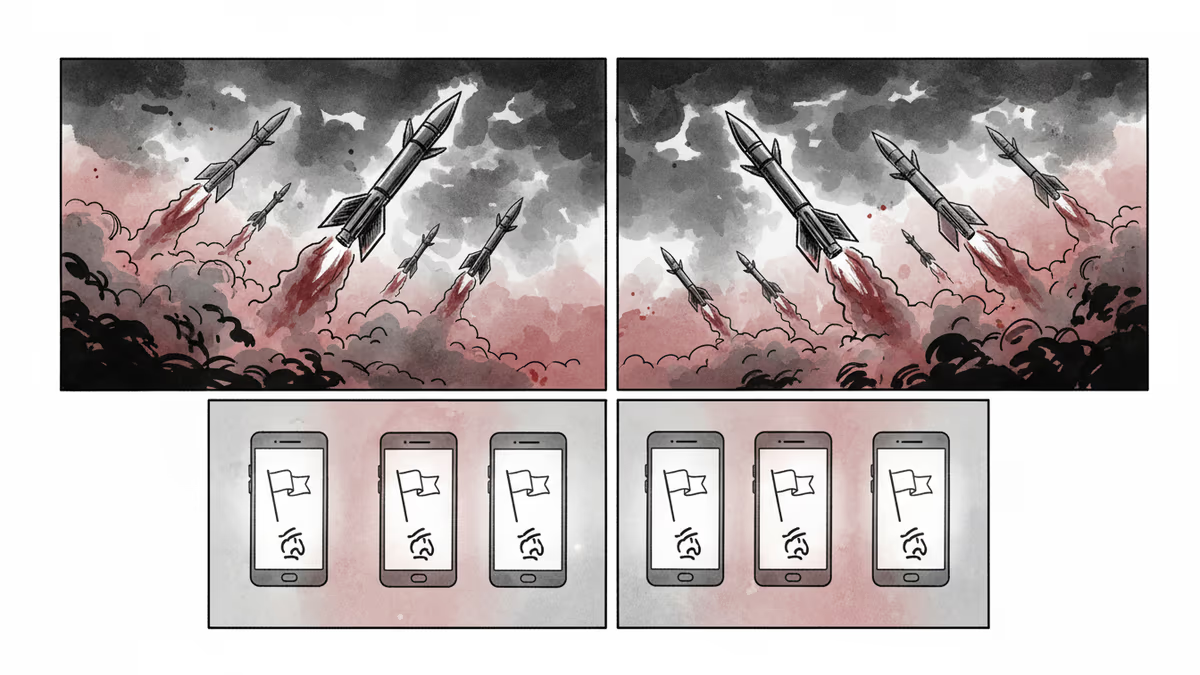
When Bombs Fall, Phones Buzz: 'Surrender Now
As Israel-US strikes hit Iran, hackers simultaneously sent surrender messages through a prayer app to 5 million users. A new dimension of cyber warfare emerges.
5 Million Phones, One Message: 'Help Has Arrived'
As explosions jolted Tehran residents awake Saturday morning, something unprecedented happened. While Israeli and US missiles struck Iranian targets, 5 million phones buzzed with an entirely different kind of attack.
The messages came through 'BadeSaba Calendar,' a prayer-timing app downloaded by millions of Iranians. But these weren't calls to prayer. They were calls to surrender.
"Help Has Arrived," read the first notification at 9:52 AM Tehran time, just minutes after the first explosions. For the next 30 minutes, Iranian military personnel received a barrage of messages urging them to "lay down your weapons" and "join the forces of liberation."
The Psychology of Digital Warfare
"The time for revenge has come," one hacked message declared. "The regime's repressive forces will pay for their cruel and merciless actions against the innocent people of Iran."
These weren't random cyber pranks. The messages were surgical, targeted, and timed with military precision. They promised amnesty to defectors and painted a picture of inevitable defeat—classic psychological warfare, delivered through push notifications.
Cybersecurity experts say this level of coordination doesn't happen overnight. "The compromise of assets likely happened some time ago," notes Morey Haber from BeyondTrust. "This is nation-state versus nation-state, executed with intent and precision."
When the Internet Goes Dark

As the digital assault unfolded, Iran's internet infrastructure crumbled. Network traffic plummeted to just 4% of normal levels, according to NetBlocks. Major data centers lost international connectivity, phone lines went dead, and even VPNs became useless.
State-affiliated news agencies IRNA and ISNA were also hit by cyberattacks, their websites temporarily knocked offline. While IRNA recovered, ISNA remained inaccessible at publication time.
For many Iranians, this digital blackout felt familiar. They'd experienced similar shutdowns during mass protests earlier this year, when 3,117 civilians died and the government severed internet connections to limit documentation and outside attention.
The Attribution Mystery
Here's what makes this incident particularly intriguing: nobody knows who did it. No hacker group has claimed responsibility. Was it Israel? Iranian dissidents? A third party?
"Attribution in cases like this is always complex," says digital rights researcher Narges Keshavarznia. "We genuinely do not know who is behind them."
But the mystery itself sends a message. In modern conflict, attacks can come from anywhere, through anything—even your prayer app.
The New Rules of War
This incident reveals how 21st-century warfare has evolved. Physical strikes and cyber operations now happen simultaneously, each amplifying the other's psychological impact. While missiles destroy infrastructure, hacked apps target morale.
The timing wasn't coincidental. As bombs fell from the sky, surrender messages arrived in pockets. The medium became part of the message: your government can't even protect your phones.
Authors
Related Articles
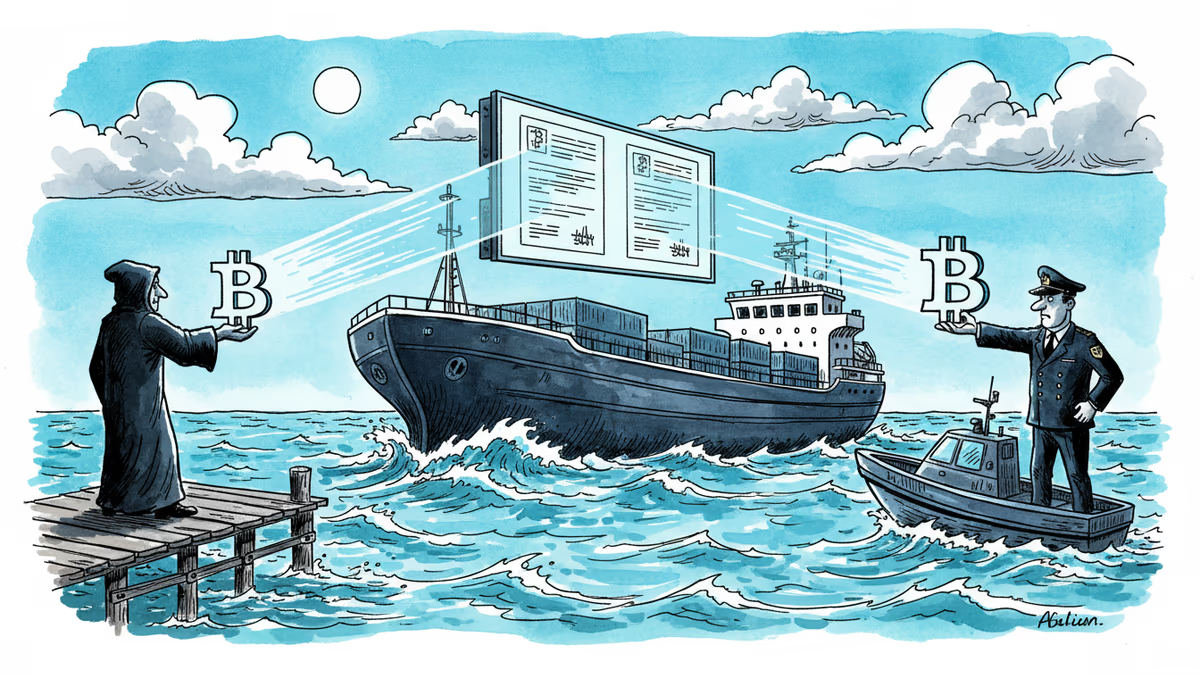
Scammers posing as Iranian authorities are demanding bitcoin and tether from ships near the Strait of Hormuz—exploiting the fact that Iran already does exactly this.

A small pro-Iran team is racking up millions of views with AI-generated Lego videos that mock Trump — and Americans are sharing them. What does that tell us about information warfare?
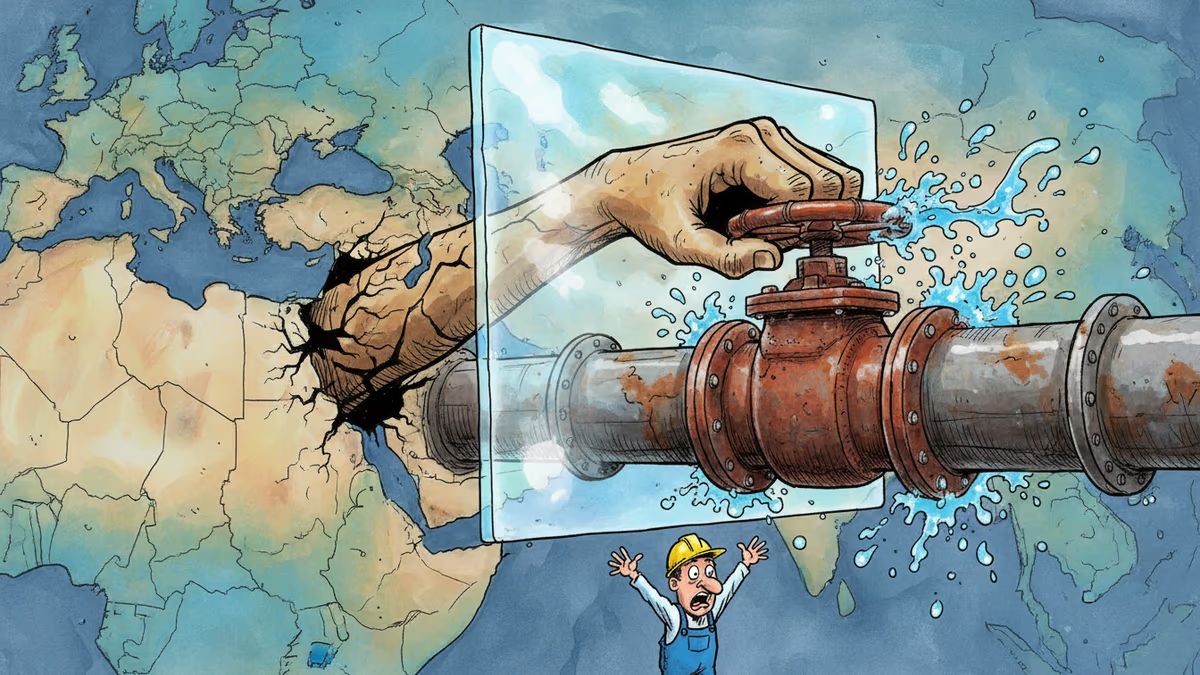
Iranian government-backed hackers have escalated from data theft to physically manipulating U.S. water, power, and local government control systems. A joint FBI-NSA-CISA-DOE advisory confirms operational disruption has already occurred.
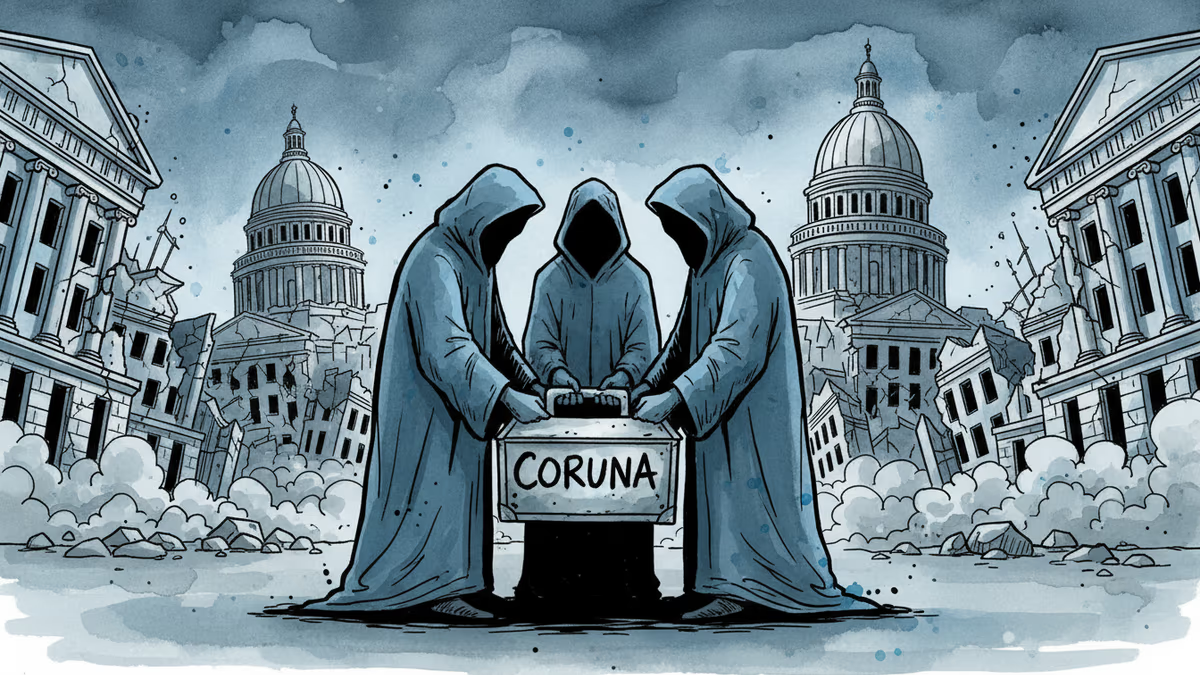
CISA orders emergency patches for iOS vulnerabilities exploited by sophisticated Coruna toolkit, revealing how cybercriminals weaponize already-patched flaws
Scammers posing as Iranian authorities are demanding bitcoin and tether from ships near the Strait of Hormuz—exploiting the fact that Iran already does exactly this.
A small pro-Iran team is racking up millions of views with AI-generated Lego videos that mock Trump — and Americans are sharing them. What does that tell us about information warfare?
Iranian government-backed hackers have escalated from data theft to physically manipulating U.S. water, power, and local government control systems. A joint FBI-NSA-CISA-DOE advisory confirms operational disruption has already occurred.
CISA orders emergency patches for iOS vulnerabilities exploited by sophisticated Coruna toolkit, revealing how cybercriminals weaponize already-patched flaws
Thoughts
Share your thoughts on this article
Sign in to join the conversation