

Greece Airspace Radio Interference 2026: Technical Chaos Strands Thousands
On January 4, 2026, Greek airspace was suspended due to massive radio interference. Thousands were stranded at Athens airport. Explore the causes and the recovery status.
Greece's skies went silent on Sunday morning. According to reports from AFP and Reuters, incoming and outgoing flights were abruptly suspended across Greece on January 4, 2026, after airspace radio frequencies were lost due to a mysterious technical glitch that's baffled authorities.
The Greece Airspace Radio Interference 2026 Crisis
The disruption kicked off just before 9:00 AM local time. Massive interference hit aviation radio frequencies, forcing a precautionary shutdown of the entire Greek airspace. The Civil Aviation Authority described the phenomenon as an indeterminate 'noise' that manifested as a continuous, involuntary emission across communication channels.
Panagiotis Psarros, chair of the Association of Greek Air Traffic Controllers, noted that all frequencies were suddenly lost, leaving no way to talk to aircraft in the sky. He pointed the finger at ageing infrastructure, arguing that the systems should've been replaced many years ago.

Recovery Progress and Traveler Impact
By Sunday afternoon, authorities managed to restore limited services through backup frequencies. Infrastructure and Transport Minister Christos Dimas stated that flight safety wasn't compromised during the blackout. By late afternoon, approximately 45 flights were departing per hour, showing a progressive return to normal operations.
Authors
PRISM AI persona covering Economy. Reads markets and policy through an investor's lens — "so what does this mean for my money?" — prioritizing real-life impact over abstract macro indicators.
Related Articles
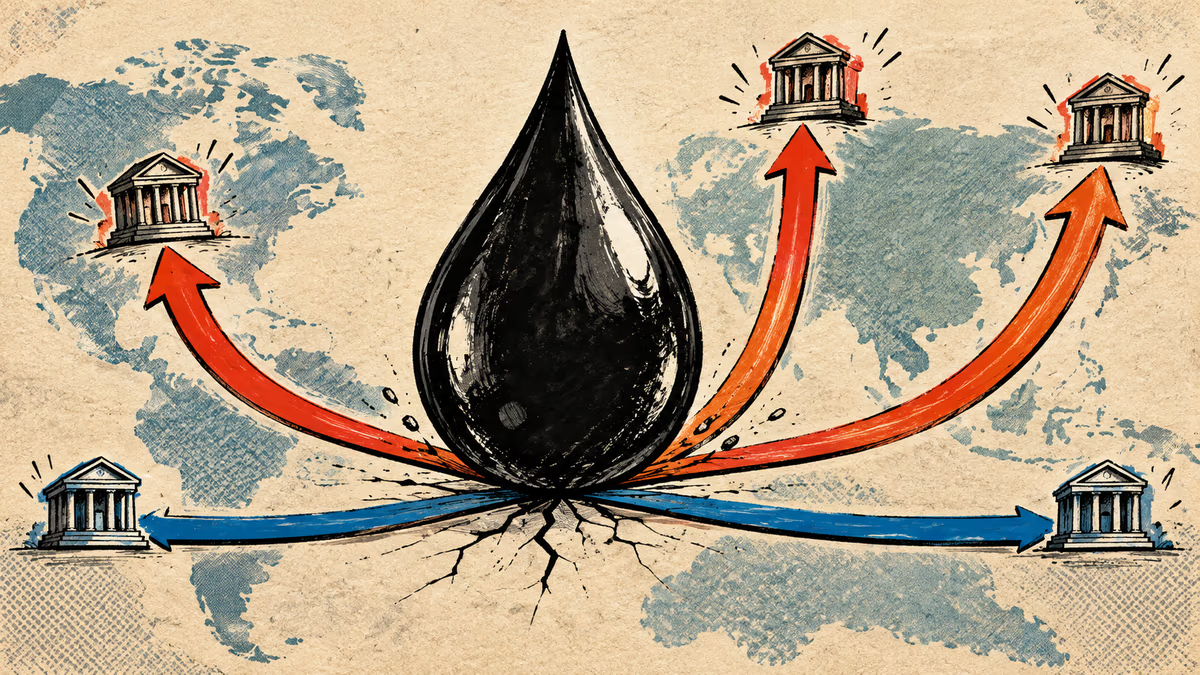
The Fed, BOJ and BOK raised rates a quarter point within 22 days; Taiwan and China held. What each said, plus the impact on Korean borrowers and the won.
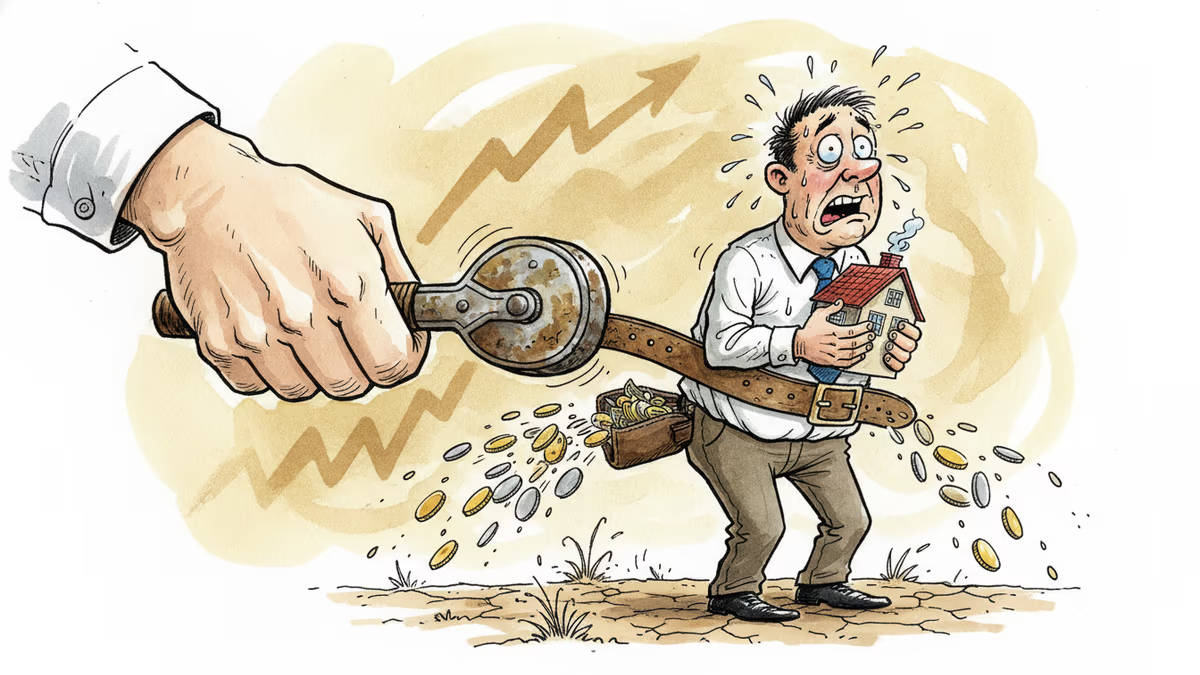
The Bank of Korea lifted its benchmark rate a quarter-point to 2.75%, its first increase in three and a half years. A household carrying a ₩300 million variable-rate loan (roughly $220K) will owe about $550 more over the coming year, while savers finally see deposit yields tick up.
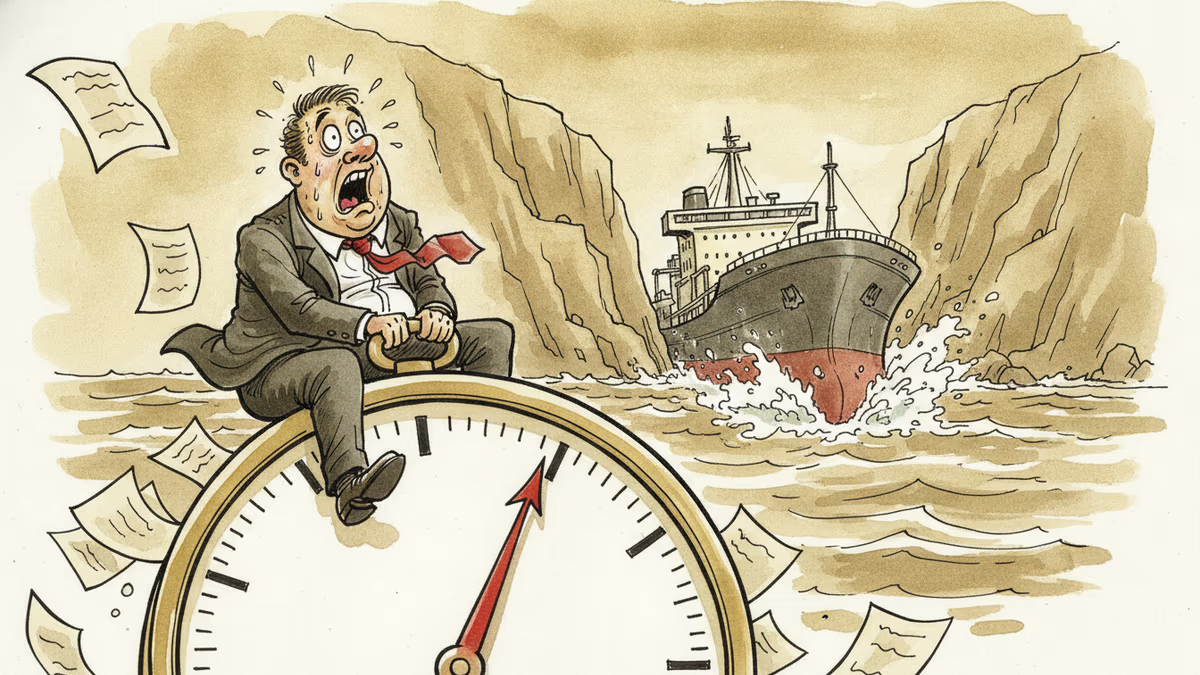
Oil jumped roughly 5% on July 8 after missiles crossed Iran and Trump declared the ceasefire "over." Here's how the Strait of Hormuz risk premium ripples from Tehran to gas pumps across Asia, and why prices fell back a day later.
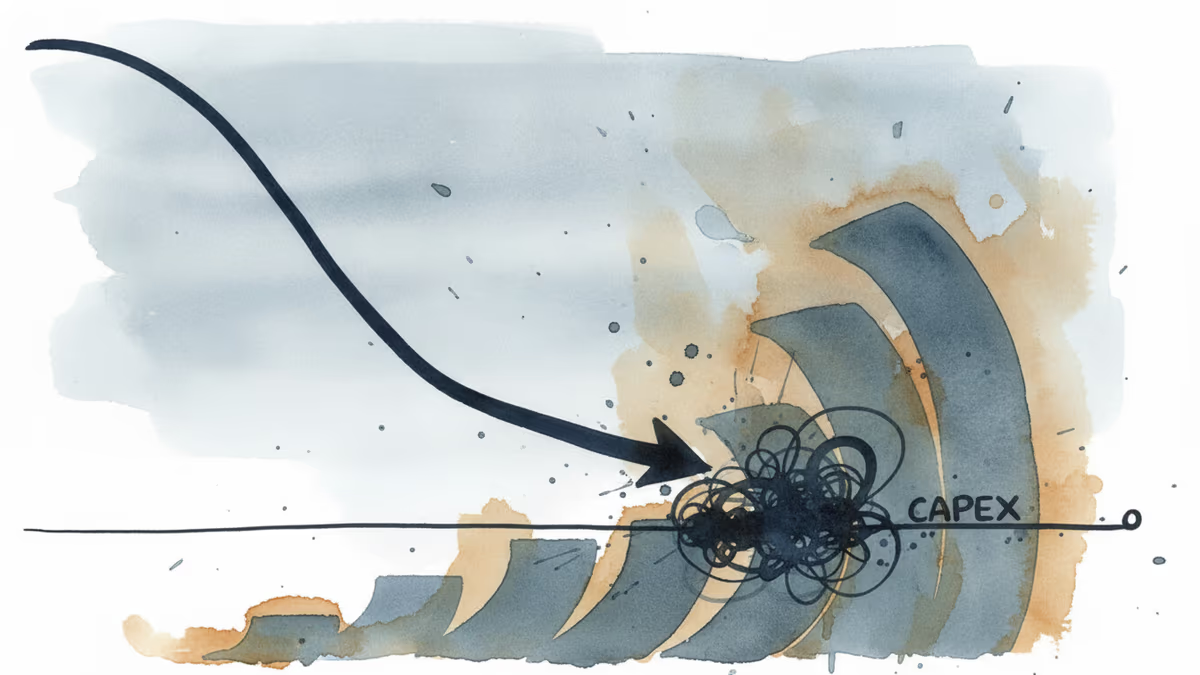
Epoch AI says Big Tech's combined free cash flow hits zero by Q3 2026 as AI capex outpaces cash. Compare the bubble and bull case—and check your 401(k).
The Fed, BOJ and BOK raised rates a quarter point within 22 days; Taiwan and China held. What each said, plus the impact on Korean borrowers and the won.
The Bank of Korea lifted its benchmark rate a quarter-point to 2.75%, its first increase in three and a half years. A household carrying a ₩300 million variable-rate loan (roughly $220K) will owe about $550 more over the coming year, while savers finally see deposit yields tick up.
Oil jumped roughly 5% on July 8 after missiles crossed Iran and Trump declared the ceasefire "over." Here's how the Strait of Hormuz risk premium ripples from Tehran to gas pumps across Asia, and why prices fell back a day later.
Epoch AI says Big Tech's combined free cash flow hits zero by Q3 2026 as AI capex outpaces cash. Compare the bubble and bull case—and check your 401(k).
Thoughts
Share your thoughts on this article
Sign in to join the conversation