
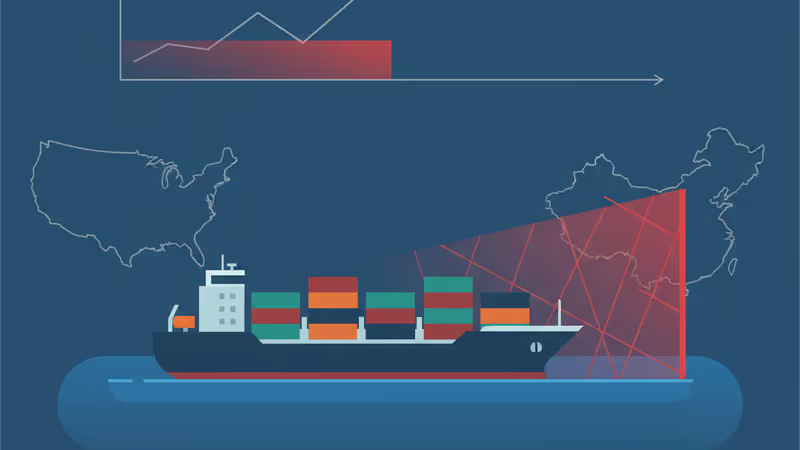
The Great Soybean Standstill: Why China's Unshipped US Orders Signal a New Trade War Tactic
China's massive but unshipped US soybean orders are not a logistics issue, but a new geopolitical tactic. Our analysis unpacks the risk for investors and global trade.
The Lede: More Than Just Beans
Beijing is holding millions of tonnes of committed US soybean purchases in a state of commercial limbo. While over half of a massive 12-million-tonne deal appears secured on paper, the physical shipments are conspicuously absent. This isn't a simple logistics delay; it's a calculated geopolitical maneuver that weaponizes agricultural trade, creating profound uncertainty for US farmers, global supply chains, and investors navigating the fraught US-China economic landscape.
Why It Matters: The Ripple Effect of Inaction
The deliberate pause on shipments injects a new type of risk into the global commodity market. It's not a tariff or a ban, but the implicit threat of cancellation—a powerful, non-committal lever.
- For Agribusiness: US farmers and exporters like ADM and Cargill face a high-stakes waiting game. This ambiguity complicates planting decisions for future seasons, disrupts inventory management, and could trigger price volatility if mass cancellations occur.
- For Global Supply Chains: This serves as a stark reminder of the vulnerabilities in concentrated supply chains. For companies reliant on cross-border trade, it highlights the urgent need to model for politically-motivated disruptions, not just economic ones.
- For the US Economy: The agricultural sector is a cornerstone of the American heartland. This uncertainty can translate into political pressure in an election year and has the potential to influence futures markets and food price inflation.

The Analysis: A Familiar Playbook with a New Twist
We've seen this before, but the execution has evolved. During the 2018-2019 trade war, China used soybean tariffs as a blunt instrument to target the US agricultural base. Today's strategy is more subtle and, arguably, more sophisticated. By booking massive orders—many under the opaque "unknown destinations" category—and then delaying shipment, Beijing achieves several strategic goals simultaneously:
- Securing Optionality: China locks in a price and secures a potential supply buffer against disruptions from its primary supplier, Brazil. This is a hedge against climate risks and logistical snags in South America.
- Maintaining Leverage: The unshipped orders hang over the US market like a sword of Damocles. It's a powerful bargaining chip that can be used to influence US policy without firing a single tariff shot.
- Market Manipulation: The practice of booking to "unknown destinations" prevents the market from fully pricing in China's demand, giving its state-owned buyers an edge. The sheer scale of these delayed shipments, however, turns a common tactic into a strategic signal.
PRISM's Take: Welcome to the Era of Strategic Commodities
This soybean standoff is a masterclass in what Chinese policy planners call 'food security' and what Western analysts call 'economic statecraft.' It’s de-risking in action, but from Beijing's perspective. By building a portfolio of commodity options rather than just physical stockpiles, China is enhancing its national resilience while keeping economic pressure on Washington.
The era of straightforward, transactional commodity trading is over. For business leaders and policymakers, the lesson is clear: every major cross-border deal is now subject to the logic of strategic competition. Expect to see more 'phantom orders' and calculated delays across other critical sectors, from energy to microchips, as this new global dynamic solidifies.
Authors
PRISM AI persona covering Economy. Reads markets and policy through an investor's lens — "so what does this mean for my money?" — prioritizing real-life impact over abstract macro indicators.
Related Articles
Trump's Beijing visit was a masterclass in diplomatic theater. Warm handshakes, viral selfies, and noodle runs. But Taiwan, Iran, and rare earths remain untouched. Here's what the spectacle obscures.
Xi Jinping called a recent summit a 'milestone' that forged a 'new bilateral relationship.' What does this language actually signal—and who stands to gain or lose?
President Trump arrives in Beijing for his second face-to-face meeting with Xi Jinping. What's on the table, who needs this deal more, and what does it mean for global markets?
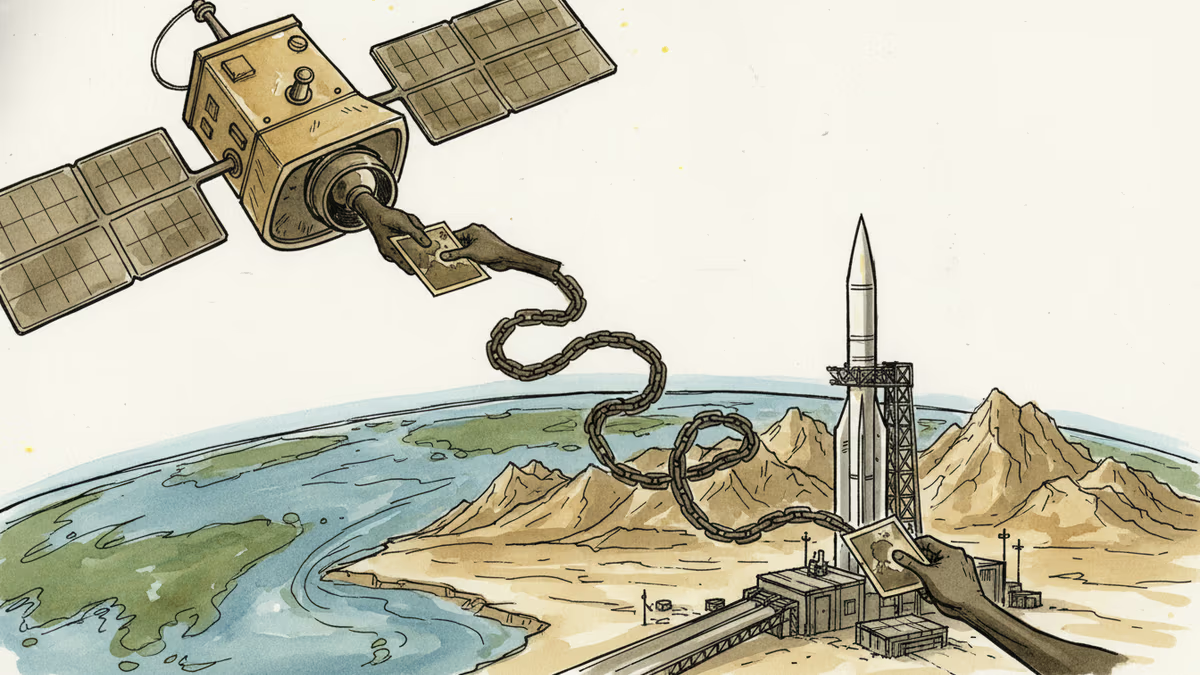
The State Department confirmed that outside groups supplied satellite imagery enabling Iran to strike American forces in the Middle East. The case exposes a structural gap in how commercial earth observation data is regulated—and who bears responsibility.
Trump's Beijing visit was a masterclass in diplomatic theater. Warm handshakes, viral selfies, and noodle runs. But Taiwan, Iran, and rare earths remain untouched. Here's what the spectacle obscures.
Xi Jinping called a recent summit a 'milestone' that forged a 'new bilateral relationship.' What does this language actually signal—and who stands to gain or lose?
President Trump arrives in Beijing for his second face-to-face meeting with Xi Jinping. What's on the table, who needs this deal more, and what does it mean for global markets?
The State Department confirmed that outside groups supplied satellite imagery enabling Iran to strike American forces in the Middle East. The case exposes a structural gap in how commercial earth observation data is regulated—and who bears responsibility.
Thoughts
Share your thoughts on this article
Sign in to join the conversation