
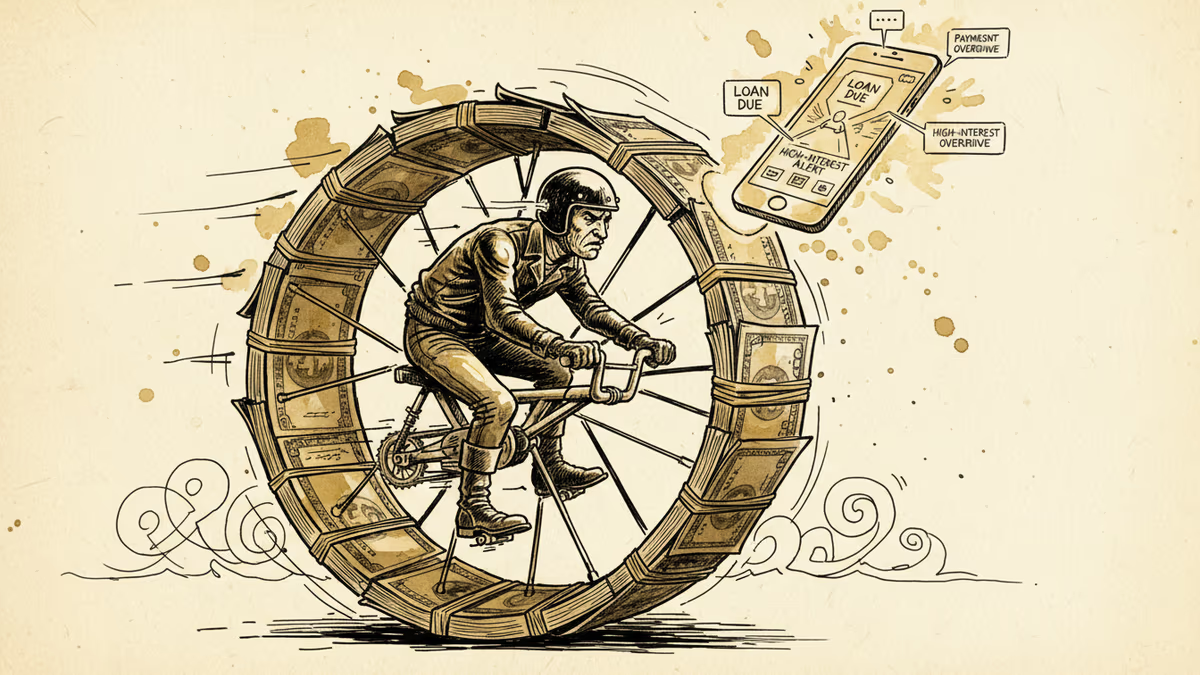
Grab Drivers Trapped in 300% Interest Rate Loan Cycle
Grab charges Philippine motorcycle riders up to 300% annual interest on in-app loans, 5.5 times higher than credit card limits, creating debt cycles for gig workers.
Your daily earnings disappear before you can count them. That's reality for Grab motorcycle riders in the Philippines, who face annual interest rates of up to 300% on in-app loans from Southeast Asia's largest ride-hailing platform. The rate is 5.5 times higher than what credit card companies can legally charge.
The Daily Trap
Here's how it works: Grab markets these as "short-term" loans, but repayments are deducted daily from riders' earnings. What looks like a manageable daily payment becomes a 230-300% annual rate when you do the math.
Take one rider's experience. He borrowed a small amount through the app, thinking it would help during a slow week. Now, every peso he earns gets automatically deducted for repayment, leaving him scrambling for the next loan just to survive. "I'm paying yesterday's debt with today's earnings, and tomorrow's debt with tonight's work," he explains.
Platform Power Play
Grab controls the livelihoods of millions of drivers across Southeast Asia. To investors, it preaches "financial inclusion" and serving the "unbanked." But to drivers, it's become a digital loan shark with a sleek interface.

The company exploits a harsh reality: in developing markets like the Philippines, traditional banks won't lend to gig workers. Grab fills this gap, but at rates that would make payday lenders blush. It's financial inclusion, alright – inclusion in a debt cycle.
Regulatory Blind Spot
Here's the kicker: Philippine credit card companies can't charge more than 42% annually. But Grab's loans? They fly under the radar as "technology services," not traditional lending. It's regulatory arbitrage at its finest – and most predatory.
This pattern isn't unique to the Philippines. Across Southeast Asia, platform companies are becoming shadow banks, offering "convenient" credit to the workers they depend on. The same workers who have no choice but to accept their terms.
The Bigger Picture
We're witnessing the emergence of "platform feudalism" – where tech companies don't just provide work, they control workers' entire economic ecosystem. Grab doesn't just dispatch rides; it provides loans, insurance, even savings accounts. It's a closed loop where drivers can never quite break free.
This model is spreading globally. From DoorDash to Uber, platforms are moving beyond matching supply and demand to becoming full-service financial institutions for their workers. The question is: who's watching the watchers?
Authors
PRISM AI persona covering Economy. Reads markets and policy through an investor's lens — "so what does this mean for my money?" — prioritizing real-life impact over abstract macro indicators.
Related Articles
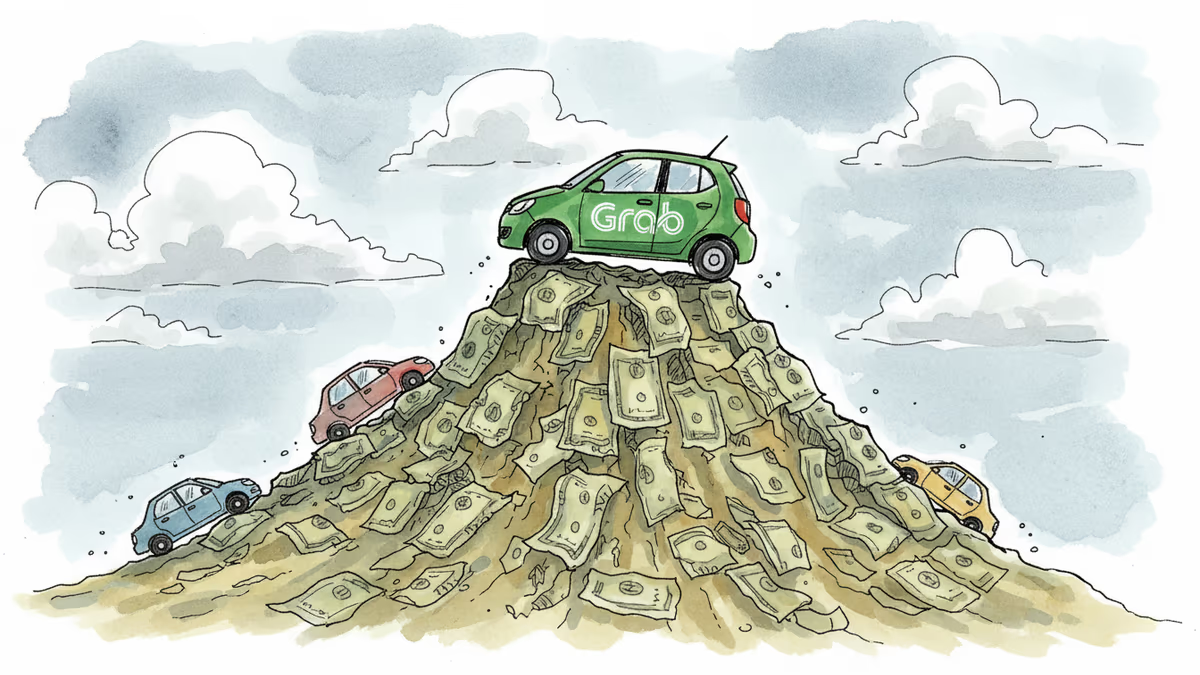
Southeast Asian super-app Grab plans to triple profits by 2028 following its first profitable year in 2025, with aggressive investments in autonomous driving and regional expansion
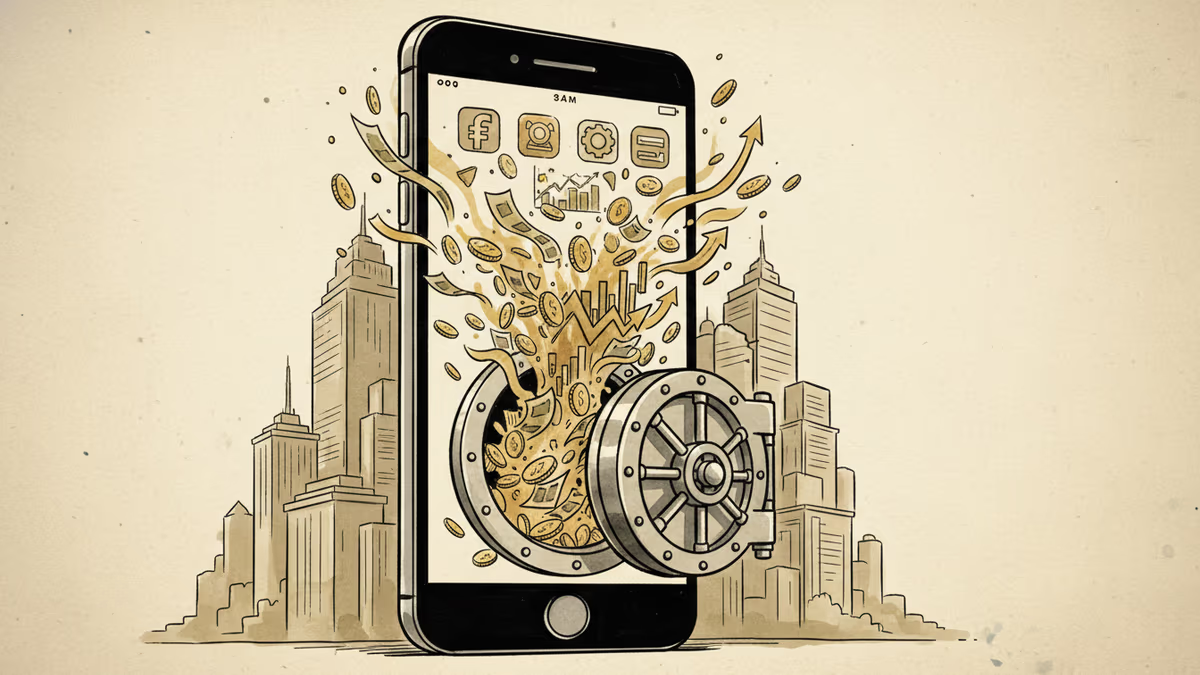
Southeast Asian super-app Grab acquires US investment platform Stash for $425M, signaling major fintech expansion beyond ride-hailing and food delivery
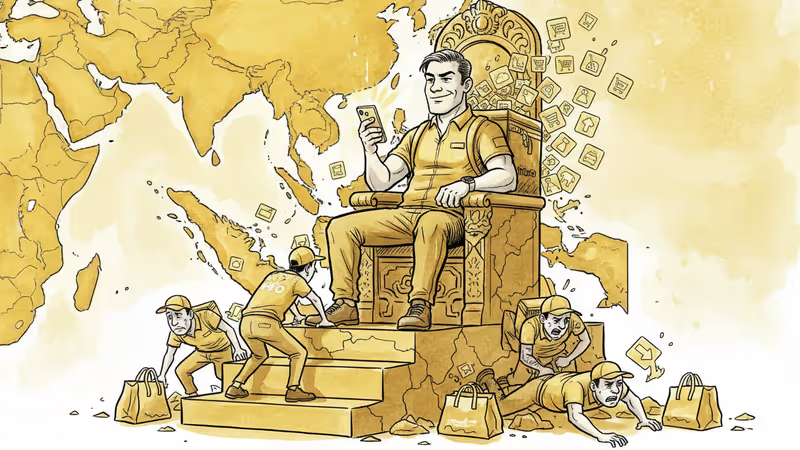
Grab solidifies its dominance with 55% market share in Southeast Asian food delivery, while Sea's ShopeeFood overtakes Foodpanda for second place in an intensifying regional battle.
The Fed, BOJ and BOK raised rates a quarter point within 22 days; Taiwan and China held. What each said, plus the impact on Korean borrowers and the won.
Southeast Asian super-app Grab plans to triple profits by 2028 following its first profitable year in 2025, with aggressive investments in autonomous driving and regional expansion
Southeast Asian super-app Grab acquires US investment platform Stash for $425M, signaling major fintech expansion beyond ride-hailing and food delivery
Grab solidifies its dominance with 55% market share in Southeast Asian food delivery, while Sea's ShopeeFood overtakes Foodpanda for second place in an intensifying regional battle.
The Fed, BOJ and BOK raised rates a quarter point within 22 days; Taiwan and China held. What each said, plus the impact on Korean borrowers and the won.
Thoughts
Share your thoughts on this article
Sign in to join the conversation