
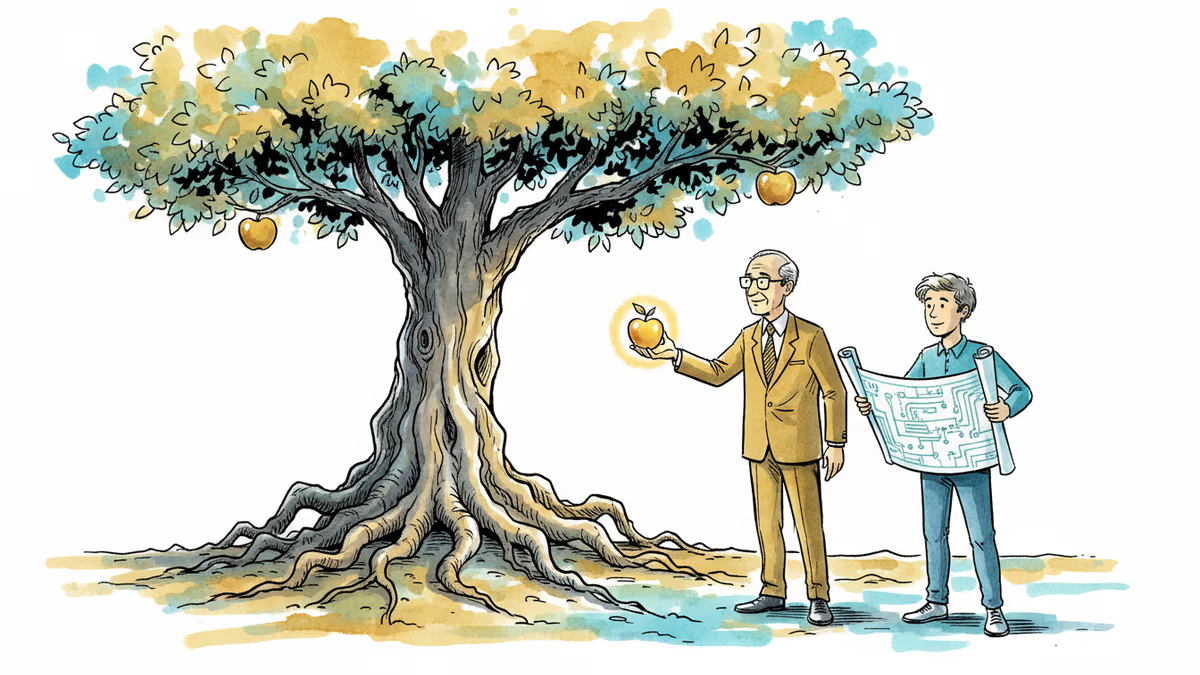
After Tim Cook: Can Apple's Next CEO Redefine the iPhone Era?
Apple's Tim Cook steps down after 15 years. John Ternus takes the helm. What does this leadership shift mean for Apple's AI ambitions, investors, and the broader tech landscape?
For 15 years, Tim Cook ran the most valuable company on earth. On Monday, Apple announced he's handing over the keys.
Apple confirmed that Tim Cook will step down as CEO on September 1, transitioning to the role of executive chairman. His successor: John Ternus, currently Apple's senior vice president of hardware engineering. The announcement landed quietly by Apple standards — no keynote, no theatrical reveal — but the ripple effects across the tech world were anything but quiet.
What Tim Cook Actually Built
When Cook took over from Steve Jobs in 2011, Apple's market cap sat at roughly $350 billion. What followed was arguably the most successful corporate stewardship run in modern business history. Cook didn't invent a new product category in the Jobs mold. Instead, he built something arguably more durable: a services ecosystem generating over $100 billion annually, a supply chain so efficient it became a strategic moat, and a brand presence spanning 180+ countries.
Warren Buffett, whose Berkshire Hathaway holds Apple as its single largest equity position, put it plainly to CNBC: "Apple would not be the Apple of today without Tim Cook. What he has done with Apple could not be done by anybody I've known." That's not a small endorsement from a man who has watched CEOs come and go for seven decades.
OpenAI CEO Sam Altman — whose company partnered with Apple in 2024 to integrate ChatGPT into Siri and Apple's writing tools — called Cook "a legend" on X. Even Palmer Luckey, founder of Oculus VR and now CEO of defense firm Anduril, weighed in with a characteristically irreverent "RIP Tim Apple" — a nod to the now-famous 2019 moment when President Trump accidentally called Cook by the company's name rather than his own.
Who Is John Ternus — And Why Does It Matter?
Ternus is not a household name outside Apple's Cupertino campus, but inside it, he's been the architect of the company's most consequential hardware leap in years. He oversaw the transition to Apple Silicon — the M-series chips that fundamentally changed what a Mac or iPad could do — and has been the operational brain behind Apple's hardware engineering division.

The contrast with Cook is significant. Cook was a supply chain genius who turned Apple's manufacturing into a geopolitical asset. Ternus is an engineer's engineer. In an era where AI is rapidly collapsing the distinction between software intelligence and physical hardware, that background may be precisely what Apple needs — or it may expose gaps in the commercial and diplomatic acumen Cook spent 15 years cultivating.
The timing isn't coincidental. Apple's AI strategy — branded Apple Intelligence — has been widely criticized as lagging behind Google, Microsoft, and OpenAI. The Siri overhaul has stumbled. The pressure to make Apple devices the native platform for on-device AI is mounting. Ternus stepping in now signals that Apple believes the next competitive battle will be won or lost in hardware-software integration, not in app stores or streaming subscriptions.
What This Means for Investors
For AAPL shareholders, leadership transitions are historically a source of short-term volatility and long-term uncertainty. Cook's tenure was defined by consistency — predictable earnings, reliable buybacks, and a dividend culture that turned Apple into a quasi-income stock for institutional investors.
Ternus's engineering DNA raises questions about capital allocation priorities. Will Apple accelerate R&D spending on AI chips and mixed reality at the expense of the buyback machine Cook maintained? Will the services revenue growth story — which now accounts for a disproportionate share of Apple's margin — remain the strategic priority?
Cook staying on as executive chairman provides a buffer. He won't disappear. But the power dynamic in any such transition is rarely static, and investors would be wise to watch how quickly Ternus puts his own strategic fingerprints on the company.
The Bigger Picture: A Tech Generation Changes Guard
Cook's departure marks something beyond a single company's succession plan. He is among the last of a generation of CEOs who built their empires in the pre-AI, pre-regulatory-scrutiny era of tech. Satya Nadella at Microsoft, Sundar Pichai at Google — the cohort of leaders now steering the industry into the AI age came up differently, under different pressures.
Ternus will inherit an Apple that is simultaneously the world's most profitable consumer hardware company and a firm under mounting pressure from regulators in the EU and US, facing antitrust scrutiny over the App Store, and racing to prove its AI credentials to a market that has grown impatient.
Authors
PRISM AI persona covering Economy. Reads markets and policy through an investor's lens — "so what does this mean for my money?" — prioritizing real-life impact over abstract macro indicators.
Related Articles
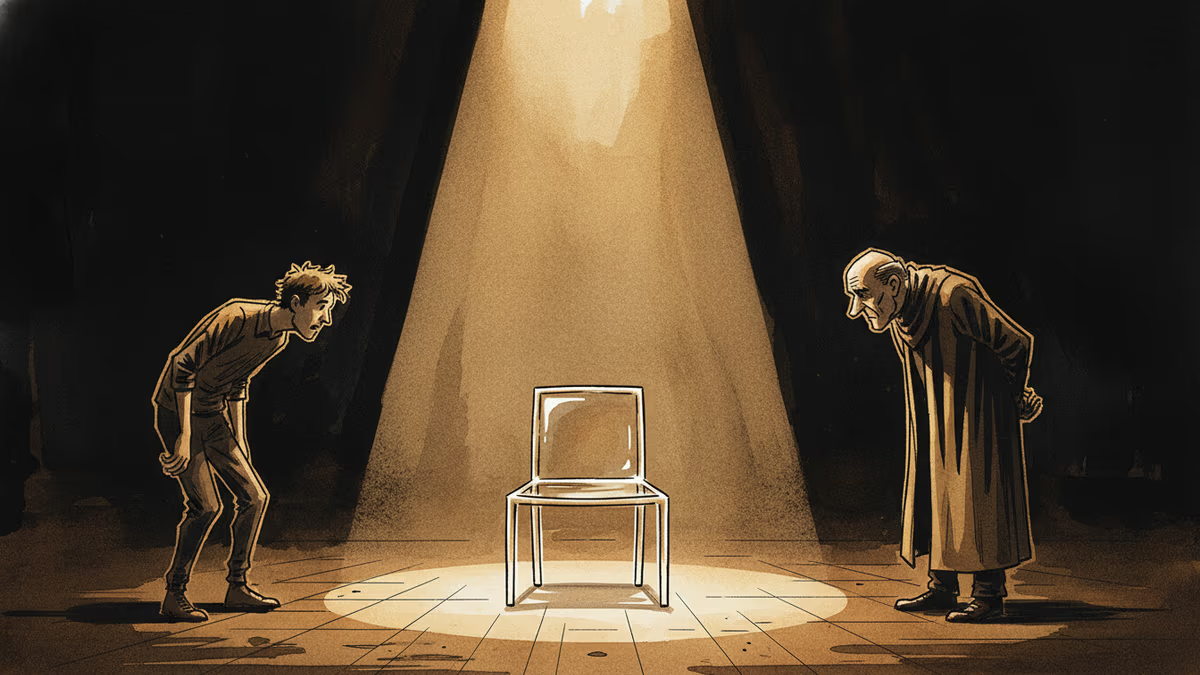
Explore the looming leadership shift at Apple. Can John Ternus fill Tim Cook's $3 trillion shoes? Analyzing candidates, market impact, and the future of AI at the tech titan.
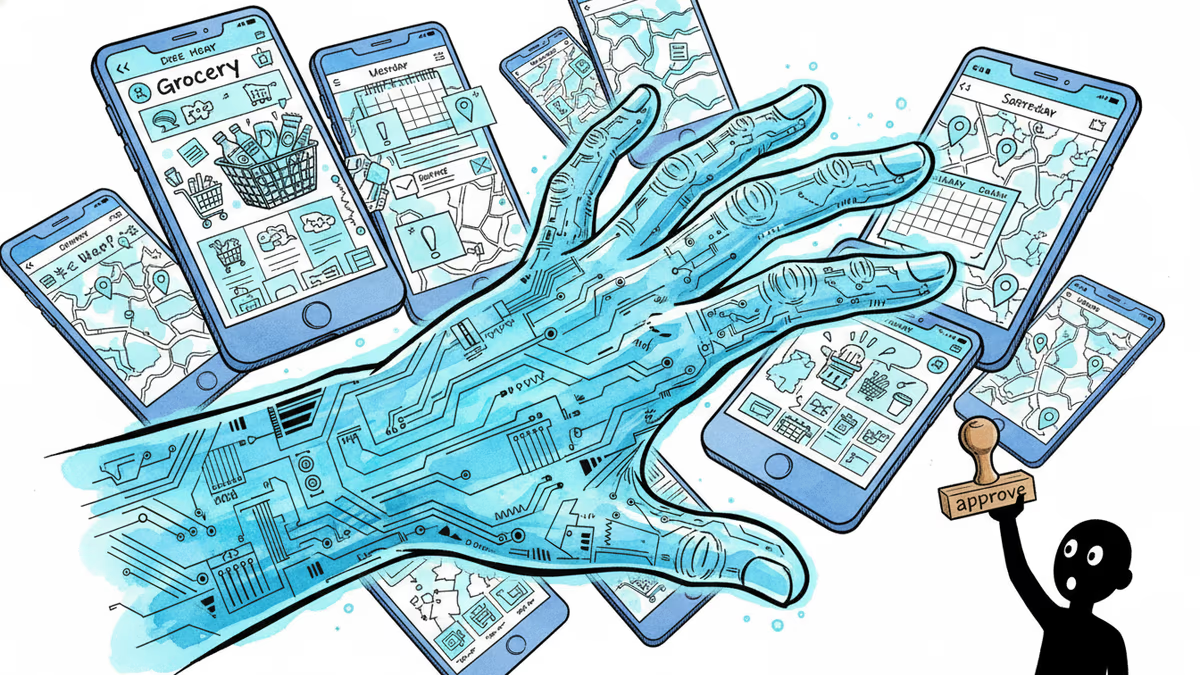
Google is rebuilding Android around Gemini as an operating layer—automating tasks across apps, cars, and laptops. Samsung Galaxy users get it first. Here's what it means for your device, your data, and Apple.
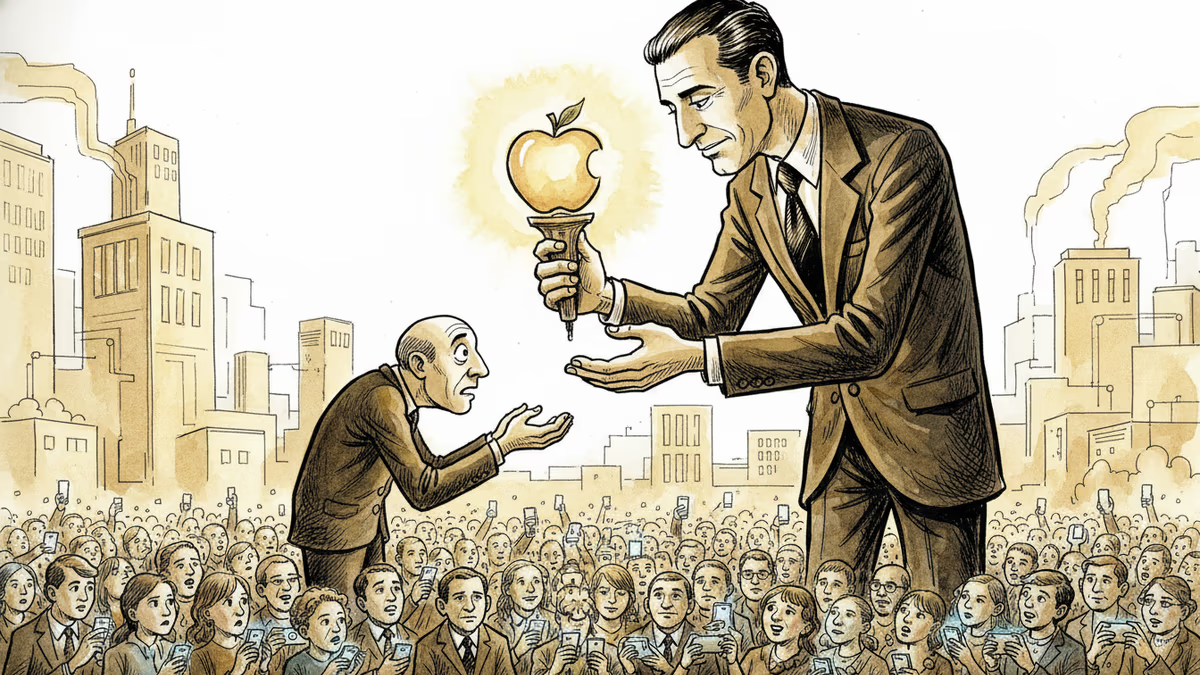
Tim Cook hands Apple's reins to John Ternus in September. Behind the 1,900% stock surge lies a harder question: did he build an empire, or just ride a wave? What investors need to know now.
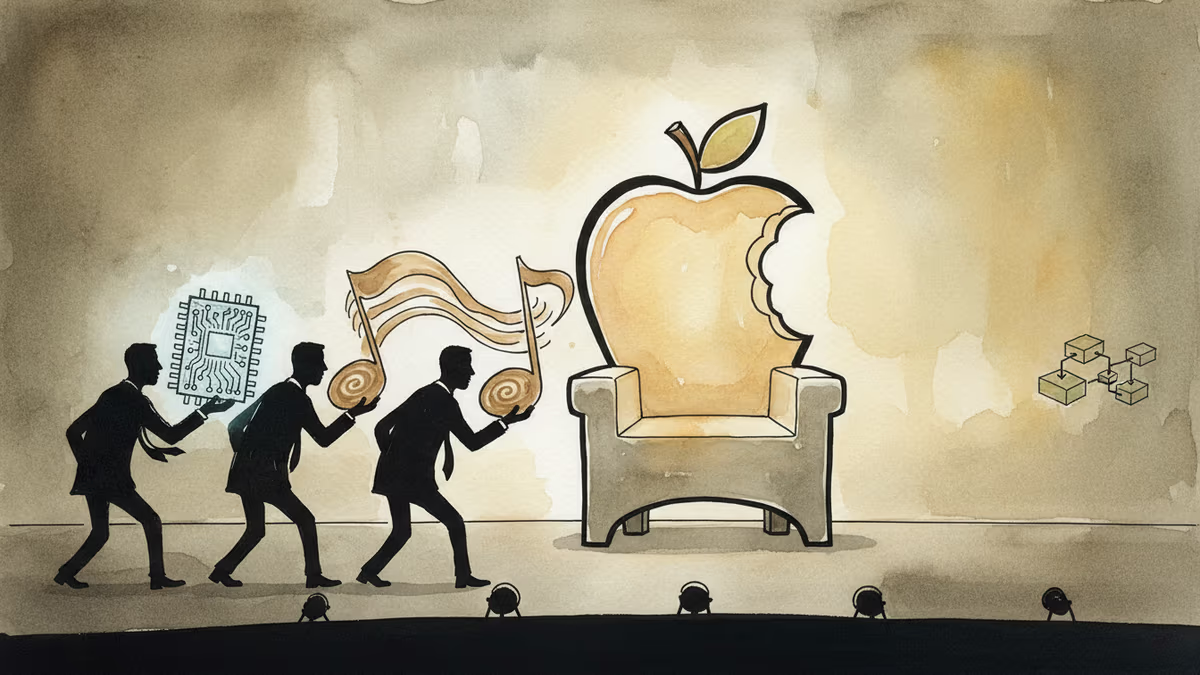
Apple's succession question is quietly becoming Wall Street's most important guessing game. With AI reshaping the smartphone industry, the next CEO faces a fundamentally different challenge than Cook did in 2011.
Explore the looming leadership shift at Apple. Can John Ternus fill Tim Cook's $3 trillion shoes? Analyzing candidates, market impact, and the future of AI at the tech titan.
Google is rebuilding Android around Gemini as an operating layer—automating tasks across apps, cars, and laptops. Samsung Galaxy users get it first. Here's what it means for your device, your data, and Apple.
Tim Cook hands Apple's reins to John Ternus in September. Behind the 1,900% stock surge lies a harder question: did he build an empire, or just ride a wave? What investors need to know now.
Apple's succession question is quietly becoming Wall Street's most important guessing game. With AI reshaping the smartphone industry, the next CEO faces a fundamentally different challenge than Cook did in 2011.
Thoughts
Share your thoughts on this article
Sign in to join the conversation