
Google Wants Gemini to Run Your Phone, Not Just Answer It
Google is rebuilding Android around Gemini as an operating layer—automating tasks across apps, cars, and laptops. Samsung Galaxy users get it first. Here's what it means for your device, your data, and Apple.
Your phone already knows where you live, who you text, and what you buy. Now Google wants it to act on that knowledge—without you lifting a finger.
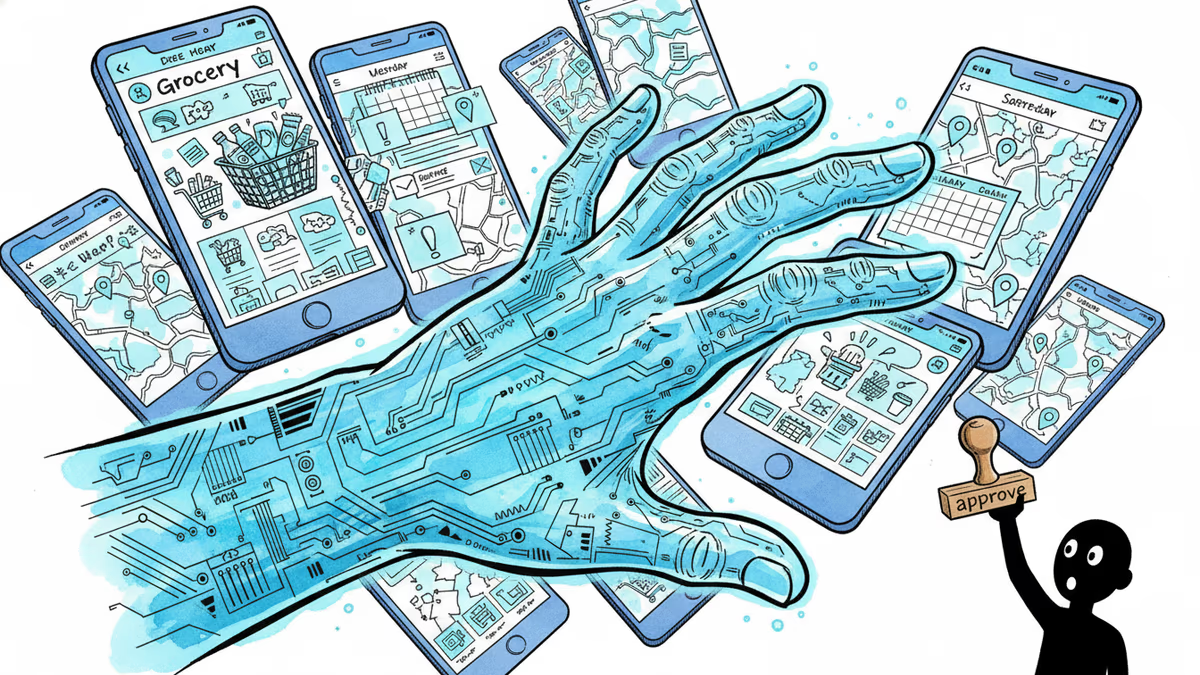
Ahead of its Google I/O developer conference next week, Google unveiled a sweeping set of Android updates that push Gemini from chatbot to what the company calls an "intelligence system"—an AI layer that moves across apps, reads screen context, and completes multi-step tasks on your behalf. Book a restaurant. Build a grocery list. Pull details from your Gmail. All in one request.
From Assistant to Agent: What Actually Changes
The shift sounds subtle but isn't. Traditional voice assistants answer questions. What Google is describing is an AI that takes action—jumping between apps, reading what's on your screen, and completing transactions. Sameer Samat, who oversees Google's Android ecosystem, told CNBC: "We're transitioning from an operating system to an intelligence system."
He walked through a concrete example: ask Gemini to look at the guest list for a backyard barbecue, build a menu, add ingredients to an Instacart cart, and pause for approval before checkout. That's not a search. That's delegation.
The app automation features will roll out this summer, starting with the latest Samsung Galaxy and Google Pixel phones, before expanding to Android watches, cars, glasses, and laptops later in the year. Android Auto—already embedded in more than 250 million vehicles—is getting its biggest maps update in a decade, plus Gemini-powered help for tasks like ordering dinner while driving.

The Control Question Nobody Wants to Answer
Agentic AI has one obvious problem: software acting without permission. Google's answer is what Samat called the "human always in the loop" principle—Gemini returns to the user before completing any transaction. It's a reasonable guardrail for now.
But the history of tech convenience suggests this will erode. Every friction point that gets removed is a decision that quietly shifts from user to system. One-click checkout felt safe too, until it didn't. The question isn't whether Google's intentions are good—it's whether the approval step survives contact with user impatience.
Google is also making a pointed argument about privacy architecture. Apple has long positioned itself as the privacy-first alternative, using hardware integration and on-device processing as its moat. Google's counter is that it can bring AI deeper into the device experience while still giving users granular control over what Gemini can see, where it can act, and when it needs confirmation. Whether that argument holds up in practice—or in front of regulators—remains to be seen.
Apple's Awkward Position
The timing is pointed. Apple signed a deal with Google to power parts of Apple Intelligence with Gemini just four months ago. Now Google is demonstrating that its own Android AI is further along than anything Apple has shown publicly. Apple faces its own developer conference, WWDC, in weeks, and the pressure to show a meaningfully upgraded Apple Intelligence is real.
For investors, the scoreboard is already clear. Alphabet's stock has climbed more than 140% over the past year. Apple is up roughly 40% in the same period. Wall Street has decided Google's bet on owning the full AI stack—models, cloud, device OS, browser, car—is worth more than Apple's premium hardware margins. What investors want to see now is whether Gemini can become genuinely indispensable in daily life, not just impressive in demos.
This content is AI-generated based on source articles. While we strive for accuracy, errors may occur. We recommend verifying with the original source.
Related Articles
Five Big Tech giants reported Q1 earnings after committing a combined $700B+ to AI data centers. The results reveal a clear divide between smart spenders and expensive mistakes.
Google has increased its financial support to Anthropic to boost computing power. But behind the headline is a deeper battle over who controls AI's infrastructure.
Tim Cook hands Apple's reins to John Ternus in September. Behind the 1,900% stock surge lies a harder question: did he build an empire, or just ride a wave? What investors need to know now.
Apple's Tim Cook steps down after 15 years. John Ternus takes the helm. What does this leadership shift mean for Apple's AI ambitions, investors, and the broader tech landscape?
Five Big Tech giants reported Q1 earnings after committing a combined $700B+ to AI data centers. The results reveal a clear divide between smart spenders and expensive mistakes.
Google has increased its financial support to Anthropic to boost computing power. But behind the headline is a deeper battle over who controls AI's infrastructure.
Tim Cook hands Apple's reins to John Ternus in September. Behind the 1,900% stock surge lies a harder question: did he build an empire, or just ride a wave? What investors need to know now.
Apple's Tim Cook steps down after 15 years. John Ternus takes the helm. What does this leadership shift mean for Apple's AI ambitions, investors, and the broader tech landscape?
Thoughts
Share your thoughts on this article
Sign in to join the conversation