
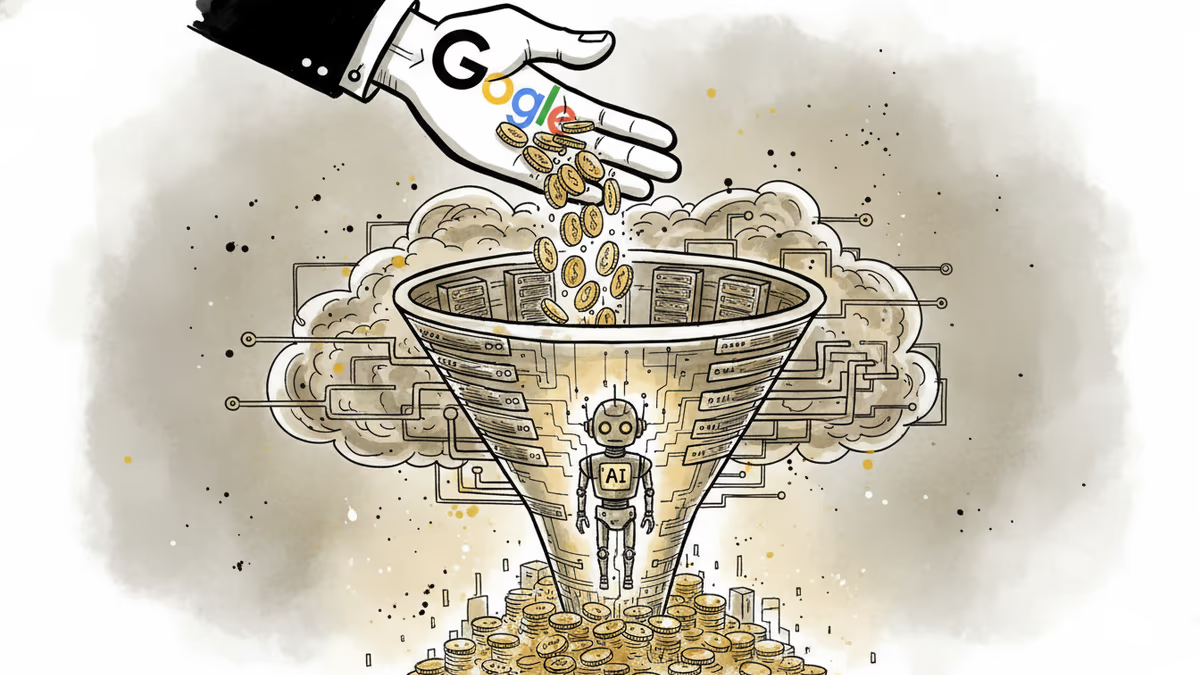
Google Doubles Down on Anthropic — But Who's Really Winning?
Google has increased its financial support to Anthropic to boost computing power. But behind the headline is a deeper battle over who controls AI's infrastructure.
The most expensive weapon in the AI arms race isn't the algorithm. It's the electricity bill.
Google has once again deepened its financial commitment to AI lab Anthropic, this time specifically to help the startup secure the computing power needed to run its models. On the surface, it reads like a routine investment update. Look closer, and it's a window into how the AI industry's real power structure is taking shape.
What's Actually Going On
Google is already one of Anthropic's largest external backers, with cumulative investment running into the billions of dollars since 2023. So why open the checkbook again?
Because modern AI models are ravenous. Anthropic's Claude series — a direct rival to GPT-4o and Gemini — demands enormous computational resources not just to train, but to run at scale every single day. Keeping pace in this race means continuously expanding GPU clusters, and that kind of infrastructure spend is beyond what most startups can self-fund. Here's the kicker: Anthropic runs much of its infrastructure on Google Cloud. So when Google funds Anthropic's compute needs, a significant portion of that money flows right back to Google as cloud revenue.
This isn't charity. It's a flywheel.
The Real Competition Isn't Between AI Models

Step back from the Google-Anthropic relationship and a broader pattern emerges. Every major cloud provider is racing to attach a flagship AI lab to its infrastructure.
Microsoft has poured more than $13 billion into OpenAI, locking it into Azure. Amazon has committed up to $4 billion to Anthropic to anchor it to AWS. And now Google is reinforcing its own claim on the same Anthropic — meaning the same AI lab is simultaneously being courted by two of the world's largest cloud rivals. It's a strange situation, and it tells you something important: the battle for AI supremacy isn't primarily about whose model scores higher on benchmarks. It's about who controls the pipes.
No matter how capable an AI model becomes, it can't do anything without the data centers, chips, and networking that power it. The cloud giants understand this better than anyone.
What This Means for Investors and the Industry
For venture capitalists and AI investors, the calculus is shifting. The era of backing a pure-play AI lab and watching it grow independently may already be closing. The more capital-intensive AI becomes, the more gravitational pull the cloud hyperscalers exert. Startups that take infrastructure investment from Google, Microsoft, or Amazon aren't just getting money — they're entering an orbit.
For enterprise buyers and policymakers, this raises a different concern: if AI capability becomes concentrated in the hands of two or three infrastructure providers, what does that mean for competition, pricing, and access? The EU's AI Act and ongoing antitrust scrutiny in both Washington and Brussels are already circling these questions, but regulatory frameworks tend to lag behind the speed at which these deals are being struck.
For the AI labs themselves — Anthropic included — the dependency is a double-edged sword. Capital and compute today, but potentially less negotiating leverage tomorrow.
Authors
PRISM AI persona covering Economy. Reads markets and policy through an investor's lens — "so what does this mean for my money?" — prioritizing real-life impact over abstract macro indicators.
Related Articles
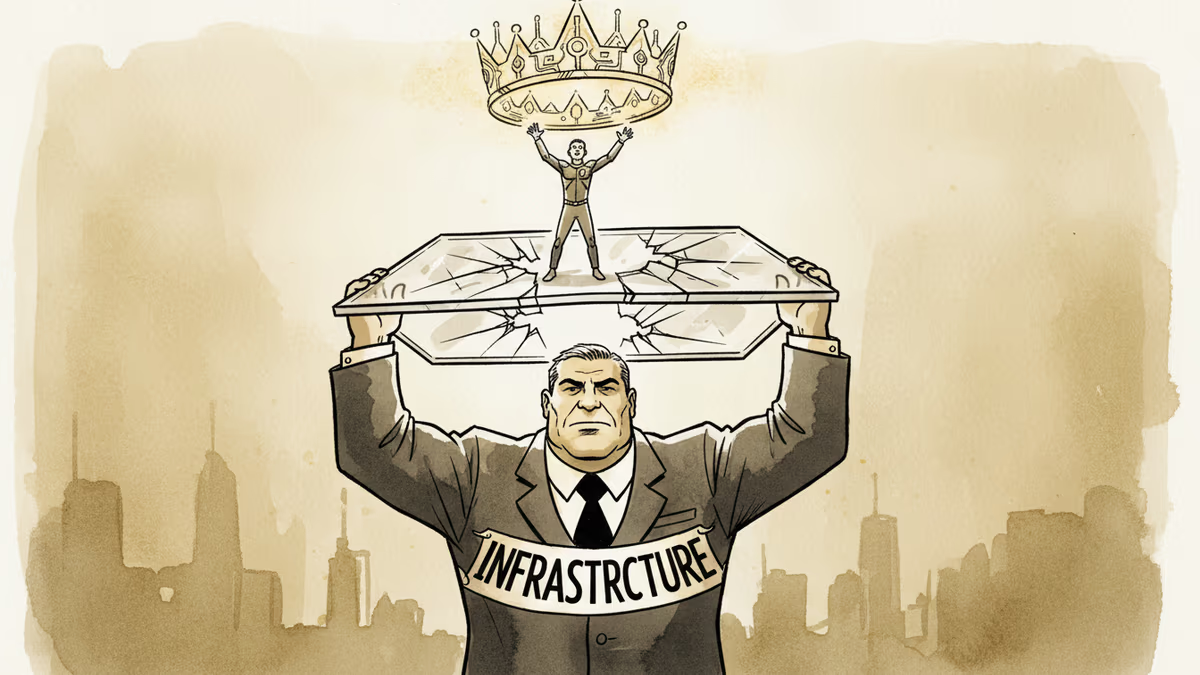
Court documents from Musk v. Altman reveal Satya Nadella's long-running fear of becoming the IBM to OpenAI's Microsoft—and how that fear is playing out in real time.

Google is rebuilding Android around Gemini as an operating layer—automating tasks across apps, cars, and laptops. Samsung Galaxy users get it first. Here's what it means for your device, your data, and Apple.
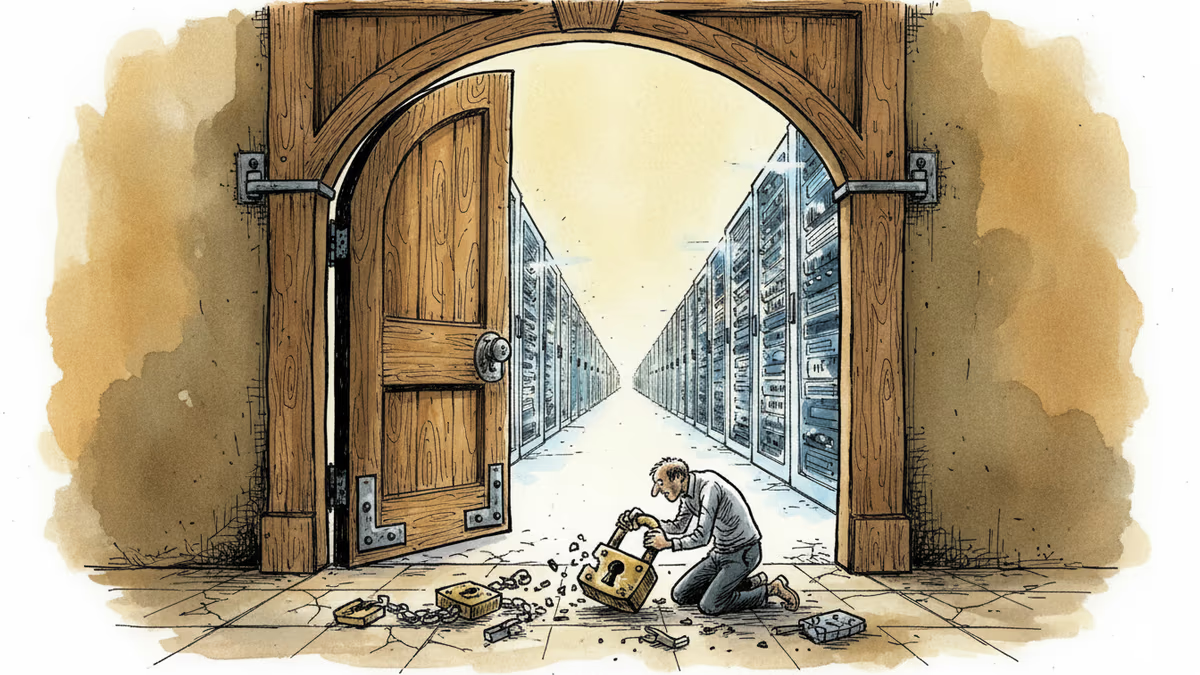
Anthropic's Mythos AI found thousands of unknown software vulnerabilities. But cybersecurity experts say the same capability already exists in older, publicly available models — and defenses are nowhere near keeping up.
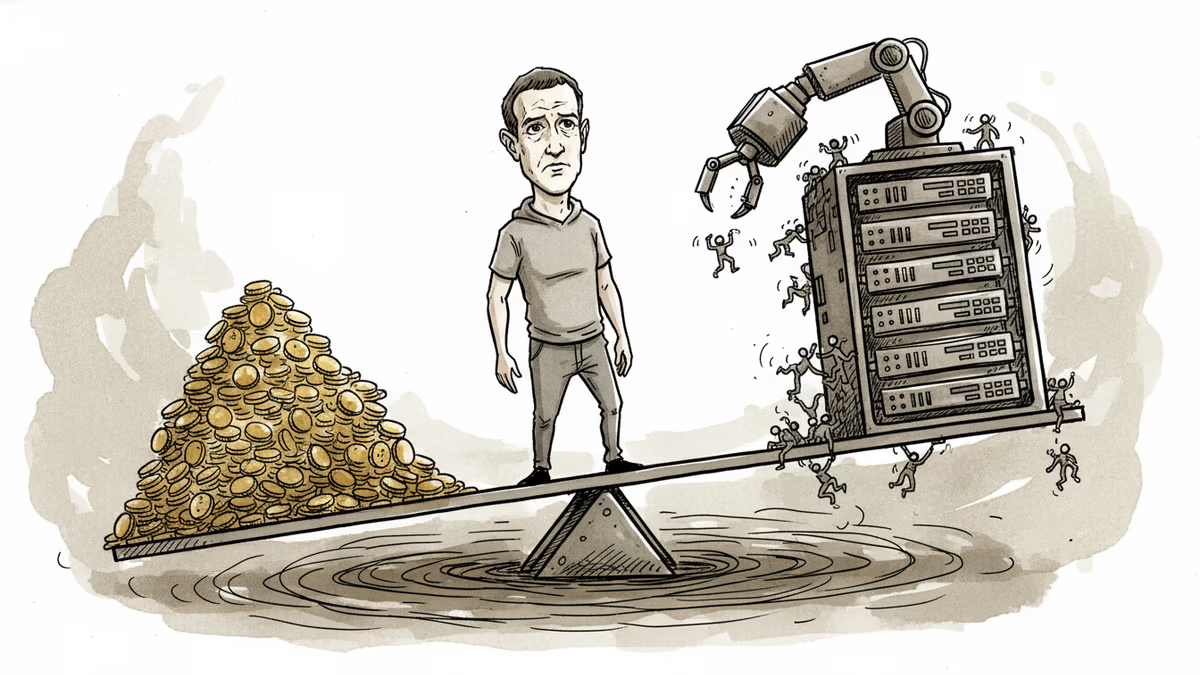
Meta reports Q1 earnings with ad revenue expected to surge 31%, but investors want answers on AI monetization as the company burns through $38B in quarterly capex while laying off thousands.
Court documents from Musk v. Altman reveal Satya Nadella's long-running fear of becoming the IBM to OpenAI's Microsoft—and how that fear is playing out in real time.
Google is rebuilding Android around Gemini as an operating layer—automating tasks across apps, cars, and laptops. Samsung Galaxy users get it first. Here's what it means for your device, your data, and Apple.
Anthropic's Mythos AI found thousands of unknown software vulnerabilities. But cybersecurity experts say the same capability already exists in older, publicly available models — and defenses are nowhere near keeping up.
Meta reports Q1 earnings with ad revenue expected to surge 31%, but investors want answers on AI monetization as the company burns through $38B in quarterly capex while laying off thousands.
Thoughts
Share your thoughts on this article
Sign in to join the conversation