
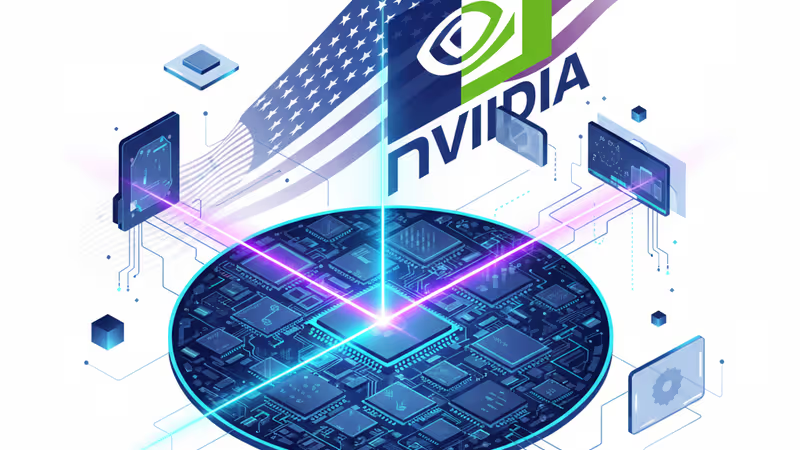
Trump Enacts Tariffs to Seize 25% of Nvidia and AMD AI Chip Sales to China
President Trump introduces new tariffs on Nvidia and AMD to secure a 25% cut of AI processor sales to China, following the December reversal of H200 export bans.
The U.S. government isn't just regulating tech—it's taking a commission. President Donald Trump has announced a novel tariff scheme designed to collect a 25% cut from Nvidia and AMD's AI processor sales to China. This unprecedented move marks a shift from total export bans to a 'pay-to-play' model for advanced silicon.
The Trump Nvidia AMD China AI Tariffs Scheme
This decision follows a pivotal policy reversal in December 2025, when the White House allowed Nvidia to ship its H200 chips to China. According to industry executives, the new tariffs announced on Wednesday aren't standard trade barriers; they are a legal mechanism to enforce the agreed-upon 25% revenue-sharing deal. By framing these payments as tariffs, the administration aims to shield the arrangement from potential legal challenges regarding executive overreach.

Monetizing Tech Leadership Amid Geopolitical Rivalry
While Nvidia and AMD regain access to the massive Chinese market, the 25% 'toll' significantly impacts their bottom lines. Geopolitical analysts note that this strategy allows the U.S. to maintain a 'chokehold' on AI capabilities while simultaneously generating billions in federal revenue. This 'transactional geopolitics' reflects the administration's preference for deals that offer immediate economic returns alongside strategic control.
Authors
Related Articles
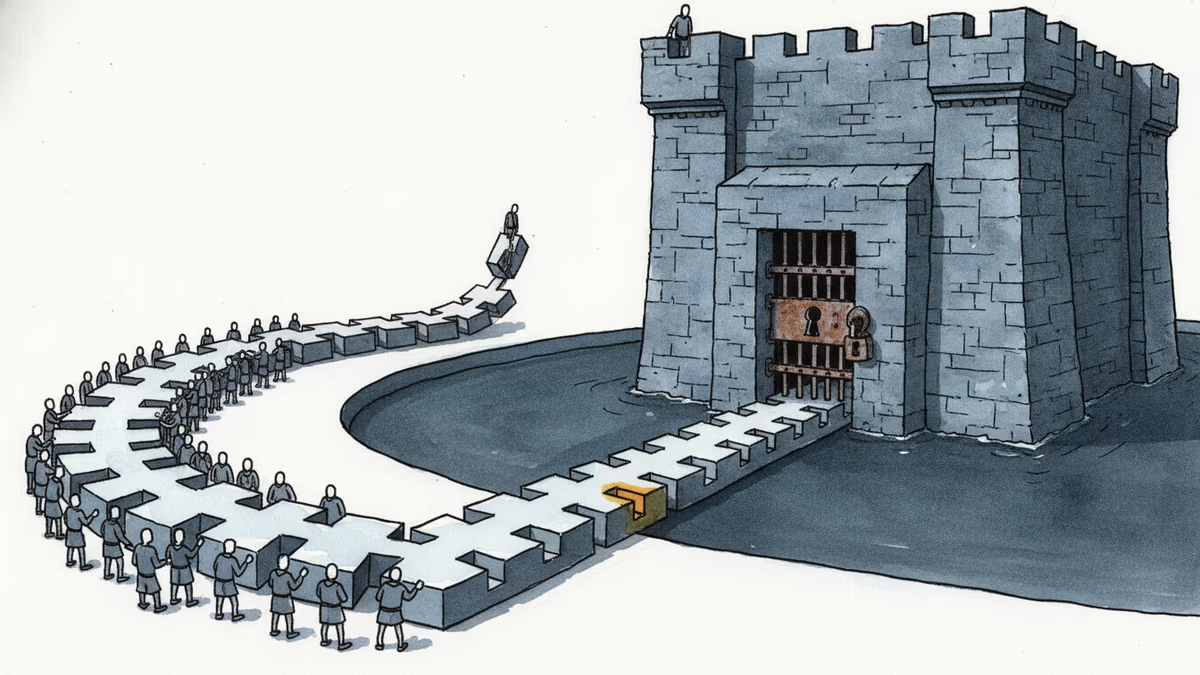
Nvidia shipped roughly a billion RISC-V cores in 2024, then announced it would run CUDA on the open standard. We break down how royalty-free instruction sets and open software stacks are trying to route around CUDA's lock-in. Part 2 of the Semiconductor Sovereignty series.
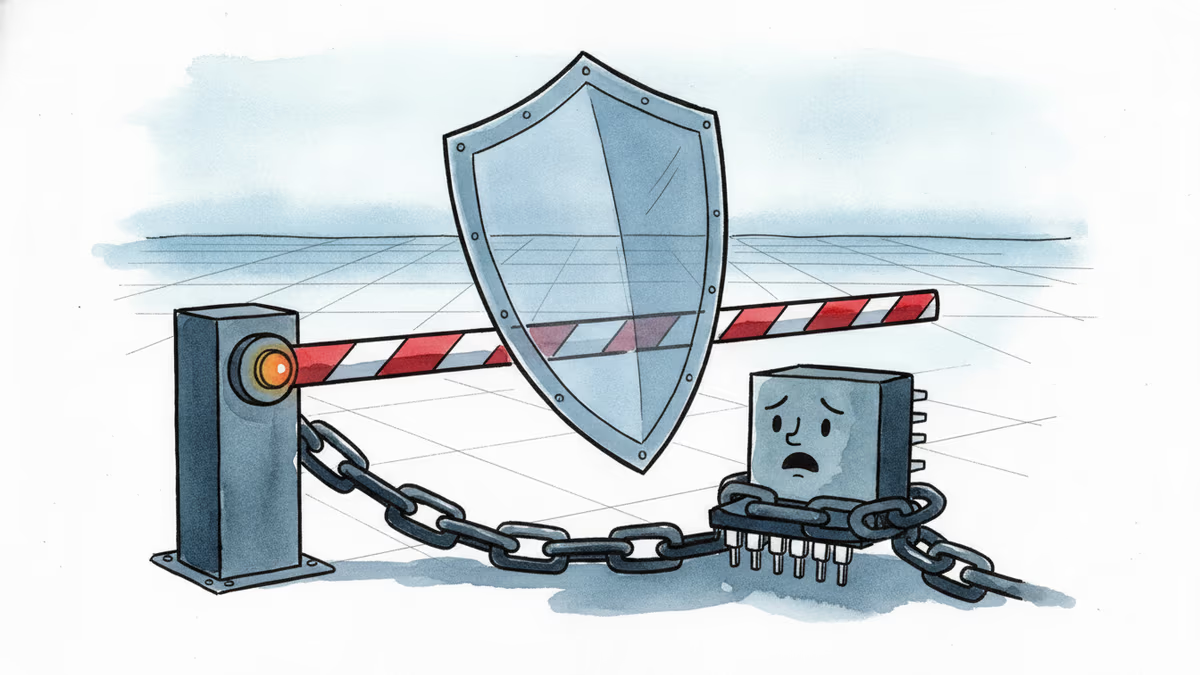
US AI-chip export controls split into three layers in the first half of 2026 — January easing, a May crackdown on circumvention, and a pending bill. Nvidia erased China from its guidance and still posted a record $81.6 billion quarter. A look at the export policy that both shields and cages it.
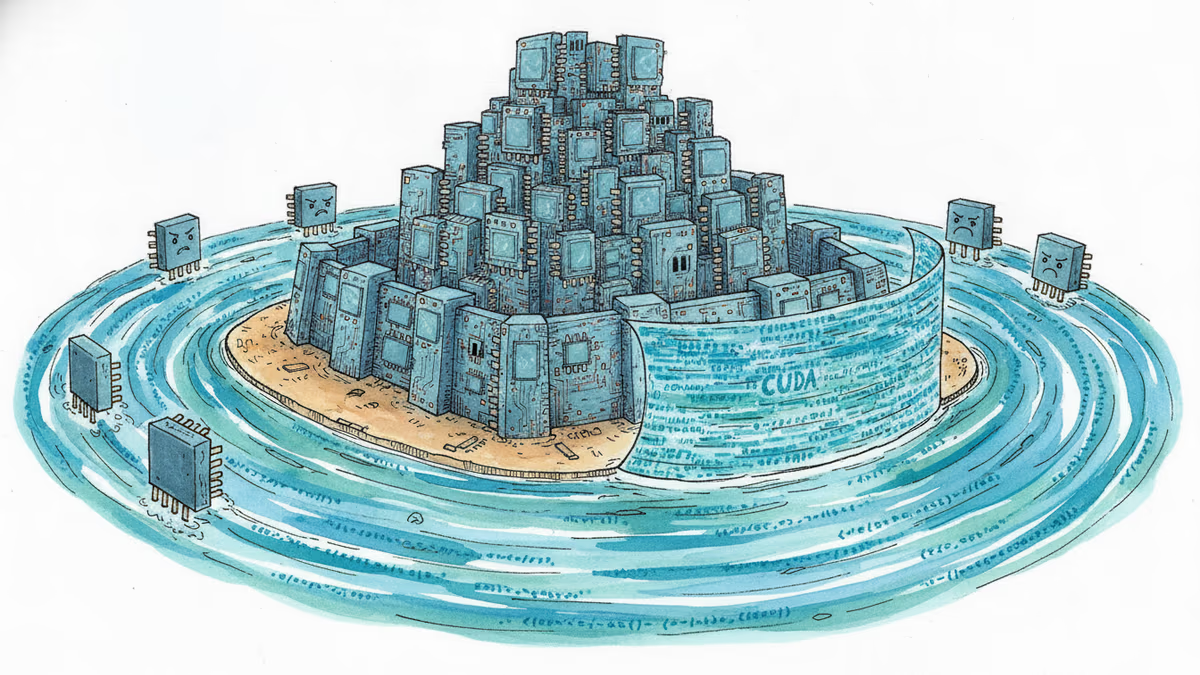
AMD's MI325X matches or beats Nvidia on memory and bandwidth — yet Nvidia's 86-92% share holds. The real moat is CUDA, 20 years in the making. Part 1 of 4.

Snowflake's new $6 billion AWS contract is about more than cloud spending. It signals a shift in AI infrastructure—away from Nvidia GPUs and toward cheaper, homegrown chips for the agent era.
Nvidia shipped roughly a billion RISC-V cores in 2024, then announced it would run CUDA on the open standard. We break down how royalty-free instruction sets and open software stacks are trying to route around CUDA's lock-in. Part 2 of the Semiconductor Sovereignty series.
US AI-chip export controls split into three layers in the first half of 2026 — January easing, a May crackdown on circumvention, and a pending bill. Nvidia erased China from its guidance and still posted a record $81.6 billion quarter. A look at the export policy that both shields and cages it.
AMD's MI325X matches or beats Nvidia on memory and bandwidth — yet Nvidia's 86-92% share holds. The real moat is CUDA, 20 years in the making. Part 1 of 4.
Snowflake's new $6 billion AWS contract is about more than cloud spending. It signals a shift in AI infrastructure—away from Nvidia GPUs and toward cheaper, homegrown chips for the agent era.
Thoughts
Share your thoughts on this article
Sign in to join the conversation