
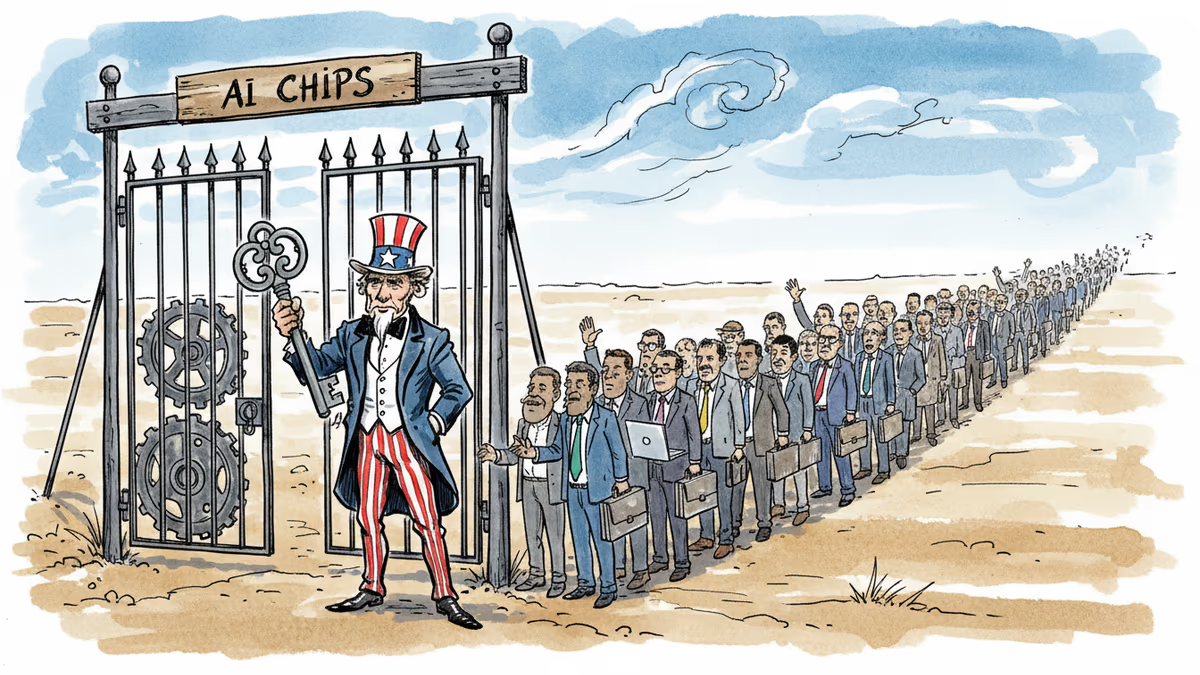
Trump's AI Chip Export Controls Could Reshape Global Tech Power
Trump administration drafts rules requiring US approval for all AI chip exports worldwide. While aimed at control, the move might accelerate global tech fragmentation.
The $2 Trillion Question
Nvidia's stock dropped 3% within hours of Bloomberg's report. The reason? The Trump administration is reportedly drafting rules that would require US government approval for every AI chip shipped outside America. Not just to China—to anywhere.
This isn't your typical export restriction. Under the proposed rules, companies and governments worldwide would need approval from the US Department of Commerce to purchase AI chips from AMD and Nvidia. Small orders might get basic review, but large purchases could require government-to-government negotiations.
The Commerce Department pushed back, calling previous AI diffusion rules "burdensome, overreaching, and disastrous." But the draft proposal suggests something far more comprehensive than what the Biden administration had planned.
Silicon Valley's Mixed Reactions
The tech industry is split. Some executives see opportunity—tighter controls could cement America's AI dominance. Others worry about the opposite effect.
"If you make US chips harder to get, people will look elsewhere," said one venture capitalist who requested anonymity. "We're essentially training the world to build alternatives."
Nvidia has already felt this pain. After nearly a year of uncertainty about China access, the company hasn't seen its Chinese customers return. Revenue from China, once a major growth driver, remains depressed.
Startups are particularly nervous. One AI company founder told me they're already exploring non-US chip options: "We can't build a global business if our core technology requires State Department approval."

The Acceleration Effect
Here's the paradox: export controls designed to maintain US dominance might actually accelerate competition. China's response has been swift and decisive. Baidu's Kunlun chips, Alibaba's Hanguang processors, and dozens of other domestic AI chip projects have received massive funding boosts.
European companies are taking notice too. France's Kalray, Germany's Graphcore, and the UK's Cerebras are all positioning themselves as "sovereignty-friendly" alternatives. Performance still lags Nvidia's H100, but the gap is narrowing.
Even US allies are hedging. South Korea's Samsung and SK Hynix are accelerating their AI chip development. Japan's government announced a $67 billion semiconductor investment program. The message is clear: dependency is dangerous.
The Enforcement Challenge
Implementing global AI chip controls presents massive logistical challenges. How do you track every GPU shipment? What counts as an "AI chip" versus a gaming card? How do you prevent chips from reaching restricted buyers through third countries?
Trade experts point to the smartphone component market as a cautionary tale. Despite years of restrictions on Huawei, the company found ways to source critical components through complex supply chains. AI chips, being smaller and more valuable, could prove even harder to control.
Beyond the Headlines
This debate reflects a deeper question about America's role in global technology. The US built its tech dominance through open markets and global integration. Now it's testing whether that dominance can be maintained through restriction and control.
The early signs aren't encouraging. Nvidia's China revenue remains depressed. Meanwhile, Chinese AI companies are making do with less powerful chips—and getting surprisingly good results. ByteDance recently demonstrated that clever software optimization can sometimes compensate for hardware limitations.
Authors
Related Articles
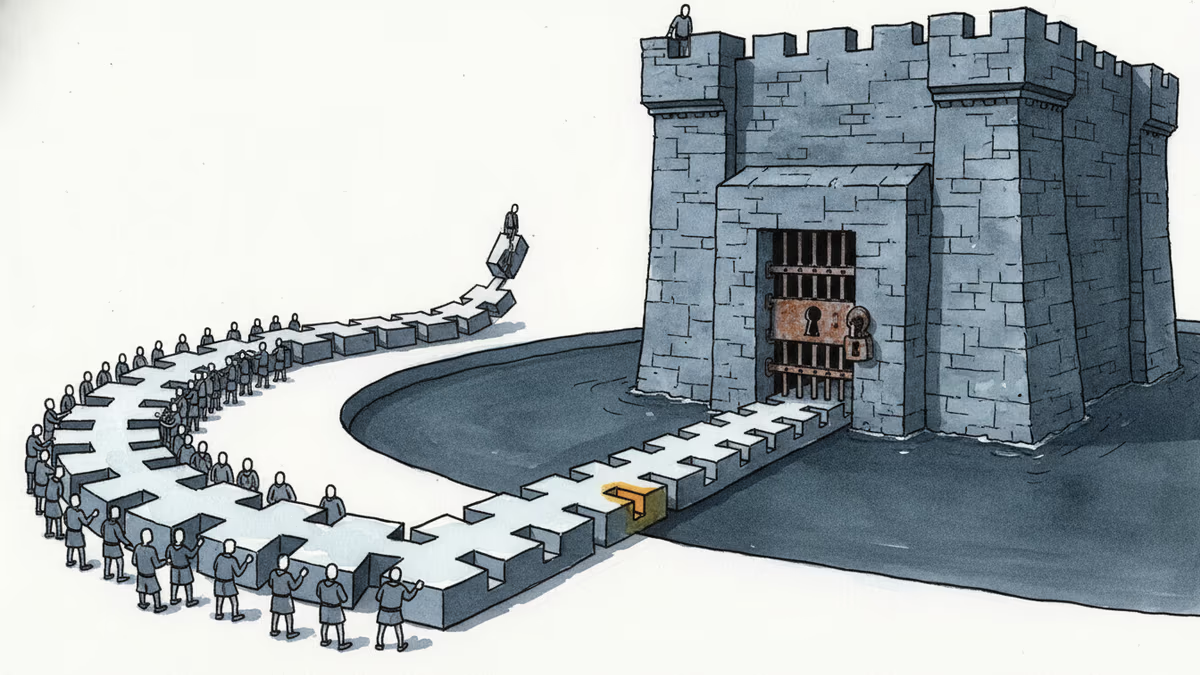
Nvidia shipped roughly a billion RISC-V cores in 2024, then announced it would run CUDA on the open standard. We break down how royalty-free instruction sets and open software stacks are trying to route around CUDA's lock-in. Part 2 of the Semiconductor Sovereignty series.

US AI-chip export controls split into three layers in the first half of 2026 — January easing, a May crackdown on circumvention, and a pending bill. Nvidia erased China from its guidance and still posted a record $81.6 billion quarter. A look at the export policy that both shields and cages it.
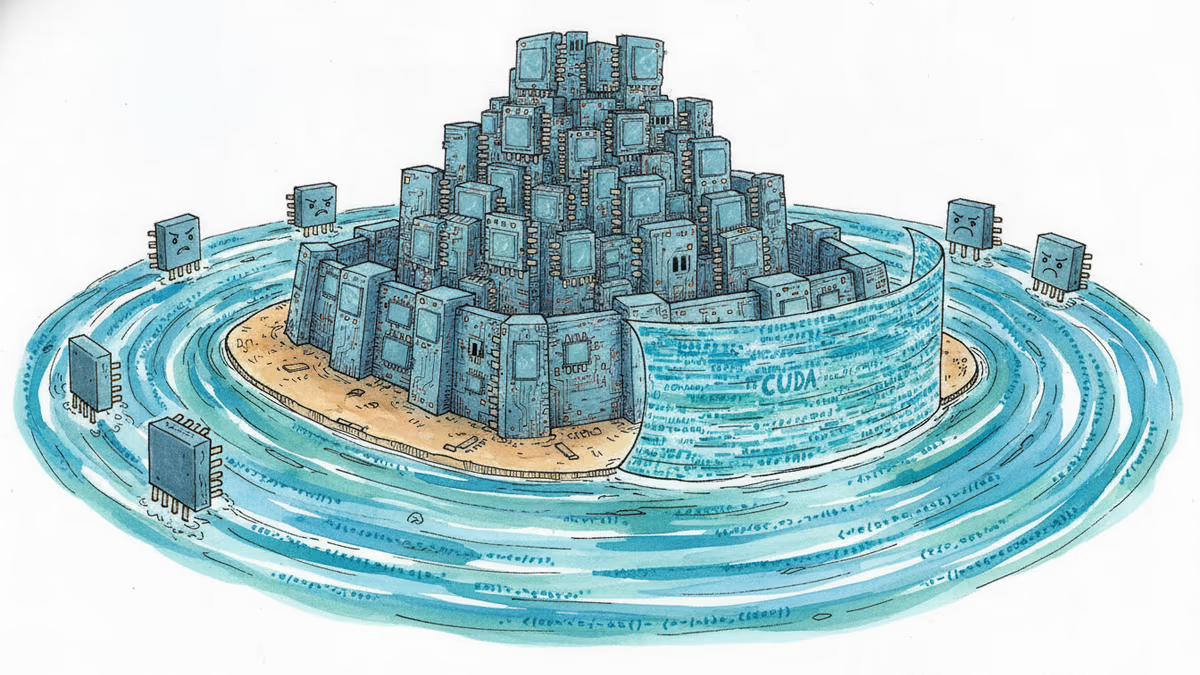
AMD's MI325X matches or beats Nvidia on memory and bandwidth — yet Nvidia's 86-92% share holds. The real moat is CUDA, 20 years in the making. Part 1 of 4.

Snowflake's new $6 billion AWS contract is about more than cloud spending. It signals a shift in AI infrastructure—away from Nvidia GPUs and toward cheaper, homegrown chips for the agent era.
Nvidia shipped roughly a billion RISC-V cores in 2024, then announced it would run CUDA on the open standard. We break down how royalty-free instruction sets and open software stacks are trying to route around CUDA's lock-in. Part 2 of the Semiconductor Sovereignty series.
US AI-chip export controls split into three layers in the first half of 2026 — January easing, a May crackdown on circumvention, and a pending bill. Nvidia erased China from its guidance and still posted a record $81.6 billion quarter. A look at the export policy that both shields and cages it.
AMD's MI325X matches or beats Nvidia on memory and bandwidth — yet Nvidia's 86-92% share holds. The real moat is CUDA, 20 years in the making. Part 1 of 4.
Snowflake's new $6 billion AWS contract is about more than cloud spending. It signals a shift in AI infrastructure—away from Nvidia GPUs and toward cheaper, homegrown chips for the agent era.
Thoughts
Share your thoughts on this article
Sign in to join the conversation